

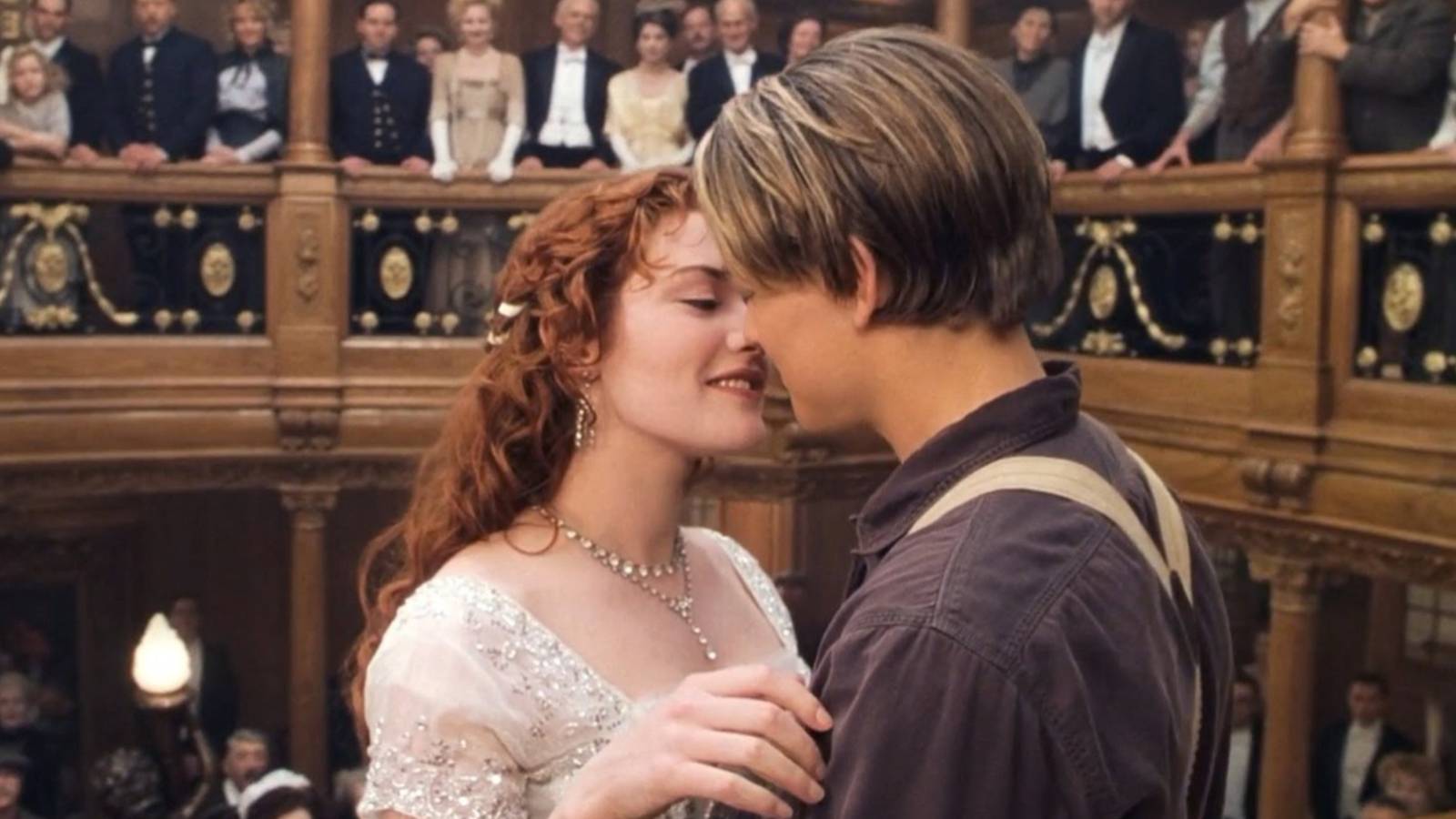
Have you ever watched a movie and it just didn’t have an ending? Doesn’t happen. Not possible. Everything has to end. Even when the lack of an ending is intentional, that in itself is still an ending. That’s a purposeful decision to not conclude in a traditional way, but the end credits still roll, or if it’s one of those older movies from a time before end credits were normal, then you get “The End.” Or sometimes “Fin.” Or if you’re watching a Swedish film, then it calls you a “****.” No, seriously.
That’s all to say endings are important, and even if an Ingmar Bergman film calls you something disparaging, hey, some of them ended pretty well before the petty insult (see The Seventh Seal, Fanny and Alexander, and The Virgin Spring). So, in the interest of celebrating good movie endings, but specifically those from a certain time, here’s a rundown of the best of the 1990s. Spoilers are inevitable, but most of these are pretty well-known, and there’s been more than a quarter of a century to see all these, so discussing what happens right at the end is fair game (especially for an article like this).
10
‘The Lion King’ (1994)
To be honest, the spot here was originally for The Usual Suspects, but I changed it last minute. Sue me. Just saying that to highlight that it’s #11, which is hopefully a little easier to take than imagining it could be anywhere from #12 to, whatever, #36,705, or however many movies came out in the 1990s. Here’s The Lion King instead. It’s a better movie with a better ending.
Very different from The Usual Suspects, sure. The ending here is not surprising, and it’s the way things had to end, with the rightful king (he’s a lion, who would’ve guessed?) back on the throne, and lessons learned and villains defeated and all that, but it’s just very cathartic. The music plays a massive role too, with that booming Hans Zimmer score being remarkably moving.
9
‘The Truman Show’ (1998)

The Truman Show is the kind of film you probably know about before you see it, since it’s got one hell of a premise that’s also easy to explain. It’s about a man who is the center of a particularly strange reality TV show (well, it seemed strange in 1998) where the whole gimmick is that everyone in his life is an actor, and aware they’re on the show, except for him.
He starts to question his reality, or lack thereof, and The Truman Show inevitably becomes about him having to break free of the only world he’s ever known. Emphasis on the “inevitably” part, because The Truman Show kind of has to end with him escaping, yet it still finds an interesting and moving way to get to that stage (and still feels a bit suspenseful, largely thanks to it drifting more toward drama – and further away from comedy – as it goes along).
8
‘Se7en’ (1995)

The same year as The Usual Suspects, there was another movie that had a twist involving a character played by Kevin Spacey, and it was Se7en. The twist that the killer is played by Spacey isn’t really a twist within the film’s universe, and is only really surprising if you’re a viewer, but then the cruelty of what actually happens right at the end is devastating for the characters and the viewers alike, so the pain is shared.
Even if you know the ending to Se7en is coming, it’s still a deeply unpleasant and upsetting thing to see play out.
To put it simply, the killer wins and gets what he wants, ensuring he’s the final victim of his whole “seven deadly sins” killing spree. It’s also the extent to which he wins that makes it all the more harrowing, and even if you know it’s coming, it’s still a deeply unpleasant and upsetting thing to see play out. But it also elevates the movie, with Se7en being a classic (rather than a merely good film) because they went where they did.
7
‘Heat’ (1995)

If you want to single out the best scene in Heat, you’re probably going to hone in on two options: the big action-packed heist/shootout sequence, or the diner scene that takes place a little before that. And that’s fair, but Heat does still save maybe its third-best sequence for right at the end? Actually, it’s a bit hard to label it that. Pretty much every scene in Heat is great.
Still, that ending delivers and really drives home everything the movie was going for narratively and thematically, and it proves oddly moving, too. It’s a film about two people who are very similar, but are on opposite sides of the law, and so it naturally ends with one proving “victorious” over the other, but it’s bittersweet for numerous reasons (and, like with The Lion King and plenty of other great endings, the music here helps a lot).
6
‘Thelma & Louise’ (1991)

With Thelma & Louise, it’s another instance of the ending being the best-known scene. The movie’s about the two titular characters going on the run, pursued by police, and they eventually run out of options, and they drive off a cliff together instead of giving up and getting arrested. Of course, it’s the way Thelma & Louise gets to that ending that helps it hit the way it does.
Still, it’s like the rest of the movie becomes a bit of a blur once it does happen, at least if you don’t see the ending coming. In that sense, there’s an argument to be made that it benefits the film, having that ending be well-known and likely known ahead of time, should you choose to watch it in a post-1991 world. That really makes it a journey over the destination sort of thing, once the destination’s known/inevitable. Still, what a destination.
5
‘The Sixth Sense’ (1999)

It would be weird to talk about iconic endings from the 1990s without mentioning The Sixth Sense, since this movie is kind of all about that twist, a bit like The Usual Suspects (and, maybe, arguably the aforementioned Se7en). If you’re able to go into this without knowing “Bruce Willis was a ghost the whole time,” then that’s pretty wild. Also, why are you living under Mount Augustus?
Also, sorry if you were the one person actually living under the world’s biggest rock and you didn’t know that, but like, come on. Pretty much everyone knows that. Maybe pretty much everyone’s also seen The Sixth Sense, at this point, because it’s an all-timer of a supernatural thriller, and still quite comfortably the best thing M. Night Shyamalan has ever directed (and he has tried to end films with a similar punch since 1999, but has never quite gotten there; it might well be an impossibility, at this stage).
4
‘Pulp Fiction’ (1994)

There’s another movie about redemption from 1994 that’ll be mentioned in a bit, but it’s at the core of Pulp Fiction’s conclusion, too. The final scene of the movie technically began right at the start of the movie, or actually, a chunk of the middle of the final scene was played first, and then there’s the rest of Pulp Fiction, and then eventually, a scene that shows the first scene from another point of view, at which point it plays out and concludes.
That all might sound convoluted, yet it works in the film itself. So, the ending isn’t really the last thing that happens with the film’s characters, but it does feel like a perfect note to end on (and it is more or less the last significant thing for the arc of Jules, who turns away from violence and genuinely does peacefully resolve the situation Pulp Fiction concludes with).
3
‘Titanic’ (1997)

One of the things about Titanic (and there are a lot, since it’s a hugely ambitious movie) is that it’s long, and so it does indeed take a while to end. But it’s well-paced for something of its length, and the framing device, love story-focused first half, and disaster/spectacle-heavy second half are all necessary components of the overall movie, and are all needed for the ending to resonate and hit as hard as it ultimately does.
It’s not that it ends in a tragic yet bittersweet way, just like it’s not that the ship hits the iceberg. The ship is always going to hit the iceberg. There is always going to be loss at the end. But Titanic makes it moving and somehow surprising in the moment, or if surprising isn’t the right word, then… eh, I don’t know what the right word is. But the catharsis of letting that necklace rest at the bottom of the ocean (it doesn’t make logical or financial sense, but it totally makes emotional sense) and then having Rose reunite with Jack in what’s probably the afterlife… all that would be cheesy in lesser hands, though thankfully, James Cameron’s hands tend to be more than capable.
2
‘Schindler’s List’ (1993)
Another epic from the 1990s, Schindler’s List is undeniably moving for its entire runtime, but especially so right near the end. Fittingly for something of its length, there are two key scenes here that feel like they comprise the ending, and if it’s cheating to count them both for present purposes, then, sorry, but also not really.
Or put another way, the scenes that take place well into the future – and briefly almost turn Schindler’s List into a documentary – prove moving in showcasing how Oskar Schindler’s actions had a lasting impact beyond his lifetime, and then the scene that feels like it more wraps up the events of the movie (the black-and-white stuff, essentially) is powerful in driving home those who couldn’t be saved, and Schindler reckoning with that personally. It’s quite comfortably Liam Neeson’s best work as an actor, and the two scenes that make up the finale of Schindler’s List also contribute to it being, overall, one of Steven Spielberg’s greatest accomplishments as a filmmaker.
1
‘The Shawshank Redemption’ (1994)

Not too surprisingly, one of the most popular movies of all time, The Shawshank Redemption, also has a pitch-perfect ending, and one that’s hard to imagine many people watching and not feeling at least a little moved by. The whole film is about surviving and holding onto hope inside a brutal prison, and it eventually becomes about escape and, indeed, redemption, as the title makes plain.
It’s not exactly a gentle movie, even if it’s technically not as horrific as other movies based on Stephen King stories (you know, the ones that genuinely belong to the horror genre), but the ending is certainly crowd-pleasing… in a good way. The characters more than earn the catharsis they eventually find, and it’s about as great and as fulfilling as an eventually happy ending can be.
Source link
