

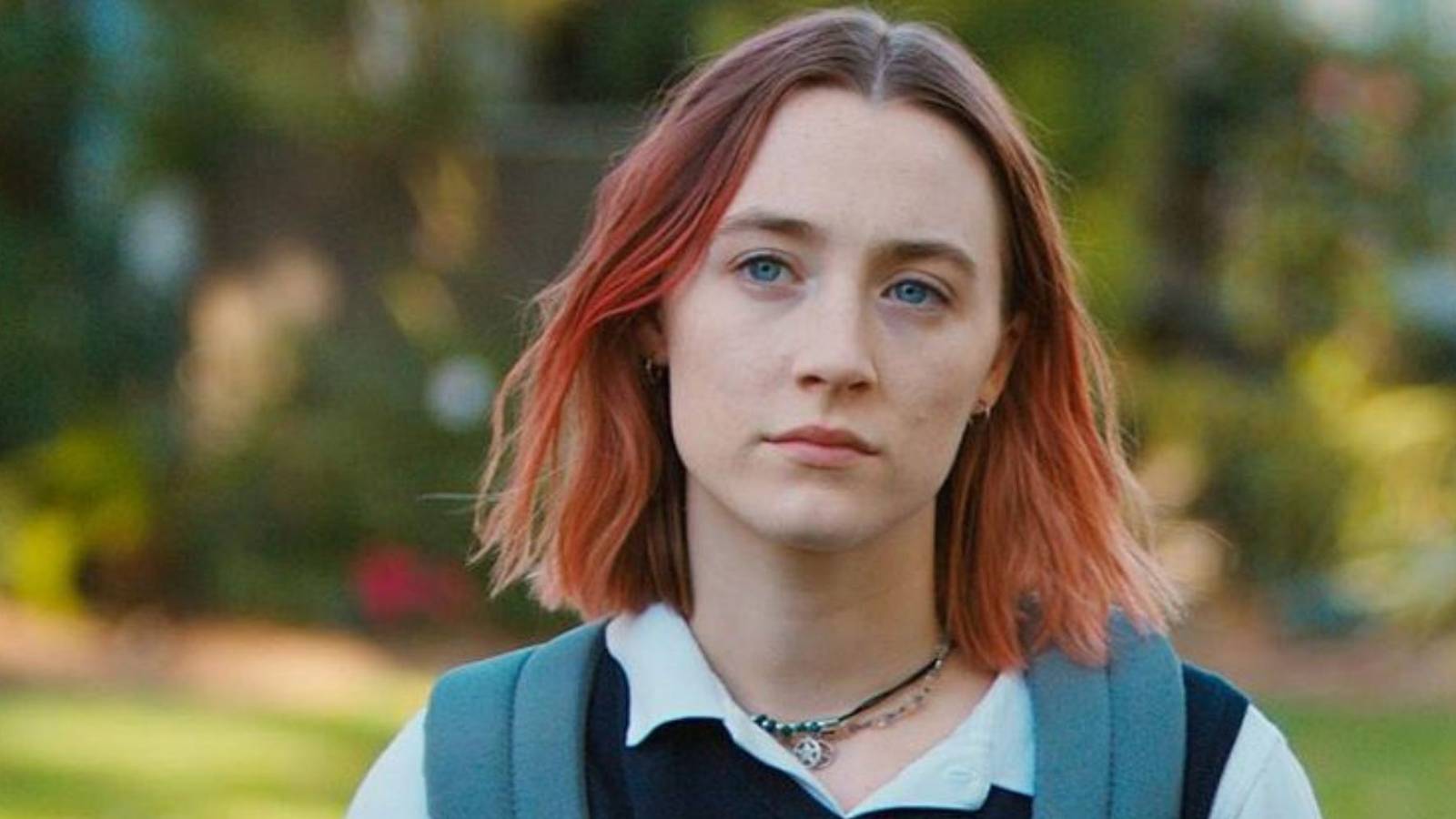
Actors becoming directors is by no means a new phenomenon. It’s something that has been happening since pretty much cinema’s infancy, and it continues to happen relatively often in the modern day. A lot of times, when they direct a film, actors cast themselves in a role, no matter its importance in the narrative. On a few precious occasions, however, there have been movies directed by actors who chose to remain behind the camera throughout the entire runtime.
Whether it’s because there’s not really any role in the movie that fits them or because they want to focus entirely on directing the movie, when an actor directs a film they’re not starring in, it’s serious business. It’s a rather effective way of signaling that it’s not a vanity project, and it’s usually a sign that the film is going to be, at the very least, really good. In the case of the ten strongest instances of a film directed by an actor who didn’t star in them, “really good” is an understatement.
‘The Effect of Gamma Rays on Man-in-the-Moon Marigolds’ (1972), Directed by Paul Newman
The Effect of Gamma Rays on Man-in-the-Moon Marigolds is a drama based on the Pulitzer Prize-winning 1964 stage play of the same title by Paul Zindel. Aside from having one of the coolest titles in the history of cinema, this was the third film Paul Newman ever directed. Every fan of 20th-century Hollywood cinema is perfectly familiar with how legendary an actor Newman was, but he was also a terribly underrated filmmaker, and this movie is all the proof anyone should need.
Not only is Newman not present on screen at all, but his direction is also surprisingly subtle and understated, drilling into the dramatic core of every scene in a way that greatly elevates the performances of leads Joanne Woodward (Newman’s wife) and Nell Potts (one of their daughters). It’s a deeply sad, emotionally daunting film, but one that’s a must-watch for all those who love Newman.
‘Hacksaw Ridge’ (2016), Directed by Mel Gibson

Controversial actor Mel Gibson made his directing debut with a made-for-television documentary in 1991, and the peak of his directing career came in 2016. Hacksaw Ridge uses the story of real-life pacifist Desmond Doss as a vehicle for a riveting yet harrowing war film about faith, courage, and the importance of sticking to one’s convictions. It’s one of Andrew Garfield‘s highest-rated movies on IMDb, as it might just be the best performance of his career.
Gibson’s direction makes it so that the combat scenes pack a hell of a punch. Brutally gory and relentless, as well as perfectly-paced, they make this a war action film that truly makes war seem like hell. But even when the story quiets down and narrows in on the characters, Gibson is more than up to the challenge. Hacksaw Ridge is an emotionally stirring and beautifully romantic character study that’s among the best war biopics of the 2010s.
‘The Chronology of Water’ (2025), Directed by Kristen Stewart

Throughout the entirety of her post-Twilight days, Kristen Stewart has been proving time and time again that she’s an immensely talented actress who shouldn’t be underestimated. Now, having made her directing debut with the psychological drama biopic The Chronology of Water (about writer and former competitive swimmer Lidia Yuknavitch), she has proved that she’s every bit as talented a filmmaker as she is a thespian.
Starring an incredible Imogen Poots as Yuknavitch, The Chronology of Water looks at its subject’s journey of healing with an impressive, artistically sharp, marvelously female-gazey perspective. Stewart’s direction is sexually charged, mesmerizingly intuitive, and unapologetically feminine. The star has established herself as an arthouse director to look out for, with every film she directs going forward.
‘Gone Baby Gone’ (2007), Directed by Ben Affleck

Nowadays, Ben Affleck is just as accomplished a director as he is an actor, with one impressive Best Picture win to his name for 2012’s Argo. He’s well-known for starring (usually in lead roles) in almost all of his films, except for one: his 2007 debut, Gone Baby Gone. This neo-noir crime thriller is based on Dennis Lehane‘s 1998 novel of the same name, and stars Michelle Monaghan alongside Ben’s brother, Casey Affleck.
It’s an absolutely thrilling detective story and morality play that’s surprisingly thought-provoking. It’s probably no coincidence that Affleck’s best directing work to date happened in a movie where he didn’t have to also focus on delivering a good performance. Gritty, loud, violent, and incredibly well-written just as much as it is well-directed, Gone Baby Gone is quintessential Bostonian cinema.
‘Wildlife’ (2018), Directed by Paul Dano

Paul Dano is one of the most incredible and versatile character actors currently working in Hollywood, and in 2018, he proved that all that talent could also be transferred to the director’s chair. The only movie he’s directed to date is the drama Wildlife, based on the 1990 novel by Richard Ford. It stars Carey Mulligan and Jake Gyllenhaal at the very top of their games, and it’s one of the most emotionally affecting domestic dramas of the last decade.
Like many actors-turned-directors, Dano lets his direction particularly focus on the dramatic juices that every scene oozes in order to bolster the performances of his stars, but that’s not the only reason why Wildlife is one of the best films of the late 2010s. It’s also well-paced, visually spellbinding, and emotionally complex. Dano takes this incredibly challenging material and never allows it to reduce itself to cheap melodrama, making it one of the most heartbreaking hidden gem dramas in recent memory.
‘Booksmart’ (2019), Directed by Olivia Wilde

From genre blockbusters to award-winning prestige dramas, Olivia Wilde has done it all when it comes to her acting work, though no one would have labeled her a “comedic actress” by the time 2019 rolled in. That makes it even more impressive that she directed one of the funniest movies of the 2010s, the coming-of-age raunchy comedy Booksmart.
Wilde handles Booksmart with the confidence of someone who’s been directing comedies for years.
Wilde’s directing debut greatly benefits from Kaitlyn Dever and Beanie Feldstein‘s hilarious and endearing lead performances, but the actress’ direction is just as important to Booksmart being as great as it is. It’s an earnest, over-the-top, exquisitely creative high school buddy comedy that Wilde handles with the confidence of someone who’s been directing comedies for years, anchored by a charming tone that never overstays its welcome.
‘Lady Bird’ (2017), Directed by Greta Gerwig

Greta Gerwig is one of the most successful and influential filmmakers working in Hollywood today, to the point that most people may think of her as a director first and an actor second, but it’s worth remembering that Gerwig’s career began as one of the most noteworthy actresses and writers of the mumblecore film movement of the 2000s. She made her directing debut in 2008 with Nights and Weekends, and it wouldn’t be until nine years later that she’d make her sophomore directing effort, the Oscar-nominated Lady Bird.
It’s arguably the best project that Gerwig has ever been involved in, a beautifully intimate dramedy that’s easily among the best high school coming-of-age movies ever. Saoirse Ronan‘s career-defining, Oscar-nominated lead performance is a powerhouse, flawlessly complemented by Gerwig’s sincere and understated approach to the story. The director disappears behind the camera, allowing the narrative and its fascinating characters to speak for themselves without ever interfering with the flashy displays that so many actors-turned-directors seem to love.
‘Get Out’ (2017), Directed by Jordan Peele
Before 2017, Jordan Peele was primarily known for his comedic work on television, especially his hilarious sketches with the Abbott to his Costello, Keegan-Michael Key. After the 2017-18 awards season, however, he was suddenly Academy Award winner Jordan Peele, one of the most exciting new voices in all of Hollywood horror. The reason was Get Out, one of the greatest horror films of the 21st century thus far.
It’s one of those horror films that are required viewing for all fans of the genre. Peele’s Oscar-winning screenplay is brilliant, and star Daniel Kaluuya delivers a tour-de-force performance, but the main reason why Get Out works as well as it does is the direction. Blending sharp social critique with psychologically intense horror, without ever losing the sense of humor that made him famous in the first place, Peele achieves a nail-biting atmosphere of suspense that never lets up. Visually striking and full of meaningful symbolism, Get Out is one of the best-directed films of the 2010s, horror or otherwise.
‘Ordinary People’ (1980), Directed by Robert Redford

The iconic ’80s classic, winner of four Academy Awards (including Best Picture and Best Director), and one of Pope Leo XIV’s favorite movies, Ordinary People is the first directorial work of one of the greatest and most iconic actors in the history of Hollywood, Robert Redford. The star directed several great movies over the course of his career (starring in only a few of them), but his debut always remained his best.
Based on the 1976 novel by Judith Guest, Ordinary People is a heavy, emotionally devastating drama about the disintegration of a wealthy family. But while Redford definitely elevates the performances of all his stars (including career-best performances by Donald Sutherland and Mary Tyler Moore and an Oscar-winning turn by Timothy Hutton), he never allows the film to become too emotionally explosive. It’s a smart, compelling, thematically layered directing effort that proves Redford was a multi-talented artist unlike any other of his generation.
‘The Night of the Hunter’ (1955), Directed by Charles Laughton

The Night of the Hunter is one of the greatest noir thrillers ever made, the kind of ’50s classic that only keeps getting better. Hugely influential, borderline terrifying, and starring Robert Mitchum in one of the best performances of Hollywood’s Golden Age, the movie was the directing debut of Charles Laughton, one of the best actors of the era. But even though the movie is nowadays remembered as one of the best ever made, it was a critical and commercial failure upon release. Sadly, this destroyed Laughton’s confidence in his skills as a director, so he never directed another film again.
It’s an absolute tragedy, because judging solely from how incredibly powerful and well-made Night of the Hunter is, we could have had the single best actor-turned-director of the 20th century on our hands. Whatever the case, Night of the Hunter is impressively expressionistic and shockingly horrifying for a Hays Code-era film. It’s one of the most potent movies about the line between good and evil ever made, and if Laughton were still alive today, he would surely be delighted by how warmly modern cinephiles have embraced his masterpiece.
Source link
