

By no means are all of Steven Spielberg’s movies adapted from pre-existing stories, as the likes of Raiders of the Lost Ark, Saving Private Ryan, and Close Encounters of the Third Kind all go to show. There’s also the movies Spielberg’s been credited with co-writing, like The Fabelmans, though in that case, you could sort of argue Spielberg was adapting his own life, owing to how autobiographical and personal the film felt.
But still, not the same as adapting a pre-existing story published as either a novel, novella, or short story. The following movies, though, were all adapted from one of those things. If a story originally existed on the page, was directed by Spielberg, led to a film that would be nominated in the Best Adapted Screenplay category rather than Best Original Screenplay, and is an overall good movie, then there’s a chance you’ll find it below.
10
‘War of the Worlds’ (2005)
Based on ‘The War of the Worlds’ (1898) by H.G. Wells
Since The War of the Worlds was published in 1898, and War of the Worlds (2005) takes place in contemporary times, it naturally takes some noteworthy liberties with the source material. But in both cases, an alien invasion is the central thing that happens narratively, and people have to deal with all the chaos, accentuated by the alien invaders having highly advanced weaponry.
Among PG-13 movies, War of the Worlds (2005) would have to be one of the most intense, especially since it plays on fears from around that time (it’s hard not to think of 9/11 when seeing some of the imagery here). It’s not a perfect movie, losing some momentum in its back half, but still, War of the Worlds largely delivers, and overall does justice to the classic H.G. Wells novel it’s based on.
9
‘The Color Purple’ (1985)
Based on ‘The Color Purple’ (1982) by Alice Walker

Steven Spielberg makes plenty of entertaining and blockbuster sorts of movies, seen to a particularly great extent with the Indiana Jones films, but starting with The Color Purple, he also showed himself as someone willing to make more grounded and serious dramas. It was the first time he did something not related to the horror, crime, action/adventure, or sci-fi genres, and while he made better dramas post-1985, this one’s still more than solid.
It’s based on the book of the same name by Alice Walker, and tells a heavy-going story that spans multiple decades, largely focused on the experiences of a young Black woman growing up in rural Georgia. It also shouldn’t be mixed up with the musical version, since The Color Purple was also adapted into a stage musical, and later, that stage musical was adapted into a 2023 film.
8
‘The Adventures of Tintin’ (2011)
Based on ‘The Adventures of Tintin’ (1929–1976) by Hergé

So, The Adventures of Tintin is a bit of a tricky example. It’s based on a series of books, and also, they’re comic books, rather than novels. But still, a book is a book, and The Adventures of Tintin takes influence from – and, to some extent, adapts – several volumes from the original comic book series that was created by Hergé, which debuted way back in 1929.
As a movie, The Adventures of Tintin is a lot of fun, and one of the better (not to mention more underrated) animated movies of the 21st century so far. There’s a ton of adventuring here that recalls Spielberg’s Indiana Jones movies, meaning it’s pretty easy to recommend this 2011 movie – even if you’re not usually a fan of animated flicks – to anyone who has a fondness for any of the Spielberg-directed Indiana Jones films.
7
‘Empire of the Sun’ (1987)
Based on ‘Empire of the Sun’ (1984) by J.G. Ballard

Based on a semi-autobiographical novel by J.G. Ballard, who was a young boy when World War II broke out, Empire of the Sun is about a boy who gets separated from his family and made a prisoner of war. It’s not the best film Spielberg directed in the 1980s, but it’s still a compelling one within his overall filmography, and it also supports the notion that the director’s one of the greatest when it comes specifically to World War II movies (he’s made quite a few).
Also, Empire of the Sun stands out for having a surprisingly great cast, with quite a few actors here becoming much more well-known in the years following its release (most notably, Christian Bale, who plays the protagonist here). It’s a slightly overlong, but still largely compelling, film that works as both a prisoner of war story and a coming-of-age movie simultaneously.
6
‘Munich’ (2005)
Based on ‘Vengeance’ (1984) by George Jonas

Munich is based on a non-fiction book of a different name, because the source material, written by George Jonas, is called Vengeance. Munich is a somewhat less in-your-face title, but the movie itself is still incredibly intense and undeniably about vengeance, too, since it takes place in the aftermath of the Munich massacre, which took place during the 1972 Summer Olympics in Munich, and involved a Palestinian militant organization killing 11 members of the Israeli Olympic team.
Mossad retaliated with a series of assassinations while trying to track down the person responsible for orchestrating the Munich massacre, and Munich (2005) shows how messy and violent the whole situation was. It lays things out in a way that’s surprisingly blunt and despairing by the standards of a Spielberg film, and it’s also notable for how unwilling it is to offer easy answers about the whole ordeal and the cycle of violence that occurred.
5
‘Minority Report’ (2002)
Based on “The Minority Report” (1956) by Philip K. Dick

“The Minority Report” was originally a novella by Philip K. Dick, rather than a novel, but it’s still being counted here as a book; one adapted into Minority Report (the film took the same advice heard in The Social Network by dropping the “the”). Much of Dick’s work has been adapted to film, including Do Androids Dream of Electric Sheep? becoming Blade Runner and “We Can Remember It for You Wholesale” becoming Total Recall.
Back to Minority Report, though, this one is about a future where people can use technology that shows crimes happening before they happen, leading to arrests of criminals who technically haven’t done anything criminal. It’s preventative, but then also morally troubling, and Minority Report (2002) really gets into all that tricky stuff while still being slick, mostly well-paced, and quite entertaining in parts, too.
4
‘A.I. Artificial Intelligence’ (2001)
Based on “Supertoys Last All Summer Long” (1969) by Brian Aldiss

A project that Stanley Kubrick was initially attached to before his death, A.I. Artificial Intelligence is an odd and always interesting mix between the coldness Kubrick’s sometimes associated with and the more human (and sometimes sentimental) stuff Spielberg often brings to his movies. It also came out in 2001, somewhat eerily, given Kubrick’s most famous movie (or one of them) is 2001: A Space Odyssey.
A.I. Artificial Intelligence is not a perfect sci-fi movie, but it is a largely impressive, ambitious, and haunting one.
With A.I. Artificial Intelligence, the source material wasn’t a novel like most of the examples here, but instead was a short story called “Supertoys Last All Summer Long,” written by Brian Aldiss. Owing to its brevity, it was admittedly expanded quite drastically for the movie. The short story was initially published in the magazine Harper’s Bazaar, but later compiled into a short story collection, so you can sort of count it as a book, or at least one part of a book (called Supertoys Last All Summer Long and Other Stories of Future Time). As for the movie? It’s not a perfect sci-fi movie, but it is a largely impressive, ambitious, and haunting one, ultimately standing as one of the more underappreciated movies in Steven Spielberg’s filmography.
3
‘Schindler’s List’ (1993)
Based on ‘Schindler’s Ark’ (1982) by Thomas Keneally

Based on a historical fiction book called Schindler’s Ark, but renamed Schindler’s List, this 1993 film is the most successful of Spielberg’s career, if you’re looking at awards like the Oscars, and understandably so. It runs for more than three hours, exploring the Holocaust and showcasing how Oskar Schindler saved more than 1000 lives from concentration camps during the Second World War.
Schindler’s Ark is marked as historical fiction because it imagines certain interactions and things that might’ve happened for which there’s no historical document. Schindler was a real person, though, and what he did – including all the lives he saved – is based on what actually happened. The story adapted to film is undeniably moving in the ways you’d expect, and Schindler’s List can comfortably count itself among Spielberg’s most impactful and memorable films.
2
‘Jurassic Park’ (1993)
Based on ‘Jurassic Park’ (1990) by Michael Crichton
The next example here had a shorter span of time between its source material getting published and the adaptation getting released, but the window of time in the case of Jurassic Park was still pretty darn short. A 1990 book by Michael Crichton became a Spielberg film three years later, and while the film was a little gentler and more approachable than the book, Jurassic Park (1993) still proves tense and frightening when it needs to.
It’s the quintessential dinosaur movie in ways that are likely obvious to anyone who’s seen it (and it’s one of those movies that pretty much everyone has seen, too). Also, the fact that Jurassic Park came out the same year as Schindler’s List – and both stand as two of Spielberg’s very best movies – will never stop being impressive.
1
‘Jaws’ (1975)
Based on ‘Jaws’ (1974) by Peter Benchley

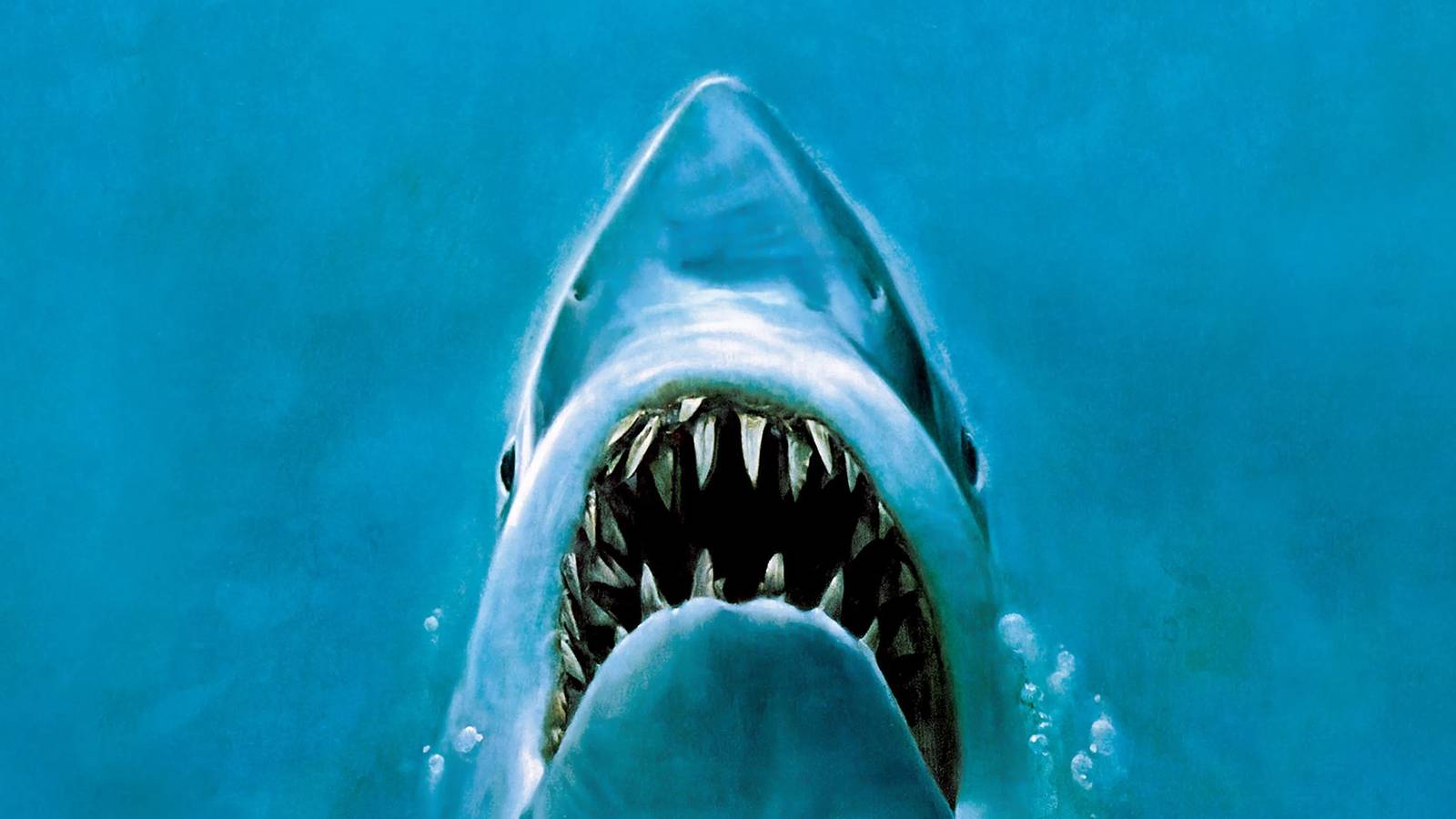
They really didn’t waste any time adapting Jaws, since the novel was published in 1974, and the film adaptation came out (famously) in the summer of 1975. It’s a bit like the case with Stephen King’s Carrie, as that book came out in 1974 and got an adaptation not long after, in 1976… admittedly, not as fast as Jaws. It was just an undeniably good story to put on the big screen.
There are some changes made, of course, and things are streamlined, but whether you read or watch Jaws, the whole thing is about a shark that ruins summer for a coastal town through a series of deadly attacks, which motivates three men to set out to sea to kill said shark, no matter what. The movie’s more fondly remembered and well-known nowadays, but you can’t entirely overlook the solid source material it was able to take and build upon.

Jaws
- Release Date
-
June 20, 1975
- Runtime
-
124 minutes

Source link
