

When it comes to war movies, audiences are quick to picture combat. No matter the era or war depicted on screen, it has become an expected part of the genre. Even in classic movies like Saving Private Ryan or Platoon, the dramatic character dynamics are interspersed with action sequences that keep things moving. There are even movies that take place almost entirely during combat, with films like Warfare and Black Hawk Down being tense, often unrelenting action experiences. Yet, for every bombastic, battle-filled epic, there are war films that can be equally brutal without the focus on combat.
The horrors of war are vast, affecting everyday life for those mired in combat zones, with grim realities shattering the sense of calm. Some movies in the genre focus on character struggles during wartime, as surviving is often more harrowing than fighting. Beyond scenarios that would see people firing bullets back and forth, there is a terrifying lack of humanity often inflicted upon groups of people that is far more brutal and heinous. Those tales can be hard to watch, presenting grim realities that many would rather ignore. Yet it’s those same war stories that yield some of cinema’s best genre entries, with audiences often praising their unflinching look at tragedy.
‘Schindler’s List’ (1993)
Steven Spielberg’s Schindler’s List is often cited as one of the most important war films ever made, yet it is also one of the most difficult to sit through. There is nothing easy about watching the cruelty on display, knowing the scenes presented show the truth, and that the cruelty isn’t from that far in humanity’s past. Ralph Fiennes’ performance as Amon Goeth is often hailed as one of cinema’s greatest villains. Still, it makes the story all the more horrifying, given the character’s penchant for inhumane acts.
The concentration camp scenes and unrelenting death on display in Schindler’s List are not for the faint of heart, even with the inspiring savior’s tale at the heart of the movie. When it comes to war stories, Spielberg’s classic is as bleak as it gets, but the Academy Award winner for Best Picture turns the brutal story into a must-see film.
‘Empire of the Sun’ (1987)

Christian Bale stars as a young British boy in a Japanese internment camp in China during WWII. Another entry from Spielberg, the movie is based on J.G. Ballard’s semi-autobiographical novel about his childhood experiences. While Empire of the Sun largely doesn’t focus on combat, it does present the horrors of war through a traumatized child who has been separated from his parents.
The film’s most horrific moments come from the dehumanizing conditions in the camp and the cruelty bestowed upon the prisoners. There is a focus on forced labor and the psychological toll the war and time in the camp take on people. Bale’s Jim also endures numerous moments of suffering, including regular starvation, and the protagonist’s age makes it particularly difficult to watch at times.
‘Come and See’ (1985)

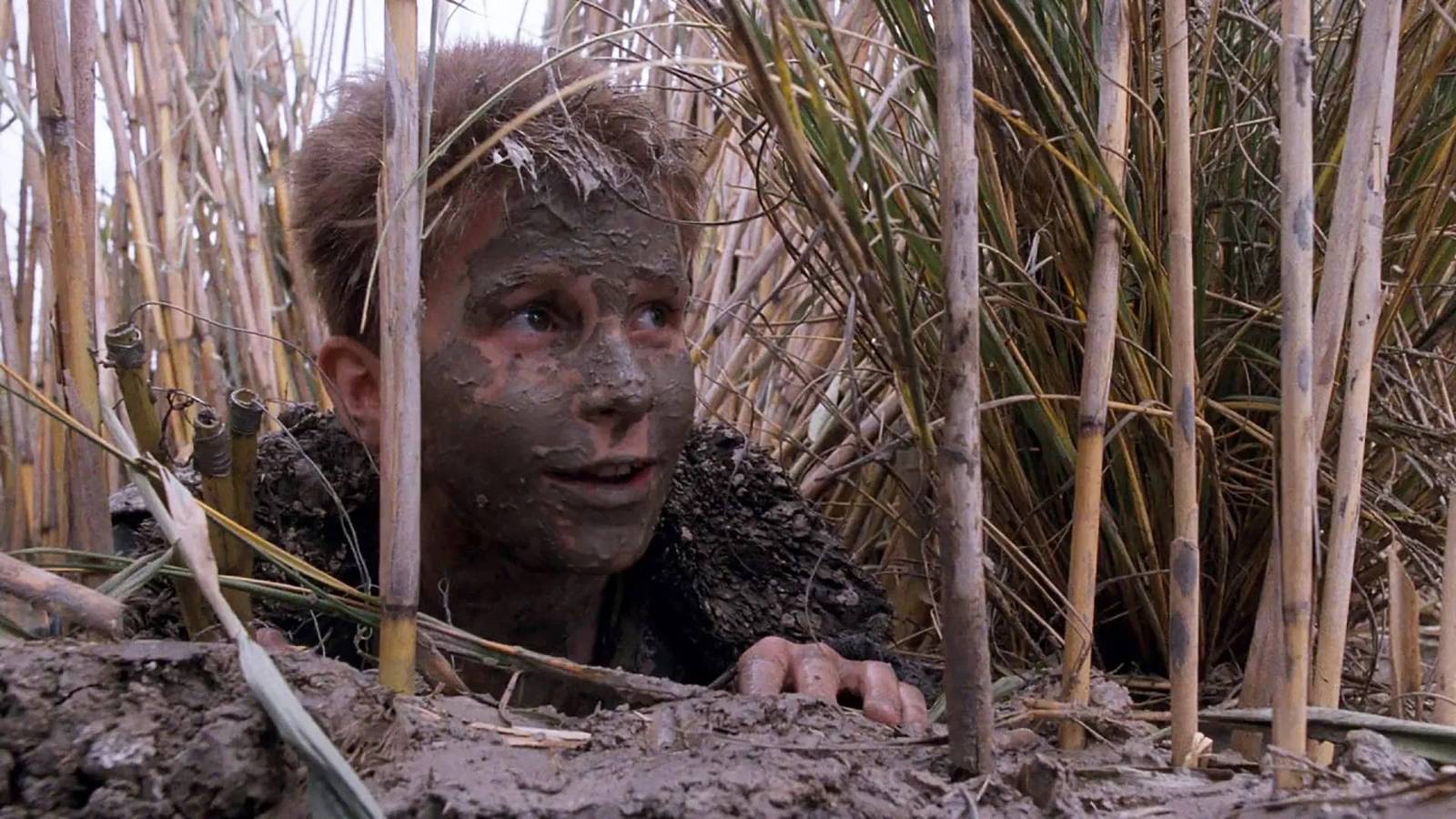
Come and See is one of the most brutal war movies of all time, depicting the often overlooked crimes committed against civilians in Belarus during WWII. The movie depicts a young boy forced to fight against his will, with the story being a visceral anti-war statement focusing on disturbingly realistic violence.
The young protagonist endures his family’s deaths and even attempts to take his own life because of the guilt it causes him. The movie offers even bleaker elements, as Come and See contains almost every imaginable war atrocity, and there is no heroic combat to be found. The tale is an oppressive viewing experience that wants audiences to feel the off-putting horrors of war. Come and See is the type of movie that is uncomfortable to watch by design.
‘The Zone of Interest’ (2023)

The Zone of Interest is another war movie that focuses on a concentration camp, specifically Auschwitz. However, it isn’t brutal in the same visceral way as the other films on the list. Instead, it forces audiences to watch the mundane lives of the Nazi commandant’s family, who live next to the notorious camp. While that doesn’t initially sound horrific, their banal existence juxtaposed against the camp makes for a unique examination of evil.
The Zone of Interest depicts an almost idyllic family life playing out with the horrors of the Holocaust occurring just on the other side of their backyard wall. While the family is going about their day, they often hear gunshots and screams, paying no attention as they simply live. There is also ash from the crematorium seen around the family’s property, showing the brutal camp practices infecting their lives, yet it never truly gives the central characters pause.
‘Inglourious Basterds’ (2009)

Quentin Tarantino’s Inglourious Basterds has plenty of brutal violence throughout. Yet, it’s not the typical war movie that is focused on combat. There are shootouts, terrifying interrogations, and raging fires, but the movie isn’t concerned with battlefield antics. Instead, it delves into tense assassination plans rife with Tarantino’s notable, lengthy dialogue scenes.
The violence in Inglourious Basterds tends to be purposefully excessive, often venturing into sadistic when it comes to Hans Landa or even Brad Pitt’s Lt. Aldo Raine. The film presents a revisionist history that plays fast and loose with certain facts. Still, it proves to be a relentless exercise in brutality off the battlefield, offering unique characters and pacing for a war movie.
‘Civil War’ (2024)

While the title implies a focus on combat, Civil War is a conscientious objector in the genre. The story focuses on photojournalists documenting a new war that has broken out in the United States, as the characters travel through several states, giving audiences a glimpse of soldiers, citizens trying to get by, and lawlessness gripping once-safe locations.
Civil War delivers an unflinching look at a divided country that feels all too timely, finding tension in human dynamics rather than taking sides. In fact, the plot tends to avoid defining many aspects of the conflict, keeping the movie focused on the horror befalling the country rather than forcing viewers to take a side in the fictional war. The movie thrives on random chaos and encounters, with much of the violence feeling nihilistic rather than meant to entertain.
‘Grave of the Fireflies’ (1988)

Grave of the Fireflies is one of the most unrelentingly sad, bleak war stories of all time. Often cited as an anti-war masterpiece, the animated film juxtaposes the beauty of nature against the harsh realities of war and death. Rather than focusing on combat, the movie is about the human cost that often goes unnoticed.
The story focuses on two siblings struggling to survive during World War II in Japan, and, in no uncertain terms, the audience watches them suffer. Grave of the Fireflies is about the slow, agonizing journey the two endure, providing little comfort to the viewers as they see the siblings abandoned by relatives and left to starve, with life becoming a daily struggle as war erodes empathy among those merely surviving.
‘The Deer Hunter’ (1978)

The Deer Hunter explores traumatic events experienced by soldiers during battle, with a focus on PTSD long before anyone had a proper understanding of what it truly meant. The “Russian roulette” scenes are notorious, as they are a tense commentary on the senseless violence of the Vietnam War while being brutal in their own right.
The movie focuses on the visceral, emotional toll that war takes, showing the trouble some soldiers have reintegrating into society following combat. The Deer Hunter‘s violence is only made more intense when juxtaposed against the blue-collar community where the soldiers come from, forcing the audience to take the same jarring journey from small town to bloody battle. The film is emotionally devastating, as many on the list are, and it delivers the horrors of war without focusing on combat.
‘The Pianist’ (2002)

The Pianist is a tale of Holocaust survival that shows one man’s journey from an idyllic family life through the horrors of WWII. The film features graphic violence and takes an unflinching look at a grim part of world history. There is senseless murder, families torn apart, and lives destroyed over horrific ideals that brought nothing but pain.
The Pianist tells a tragic story of starvation and survival. There are human moments, as beyond the constant sadness on display, there is still empathy in unlikely sources. In the vein of movies like Schindler’s List, The Pianist tells a harrowing true story that isn’t easy to sit through, yet captures a terrifying historical account that cannot be ignored, despite how bleak it is.
‘Apocalypse Now’ (1979)

Apocalypse Now has plenty of action scenes, as audiences readily recall the iconic helicopter charge and the napalm attacks. However, it spends far more time being a brutal look at the moral decay and loss of humanity brought about by war. Apocalypse Now isn’t so much about fighting a war as it is about fighting the madness it can bring about.
There is brutal violence on display, but nothing is glorified, and those in the film who thrive on it aren’t characters to be idolized. The combat audiences see is callous, painting war as an atrocity upon the country and the civilians. Apocalypse Now is never one to shy away from graphic imagery, but it’s also not the typical war movie, as audiences are treated to deep introspection more often than combat.
Source link
