

Since the dawn of cinema, going as far back as the silent era, science fiction has stood tall as one of the medium’s most defining genres. It holds a unique ability to combine thoughtful drama and rich thematic intrigue with the impact of visual storytelling that often illustrates cinematography and set design at its boldest and most brilliant. From early classics like Metropolis to medium-defining, mid-century triumphs like 2001: A Space Odyssey, and even to modern marvels like Interstellar, the genre’s grandest highlights endure as timeless masterpieces of cinema.
However, not every great sci-fi film has been so fortunate to receive the commendation and critical acclaim it deserves. Indeed, the history of the genre is full of outstanding movies that have been forgotten despite their innovation, artistry, and timeless stories. Ranging from profound political parables of the ’60s and ’70s to soulful and visually sublime sleeper hits of the 21st century, these sci-fi stunners have long been overlooked, even though they are perfect movies for today’s world.
‘Silent Running’ (1972)
Douglas Trumbull is one of the most underappreciated names in the history of sci-fi cinema. A special effects genius, his insights and expertise proved instrumental in such sci-fi classics as 2001: A Space Odyssey, Blade Runner, Close Encounters of the Third Kind, and Star Trek: The Motion Picture. While his directorial career was short-lived, it did produce a stunning debut, 1972’s contemplative gem, Silent Running. It transpires in a future where all flora on Earth has gone extinct and follows an ecologist (Bruce Dern) safeguarding a greenhouse aboard a space station from his superiors. who have ordered him to destroy the plant life to make room for more commercial cargo.
In many ways, Silent Running is far more relevant today than it was in 1972. The film’s story of environmental catastrophe and corporate apathy, enduring vision of a lived-in future setting, and brilliant practical effects have led to it aging exceptionally well over the past 54 years. Poignant, pointed, and loaded with moments of quiet pathos and prescient angst, Silent Running is an eerily prophetic dystopian sci-fi that functions superbly as both a high-stakes eco-parable and a compelling, character-driven drama.
‘The Quiet Earth’ (1985)

A hidden gem of science fiction at its most enigmatic, The Quiet Earth is a cerebral and atmospherically intense New Zealand film that plays with its post-apocalyptic landscape in ways that are fascinating, frightening, and uniquely unnerving. Doctor Zac Hobson (Bruno Lawrence) is a scientist working on a wireless global energy grid who awakens to find humanity has vanished. Initially brought to the brink of suicide by the isolation, Hobson soon finds two other survivors, and with them begins to investigate why they were left behind and how to prevent a second event from occurring.
While its premise isn’t exactly original in sci-fi, its approach is. It eschews elements of interpersonal conflict and high-stakes action in favor of an atmospheric air of realism that exudes a striking confidence. The use of silence and its meditation on ideas of scientific ethics, personal accountability, and the value of human connection make The Quiet Earth an authentic and eerie sci-fi chiller. Its disconcerting imagery of deserted city streets and its confounding finale ensure it lives long in the minds of those who have seen it.
‘Gattaca’ (1997)

Developing a cult following over the years, Gattaca soars as a sharply written and beautifully performed sci-fi gem that, despite its all-star cast and incredible storytelling, has been overlooked. Set in a future where parents can alter the genetics of their unborn children, and where class and careers are determined by DNA, it follows Vincent (Ethan Hawke), a natural-born man with a heart condition, in his efforts to achieve his impossible dream of becoming an astronaut. Working with a disabled athlete who allows him to use his identity, Vincent embraces a rigid routine to secure employment at the Gattaca space program.
Intelligent and provocative, Gattaca revels in the contemplative might of the genre to pose questions related to ethics in science and ideas of nature and augmentation while still delivering an absorbing thriller. Bolstered by stunning cinematography, immaculate set design, and its masterful ability to present a bleak and sterile world that still holds a sense of lived-in authenticity, Gattaca is an enduring gem of ’90s sci-fi that has never found the widespread acclaim it so thoroughly deserves.
‘Equilibrium’ (2002)

Somewhat schlocky despite some impressively stylized action sequences, Equilibrium was largely dismissed by critics as a bombastic rip-off of George Orwell’s 1984 that substitutes the novel’s suppression of intelligence and free thought for a restriction of emotions. The film’s box office failure certainly didn’t help its longevity either, but Equilibrium has found relevance in the modern world, particularly with society’s current anxiety surrounding artistic pursuits in an era of A.I. and the impact today’s governments could have on such endeavors.
These qualities may have seemed juvenile and far-fetched in 2002, but they have a renewed urgency in 2026. Equilibrium follows government agent John Preston (Christian Bale) as he finds his conviction in the laws he enforces wavers. Even its silly eccentricities have more of a place in today’s world, with the excesses and quirks of its action sequences backed by practical effects that make the movie feel fun and inspired. To call it a masterpiece is perhaps a stretch, but Equilibrium’s flaws are more aligned with modern sensitivities, as is its thematic journey and dystopian vision.
‘On the Silver Globe’ (1988)
The mere existence of On the Silver Globe in today’s world is a triumph of artistic passion and defiance against authoritarian regimes. While it was released in the late 1980s, the Polish film first entered production in 1977, only for its sets to be destroyed and production halted by the Polish authorities. While director Andrzej Żuławski had to include narration to fill in gaps in the story, the movie miraculously stands as a masterclass in philosophically loaded sci-fi drama that exudes documentary-esque intensity and an unrestrained visual style.
It follows a group of explorers who set off into the cosmos to start a new civilization on a distant planet, leaving behind a society of unguided and impressionable youths. When an astronaut travels to the world years later, he is revered by the primitive locals as a messianic figure. One of the most unique viewing experiences the genre has ever seen, On the Silver Globe is a gripping and cynical interrogation of religious values, an eerily atmospheric journey of faith, naivety, and manipulation, and a mesmerizing yet confronting visual display of humanity.
‘Moon’ (2009)

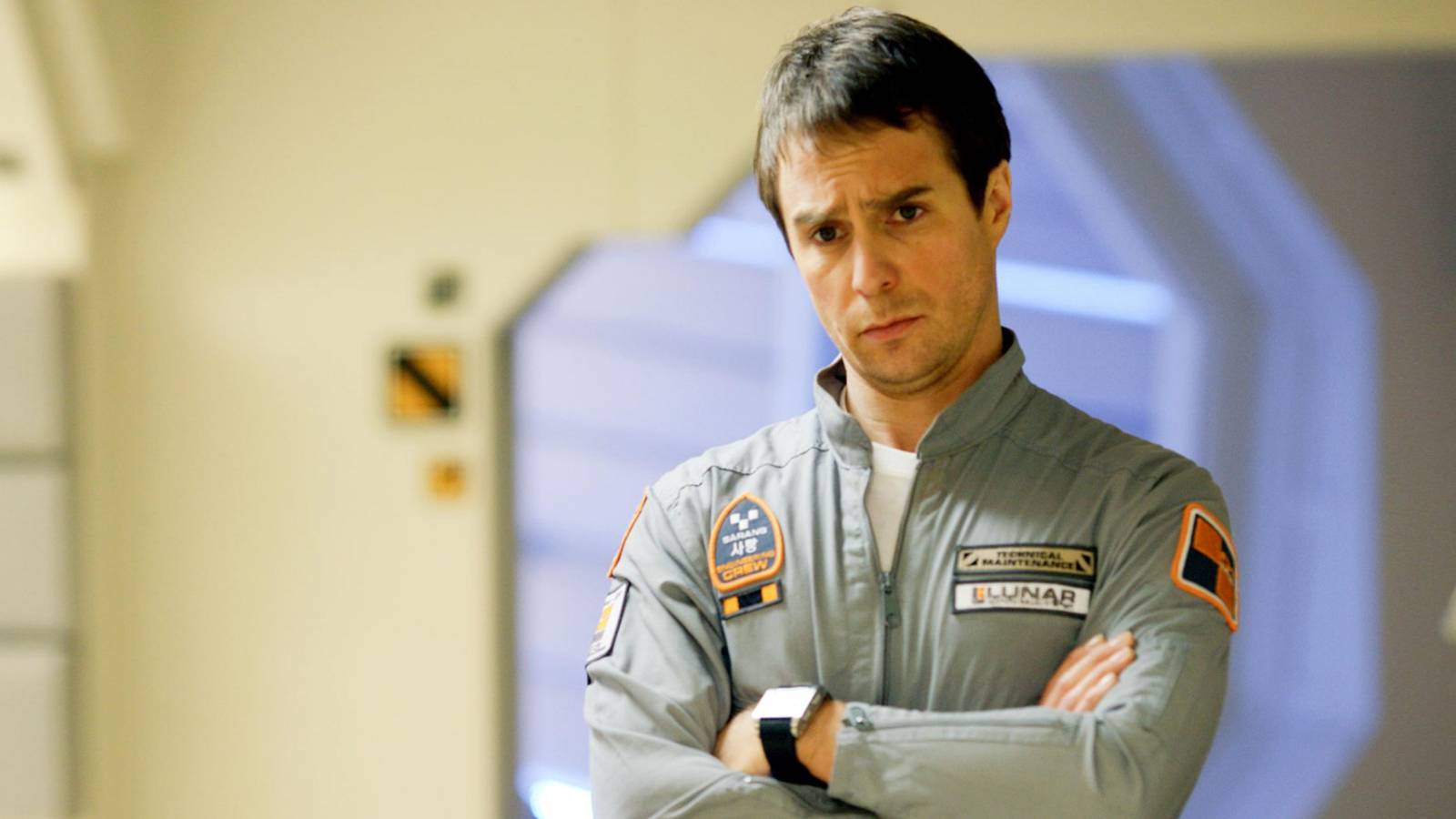
By far the most recent movie to appear on this list, Moon may not be forgotten so much as it was seldom seen in the first place. The shame is that it is truly a modern masterpiece of sci-fi cinema that marks the incredibly bold and confident directorial debut of Duncan Jones. Sam Rockwell’s performance is instrumental, with the actor starring as Sam Bell, the lone operator of a station on the dark side of the moon who, nearing the end of his three-year tenure, makes a shocking discovery that jeopardizes his chances of returning home.
Emotionally stirring, philosophically intriguing, and realized with stunning miniatures and set design, Moon stretches every cent of its modest budget to produce a triumph of sci-fi drama. It revels in its meditations on human nature and thrives on the back of the sense of poignancy and pathos embedded in Rockwell’s performance. One of the most underrated movies in the genre’s history, Moon remains every bit as captivating and devastating today as it was upon release, and it deserves to be heralded as such.
‘Strange Days’ (1995)

Strange Days was truly ahead of its time with the issues it dissects and explores. Released in 1995, it follows an ex-cop who makes money as a black-market dealer of people’s recorded memories that can be watched through a SQUID headset device. When Lenny (Ralph Fiennes) finds a disc containing the murder of a political activist, he finds himself embroiled in a conspiracy of corrupt cops and political agendas.
Contemporary reviews praised its story and acting but lamented it for not making the most of its unique vision of the future. That criticism has eroded over time, with Strange Days’s interest in ideas of police brutality, the exploitation of humanity for voyeuristic entertainment, and the dismantling of morality concerning new technology becoming pressing topics in today’s world. The fact that such a prescient and powerful thematic journey is brought to vivid life by an all-star cast and Kathryn Bigelow’s enthralling, fast-paced direction makes it truly mystifying how Strange Days has been so forgotten when it should be heralded as a defining classic of 90s sci-fi.
‘The Day the Earth Caught Fire’ (1961)
.jpg?q=49&fit=crop&w=500&dpr=2)
A low-budget gem of sci-fi suspense that leans on taut and intelligent writing rather than spectacle or special effects, The Day the Earth Caught Fire is a criminally underrated movie that holds even more thematic might today than it did in 1961. It follows two veteran British reporters who discover that simultaneous nuclear bomb tests conducted by America and the Soviet Union have disrupted Earth’s orbit. As cities are ravaged by natural disasters and civilization begins to fall into sickness and disorder, humanity makes a desperate attempt to restore balance to the world.
Beneath its frenetic story of survival and calamity, The Day the Earth Caught Fire holds commanding ideas about the toll that international conflicts and war machines have on the environment and, by extension, the devastation mankind can bring upon itself. Harrowing, eerie, and bleakly timeless, the forgotten sci-fi disaster flick achieves an enduring quality through sharp dialogue and grounded suspense, a reluctance to rely on big set pieces, and a prophetic, piercing exploration of its core themes.
‘Brazil’ (1985)

With its richly impressionable retro-futuristic aesthetic, piercing exploration of themes of totalitarianism, bureaucratic soullessness, and individualism in a world of enforced conformity, Brazil stands as a true cult classic of sci-fi cinema. While its ever-growing fanbase may challenge claims it has been forgotten, it is inarguable that it is far less renowned than it deserves to be, with Terry Gilliam’s profound and almost playful aesthetic working in tandem with skewering satire and its prophetic sharpness to create a timeless story of workplace culture that is even more pressing today than it was in 1985.
It follows Sam Lowry (Jonathan Pryce), a ministerial clerk who spots the woman he dreams of while out tending to an administrative issue. As he puts aside his work to pursue the love of his life, he finds himself branded an enemy of the state. Orwellian in nature, yet spellbinding with its colorful and vibrant spectacle, Brazil walks a fine line between dystopian dread and dark comedy. It is a damning illustration of how humanity suffers under authoritarianism, and yet it still manages to be hopeful, resulting in a sci-fi masterpiece laced with pathos and creativity.
‘Threads’ (1984)

Calling Threads a sci-fi story may be stretching the parameters of the genre’s tropes. Still, it can’t be denied that it is (thankfully) still fiction and leans heavily on scientific detail concerning the aftermath of radiation poisoning to deliver the single most confronting depiction of nuclear war ever put to screen. Director Mick Jackson and writer Barry Hines prepared for the movie with an exhaustive consultation process with scientific, medical, and strategic experts to ensure absolute authenticity in the story, which analyzes the build-up to and aftermath of a nuclear attack on Sheffield during the Cold War.
As a made-for-television film financed by Britain and Australia, Threads never had the platform to become a true cultural sensation. Yet, this deeply disturbing cautionary tale demands to be seen by as many people as possible, especially in today’s world of international conflict and heightened hostilities. Its documentary-style execution, compounded by matter-of-fact and scientific explanations about what would happen at each stage of a nuclear event from the initial bombing to the ramifications years after the strike, is as disturbing to watch as it is essential, and it is a travesty that it has been so forgotten when it is so painfully urgent.
Source link
