

It’s now officially 2026, which means, among other things, that the year for cinephiles will be filled with retrospectives of films hitting their respective decade anniversaries. That’s good news for anyone wanting to revisit or watch for the first time the best films made 20 years ago, because 2006 was an absolute banger of a year at the movies.
There were iconic films from iconic filmmakers, including bold new originals as well as a few excellent continuations of classic franchises. Whether it’s popcorn entertainment or prestige drama or something in between, 2006 had something for everyone. There are simply too many great films from the year to accurately limit them to an objectively ranked list, and each viewer will have personal favorites that might not get a mention here. Still, it’s hard to argue that these ten movies turning 20 in 2026 aren’t some of the greatest.
10
‘Borat! Cultural Learnings of America for Make Benefit Glorious Nation of Kazakhstan’
The 2000s were a solid decade for comedy. There was the rise of the Frat Pack comedies, such as Old School, and their more cultured cousins, like the Christopher Guest mockumentary Best in Show. 2006 itself had representation of both with Talladega Nights and For Your Consideration, in addition to indie darling and Oscar winner Little Miss Sunshine. Alas, if there’s one comedy that took hold of the zeitgeist that year more than any other, it’s Borat.
A feature-length spinoff of the character that Sacha Baron Cohen originated on his television series Da Ali G Show, Borat followed the less successful film featuring that show’s titular character, which failed to make much of a cultural impact. Clearly, it did teach Cohen that his offending characters worked better when unleashed on the unsuspecting public than in some fictional situation, as his Kazakh character comes to America and skewers the culture for all its worth. Borat is an incendiary send-up of bigotry and xenophobia that had audiences laughing in spite of themselves in 2006.
9
‘The Departed’

The Departed, the unlikely Best Picture winner of 2006 that was Martin Scorsese‘s hailed return to the crime genre, is also the only film to ever win the legendary director an Academy Award. Whether the film is most deserving of that honor in comparison to his other undisputed masterpieces is up for debate, but there’s no denying that Scorsese, in his fifth decade behind the camera, could still deliver one hell of an entertaining drama.
Updating the Hong Kong crime thriller Infernal Affairs to Boston, Scorsese reteams with Leonardo DiCaprio and brings Matt Damon into the fold to play an undercover agent and a criminal, respectively, each infiltrating the other side of the law. It’s bold, vibrant and violent, with a supporting cast of colorful characters, including Mark Wahlberg, in a role that takes full advantage of his Boston roots, and an absolutely unhinged Jack Nicholson who leaves his teeth marks on the scenery around him. Even if it isn’t Scorsese’s best film ever, The Departed still leaves competitors sleeping with the fishes.
8
‘United 93’

The events of 9/11 were still very present and raw in the minds of Americans in 2006, which made the idea of Hollywood exploiting them for entertainment a questionable endeavor at best. Both of the major studio films released on the subject that year, Oliver Stone‘s World Trade Center and Paul Greengrass‘ United 93, avoided doing a disservice to the lives they depicted, but it’s the latter that truly had a lasting emotional impact. It’s a queasy thriller recounting the events of that fateful day through the experiences of the passengers on board the titular flight who managed to fight back against their terrorist hijackers and prevent them from reaching their intended target. United 93 has an immediacy in its presentation that makes it a gut-wrenching viewing experience.
Using the same cinema verité style that he brought to the Jason Bourne movies, Greengrass doesn’t leave any room for overblown Hollywood sensationalizing. He gets incredible work out of a committed cast of mostly unknown actors, including several real-life figures playing themselves, and the attention to detail makes the film all the more affecting. 9/11 had a tremendous impact on the culture of the 2000s, including the films, but United 93 is the most immediate of those released in the era that gives an unvarnished depiction of the tragedy and heroism that defined that day of infamy.
7
‘Letters from Iwo Jima’

Clint Eastwood‘s war epic Letters from Iwo Jima, produced as a counterpart to Flags of Our Fathers, details the Japanese side of the Battle of Iwo Jima, offering a sensitive and nuanced portrayal of the opposite side of war not often offered by American cinema. Filmed almost entirely in Japanese, the film neither sanitizes nor demonizes its characters, instead giving focus to the determination of the soldiers and the universally destructive nature of war.
Starring an all-Japanese cast, with the exception of a few minor characters, the film is led by Ken Watanabe as General Tadamichi Kuribayashi, who is faced with leading his men against insurmountable odds, where the choices of survival versus honorable death become increasingly at odds. It’s the uncommon American-made war film made with empathy towards the opposition, and is both the most underrated masterpiece of the genre and Eastwood’s career to come out of the 21st century.
6
‘The Host’

Bong Joon Ho may now have international recognition thanks to the deserved success of his modern masterpieces Snowpiercer and Parasite, but back in 2006, most Western audiences weren’t as acquainted with the South Korean filmmaker. A lot of that changed with the release of his bonkers kaiju film The Host, which showed all the director’s skill of mashing up genres and command of tone with a monster movie meets family drama that made most American horror at the time look dull as dishwater in comparison.
The Host features a gigantic amphibious creature, the result of chemicals dumped into the Han River, preying on the unsuspecting residents of Seoul. That includes a snack bar proprietor and patriarch whose family must band together and journey into the city’s sewers after their youngest member is snatched up by the beast. The Host was a cultural phenomenon, both in South Korea, where it became one of the country’s highest-grossing films, and the U.S., where it introduced Bong to most American audiences and critics as a creative force to be reckoned with.
5
‘Casino Royale’

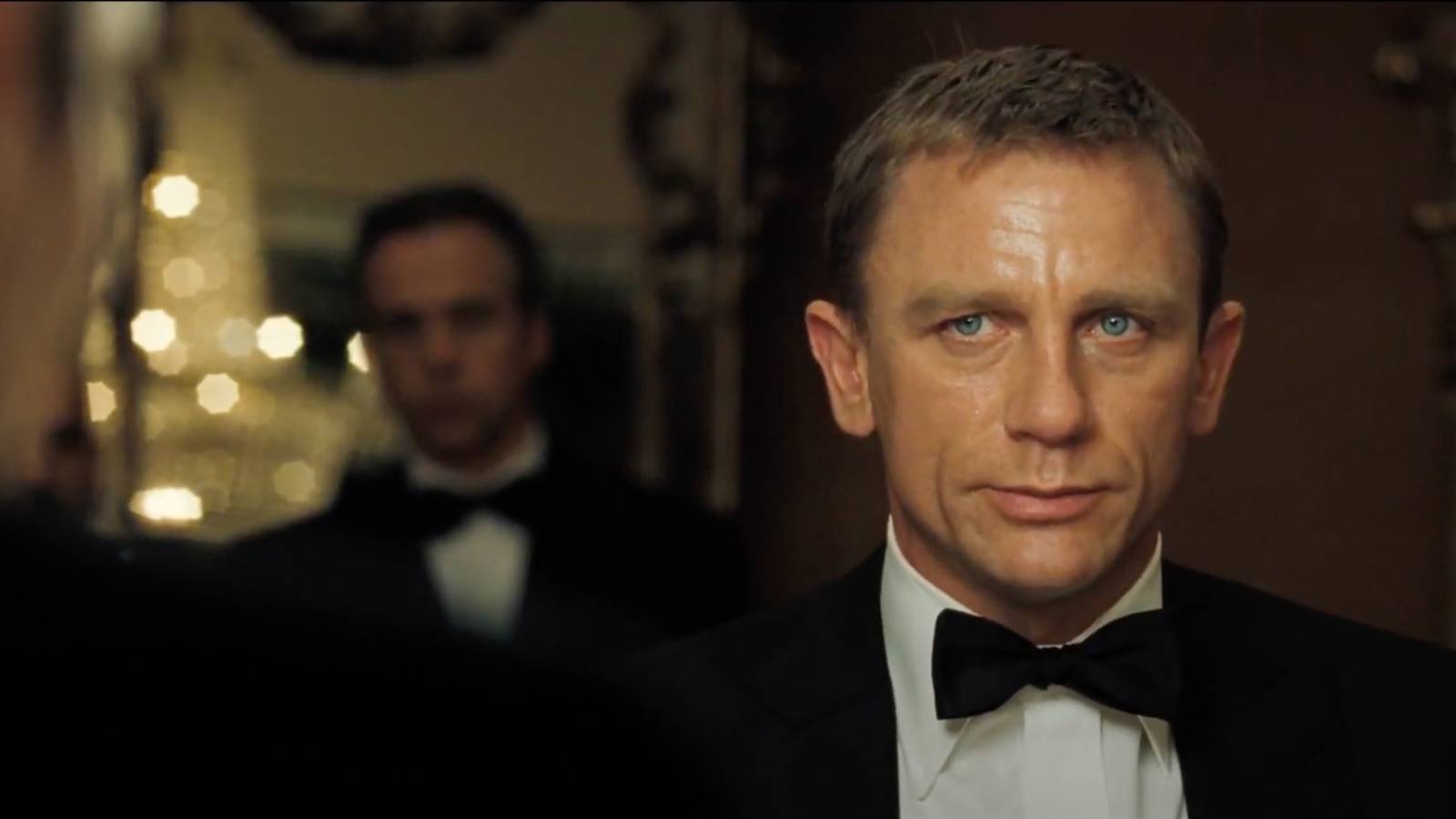
Reboot was still a relatively new term in Hollywood in 2006. Christopher Nolan had only one year earlier brought Batman back to gritty life, and the studios weren’t yet beating the dead horse that was all of their flagship franchises with endless repeated resets. Like the Caped Crusader, James Bond was primed for a franchise refresh after the abysmal Die Another Day had left the character adrift in a CGI tsunami. Casino Royale took 007 back to his roots, adopting the original spy novel by Ian Fleming to first feature the character as a younger agent on his first mission after earning his 00 status, and it’s the best of the Bond franchise.
Daniel Craig faced a ton of backlash back when he was first announced as the character, much of it directed at his blond hair, which just goes to show that toxic fans on the internet have always been there. The actor proved his worth in the role in spades, giving audiences a more ruthless Bond in line with Fleming’s novels. Moreover, Casino Royale turned out to be the best blockbuster of the year with slick, stylish action that proved audiences still had an appetite for Her Majesty’s Secret Service.
4
‘The Lives of Others’

Bond wasn’t the only representative of espionage on the big screen in 2006, with this small-scale Cold War thriller of surveillance offering a more character-driven approach to the genre over explosive escapism. Set in 1984 in East Germany, the film follows a Stasi agent assigned to spy on a playwright, an experience that draws him into his target’s life in surprisingly profound ways.
A quiet thriller in the vein of Francis Ford Coppola‘s The Conversation, The Lives of Others is a moral challenge of personal risk in resistance to government overreach in the name of national security. Even with its specific setting, its themes resonated globally as even Americans were beginning to reckon with the fallout of the Patriot Act and what moral compromises they were willing to accept in order to feel safe. It’s a smart, tense and thought-provoking thriller that doesn’t need car chases or gunfights to make pulses pound.
3
‘The Prestige’

Christopher Nolan’s excellent sci-fi period piece, The Prestige, was ever so slightly overlooked during the year of its release and in the director’s career in general for being sandwiched between his first two blockbuster Batman films. Since then, though, it’s only grown in stature as an effective and engaging mystery movie that showcases his knack for puzzle-box narrative and use of non-linear storytelling to maximum effect.
Hugh Jackman and Christian Bale utilize their star personas as dueling Victorian magicians, one a charismatic showman, the other a technically precise performer. Their growing feud escalates and expands the narrative into unexpected territory beyond genre borders, and the film’s structure feels like a magic trick in and of itself. Nolan uses clever misdirects even while giving the audience all the context and clues they need before making a magnificent reveal in the film’s final act.
2
‘Children of Men’
Alfonso Cuarón‘s gritty, visually visceral adaptation of P.D. James‘ dystopic sci-fi novel Children of Men combines some of the most intense action sequences of the 21st century with an innately human drama. Set in a future world where women have become infertile, Clive Owen plays a former revolutionary turned burnt-out cynic who gets called back into action to help a pregnant refugee escape the totalitarian government of the United Kingdom.
Children of Men is a modern action film whose images drew comparisons to the Iraq War at the time; even now, it feels comparable to the current administration’s crackdown on immigration, with Cuarón and cinematographer Emmanuel Lubezki drawing the viewer in with a documentary-like visual approach. The extended action sequences, filmed and edited to resemble single, extended shots, are still astounding, and the film offers a hopeful message amid its dire depiction of modern society on the brink of collapse.
1
‘Pan’s Labyrinth’

Amid the blockbusters, political thrillers and raunchy comedies, the best film of 2006 was a gorgeous fable from one of the greatest directors still working today, Guillermo del Toro. Having worked his way through the Hollywood system, alternating between more personal films and blockbusters, del Toro came back with his magnum opus in Pan’s Labyrinth. This dark fairytale is set in war-torn Francoist Spain, where a young girl seeks to escape from the violence of her fascist reality into a fantasy world with dangers all its own.
Beautifully combining practical and digital effects, Pan’s Labyrinth tells a spellbinding original story, pulling influence from folklore, mythology, and even religion. The director weaves a lyrical journey through his dark and twisted world that is the greatest distillation of him as a filmmaker, combining fantasy and reality in an epic allegory of faith and the violence of institutions. It’s del Toro’s masterpiece and, twenty years later, it still has the power to enchant.
Source link
