

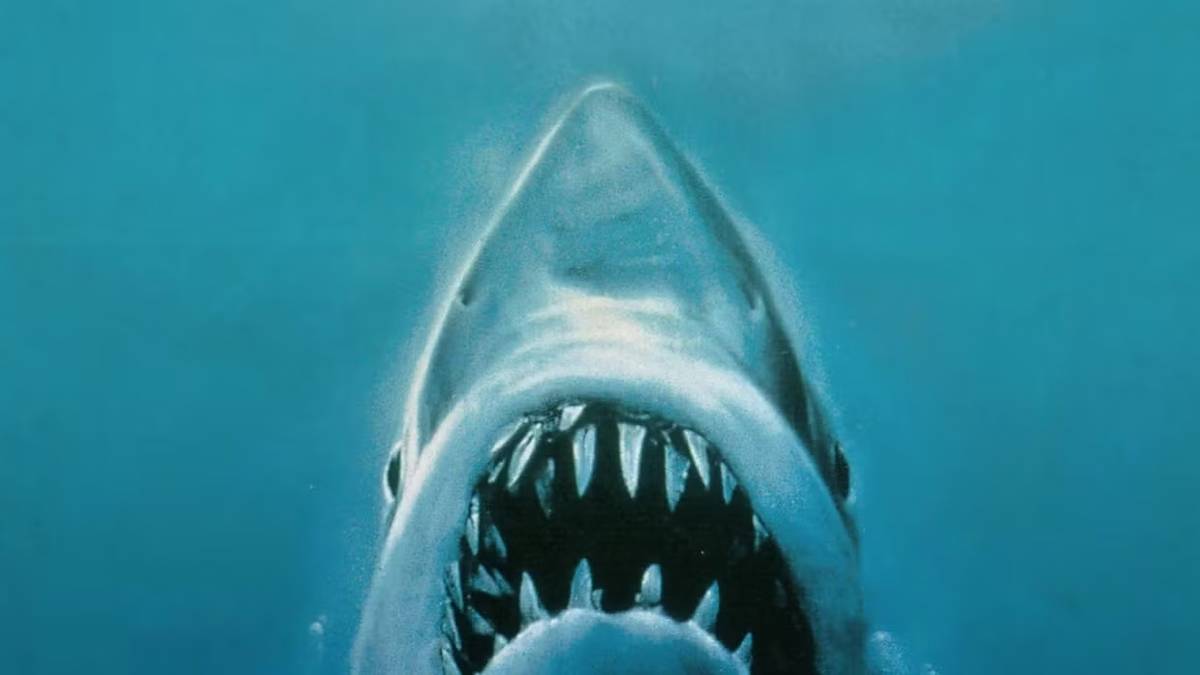
Steven Spielberg is widely celebrated as one of the most influential filmmakers in modern cinema, with a career spanning more than five decades. Known for his masterful storytelling, emotional depth, and innovative visual style, Spielberg has brought countless stories to life on the big screen. While many of his films are original creations, a significant portion of his most memorable work is adapted from literature, showcasing his talent for transforming written narratives into cinematic masterpieces.
From suspenseful thrillers to heartwarming adventures, Spielberg’s adaptations reveal the ways in which literature and film can complement each other. Adapting a book into a movie is no small feat. The process demands a delicate balance between staying faithful to the source material and reimagining it for a visual medium. Spielberg has consistently demonstrated a keen understanding of this balance, capturing the essence of characters, plot, and themes while enhancing the story with his unique style.
10
‘Bridge of Spies’ (2015)
Bridge of Spies is a historical drama set during the Cold War. It follows James B. Donovan (Tom Hanks), an American lawyer tasked with defending Rudolf Abel (Mark Rylance), a Soviet spy captured in the United States. Despite public hostility, Donovan ensures Abel receives a fair trial. Donovan is then recruited by the U.S. government to negotiate a tense prisoner exchange that involves returning Abel to his home country in exchange for American pilot Gary Powers (Austin Stowell).
Bridge of Spies stands out as one of Spielberg’s best movies based on a book because it perfectly combines his signature storytelling with a gripping historical narrative drawn from real events. Based on the book Stranger Than Fiction: The True Story of an American in Moscow, the movie translates a complex Cold War episode into a tense, character-driven drama. Spielberg uses the source material to craft a narrative that is as much about character as it is about history.
9
‘Ready Player One’ (2018)

Ready Player One is a sci-fi adventure set in a dystopian 2045 where much of humanity escapes their bleak reality by entering the virtual universe called the OASIS. The story follows Wade Watts (Tye Sheridan), a teenage “gunter”, who competes in a high-stakes contest left by the OASIS’s creator, James Halliday (Mark Rylance). To win, Wade must solve puzzles and challenges filled with 1980s pop culture references while facing a powerful corporation determined to take control of the OASIS for profit.
Ready Player One is one of Spielberg’s most visually thrilling and imaginative movies, showing how he can bring a modern book to life with his signature storytelling style. Based on Ernest Cline’s novel of the same name, the movie captures the spirit of the book while turning its complex virtual world, the OASIS, into a dazzling cinematic experience. Spielberg expertly balances nonstop action, humor, and pop culture nostalgia, creating a universe that appeals to both fans of the book and new audiences.
8
‘Munich’ (2005)

Munich is a tense historical thriller based on the aftermath of the 1972 Munich Olympics massacre, where 11 Israeli athletes were killed by a Palestinian terrorist group. The movie follows Mossad agent Avner Kaufman (Eric Bana), as he leads a covert team tasked with tracking down and assassinating those responsible for the attack. As the mission unfolds across Europe and the Middle East, Avner and his team face moral dilemmas, the psychological toll of killing, and the blurred lines between justice and revenge.
Munich stands out as one of Spielberg’s best movies based on a book because of how masterfully it adapts a complex real-life story from George Jonas’s book Vengeance. Spielberg translates the book’s investigative, morally gray narrative into a thrilling narrative, balancing historical events with the personal struggles of its characters. Drawing from the source material, Spielberg moves beyond a simple thriller and instead explores the human cost of political violence.
7
‘War of the Worlds’ (2005)

War of the Worlds, based on H.G. Wells’s classic novel, is a thrilling sci-fi disaster movie about a sudden alien invasion on Earth. The story follows Ray Ferrier (Tom Cruise), a dockworker and father in New Jersey, as he struggles to protect his children while society collapses around them. Advanced alien machines attack cities with devastating heat rays, causing mass panic and destruction. As Ray and his children flee across a devastated landscape, they witness humanity’s desperation, fear, and occasional cruelty.
War of the Worlds showcases Spielberg’s talent for turning a classic literary work into a modern, emotionally compelling experience. Spielberg uses the Ferrier family’s struggle to survive as an emotional anchor, allowing viewers to connect deeply with the human cost of the global catastrophe. By blending intense action sequences with suspenseful storytelling, he captures the terrifying scale of the alien threat while maintaining the tension and pacing that make the story gripping from start to finish.
6
‘AI: Artificial Intelligence’ (2001)

AI: Artificial Intelligence, inspired by Brian Aldiss’s short story Supertoys Last All Summer Long, is a sci-fi drama set in a future where highly advanced humanoid robots, called Mechas, coexist with humans. The film follows David (Haley Joel Osment), a childlike robot programmed to love, who is abandoned by his human family and embarks on a journey to become “real” so he can regain their love. Along the way, David encounters other Mechas, humans, and the harsh realities of a world that fears and exploits artificial life.
Although AI: Artificial Intelligence is based on a short story, it highlights Spielberg’s ability to expand on a literary narrative’s concept. By translating a short story into a rich, multi-layered cinematic experience, Spielberg elevates the source material while staying true to its emotional heart, showing his ability to balance thought-provoking science fiction with profound human drama. Ultimately, he balances the story’s emotional depth with philosophical questions that the short story only hints at.
5
‘The Lost World: Jurassic Park’ (1997)

The Lost World: Jurassic Park is an action-packed adventure about a team of scientists and explorers who return to Isla Sorna, a remote island where dinosaurs have been allowed to thrive in the wild. Dr. Ian Malcolm (Jeff Goldblum) leads a group trying to study the dinosaurs safely, while another team, motivated by greed, attempts to capture them for profit. Chaos ensues as the prehistoric creatures escape containment, threatening both the island and later urban areas.
The Lost World: Jurassic Park is one of Spielberg’s standout movies based on a book because it takes Michael Crichton’s thrilling sequel novel and transforms it into a suspenseful, visually spectacular adventure while exploring the consequences of human ambition. The movie captures the core of Crichton’s story, including commentary on the dangers of returning to a dinosaur-inhabited island. The adaptation balances excitement with moments of wonder, staying true to the novel’s spirit while making it accessible.
4
‘Empire of the Sun’ (1987)

Empire of the Sun tells the story of a young British boy named Jim “Jamie” Graham (Christian Bale) who is separated from his wealthy parents during the Japanese occupation of Shanghai in World War II. Alone and determined to survive, Jim navigates the harsh realities of war, eventually ending up in an internment camp where he witnesses the brutality, fear, and resilience of those around him. Throughout his journey, he clings to hope, imagination, and a sense of wonder to survive.
Steven Spielberg’s Empire of the Sun stands out as one of his best movies based on a book because it masterfully adapts J.G. Ballard’s semi-autobiographical novel into a sweeping, emotionally rich cinematic experience. Spielberg captures both the innocence and resilience of a child thrust into unimaginable circumstances. His direction brings Ballard’s vivid imagery to life for generations of viewers who may have had few opportunities to hear first-hand accounts of those who survived these horrifying events.
3
‘Jurassic Park’ (1993)

Jurassic Park follows a group of scientists, experts, and visitors who are invited to a revolutionary theme park on a remote island, where dinosaurs have been brought back to life through genetic engineering. Initially a showcase of scientific wonder, the park quickly descends into chaos when the dinosaurs break free due to human error and corporate negligence. The movie focuses on the struggle for survival as the humans navigate encounters with terrifying predators, including the iconic Tyrannosaurus rex and clever velociraptors.
Jurassic Park is a standout Spielberg movie based on a book because it transforms Crichton’s novel into a cinematic masterpiece that balances thrilling spectacle with thought-provoking ideas. The book provides a high-concept story about genetic engineering and the dangers of playing with nature, and Spielberg brings it to life with unprecedented visual effects, including lifelike dinosaurs that amazed audiences worldwide. He stays true to Crichton’s cautionary message while heightening the tension and wonder of the story.
2
‘Schindler’s List’ (1993)

Schindler’s List tells the true story of Oskar Schindler (Liam Neeson), a German businessman who saves over a thousand Jewish lives during the Holocaust by employing them in his factories. Set in Nazi-occupied Poland, the movie portrays the horrors of the Holocaust with unflinching realism. The story emphasizes the brutality faced by Jewish families during this time while highlighting the moral courage of those who resisted.
Schindler’s List is widely regarded as one of Spielberg’s greatest projects because it masterfully adapts Thomas Keneally’s book Schindler’s Ark into a deeply moving experience. The novel provides a meticulously researched account of Schindler’s extraordinary efforts to save Jewish lives during the Holocaust, and Spielberg translates that careful detail into an authentic story. By preserving the factual integrity of the book while using his cinematic skills, Spielberg immerses viewers in the human realities of the Holocaust.
1
‘Jaws’ (1975)

Jaws introduces a small seaside town terrorized by a great white shark that begins attacking swimmers. When the deadly predator strikes, local police chief Martin Brody (Roy Scheider) teams up with a marine biologist and a grizzled shark hunter to track and kill the shark before it can cause more destruction. The movie builds tension through masterful pacing, ominous music, and carefully framed shots that make the unseen shark more terrifying than anything on screen.
Arguably, one of Spielberg’s greatest achievements is adapting Jaws into something unforgettable, given its source material. Peter Benchley’s 1974 novel is nowhere near as compelling as the movie adaptation, and it’s a testament to Spielberg’s skills as a storyteller that he was able to see a vision within it. Ultimately, he takes a straightforward shark attack tale and turns it into a tense exploration of human psychology under threat.

Jaws
- Release Date
-
June 20, 1975
- Runtime
-
124 minutes

Source link
