

At its very best, war cinema achieves a stunning dichotomy, a precise and provocative balancing act between depicting the terrible scale of war, complete with the brutality of the battlefield and the trauma experienced by those combat touches, and the underlying resolve and spirit of humanity, which often presents itself at the darkest of times. Many of the movies that have most masterfully struck this marriage of despair and hope have been the ones exploring the First World War.
Ranging from harrowing immersions into the horror of trench warfare to the strained morality of regimental order in the military, and even to timeless triumphs illustrating the power of the human spirit even between adversaries, these WWI films are all-time classics of the genre and of cinema at large. Not only do they present essential stories of the brutality of war, but they also commemorate the millions of people who died throughout the conflict, serving as poignant and powerful reminders of the senseless waste of the scourge of war.
10
‘Westfront 1918’ (1930)
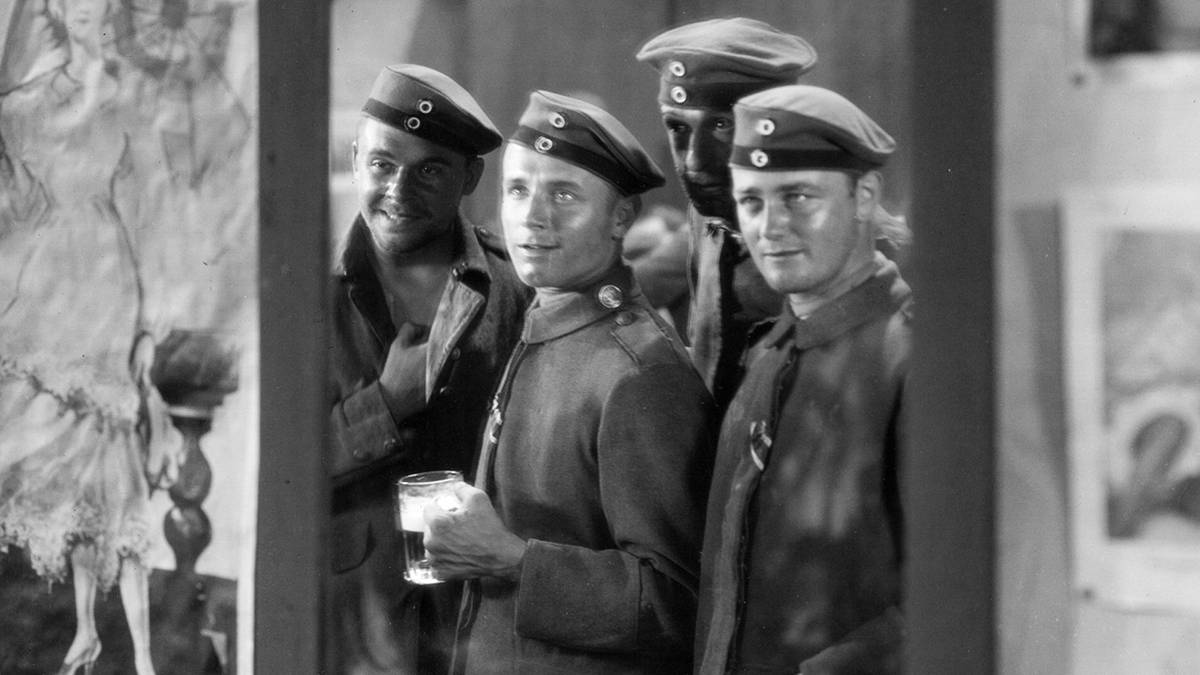
While it has been overshadowed by another noteworthy antiwar epic from 1930 (more on that later), Westfront 1918 still commands respect 96 years on as a grueling depiction of life on the battlefield and the devastating toll the war imparted on civilians throughout Europe. It follows a squad of German soldiers marching through France in the closing stages of the war. While they veer from one battlefield to another, one of the troops is granted leave to return home temporarily, where he is disillusioned by the psychological, moral, and economic toll the war has had on his wife and hometown.
Based on Ernst Johannsen’s novel “Four Infantrymen on the Western Front,” and directed with incredible conviction by G. W. Pabst, Westfront 1918 presents a bleak and brutal vision of war that tears shreds from any notions of heroism and glory in favor of the bitter truth of shattered young men. Even in its darkest moments, however, Waterfront 1918 still presents a sense of humanity, be it in the shared bond between the four focal characters or the somber, bittersweet final moments depicting a glimpse of shared humanity between a French soldier and a dying German.
9
‘King and Country’ (1964)

A gutting and sorrowful drama about the loss of humanity in times of war, King and Country explores the innocence of a soldier and the unforgiving morality and authority of the military in a provocative and piercing style. Private Arthur Hamp (Tom Courtenay) volunteered at the start of the war and is the last surviving member of his company. However, when he is picked up by military police while “going for a walk” in 1917, he is sent back to his unit to face court-martial for desertion. He is represented by Captain Hargreaves (Dirk Bogarde), whose initial dismissal of Hamp’s simple nature soon becomes an identifying sympathy.
Interestingly, the British war film doesn’t show any combat, but it does highlight the inhumanity of war through its story of persecution and the pursuit of morale, with Hamp often being reduced to a statistic or a symbol despite his extended service. Director Joseph Losey extracts outstanding performances from the cast, delivering a dismal and disheartening drama that dissects the ideology of the military with stirring conviction and debilitating emotional punch.
8
‘Wings’ (1927)
The recipient of the first-ever Best Picture Oscar award, Wings is a silent/synchronized sound war romance film that laid the groundwork for the genre going forward. Interestingly, despite many hits of war cinema finding their strength in the spectacle of war and themes of humanity amid such terror, Wings finds its greatest asset in the stirring, luminous screen presence of its stars, who, despite not being able to exchange audible dialogue, underline the poignant human drama of war with sublime skill.
Anchored in ideas of love and sour friendship, it follows two American fighter pilots from the same town who find their brotherhood coming undone as they both develop romantic feelings for Sylvia Lewis (Clara Bow). There is a melodramatic, character-focused intensity to Wings, which may not be in vogue for the war films of today, but it does effectively highlight the human cost of war and the relationships that such conflicts jeopardize. Marrying humanity and heart with innovative realization of aerial combat on screen, Wings thrives as a worthy tribute to the aces who died during WWI.
7
‘Gallipoli’ (1981)

Exemplifying mateship, courage, and wry humor amid the most trying of circumstances, Gallipoli doesn’t just stand as a phenomenal WWI drama, but also as one of the greatest movies Australia has ever produced. It follows two young sprinters from Western Australia who enlist in the Australian Army and are sent to the Gallipoli peninsula to partake in the Gallipoli Campaign, one of the deadliest and most devastating military operations in Australian history.
Bolstered by Peter Weir’s typically sharp direction and a brilliant approach of low-key, almost flippant personalities from the actors in their roles, Gallipoli excels at delving into the horror of war while maintaining a uniquely Australian attitude. This approach doesn’t prevent the film from being emotionally devastating, with its conclusive sequence, one of the most poignant and damning that war cinema has seen, a somber illustration of the decimation of war eclipsing even the camaraderie of friendship with callous indifference and penetrating violence.
6
‘All Quiet on the Western Front’ (2022)

Among the greatest war movies of recent decades, 2022’s All Quiet on the Western Front uses all the technical advancements of the modern day to recalibrate Erich Maria Remarque’s brilliant anti-war novel with a visually grueling spectacle of trench warfare. Following a group of German youths whose enthusiasm and excitement about serving their country is shattered when they get to the Western Front and are exposed to the true nature of combat. Additionally, the film also introduces a geopolitical subplot that covers Matthias Erzberger’s (Daniel Brühl) efforts to enter armistice negotiations with the Allies.
While it explores the same themes as the classic film from 1930, also based on Remarque’s novel, Edward Berger’s 2022 distinguishes itself with its focus on the visceral violence of war, with its astounding use of long-takes and its horrific depiction of France’s first use of tanks on the battlefield. Despite all the technological prowess, All Quiet on the Western Front maintains its focus on the waste and futility of war, making it a worthy adaptation of the source material and one of the best movies of the past decade of any genre.
5
‘1917’ (2019)

Another modern masterpiece of war cinema, 1917 is as astounding as it is arresting, with Sam Mendes’s one-take, real-time approach to the WWI story making for a phenomenal feat of filmmaking that immerses viewers in a nerve-rattling journey across the front lines courtesy of Roger Deakins‘ sublime cinematography and a litany of awe-inspiring sequences. It follows two young British soldiers tasked with delivering a message to another battalion, warning them that they are marching into an ambush.
Capturing the terrifying intensity and tight-knit brutality of trench warfare with a raw and visceral immediacy courtesy of its captivating technical mastery, 1917 flaunts a morbidly engrossing realism that makes every prolonged silence agonizing and every second of conflict a heart-racing spectacle of cold-blooded suspense. What is so incredible about the film is that, despite its one-shot illusion being a major feature, it never comes across as a gimmick. Instead, 1917 delivers a visceral viewing experience defined by grit and brilliant emotional stakes, exploring themes of survival, duty, and the fragility of hope in times of war.
4
‘Paths of Glory’ (1957)

Marking what is perhaps an underrated entry in Stanley Kubrick’s sublime filmography, Paths of Glory is a razor-sharp and surgical dissection of military accountability and the woefully immoral overlap between an officer’s record and political prestige. When a senseless and suicidal French assault on a valuable position held by Germany sees the troops refuse to follow orders, three soldiers are court-martialed, serving as symbols of justice as they face charges of cowardice. While Colonel Dax (Kirk Douglas) defends the men in court, he dreads that the sentence was set long before the trial began.
By reducing combat to a game played by those in authority, that those below them must carry out or face a firing squad, Paths of Glory relays a piercing anti-war message. It has a depressing and powerfully evocative judgment on idealism vs. nihilism in the military, presented through gorgeous cinematography, unforgettable performances, and a striking bluntness. Complemented by its emotionally gratifying yet bittersweet ending, Paths of Glory is a dismantling of the psychology of war, a damning indictment of the inhumanity it breeds, and a timeless commentary on authority in combat that is relentlessly grim yet profoundly humane.
3
‘All Quiet on the Western Front’ (1930)

Standing as the first truly timeless war drama in cinematic history, 1930’s All Quiet on the Western Front is lauded as being the defining anti-war film, a profound deconstruction of the heroism, adventure, and glory that laid bare the brutal truth of the First World War. Released just a year after Erich Maria Remarque’s book was published, the American view on the German perspective only highlighted the universality of the story of optimistic, wide-eyed boys being ground into vessels of trauma and terror by the soul-destroying brutality of war.
A true technical feat, director Lewis Milestone used innovative techniques with both cinematography and sound design to present the anti-war picture with a visceral might. This confronting violence was revolutionary to audiences in 1930 and still packs a punch almost a century on. Its impact was raw and immediate, but its legacy is just as impressive, with its tight thematic focus on the futility of war, the obliteration of innocence, and the senseless waste of life championed as being noble and heroic proving to be as bitterly timeless as its filmmaking prowess.
2
‘The Grand Illusion’ (1937)

2026 marks the 89th anniversary of The Grand Illusion, a fact that makes it incredible that the French WWI drama still stands as arguably the most philosophically engrossing and humane war picture ever made. Following French POWs in German captivity, it transpires that nobleman Captain de Boëldieu (Pierre Fresnay) and Lieutenant Maréchal (Jean Gabin)—an officer from a more modest background—are sent to a new camp following several escape attempts. There, de Boëldieu forms a peculiar bond with Captain von Rauffenstein (Erich von Stroheim), the commander of the camp who hails from German aristocracy.
While its anti-war sentiments are incredibly prevalent, what makes The Grand Illusion so unique and powerful is how it explores ideas of class, humanity, and social upheaval. It basks in the cultural change WWI would bring to many European countries through the ideological discussions of two adversaries from similar backgrounds. Rich in character development and realized with tragedy and heart, The Grand Illusion illuminates the futility of war through the similarities all men share, regardless of national borders and backgrounds, and the destructive call of duty that divides them.
1
‘Lawrence of Arabia’ (1962)

Regarded by many as being the greatest epic war movie of all time and a true icon of the medium at large, Lawrence of Arabia marries its astonishing true story basis with breathtaking visuals and a razor-sharp lead performance from Peter O’Toole to present a masterpiece of filmmaking. With an almighty runtime of 227 minutes, it explores the exploits of T. E. Lawrence through the First World War, during which time he united the warring Arab tribes to fight against the Ottoman Empire, while also trying to convince them to use the power of their union to secure a future free from British rule.
With its awe-inspiring scale and divine visual display, David Lean makes Lawrence’s pivotal feats an enrapturing experience, a spectacle of majestic grandeur that never fails to acknowledge the significance of the man’s achievements or address the scope and destruction of the war. Whereas many of the epic films of the mid-century era have aged poorly, Lawrence of Arabia is every bit as exceptional today as it was in 1962, its nuances concerning Lawrence holding more gravitas now than when it was released. It will forever be one of Hollywood’s most ravishing epics and is enshrined among the greatest war movies ever made.
Source link
