

Horror, more than any other genre, has the freedom to do what it wants. Horror can be slow, creeping dread, or it can be fast-paced, over-the-top mayhem. It can scare us by showing so little, or it can be in our face with extreme violence and gore. Sometimes, it seemingly doesn’t have a lot to say (that’s what Damien Leone offered with his Terrifier franchise), while other times the genre has a deeper message. For example, The Texas Chain Saw Massacre is about so much more than a cannibal in a leather mask.
Over the decades, these ten horror films stand out above all others for how ambitious their creators were. A combination of story, effects, inventiveness, and a chilling message has led to these classics staying with audiences long after the end credits roll. Today, these movies remain landmarks of the genre and true statements of how forward-thinking it can be.
10
‘Possession’ (1981)
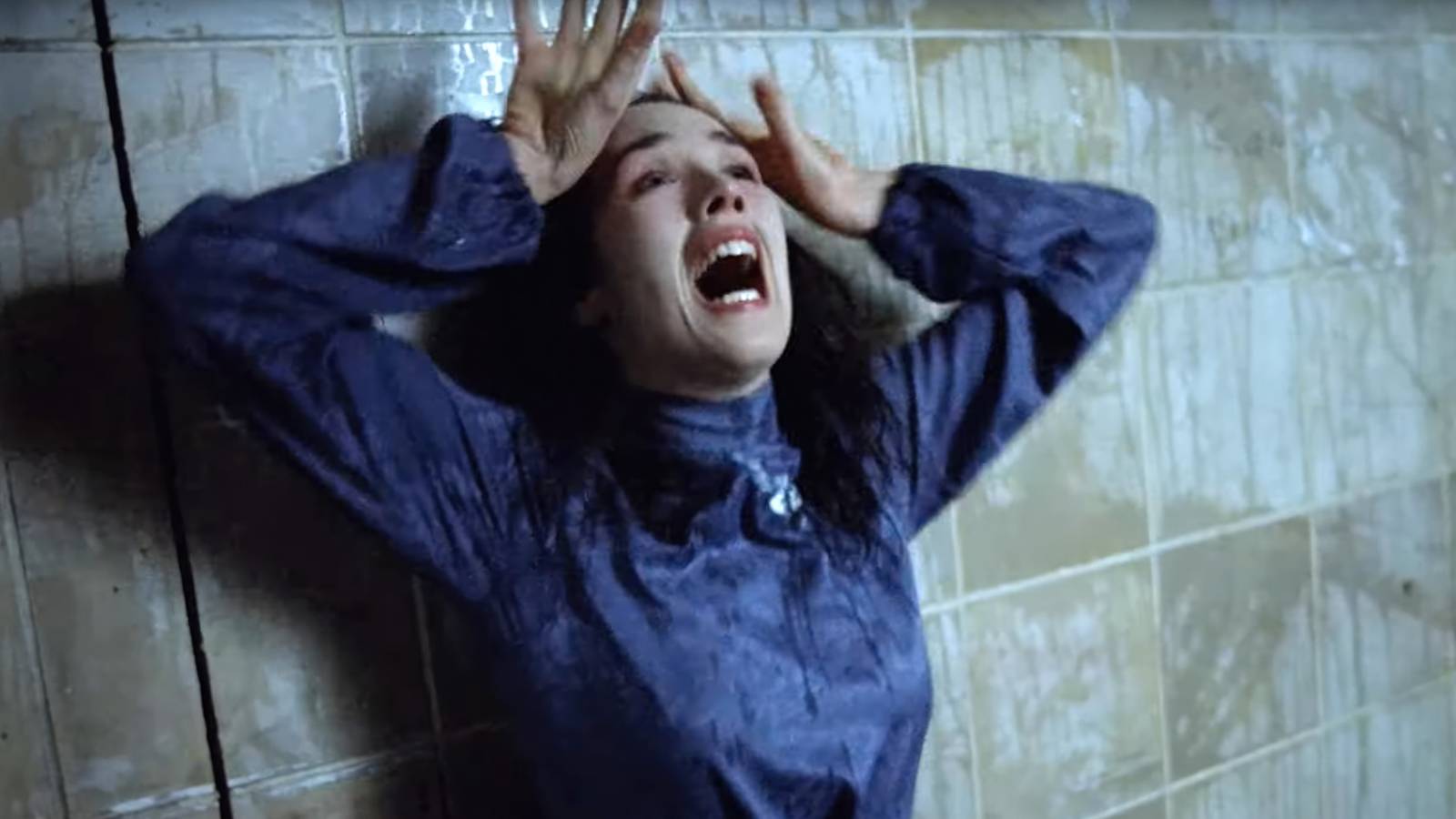
Andrzej Żuławski‘s Possession, set and filmed in Berlin, revolves around the crumbling marriage of a spy named Mark (Sam Neill) and his wife, Anna (Isabelle Adjani), who is seeing another man on the side. What first starts as an uncomfortable story about a breakup turns into something more as Anna begins to lose mind, while a terrifying presence hides in their home.
Possession brilliantly combines genres: it’s a drama, a psychological horror film, and a creature feature all in one. Adjani’s unglued performance is unsettling as a possessed woman unable to free herself from the grip of the monster. With themes of paranoia (it’s set in Cold War Germany for a reason) and repressed sexuality, this seminal ’80s horror is much deeper than your average possession flick.
9
‘Suspiria’ (1977)

Suspiria is one of several masterpieces by Italian director Dario Argento. In this one, American ballet dancer Suzy (Jessica Harper) moves to a dance school in West Germany (there it is again!). There’s only one major problem: it’s run by witches. It’s then a fight to the death, as Suzy struggles to escape their clutches and kill the coven before it’s too late.
Suspiria works by being so much more than that description. Instead, it’s a classic because of the art Argento created on screen. The slow-burn storytelling is unsettling, but it’s the visuals that stick out the most, with the director bathing his movie in deep colors, especially red. Suspiria is a beautiful, vibrant painting come to life. It pulls in your eyes before it makes them go wide with terror.
8
‘A Quiet Place’ (2018)
John Krasinski was already directing movies before A Quiet Place, but this blockbuster put him on the map as a genre visionary. The story takes place in the days after an alien invasion, where creatures with advanced hearing have made it so that the human survivors must live in silence. The Abbott Family knows this, and will only become even more aware of their plight due to a tragic death and the advancing pregnancy of one of their own (Emily Blunt).
Alien invasion movies have been done to death. A Quiet Place found an audience who’d already seen everything by creating terrifyingly original monsters and showcasing the plot with inventive techniques. Whereas so many films thrive on sound, A Quiet Place was chilling because of the lack of it. In an era of cellphones and rude talkers, Kransinski’s movie had theater goers silent and gripping their seats, afraid to make a peep.
7
’28 Days Later’ (2002)

28 Days Later, written by Alex Garland and directed by Danny Boyle, tells the story of Jim (Cillian Murphy), who goes into a coma in a normal world, only to wake up in a London that has been ravaged and emptied by an outbreak. With a rage virus accidentally let loose, infected humans have been transformed into zombie-like monsters, and now Jim and his new friends are on the run.
Just like alien invasion movies, the zombie outbreak subgenre has resulted in countless offerings. 28 Days Later, however, is not like the others. For one, these are not technically zombies, and long before World War Z and Train to Busan, they move fast, making them so much more of a threat. Boyle and company truly did empty London streets to film some scenes, with haunting visuals that felt all too real later, as shooting took place during 9/11. After COVID and the anger of our current era, the horror hits even closer to home.
6
‘Sinners’ (2025)

Ryan Coogler‘s Sinners stars Michael B. Jordan in dual roles as twin brothers opening a juke joint in 1930s Mississippi. They already have problems with the side eyes of white people around them, along with relationship drama… then the vampires show up, asking to be let into the club. When they get in, all hell breaks loose in a bloody fight between the living and the undead.
Sinners excels on multiple levels. The cinematography is rich and stunning. The music, which includes everything from Irish folk standards to the history of Black song, is immersive. Even without something more going on, Sinners is a scary vampire film. Throw in the harsh reality of racism and cultural appropriation, and you have a horror movie refusing to stay in the lines of expectations.
5
‘The Exorcist’ (1973)

William Friedkin‘s The Exorcist, based on a novel of the same name by William Peter Blatty, is set in Washington, D.C., where a young girl, Regan (Linda Blair), is possessed by a demon. Unable to find answers, her movie star mother, Chris (Ellen Burstyn), turns to a priest named Damien (Jason Miller) for help, before Father Merrin (Max von Sydow) is brought in to save the girl from the grasp of the devil.
Demon possession movies are common now, but in 1973, The Exorcist was something so different and horrific that it resulted in theatergoers passing out or walking out left and right. It pushed boundaries with its vulgarity and heresy (how did they get away with the crucifix scene?!), dropped an unforgettable score, and provided some outstanding practical effects with Regan’s transformation and von Sydow’s old man makeup. In a film about faith and the lack of it, no movie like it has ever been able to recreate what The Exorcist did.
4
‘Get Out’ (2017)

Jordan Peele was known for comedy until his directing debut, Get Out, which he also wrote. There are anxiety-filled comedic moments, but there’s nothing funny about the plot of a Black man (Daniel Kaluuya) who goes on a trip to meet the family of his white girlfriend (Allison Williams). What begins as an uncomfortable amount of acceptance turns into a narrative about control with a shocking twist.
Symbols and messages are scattered throughout Get Out. Instead of the racist tropes we’re used to, Peele examines the racism of seemingly progressive whites who still use Black people for their own gain. The usual themes of race, slavery, and cultural appropriation are there, yet Peele’s not content to expose those in the usual ways. He turns what had been done before on its head with a film that’s a must-watch for every white person who thinks they know better.
3
‘The Shining’ (1980)

The Shining is one of Stephen King‘s best and most famous novels, and in 1980, Stanley Kubrick delivered his adaptation. Jack Nicholson stars as Jack Torrance, the alcoholic new winter caretaker of the Overlook Hotel. When he takes his family there, they are secluded in the snow as demons and ghosts appear, whether they be part of the hotel or awakened in Jack’s dark soul.
King famously despised Kubrick’s version for multiple reasons. With all due respect to the Master of Horror, the movie is still one of the best in the genre. Every character is compelling, the hotel set is vast and incomprehensible as a character unto itself, and the themes are so plentiful that they were explored in the documentary Room 237. Is The Shining a simple ghost story, or is it one about family violence and the breakdown of a man’s mind? Kubrick doesn’t tell us. Over four decades later, fans are still trying to figure it out.
2
‘The Blair Witch Project’ (1999)

Daniel Myrick and Eduardo Sánchez‘s The Blair Witch Project is set in the woods of Maryland, where three college students are chasing down the legend of a local witch for a documentary. They end up getting lost in the woods, recording their every misstep, as supernatural happenings send them into terror. The movie begins by telling the audience how their story will end tragically, then spends the rest of it letting the horror unfold.
In 1999, found footage movies had only been done a few times. The Blair Witch Project was the first many had ever seen, and the marketing campaign was genius, leading many to think that what they were watching was real. Even when you know it’s fiction, the fear isn’t removed. The characters, who are mostly ad-libbing, feel so genuine, and the refusal to show us the monster creates imagined horrors in the mind scarier than anything anyone could put on screen.
1
‘The Thing’ (1982)

John Carpenter‘s The Thing is regarded by many as the greatest practical effects horror movie ever made. Set in a research station in the Arctic, the leader of a small group of men is the badass R.J. MacReady (Kurt Russell). When they are hunted by a shape-shifting alien who can take the form of anyone, the dwindling numbers battle not only the monster among them but the perilous cold that traps them inside.
Carpenter’s film is a reboot of 1951’s The Thing from Another World, and it’s not content with doing the same thing again. The ensemble cast is made up of complex characters we love and hate but don’t actually know; even the most likable, we don’t trust. The narrative is built on that theme, with paranoia taking over. Anyone can be the monster, and many will be. Before The Thing gets to its much-discussed final scene, Rob Bottin‘s effects create a movie monster so impossibly formed that nothing today can match it.
Source link
