

Although some romance films are often dismissed as fluffy and formulaic, others prove that these stereotypes could actually not be farther from the truth. Plenty of stories are clever and delightfully surprising, proving that the heart doesn’t always follow a straight line; the stimulating side of romance — the films that make audiences think as much as they make them swoon — sits at the very top of the list.
From the heartbreaking science fiction fan-favorite Eternal Sunshine of the Spotless Mind to devastating psychological dramas like Amour, these best cerebral romance movies throw love into the mix with philosophy, moral dilemmas, or social critique. The result is far more captivating than the first glance might suggest, proving that romance can be just as intellectually stirring as it is emotionally shattering.
10
‘Never Let Me Go’ (2010)
Based on Kazuo Ishiguro‘s 2005 novel of the same name and adapted from a screenplay by beloved sci-fi filmmaker Alex Garland, Mark Romanek‘s Never Let Me Go is set in an alternative history and centers on three youngsters: Kathy, Ruth, and Tommy (Carey Mulligan, Keira Knightley, and Andrew Garfield) who become entangled in a love triangle.
Never Let Me Go is the sort of slow-burning, science fiction romance that doesn’t just tug at viewers’ hearts but challenges them by diving into compelling themes like mortality and ethical complacency. This isn’t a film you step into expecting high-stakes action or spectacle; rather, it trusts viewers to sit still and consider difficult questions. At its core, Never Let Me Go functions as a meditation on the human condition. And in today’s world, it feels as timely and haunting as ever.
9
‘The Fountain’ (2006)

Those who enjoy a hint of fantasy with their romance will likely enjoy Darren Aronofsky‘s The Fountain, which completely abandons a straightforward narrative in favor of a three-part story (16th-century, present, and future). At the center of this fantasy epic are Hugh Jackman and Rachel Weisz, who play sets of characters bonded by love across time and space, from a conquistador and his ill-fated queen to a modern-day scientist and his terminally ill wife.
The Fountain is packed with metaphors — from the Tree of Life and the Mayan underworld to the recurring ring motif — and it weaves together three distinct timelines, none of which bother with simple linear storytelling. If this isn’t cerebral, it’s hard to say what is. And yet, despite its structural complexity and symbolic density, The Fountain remains deeply affecting. What ultimately stands out about Aronofsky’s movie, beyond its striking visuals and symbolism, is how it challenges audiences to confront existential questions about love, loss, and mortality.
8
‘The Lobster’ (2015)

Yorgos Lanthimos‘ absurdist black-comedy, one of his earliest works before the success of Poor Things, stars Colin Farrell as a newly single bachelor who moves into a hotel with other singles, all under strict instructions: find a romantic partner within 45 days. Fail, and you turn into an animal of your choice.
With its delightfully absurd premise, top-notch deadpan performances — Rachel Weisz plays the love interest, and Olivia Colman also stars as the composed hotel manager — and arbitrary rules in a strict and cold world, The Lobster satirizes societal pressures around romantic relationships and the contemporary dating scene. The film works essentially because it is clever, engaging, and genuinely unlike almost anything else. For anyone drawn to surrealist romantic comedies that transform everyday societal expectations into something terrifying (admittedly a niche crowd), it’s well worth a watch.
7
‘Rebecca’ (1940)

Are you a fan of gothic romance with a touch of psychological intrigue? Alfred Hitchcock‘s iconic Rebecca — his only Best Picture winner — should already be on your list. The filmmaker’s first American project, based on the novel of the same name by Daphne du Maurier, stars Laurence Olivier as the brooding widower Maxim de Winter and Joan Fontaine as the young woman who becomes his second wife. While Maxim’s first wife is never seen, her reputation and recollections of her are constant presences in the characters’ lives, haunting every corner of Manderley.
What’s so fascinating about Rebecca‘s suspense is how it is entirely driven by the new Mrs. de Winter’s mental state. The tension is internal as much as it is atmospheric, shaped by her insecurity and isolation. Meanwhile, Rebecca herself — never once seen — runs the show. The result is a haunting narrative that feels cerebral, exploring themes of masochism, obsession with the past, and the skewed power dynamics of an unhealthy marriage. Not your cozy Gothic romance, but certainly unnerving in the most elegant, moody way possible.
6
‘Amour’ (2012)

Through an unflinching portrayal of dementia and old age, Amour more or less insists that you sit up straight and pay attention. This austere, heart-wrenching story follows Georges and Anne — Jean-Louis Trintignant and Emmanuelle Riva in two incredible performances — a couple of retired music teachers enjoying life in their eighties until Anne suddenly has a stroke at breakfast and their lives are changed forever.
Amour essentially distills what it means to grow old and the inevitable loss of control that accompanies it. Under the minimalist direction of renowned filmmaker Michael Haneke, the bluntly honest drama is not interested in traditional melodrama. Instead, it quietly but surely delivers a thought-provoking, relentless look at a fate we all understand, even if we’d prefer to keep it comfortably out of frame.
5
‘The Handmaiden’ (2016)

From the mind of Oldboy director Park Chan-wook, the visually sumptous The Handmaiden whisks audiences away to Japanese-occupied Korea, where a con man plans to seduce a Japanese heiress named Lady Hideko (Kim Min-hee), then marry her and commit her to an asylum to steal her inheritance. To pull it off, he recruits a pickpocket named Sook-hee (Kim Tae-ri) to become Hideko’s maid. Simple plan, right? Naturally, it unravels the moment the two start falling for each other.
The Handmaiden‘s three-part narrative is a gift that keeps on giving, pulling the rug out from under you at every turn. With its constant shifts in perspective, it demands that audiences actively piece together the truth behind a deceptively simple con. At its heart, the movie operates as both a romance and a psychological thriller, rich with symbolism and unsettling imagery. Beneath all the twists and polished surfaces, though, it’s also a sharp exploration of female agency, desire, and the art of manipulation.
4
‘Her’ (2013)

Long before AI became everyone’s favorite dinner-party topic, Spike Jonze‘s was already there with Her, a tender meditation on artificial intelligence and love in the digital age. Starring Joaquin Phoenix in the lead role, the film imagines a beautifully-colored near future in which a lonely, heartbroken, recently separated writer develops an unlikely relationship with an operating system designed to meet his every need.
Her is thought-provoking in how it explores the philosophical and emotional complexities of love and loneliness, and the way it treats that same premise with sincerity. It asks whether a relationship with an operating system can truly be considered “real,” challenging viewers to reconsider what connection really means while simultaneously offering an introspective character-driven drama. Add to that fantastic performances (Scarlett Johansson‘s voice work is great, too!) and an immersive, pastel-colored worldbuilding, and you’ve got yourself a thought-provoking romance that sneaks up on you.
3
‘2046’ (2004)

After the huge success of In the Mood for Love, Wong Kar-wai returned with something of a loose sequel: 2046. Its premise follows protagonist Chow Mo-wan (Tony Leung) as he wrestles with lost love after the events of the first film. Chow inhabits a world of fleeting romantic affairs, which he transforms into a sci-fi novel about a train bound for the titular year.
In a way, 2046 is the kind of film that refuses to make sense — it’s deliberately slippery, with an almost dreamlike exploration of memory and loss at its center. It jumps from the 1960s to a futuristic train that may or may not exist, leaving audiences to piece together meaning from symbols and emotion rather than pure plot logic. While it doesn’t quite capture the elegance of its predecessor, Kar-wai’s film remains a stylish, slow, and endlessly interesting romance that captivates with both narrative and aesthetics.
2
‘Vertigo’ (1958)

Image via Paramount Pictures
While Rebecca haunts with its gothic shadows, Vertigo persuades audiences to spiral into obsession. Starring Kim Novak and James Stewart, the Hitchcock classic, adapted from the French novel by Boileau-Narcejac, follows a police detective crippled by a fear of heights. When he’s hired to follow the strange habits of a friend’s wife, he finds himself increasingly obsessed with her.
Vertigo did not exactly set critics on fire when it came out. Today, of course, it’s often hailed as Hitchcock’s magnum opus and one of the greatest films of all time, particularly in the realm of the romance genre. Fundamentally, Vertigo, as the name suggests, is the kind of film that will make you feel dizzy without leaving your seat, full of dreamlike visuals and sly commentary on voyeurism, male desire, and the curious way men think women exist primarily for their contemplation.
1
‘Eternal Sunshine of the Spotless Mind’ (2004)

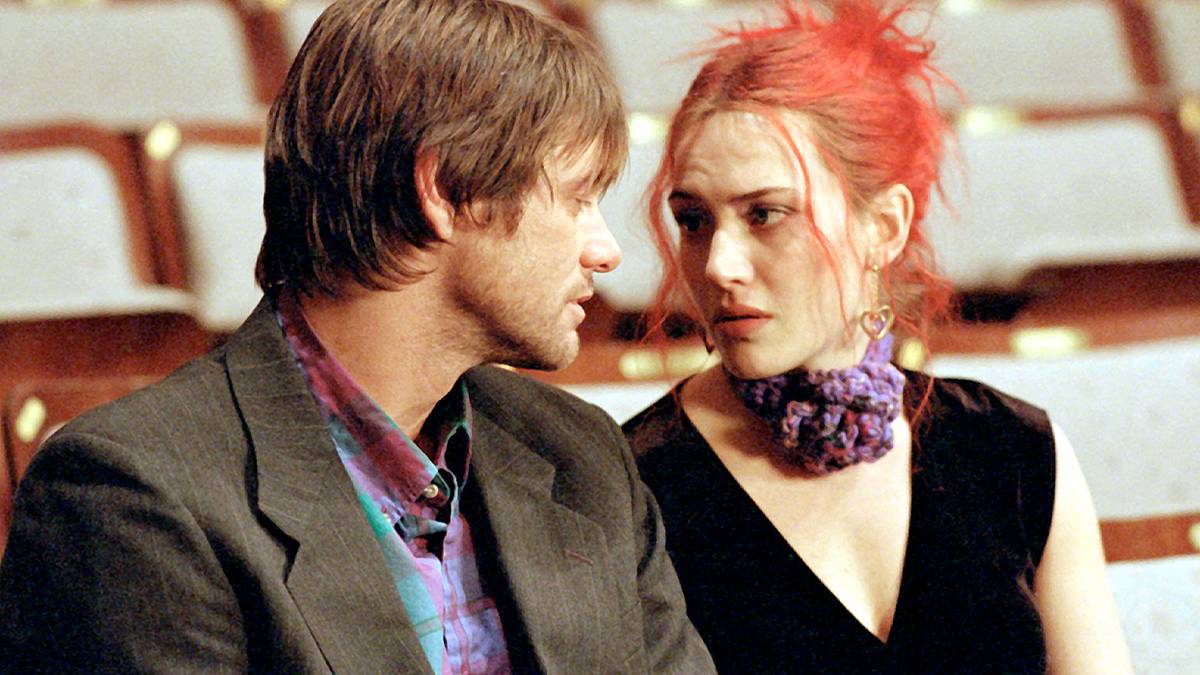
When it comes to psychological romance films that are highly cerebral, Eternal Sunshine of the Spotless Mind is perhaps the most obvious choice. The fan-favorite romantic sci-fi follows the couple Joel Barish (Jim Carrey in an incredible dramatic effort) and Clementine (Kate Winslet), who undergo a medical procedure to have each other erased from their memories for eternity.
Michel Gondry‘s movie is a philosophical lecture and romance at once; it fascinates with its big interrogation of memory, identity, and heartbreak. Anchored by a captivating reverse chronological structure and surrealist flair that keeps viewers off balance, this mind-bending romance asks big questions about memory, identity, and heartbreak: if we erase the people who hurt us, do we also erase a piece of ourselves — the joys, the lessons, and even the piece shaped by their wrongdoings?
Source link
