

1950 was a quiet but decisive turning point in film history. The optimism of the postwar years was giving way to cynicism, introspection, and moral ambiguity. At the same time, filmmakers outside Hollywood were pushing cinema into new philosophical territory, questioning truth, identity, and storytelling itself.
With that in mind, the titles below include some of the most enduring classics from that year. On this list, fairy tales sit beside brutal crime dramas, romantic comedies brush up against existential meditations, and glamorous Hollywood satires expose the industry’s own cruelty.
10
‘Rio Grande’ (1950)
“I don’t like to see men fight among themselves.” Rio Grande is a quietly resonant Western from genre legend John Ford. Set at a remote cavalry outpost on the Texas-Mexico border, it centers on Colonel Kirby Yorke (John Wayne), a rigid and disciplined officer tasked with protecting settlers from Apache raids. Complicating matters is the arrival of his estranged wife (Maureen O’Hara) and their son (Claude Jarman Jr.), now a young recruit under his command. From here, the plot balances military conflict with domestic tension, as Yorke struggles to reconcile his sense of duty with his private regrets.
Unlike most Westerns of the era, Rio Grande is surprisingly emotionally restrained. Rather than foregrounding large-scale action, it focuses on character, routine, and moral responsibility. The themes are thoughtful, and the movie has a lot to say about family, class, and masculinity (though its treatment of some of the Native American characters has not aged well).
9
‘Born Yesterday’ (1950)

“I’ve been thinking, Harry, and I decided I don’t like you.” Born Yesterday is a sharp, politically charged comedy, jam-packed with wit, romance, and social critique. Judy Holliday plays Billie Dawn, a seemingly dim-witted woman accompanying her corrupt businessman boyfriend (Broderick Crawford) to Washington, D.C. When he hires a journalist to educate her so she’ll appear respectable, Billie begins to realize both her intelligence and the extent of her exploitation. Her growing political and personal awareness drives the story.
The movie was directed by the great George Cukor (the brains behind The Philadelphia Story and My Fair Lady) and his skillful touch is all over it. That said, the highlight is Holliday, who repeatedly steals scenes here. She ensures that Billie’s transformation feels earned, not condescending. Holliday (somewhat controversially) won the Best Actress Oscar for her efforts, beating out both Gloria Swanson (for Sunset Boulevard) and Bette Davis (All About Eve).
8
‘Harvey’ (1950)

“In this world, Elwood, you must be oh so smart, or oh so pleasant.” James Stewart leads this gentle, disarming comedy as Elwood P. Dowd, a cheerful man who insists that his best friend is a six-foot-tall invisible rabbit named Harvey. When Elwood’s family attempts to have him committed to protect their social standing, chaos ensues as doctors and relatives begin to question who, exactly, is unbalanced. It’s all pretty farcical, with the entertainment stemming from a series of misunderstandings, though the story manages to be warm and whimsical rather than cynical.
Rather than treating Elwood as delusional, the film presents him as generous, patient, and deeply humane. His refusal to conform exposes the pettiness and cruelty of “normal” society. In the process, Harvey suggests that kindness and imagination may be more valuable than rigid rationality. Not to mention, the script is funny throughout, and Stewart’s performance is fantastic, arguably one of the best of his career.
7
‘Cinderella’ (1950)

“A dream is a wish your heart makes.” Cinderella revitalized Disney animation at a crucial moment, becoming the studio’s biggest hit in well over a decade. It remains one of the most timeless and iconic movies in Disney’s collection: the story of Cinderella (Ilene Woods), a young woman forced into servitude by her cruel stepmother and stepsisters, continues to delight generations of viewers. The plot is familiar, drawing on centuries-old fairy tales, but its execution gives it lasting power.
The animation is simply breathtaking, meticulously planned, and carefully based on live-action footage. The attention to detail is off the charts, with even the backgrounds and side characters animated to perfection. The songs are phenomenal, too, and the voice acting is strong across the board. All this makes Cinderella one of the very best films from Disney’s classic period, more like a shared cross-cultural dream than a typical movie.
6
‘The Asphalt Jungle’ (1950)

“Crime is only a left-handed form of human endeavor.” Though perhaps not all that well-known now, this landmark crime film helped redefine the heist genre. The story follows a group of professional criminals assembling an intricate jewelry robbery, each member contributing specialized skills. However, a sense of fatalism hangs over everything. There are no heroes here, only individuals clinging to ambition or desperation. As the plan unfolds, personal weaknesses, greed, and bad luck slowly undermine the operation.
At the time, the film’s realism and lack of moralizing were striking. It paved the way for later crime dramas that treated criminals as complex individuals rather than caricatures. The movie is now regarded as highly influential. Every caper from Rififi onward owes The Asphalt Jungle a debt of gratitude. It’s one of director John Huston‘s very best movies, which is saying something, boasting stellar performances from the likes of Sterling Hayden, Louis Calhern, and Jean Hagen.
5
‘In a Lonely Place’ (1950)

“I was born when she kissed me. I died when she left me.” In a Lonely Place is a haunting noir from Nicholas Ray, director of Bigger Than Life and Rebel Without a Cause. Humphrey Bogart has top billing as Dixon Steele, a volatile screenwriter who becomes a murder suspect after a woman he spent the evening with is found dead. Though cleared by police, Dixon’s temper and instability strain his relationship with Laurel, the woman who believes in him.
While this sounds like a typical mystery, the movie stands out by shifting the focus away from the solving of the crime and instead onto the slow erosion of trust between the characters. It’s surprisingly psychologically deep. Rather than offering clear guilt or innocence, In A Lonely Place explores how fear can poison intimacy. It becomes a critique of Hollywood masculinity and creative ego. This wouldn’t work without the brilliant performance from Bogart. Here, he’s enigmatic and complex, his charisma is inseparable from his rage.
4
‘Orpheus’ (1950)

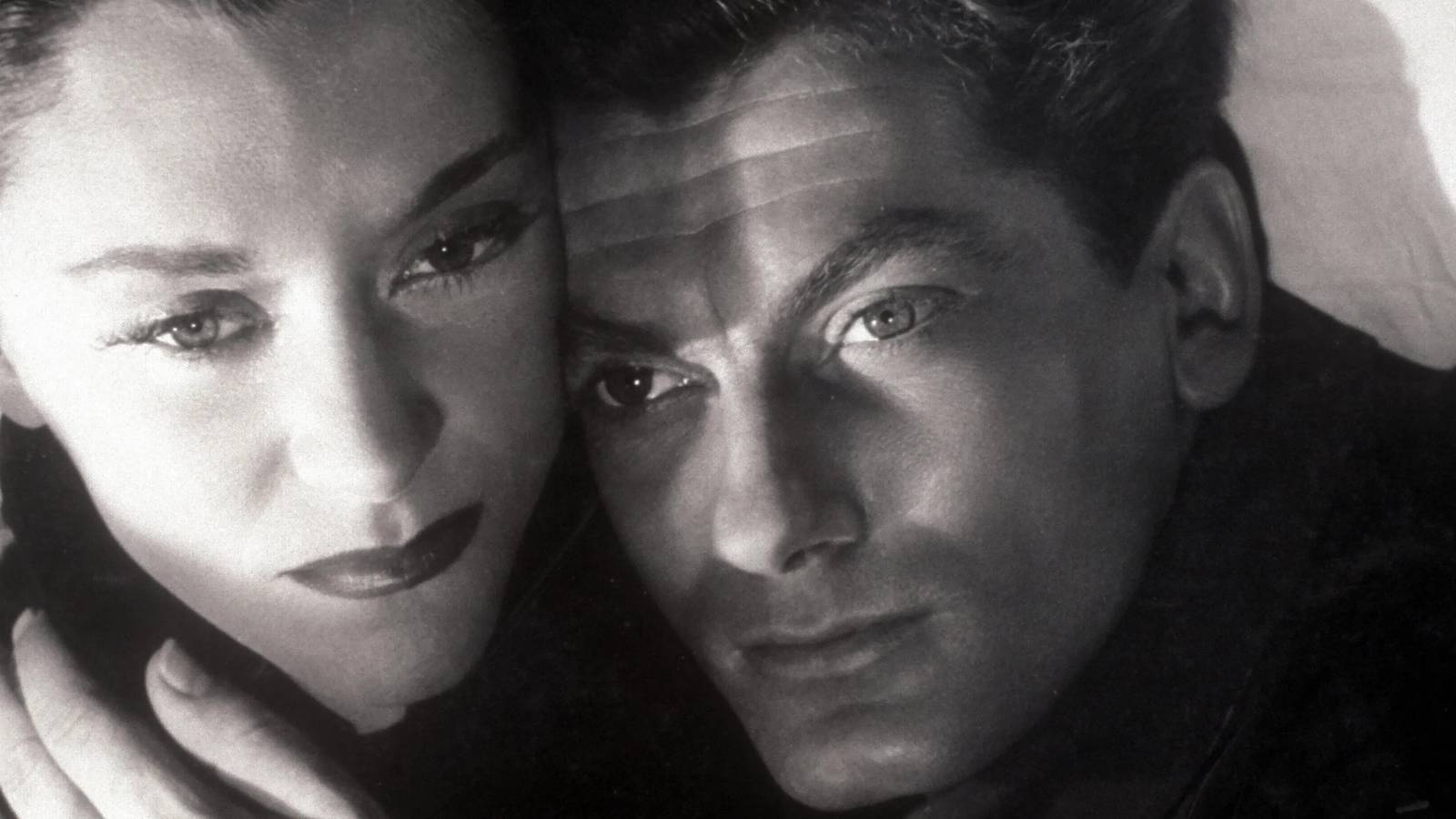
“Mirrors are the doors through which Death comes and goes.” Orpheus is a lyrical, modern reimagining of the ancient myth, relocating the story to 1950s France. Orpheus (Jean Marais) is a poet obsessed with cryptic messages transmitted through the radio, currently in a strained marriage to Eurydice (Marie Déa). When she dies, Orpheus ventures into the underworld to reclaim her, guided by mysterious rules and mirrored thresholds. The plot unfolds like a dream, blending myth, romance, and more than a little surrealism.
Orpheus was directed by the influential avant-garde artist Jean Cocteau, and it’s generally regarded as one of his best efforts. Here, the director uses simple visual tricks to suggest metaphysical ideas, turning mirrors into gateways and death into bureaucracy. All this serves to explore some big-brain ideas around art, obsession, and the cost of inspiration. This approach was influential, with giants like Akira Kurosawa and Andrei Tarkovsky citing it as an inspiration.
3
‘Rashomon’ (1950)

“I don’t understand. I just don’t understand.” One of Kurosawa‘s many masterpieces, Rashomon revolutionized cinematic storytelling by questioning the very idea of objective truth. It’s a violent crime, the murder of a samurai and the assault of his wife, through four conflicting testimonies, each presenting a different version of events. The plot repeats itself from multiple perspectives, revealing how memory, ego, and self-interest distort reality.
This might sound tame now, but back in 1950, this was an audacious narrative structure, one that coined the term “Rashomon effect”. It permanently altered how stories could be told on screen, and its success helped bring Japanese cinema to a global audience. Aside from that storytelling innovation, the movie is simply well-crafted and well-performed, with a wealth of striking images. It opened all sorts of possibilities for the medium, unleashing a burst of creativity that would fuel New Wave movements the world over.
2
‘All About Eve’ (1950)

“Fasten your seatbelts, it’s going to be a bumpy night.” All About Eve is a razor-sharp satire about ambition, aging, and the brutal machinery of fame. It revolves around Eve Harrington (Anne Baxter), an apparently innocent young woman who ingratiates herself with a celebrated Broadway actress (Bette Davis), only to reveal her ruthless desire to replace her. The dialogue is fast, biting, and endlessly quotable, while its characters are richly drawn rather than purely villainous.
Released at a time when Hollywood rarely examined its own cruelty, the film feels startlingly honest. Success here is shown as intoxicating but corrosive, especially in an industry obsessed with youth. It’s a thoroughly modern message that still resonates. All in all, All About Eve is witty, intelligent, and fantastically acted, featuring some of the greatest stars of the day at the top of their game. Davis, in particular, is at her very best here.
1
‘Sunset Boulevard’ (1950)

“All right, Mr. DeMille, I’m ready for my close-up.” Although it plays with similar ideas, Sunset Boulevard makes for a much darker, more unsettling meditation on fame, illusion, and decay. The story follows Joe Gillis (William Holden), a struggling screenwriter who becomes entangled with Norma Desmond (Gloria Swanson), a former silent film star living in delusion and isolation. Joe moves into Norma’s decaying mansion, and their relationship becomes increasingly toxic, fueled by dependency and fantasy.
This premise quickly becomes a full-on noir nightmare, literally narrated from beyond the grave. Norma is both monstrous and tragic, a symbol of an industry that worships youth and forgets loyalty. Through her, director Billy Wilder exposes Hollywood’s ability to discard its own creations while feeding their illusions. He pulls off a delicate balancing act, aided by truly brilliant performers. Swanson and Erich von Stroheim are especially strong, doing a lot to hold the movie together.

Sunset Boulevard
- Release Date
-
August 10, 1950
- Runtime
-
110 Minutes
-

William Holden
Joe Gillis
-
Gloria Swanson
Norma Desmond
Source link
