

1962 was something of a cinematic crossroads. The classical studio system was still technically intact, but its certainties were beginning to crack. Censorship was loosening, international cinema was exerting stronger influence, and filmmakers were increasingly willing to confront darker, more complex themes.
This was a year when Hollywood prestige films, European modernism, and genre reinventions all collided. More than sixty years later, the classics of 1962 still have the power to entertain us, unsettle us, or offer us some striking food for thought.
10
‘Cape Fear’ (1962)
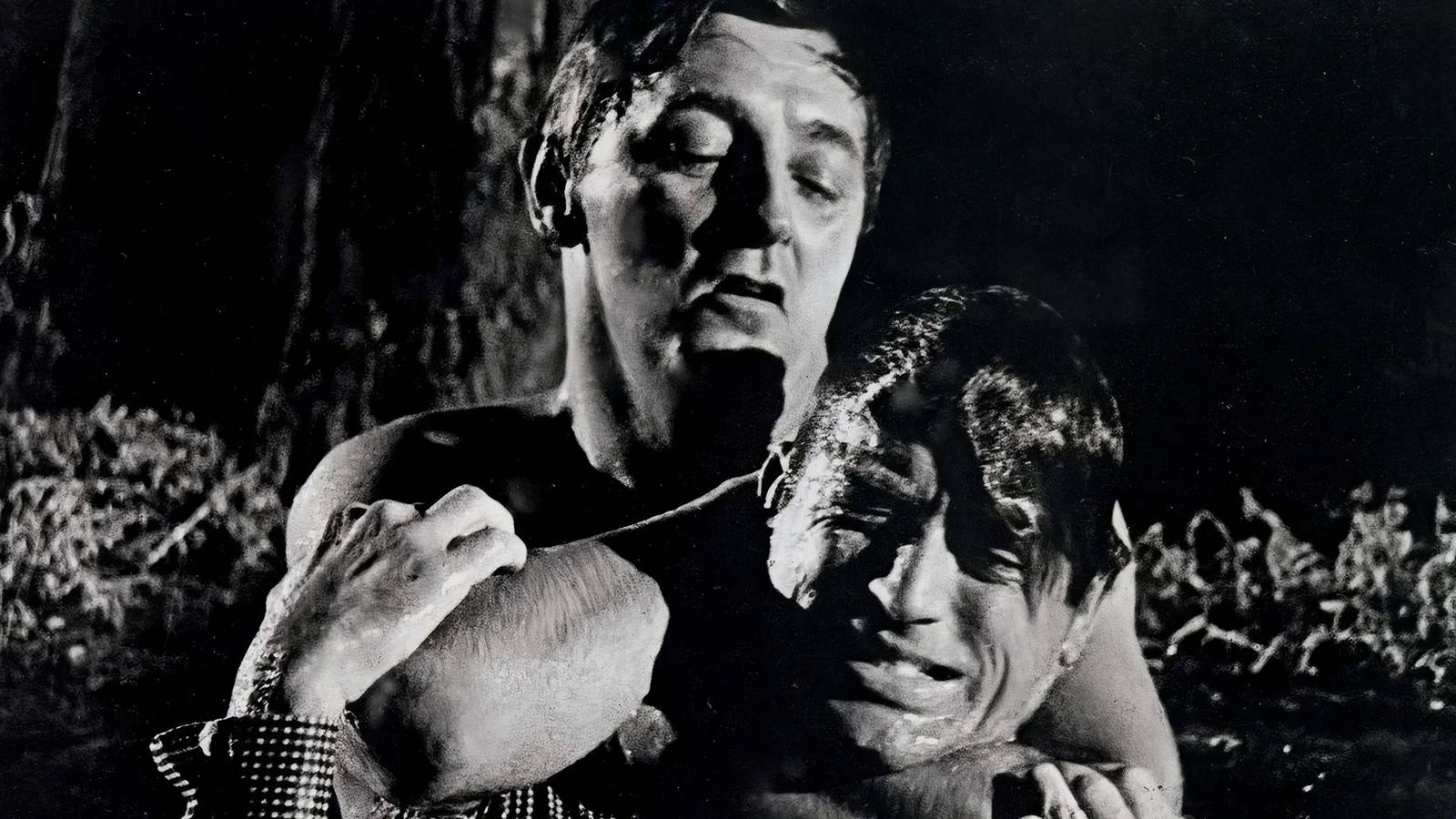
“I’m gonna teach you what fear really means.” Those who only know the Scorsese remake should check out this menacing original. Cape Fear revolves around a convicted criminal (Robert Mitchum) who, after being released from prison, stalks the lawyer (Gregory Peck) he believes wrongfully testified against him. It’s a juicy premise, ruthlessly executed. Cady is a fascinating, frightening antagonist. He’s cruel and devious, operating within the law just enough to remain untouchable, turning legality itself into a weapon. Mitchum plays him to perfection.
The lawyer’s authority and rationality prove inadequate against someone fueled by obsession and resentment. Through this, the movie ably captures the terror of knowing danger is present but being powerless to stop it, a theme that still resonates deeply. This was a thriller that pushed boundaries for its time, especially in its suggestion of sexual violence and moral helplessness, and it still packs a punch now.
9
‘Sanjuro’ (1962)

“A sword is a tool for killing.” Sanjuro is one of Kurosawa’s most philosophical (and cynical) samurai movies. It follows a wandering ronin (Toshiro Mifune) who becomes entangled in a power struggle among corrupt officials. The movie builds on the character introduced in Yojimbo, but deepens the moral texture. Sanjuro is clever, pragmatic, and often amused by the incompetence around him, yet he remains acutely aware of violence’s cost. Kurosawa tells his story with wit and sudden violence.
The director also pulls off an impressive tonal balance here. Humor and brutality coexist, never canceling each other out. In this sense, Sanjuro functions both as genre entertainment and critique, exposing how honor and loyalty can be manipulated by those in power. The famous final duel, brief and shocking, undercuts any lingering romanticism about swordplay and righteous combat. The graphic violence and geysers of blood were very influential, inspiring many action movies that followed.
8
‘Lolita’ (1962)

“You know, you could stand a little sunshine.” Stanley Kubrick directed this adaptation of Vladimir Nabokov’s novel, and his storytelling genius is very much evident in it. Few directors could have made such an effective movie out of such a controversial, borderline unfilmable book. Lolita centers on a middle-aged man (James Mason) who becomes obsessed with a young girl (Sue Lyon) framing his actions through self-justifying narration. The protagonist’s intelligence and charm become tools of manipulation, both for the characters around him and for the audience. It was a challenging role to play, but Mason does a solid job with it.
The tone oscillates between dark comedy and moral horror, refusing clear emotional footing. It’s deeply uncomfortable, but also intelligent and psychologically brutal. In making it, Kubrick was forced to navigate heavy censorship, resulting in a version that implies more than it shows. That restraint, paradoxically, gives the film its enduring power.
7
‘The Exterminating Angel’ (1962)

“We can’t leave.” The Exterminating Angel is a typically strange gem from master of the surreal Luis Buñuel. It follows a group of wealthy dinner guests (including frequent collaborator Silvia Pinal) who, after an elegant evening, find themselves inexplicably unable to leave the room they are in. The plot offers no explanation, and that refusal is the point. It becomes a piercing class allegory. Buñuel uses the premise to strip away the veneer of civility, revealing how quickly manners collapse into cruelty, superstition, and despair.
As time passes, class distinctions harden rather than dissolve, exposing entitlement and moral emptiness. Buñuel’s targets here are elite self-regard and empty, hypocritical social rituals. In particular, some critics have interpreted The Exterminating Angel as a commentary on Spain under dictator Francisco Franco. It’s weird, ambiguous, claustrophobic, and audacious, gradually descending into anarchy over the course of its 93-minute runtime.
6
‘Ivan’s Childhood’ (1962)

“War has no room for children.” Ivan’s Childhood is a war drama by the great Soviet director Andrei Tarkovsky. The title character is a young boy (Nikolai Burlyayev) working as a scout for the Soviet army during World War II, navigating landscapes shaped by violence and loss. However, the movie avoids the expected genre tropes and battle spectacle, instead leaning on psychological devastation. Dreams and reality blur, with lyrical imagery interrupting grim routine.
It’s an anti-war film to the core, with childhood deliberately framed as the ultimate contrast to conflict and violence. Here, there is nothing heroic in war. Ivan’s determination feels less like bravery than damage, his maturity an adaptation to trauma rather than growth. This was Tarkovsky’s feature debut, and yet his storytelling and aesthetic mastery are clearly on display. Here, his visual language, all water, forests, and silence, imbues the film with mournful beauty, making the contrast with the brutality even more painful.
5
‘What Ever Happened to Baby Jane?’ (1962)

“But ya are, Blanche! Ya are in that chair!” This gothic melodrama focuses on two aging sisters (played by Bette Davis and Joan Crawford), both former performers, locked in a toxic cohabitation fueled by jealousy and unresolved trauma. The younger sister, Jane, was a famous child actress, and her shy older sister, Blanche, very much lived in her shadow, planting bitter seeds of rivalry that last into adulthood. However, their roles were reversed in adulthood, with Jane becoming an alcoholic and Blanche finding success as an actress.
From here, the movie brings together an impressive range of styles and moods, from drama to black comedy and back. The plot eventually escalates from psychological cruelty to outright horror, as power shifts unpredictably between the sisters. The stars are terrific in their parts, pushing their performances into grotesque territory without losing emotional truth. Davis and Crawford allegedly had a real on-set feud during filming, perhaps adding to the realism.
4
‘The Man Who Shot Liberty Valance’ (1962)

“When the legend becomes fact, print the legend.” The Man Who Shot Liberty Valance is a western about myth-making itself. James Stewart leads the cast as Ranse Stoddard, a lawyer who becomes a symbol of frontier justice after killing a notorious outlaw (Lee Marvin), only for the truth behind the event to remain buried. Opposite him is John Wayne as gunslinger Tom Doniphon, whose story is tangled up with those of Stoddard and Valance. John Ford uses this premise to interrogate how history is constructed and remembered, particularly in this genre.
Violence is not glorified; it is contextualized as something absorbed into narrative for political convenience. The film’s famous line about printing the legend rather than the truth encapsulates its thesis. What makes it endure is its self-awareness. In other words, this is a Western that understands that the genre was arriving at the end of an era in the early ’60s, both historically and cinematically.
3
‘Jules and Jim’ (1962)

“We were young. We were very happy.” Jules and Jim is a French New Wave classic, one of the most beloved movies by François Truffaut. It follows two friends (played by Oskar Werner and Henri Serrie) and the woman (Jeanne Moreau) they both love, tracing their relationship across years marked by passion, friendship, and eventual tragedy. The characters pursue intensity without fully understanding the cost. Along the way, the movie’s energy gradually gives way to melancholy, as freedom curdles into instability.
On the aesthetic side, Truffaut embraces stylistic freedom to mirror the characters’ emotional volatility, using voiceover, jump cuts, and playful pacing to phenomenal effect. These moves were bold and groundbreaking for the time. Here, the director aptures romantic idealism like lightning in a bottle, both intoxicating and destructive. This approach influenced countless filmmakers to follow; an infinite number of student films pay homage to Jules and Jim.
2
‘To Kill a Mockingbird’ (1962)

“You never really understand a person until you consider things from his point of view.” In To Kill a Mockingbird, Gregory Peck is the Platonic ideal of what a lawyer should be, a man who stands up for what is right and refuses to give in to pressure. He is Atticus Finch, a lawyer in the American South who defends a Black man (Brock Peters) falsely accused of rape, seen through the eyes of his young daughter (Mary Badham). Framing the story through Scout’s eyes is a genius move, serving to amplify the senselessness of prejudice.
The movie is inspiring because Atticus refuses to bend. His integrity is compelling not because it is flashy, but because it is consistent. Through him, the movie pays tribute to everyday acts of moral courage. It’s a “message movie” told without melodrama or didacticism, its themes never overwhelming the story itself. More than half a century later, it’s still one of the very best courtroom dramas.
1
‘Lawrence of Arabia’ (1962)

“The trick, William Potter, is not minding that it hurts.” Lawrence of Arabia is epic filmmaking driven by psychological contradiction. Peter O’Toole delivers a layered, three-dimensional performance as T.E. Lawrence, a British officer whose involvement in the Arab Revolt transforms him from observer to mythic figure… and then dismantles him. He’s an endlessly fascinating character: Lawrence’s brilliance is inseparable from ego, cruelty, and confusion.
In terms of the direction, David Lean combines staggering scale with intimate character study, using vast landscapes to reflect internal isolation. He also gets surprisingly complex and critical with the themes. For instance, the film interrogates imperialism without flattening its protagonist into villain or savior. Power here is seductive and corrosive, leaving identity fractured. Ultimately, Lawrence of Arabia understands that history is shaped not just by events, but by the fragile psychology of those who believe themselves destined to shape it.
Source link
