

1994 was an incredibly stacked movie year. It was a time when blockbusters, indie breakthroughs, documentaries, and populist crowd-pleasers all seemed to hit their creative stride at the same time. Studios were still willing to gamble on distinctive voices, mid-budget dramas could become cultural events, and genre films were allowed to be strange, personal, or morally messy.
The result was a diverse array of classics that people continue to return to today. Some were hits on release, others opened quietly but gradually found a place in people’s hearts. The best of them rank among the finest films ever made, period.
10
‘Clerks’ (1994)
“I’m not even supposed to be here today!” Clerks is one of the most influential micro-budget films ever made, even though it looks, at first glance, like a joke that got out of hand. Shot in grainy black-and-white, Kevin Smith‘s feature debut chronicles a single workday in the lives of two convenience store clerks (Brian O’Halloran and Jeff Anderson) as they complain about customers, relationships, pop culture, and the general unfairness of adulthood. There’s no traditional plot, just conversations, digressions, and petty conflicts.
Nevertheless, all this accumulates into something unexpectedly honest and, for its time, pretty aesthetically radical. The dialogue feels overheard rather than written, capturing the aimless frustration of being young, broke, and intellectually restless. Plus, Smith wasn’t interested in making his characters likable so much as recognizable. Over time, Clerks has come to represent a turning point for independent cinema, proving that personality and voice mattered more than polish.
9
‘Four Weddings and a Funeral’ (1994)
.jpg?q=49&fit=crop&w=500&dpr=2)
“Is it raining? I hadn’t noticed.” Four Weddings and a Funeral helped redefine the modern romantic comedy by embracing awkwardness, melancholy, and emotional restraint. It’s simultaneously hilarious and poignant. The story follows a group of friends through a series of social gatherings, with a shy Englishman (Hugh Grant) repeatedly crossing paths with an American woman (Andie MacDowell) he can’t quite commit to. This could’ve just been a run-of-the-mill rom-com, but Four Weddings and a Funeral stands out by not forcing the plot into the expected formula.
Rather than building toward a single romantic crescendo, the movie allows relationships to drift, stall, and misfire. The humor is gentle but sharp, and the moments of sadness land without melodrama. Audiences responded to this approach: Four Weddings and a Funeral was an absurdly huge hit, grossing a staggering $245m against a budget of $4.4m. Its success catapulted Hugh Grant to stardom.
8
‘Speed’ (1994)

“Pop quiz, hotshot.” Speed is a masterclass in high-concept action filmmaking. The premise is famously simple: a city bus is rigged with a bomb that will detonate if the vehicle drops below a certain speed. The movie builds this juicy setup into one of the most nail-biting action thrillers ever, a relentless exercise in escalation. At the heart of it are Keanu Reeves and Sandra Bullock as two people desperately trying to avert catastrophe.
The characters are lightly sketched but effective, made compelling by the likable leads. The real draws here are the killer practical effects and phenomenal stunts. Three decades later, Speed endures because it respects momentum, both literally and narratively, and never forgets that suspense comes from problem-solving under pressure, not spectacle for its own sake (a lesson its sequel would sadly not remember). Many action movies since have tried (and usually failed) to recapture its lightning in a bottle.
7
‘The Crow’ (1994)

“It can’t rain all the time.” The Crow is a superhero movie steeped in tragedy, both on screen and off. The main character (Brandon Lee) is a murdered musician who returns from the dead to avenge himself and his fiancée, guided by grief and supernatural purpose. While that sounds like pulpy comic fare, the movie is actually deeply atmospheric and psychologically complex. Here, director Alex Proyas crafts a rain-soaked, industrial city that feels less like a place than a state of mind, one defined by loss, rage, and romantic fatalism.
The cinematography and production design are fantastic, complemented perfectly by Graeme Revelle‘s orchestral, guitar-inflected score. Both aesthetically and thematically, The Crow was unusually dark and stylish for its time, paving the way for many of the gritty superhero classics that would follow in the decades to come. It has rightly become a cult classic.
6
‘Natural Born Killers’ (1994)

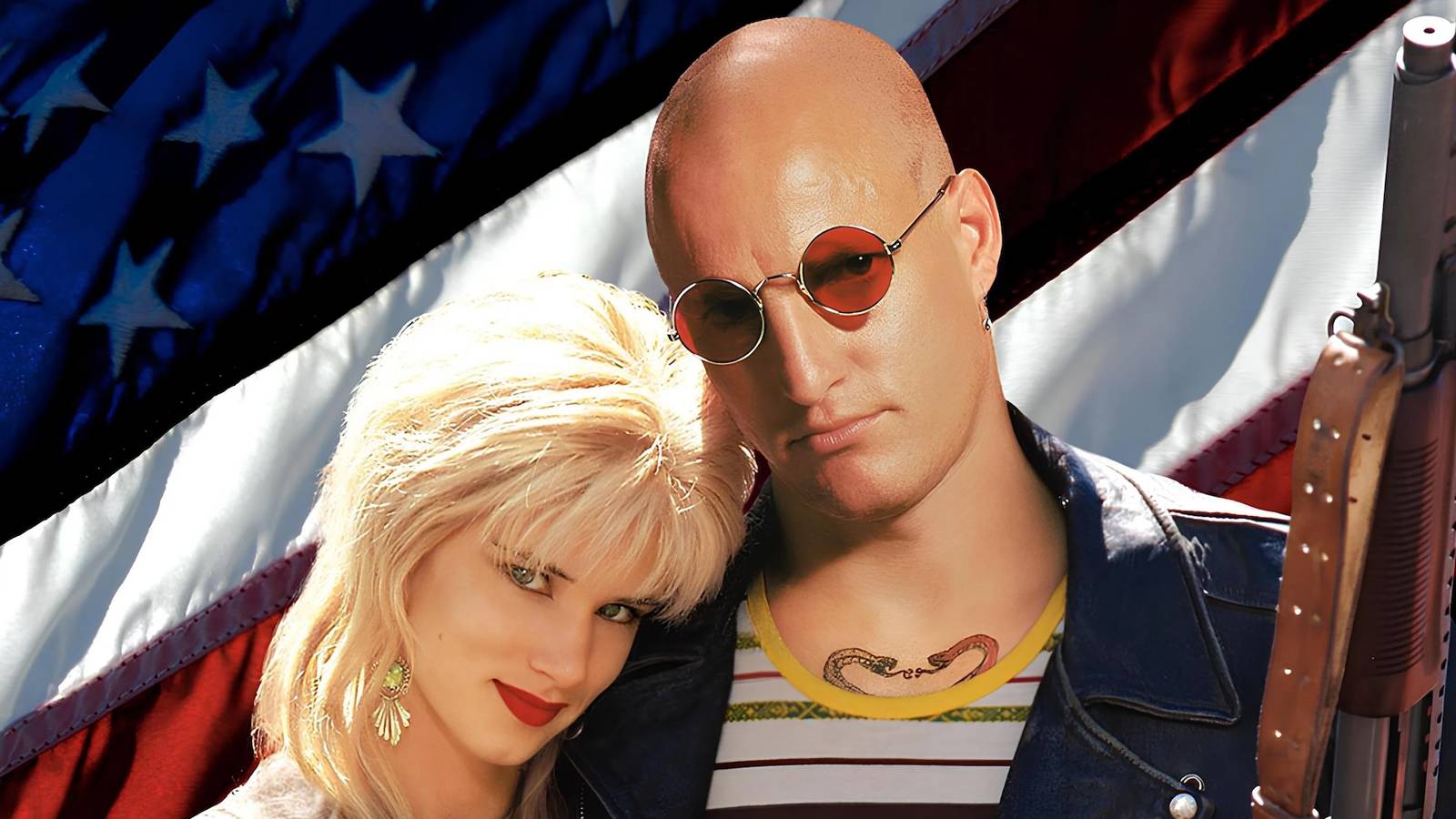
“Only love can kill the demon.” Natural Born Killers represented the intriguing creative pairing of Oliver Stone‘s direction and Tarantino‘s writing. The result is an audacious, controversial banger that’s unlike anything else in ’90s crime cinema. Woody Harrelson and Juliette Lewis lead the cast as two lovers who embark on a killing spree, becoming media celebrities along the way. In telling their story, Stone uses hyperactive editing, shifting formats, and tonal whiplash to mirror the media frenzy he’s critiquing.
The stylistic daring here is impressive. We get ultra-violence, dark comedy, trippy hallucinations, and even animated sequences. Indeed, Natural Born Killers stands out thanks to its willingness to be abrasive. The film doesn’t want to be liked; it wants to overwhelm. On release, some critics accused the movie of glorifying violence, but nowadays most people recognize it as vitriolic satire. In today’s era of algorithmic outrage and viral notoriety, its themes feel pretty prophetic.
5
‘Hoop Dreams’ (1994)

“I want to go to college.” Hoop Dreams quietly revolutionized documentary filmmaking by refusing to impose a neat narrative on real lives. It zooms in on two Chicago teenagers, William Gates and Arthur Agee, over several years as they pursue basketball careers that promise escape from poverty and instability. Along the way, director Steve James allows hope, disappointment, and systemic inequality to unfold without editorial manipulation. There are no villains here, just institutions that quietly fail the people depending on them.
Taken together, Hoop Dreams isn’t just a phenomenal sports documentary but a deeply American story about ambition and structural barriers. It examines race, social inequality, and the American education system, along with individual dreams and fears. Crucially, the film treats its subjects with dignity, allowing them to be contradictory, flawed, and resilient. Real. Simply put, it’s one of the best documentaries ever.
4
‘The Lion King’ (1994)

“Remember who you are.” The Lion King was a technical and musical triumph, delivering on every single front, from the songs and visuals to the emotional story. The plot is world-famous at this point, crossing cultural and linguistic barriers: a young lion prince (voiced by Matthew Broderick) is forced into exile after the death of his father (James Earl Jones), struggling with guilt and identity before reclaiming his place. Drawing from Shakespeare and archetypal storytelling, the story presents grief as something that must be faced rather than outrun.
The themes are strikingly rich for a kids’ movie, delving deep into responsibility, memory, and self-acceptance. In particular, The Lion King treats childhood loss with seriousness, trusting young audiences to handle complexity. It was a smash hit on release and remains beloved to this day, spawning sequels and spinoffs and live-action remakes. It’s likely to continue to delight new generations of viewers for a long time to come.
3
‘Forrest Gump’ (1994)

“Life was like a box of chocolates.” Tom Hanks won his second Oscar for his work in this offbeat epic, and rightly so. He carries most of Forrest Gump single-handedly, playing a kind-hearted man with limited intellectual capacity who inadvertently influences major moments in American history. (The scene where he meets his son is some of the best acting of the decade.) Through him, the movie becomes both a character study and a reflection of America in the second half of the 20th century.
Sure, the movie can be a little sentimental at times, perhaps pulling too blatantly on the audience’s heartstrings. However, that’s also its charm. Forrest Gump is a fundamentally warm and human movie, bursting with creativity and emotion and optimism. It’s the kind of grand, technically innovative, big-hearted story that only Robert Zemeckis could make. In the end, while its Best Picture win is now generally viewed as an error, Forrest Gump is still a feel-good classic.
2
‘Pulp Fiction’ (1994)

“Ezekiel 25:17.” Pulp Fiction was far and away the most revolutionary and influential movie of 1994, a talky, nonlinear crime masterpiece that hugely expanded the possibilities of mainstream movie-making. Here, Tarantino interweaves multiple crime narratives, told out of order, driven by dialogue rather than plot mechanics. Violence becomes absurd, philosophy emerges from trivial conversations, and genre conventions are gleefully dismantled.
The characters are iconic, every line is quotable, and practically every scene has become famous. At the same time, Pulp Fiction is meta and self-aware, jam-packed with allusions and references to scores of films. In this sense, it’s a love letter to cinema itself, radiating an infectious enthusiasm and a fundamental belief in the power of the medium. The movie treats pop culture as a living language, one capable of producing meaning, humor, and even grace. It’s hugely entertaining and deceptively complex, containing many layers and an endless supply of rich ideas.
1
‘The Shawshank Redemption’ (1994)

“Get busy living, or get busy dying.” The Shawshank Redemption is the rare film whose reputation grew slowly and then became unshakable. After a muted reception in 1994, it’s now widely regarded as a masterpiece, and remains the highest-rated movie on IMDb. The story (based on a Stephen King novella) follows a banker (Tim Robbins) sentenced to life in prison, charting decades of endurance, quiet resistance, and friendship with a fellow inmate (Morgan Freeman).
Frank Darabont and his cast build this tale into a moving statement on hope. The Shawshank Redemption never claims the world is just; it suggests only that dignity can survive within injustice. Despite all the hardship, its core message is still one of optimism and grace. The film’s enduring popularity reflects a universal hunger for stories that affirm perseverance without denying suffering. It’s also simply a beautiful portrait of male friendship, something we don’t see often enough. Beautiful, touching, and well-crafted.
t
Source link
