

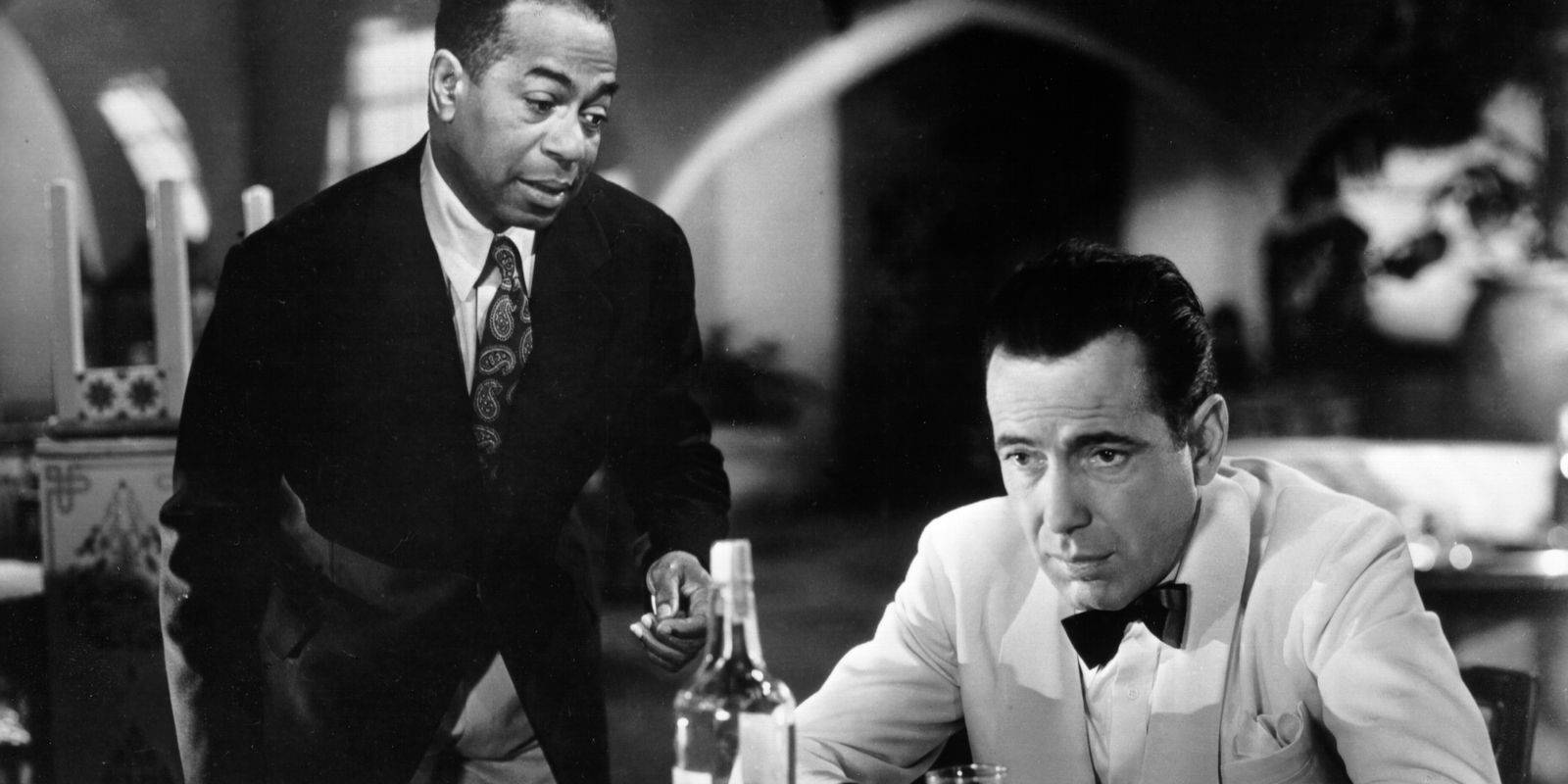
War films are frequently defined by spectacle — the relentless thunder of gunfire, the terrifying chaos of battle, and, perhaps most commonly, a rather visceral depiction of violence. Iconic examples like Saving Private Ryan, Hacksaw Ridge, Apocalypse Now, and 1917 are soaked in blood, relying heavily on the innate brutality of war. That said, some of the most devastating war stories unfold away from the battlefield.
In these movies, the damage is measured through silence, memory, grief, and loss, as they strip away the gore and the explosions in favor of highlighting the profoundly human cost of war. Emotion has nothing to do with graphic imagery; all that’s necessary to induce heartbreak in the audience is the mere implication of violence. As such, the following films force viewers to confront the emotional realities of war in quieter, albeit more unsettling ways.
Casablanca Reveals the Cost of Love During Wartime
Set in Vichy France-controlled Morocco at the height of the Second World War, Rick’s Café Américain serves as a neutral arena for various conflicting parties in Casablanca. At the center is Humphrey Bogart’s Rick Blaine, who disguises his disillusionment behind layers upon layers of cynicism — at least until he rediscovers his purpose. Casablanca portrays war as both a backdrop to the story and a powerful catalyst that shapes the main character arcs on a fundamental level.
There’s hardly a need for visceral violence when the movie can simply break viewer hearts by displaying one of the most emotional sacrifices in cinema. The love story between Rick and Ingrid Bergman’s Ilsa culminates in a memorable farewell, one that intentionally prioritizes moral duty over personal desire. World War II has essentially stripped the pair of choice, reducing their love to a fleeting luxury whose untimely termination is quietly devastating.
Life Is Beautiful Hides Horror Behind a Father’s Love

Roberto Benigni’s Life Is Beautiful is an unconventional war film, a uniquely calibrated blend of tragedy and comedy that explores the Holocaust through fatherly love. What begins with whimsical joy transitions into the nightmares of surviving a concentration camp — and yet, it’s Guido Orefice’s determination to protect his son that keeps the storyline shockingly lighthearted. In the midst of the worst crimes against humanity, Guido’s light shines bright and eternal.
Life Is Beautiful earned some negative criticism for trivializing the Holocaust, but the movie’s intentions were always pure. The father-son bond remains the wildly beating heart of the story, as Guido successfully prevents Giosuè from suffering as much as millions of others did. The pain comes from behind the illusion — what Giosuè doesn’t notice or realize is immediately picked up by viewers, including Guido’s poignant final moments that cement the act of love as simultaneously distressing and comforting.
Good Morning, Vietnam Tries to Lighten War with Humor

From Apocalypse Now to Casualties of War, Vietnam War movies often veer toward the overtly catastrophic. Blood, carnage, dehumanization, and general suffering serve as intrinsic elements of the sub-genre, with a notable exception being Good Morning, Vietnam. Starring Robin Williams in a Golden Globe-winning and Oscar-nominated performance as radio DJ Adrian Cronauer, the film examines the Vietnam War through comedy, music, and dissent.
Cronauer’s regular broadcasts transform into a literal lifeline for the soldiers experiencing the darkest moments of their lifetimes. Although the Vietnam War is shunted offscreen, its foreboding presence can be felt in every interaction and broadcast. Good Morning, Vietnam uses censorship and propaganda to highlight the human cost of war in subtler ways than having soldiers torn to shreds by a hail of bullets. And when the humor begins to fail, viewers understand that even laughter cannot be a permanent shield.
The Zone of Interest Captures War Through Its Absence

The Zone of Interest deftly subverts the traditional language of war cinema by keeping the violence just beyond visual reach — but not beyond the audience’s growing comprehension. The story is centered on the domestic life of a Nazi commandant’s family, who establish a seemingly happy home right next to Auschwitz. It is a radical perspective that makes the Holocaust even more conspicuous by its glaring absence from onscreen occurrences.
In fact, the family’s daily routines — gardening, raising children, dining together — unfold against the constant genocide taking place right next door. And the scariest part is that the normalcy isn’t even affected by the nearby horror, even as screams and gunshots pepper the seemingly distant background. Ultimately, The Zone of Interest induces heartbreak by normalizing unimaginable atrocities and reducing them to ambient noise.
Oppenheimer Questions the Moral Weight of Science

The atomic bombings of Hiroshima and Nagasaki remain the only examples of their kind, even now after so many other countries have developed nuclear weapons. Christopher Nolan’s Oppenheimer attempts an introspective take on the intellectual and moral burden borne by the titular scientist, who claimed that he had “blood on [his] hands” following President Truman’s 1945 command to obliterate two cities thriving with life. And it’s the aftermath that begs attention in Oppenheimer.
The Manhattan Project is presented as a feat of human ingenuity, but it also becomes a precursor to potential devastation. Oppenheimer concludes with the eponymous figure stating the possibility of a nuclear apocalypse, “a chain reaction that would destroy the entire world,” transforming scientific triumph into a feeling of existential dread that remains all the more potent today.
The Imitation Game Depicts War as a Battle of the Minds

Modern warfare doesn’t just take place on the active battlefield — on the contrary, much of the framework relies on computerized systems and digital manipulation. This was made painfully clear in The Imitation Game, which presented World War II through the fiber-optics of intellect. Chronicling the life and career of Alan Turing, this movie reframes war as a contest of the mind, where victory demands the ability to outthink the enemy.
Cracking the Enigma code becomes a race against time, but The Imitation Game abandons stereotypical hero tropes in favor of highlighting the loneliness and eccentricities of its protagonist. Alan Turing’s work saved millions of lives, whereas his own life is marked by isolation and persecution. The system that punished a genius savior, simply for being queer, demonstrates a level of upsetting injustice that ironically appears to have returned in the 2020s.
Grave of the Fireflies Highlights War at Its Most Heartbreaking
Studio Ghibli is famed for its heartwarming tales of childhood wonder, familial bonds, and human connection. However, there’s one example that strays so far from its peers that it can only be described as devastatingly heartbreaking. Grave of the Fireflies rejects sensationalism and embraces the intensely personal perspectives of two children desperately trying to survive a physical and emotional nightmare.
Instead of grand speeches or heroic character arcs, Grave of the Fireflies paints a painful picture of wartime suffering by inflicting it on the most innocent members of society. The experiences of the protagonist pair grow worse and worse as the war continues, invoking heartache in everyone watching. Even moments of happiness deepen the sorrow, as viewers realize the fleeting nature of joy in a world that’s collapsing in on itself.
The Boy in the Striped Pyjamas Reveals Innocence Destroyed by War

Although Life Is Beautiful approached the Holocaust through the viewpoint of childhood innocence, The Boy in the Striped Pyjamas reveals a far more depressing take on the same concept. Centered on the unlikely friendship between Shmuel, a Jewish boy imprisoned in a concentration camp, and Bruno, the son of a Nazi officer, this movie constructs a stark contrast between reality and ignorance.
The audience grasps the full extent of the situation even as Bruno and Shmuel remain relatively oblivious, making The Boy in the Striped Pyjamas an example of dramatic irony. In the end, however, it’s the anticipation of the inevitable outcome that keeps the story tense until the climax. Children should never have to endure anything like the Holocaust, and the film drives that truth home with distressing accuracy.
Atonement Showcases Trauma Beyond the Battlefield

A romantic war tragedy featuring Keira Knightley and James McAvoy in multi-award-winning roles, Atonement spans multiple timelines hinged around the Second World War. The visual craftsmanship effortlessly captures despair and chaos without resorting to conventional action, portraying the psychological toll of war on both those who fight and those who have loved ones on the battlefield.
Atonement is mainly about consequences — how a single act ripples outwards and triggers outcomes that cannot be undone. The war magnifies these themes, serving as the intersection between personal and historical trauma. The absence of graphic violence allows the focus to remain on emotional consequences, which is where much of Atonement‘s pain and sadness come from.
The Great Dictator Became So Much More Than a Comedy

Not many movies have weaponized humor as powerfully as Charlie Chaplin’s The Great Dictator, which mocks authoritarianism and strips tyrants of their alleged invincibility. The film examines how hatred and propaganda can shape society, with its WWII release timing turning it into a form of resistance against Adolf Hitler and the Nazi Reich.
When The Great Dictator was released, Charlie Chaplin — and most of the world — had no idea just how terrible the ongoing Holocaust was. In his 1964 autobiography, he wrote that he “could not have made fun of the homicidal insanity of the Nazis” if he had “known of the actual horrors of the German concentration camps.” In other words, The Great Dictator eventually evolved from a satirical comedy to a bitter realization of the nightmares occurring in the background.
Source link
