

While they don’t get the recognition for their achievement in cinematic storytelling as their theatrically released counterparts, television movies have been an industry staple for decades. Whether it’s memorable network television projects or movies produced for premium cable platforms like HBO, television films can tell stories that are just as effective on the small screen. These projects often feature top creative talent, either at the start of their career or in a departure from their established cinematic work. But there are some television movies that rise above the rest as a clear example of the underrated quality of the format.
To be clear, this list covers standalone television movies, not two-part miniseries like the “Salem’s Lot” that were subsequently repurposed as movies primarily for foreign markets. Television movies in America that were recut for foreign theatrical release, however, are included here. We’re also avoiding the movies produced by streaming platforms that saw a limited theatrical release for award season consideration.
Here are the 15 best TV movies of all time ranked and all well worth checking out.
15. The Day After
As the Cold War saw resurgent tension between the United States and the Soviet Union in the ’80s, 1983’s “The Day After” capitalized on that geopolitical anxiety. The movie has the Soviets block access to Berlin which serves as the precursor of a full invasion of West Germany. This escalates into a nuclear war, as NATO tries to stop the Soviet advance and the Warsaw Pact retaliates accordingly. Taking on the perspective of ordinary people living in the Kansas City area, the conflict results in widespread devastation from the subsequent bombardment of America and Russia.
“The Day After” left a deep impression on millions of viewers and reportedly terrified Ronald Reagan after he saw the movie. The movie didn’t shy away from its depiction of nuclear war and the grim aftermath, realizing the fears of a generation growing up under the shadow of the Cold War. Director Nicholas Meyer was fresh off helming “Star Trek II: The Wrath of Khan,” and he brings a similar somber edge and real sense of consequence to the movie. An unflinching look at how a long-feared nuclear war against the Soviet Union could break out, “The Day After” is a nihilistic political thriller with severe fallout.
14. Ghostwatch
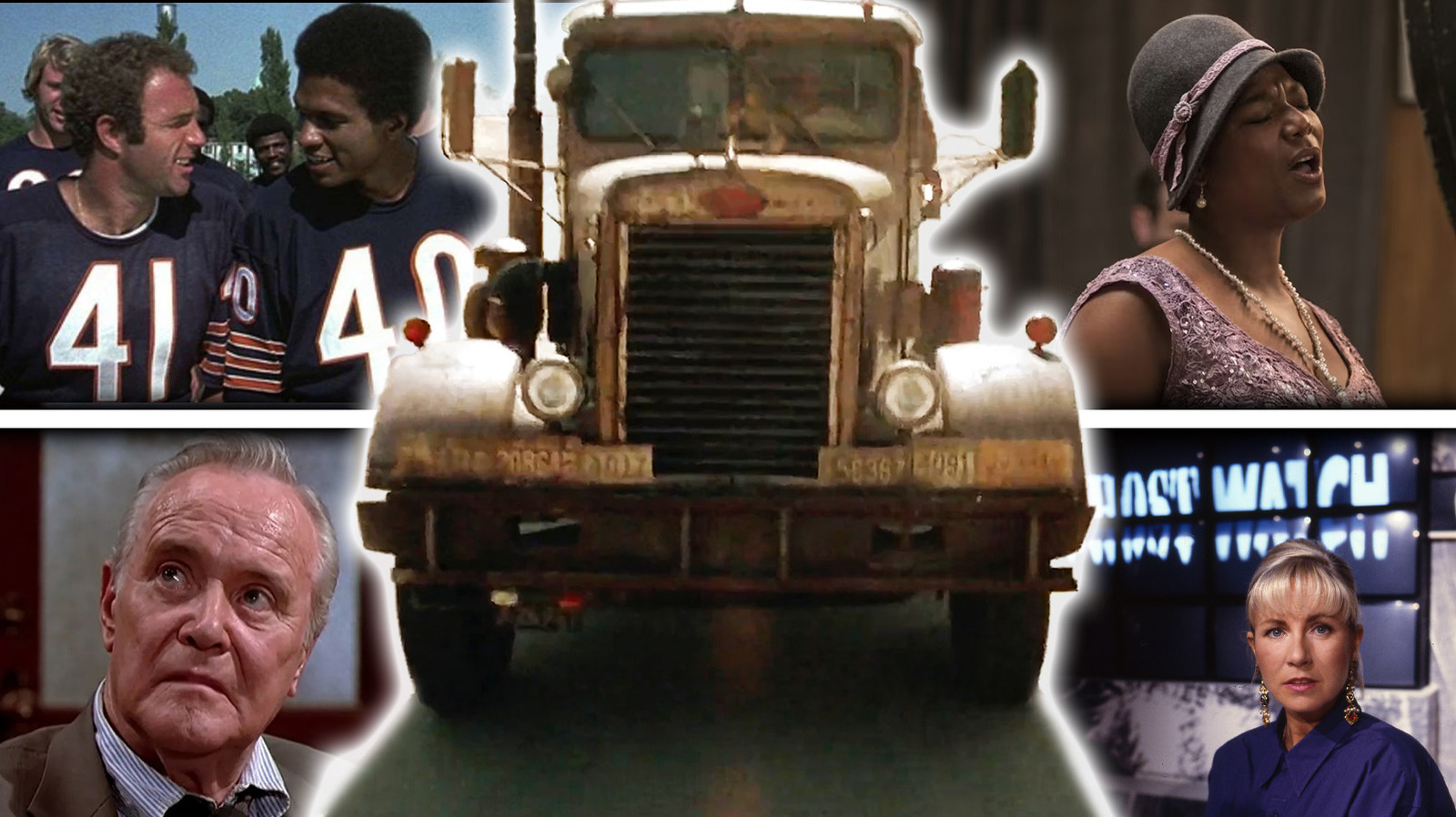
Just as Orson Welles’ “The War of the Worlds” radio adaptation shocked the United States in 1938, the BBC’s “Ghostwatch” terrified the nation when it aired in the United Kingdom. The 1992 movie debuted on Halloween night and was presented as a live television broadcast examining paranormal activity at a house in the London metropolitan area. To highlight the project’s verisimilitude, the film was hosted by actual television presenters Michael Parkinson, Sarah Greene, and a small production crew. The group uncovers the dark secret behind the haunted house and the murderous poltergeist called Pipes, who has his own plans to expand his ghostly presence.
Hosted by recognizable figures to the British public not primarily known for acting roles, the effectiveness behind “Ghostwatch” especially lies in its casting. Audiences are lulled into a false sense of security by these familiar faces and subtly bland studio sequences before the supernatural menace takes root. The BBC distanced itself from the movie after its initial broadcast, never airing it again, but it has found new audiences on different platforms and home video. A precursor to found footage horror that was popularized by the end of the ’90s, “Ghostwatch” takes advantage of its medium and industry figures.
13. Nightjohn
While some of the best Disney Channel original movies usually featured lightweight stories of young love and friendship, 1996’s “Nightjohn” centered on far more serious subject matter. Adapting Gary Paulsen’s 1993 novel of the same name, the movie follows young 19th century slave Sarny (Allison Jones). Despite the wishes of her cruel owner Clel Waller (Beau Bridges), Sarny learns to read from an older slave, John (Carl Lumbly). Through this secret skill, Sarny discovers the truth about the outside world and the injustice that she regularly endures as a slave.
A surprisingly mature Disney Channel television movie, “Nightjohn” does not downplay the horrors of slavery in its story. This isn’t done at the same level as something like “12 Years a Slave,” of course, but the television film doesn’t sanitize or play down to its audience. The movie is also anchored by a strong ensemble cast, with Lumbly and Bridges as the particular standouts. A frank look at quiet resistance through education and awareness, “Nightjohn” is an overlooked Disney Channel original standing far above the rest.
12. Brian’s Song
The tragic friendship between real-life football teammates Brian Piccolo and Gale Sayers is the focus of the 1971 television movie “Brian’s Song.” Based on Sayers’ autobiography, the two athletes play together for the Chicago Bears, becoming roommates when the team is on the road. A friendship quickly forms between the pair which blossoms as they complement each other well on the field. However, Piccolo’s career and life are cut short when he receives a terminal cancer diagnosis, with Sayers rocked by the loss of his friend.
“Brian’s Song” ranks among the best football movies of all time, largely thanks to James Caan and Billy Dee Williams’ performances. The two actors form an easygoing rapport between their characters that fuels much of the film’s enjoyment. The athletic sequences are engagingly staged, especially for their time, but the real appeal here is the central dynamic between its main characters. “Brian’s Song” avoids becoming a formulaic tearjerker, instead weaving a tale of friendship and loss that continues to resonate.
11. Who Am I This Time?
The 1982 television movie “Who Am I This Time?” features a particularly impressive creative team, both in front of and behind the camera. The film focuses on unassuming hardware store clerk Harry Nash (Christopher Walken) who becomes something of a local celebrity from his well-received community theater performances. Among Harry’s fans is Helene Shaw (Susan Sarandon), who decides to become a performer in the amateur troupe after becoming infatuated with him. However, Helene quickly discovers how completely shy Harry is off the stage as she tries to strike up a relationship with him.
In addition to its two stars, “Who Am I This Time?” is directed by Jonathan Demme (“Silence of the Lambs”) and based on a story by Kurt Vonnegut. There is a seriocomic quality to the production, highlighted in Walken and Sarandon’s scenes together and the misunderstandings their characters constantly endure. Demme stages the movie around them with a quiet charm, celebrating the local theater scene and the escape provided to ordinary people through acting. Deserving of being recognized among Christopher Walken’s best movies, “Who Am I This Time?” is among the veteran actor’s most vulnerable performances.
10. You Don’t Know Jack
Controversial euthanasia advocate Jack Kevorkian is the subject of the 2010 HBO television movie “You Don’t Know Jack.” Al Pacino stars as Kevorkian as he develops methods for individuals to painlessly and efficiently end their own lives. This growing obsession proves to be divisive, but Kevorkian maintains that he’s only assisting conscientious patients who willingly want to terminate their suffering. However, when Kevorkian’s latest patient is physically incapable of performing his own end-of-life procedure, Jack takes it upon himself to become directly involved.
Pacino and director Barry Levinson form an effective creative collaboration chronicling Kevorkian’s lethal activities and perspective. This is a story where the stakes are quite literally life and death, but it still features plenty of admittedly dark comedy. However, when the subject matter turns deadly serious, the film provides poignant character-driven drama in a seamless tonal shift. One of the best HBO original movies, “You Don’t Know Jack” won Pacino a well-deserved Emmy for his performance.
9. Someone’s Watching Me!
One of the best John Carpenter movies was actually a television project made for NBC: “Someone’s Watching Me!” from 1978. The film follows Leigh Michaels (Lauren Hutton), who relocates to Los Angeles to become a live television director at a local station. Moving into a luxury apartment, Leigh gradually realizes that she is being stalked by an obsessive mystery man. As the warning signs escalate, Leigh has to fend for herself as she tries to discover who her unwanted observer is.
Made shortly before Carpenter leapt into principal photography on “Halloween,” “Someone’s Watching Me!” premiered a month after the 1978 slasher flick. With Carpenter writing and directing the television movie, the filmmaker is very much at the top of his suspenseful storytelling game. The mounting sense of dread and tension is expertly paced and, given the television-friendly runtime, this story is all killer and no filler. A solid foundation for Carpenter’s subsequent thrillers and outright horror stories, “Someone’s Watching Me!” is a good showcase for his talents.
8. Lackawanna Blues
The 2001 play “Lackawanna Blues” by Ruben Santiago-Hudson was adapted into a television movie by HBO four years later. Hill Harper stars as Santiago, with the story depicting his upbringing in Lackawanna, New York, the son of a Puerto Rican father and Black mother. Due to his mother’s unstable mental health, Santiago is raised by his father (Jimmy Smits) and local boarding house landlady Nanny Crosby (S. Epatha Merkerson). Often left to his own devices at the boarding house, Santiago’s experiences around the boarding house and its tenants form the story.
Like its stage source material, “Lackawanna Blues” is a warm slice-of-life story blending drama and comedy. The movie offers an immersive experience, plunging viewers into a world of vibrant music and memorable characters through the eyes of its point-of-view protagonist. Guiding Santiago is his surrogate mother Nanny, with Merkerson delivering a standout performance though the entire film features an impressive ensemble cast. A celebration of community and found family, “Lackawanna Blues” is Santiago-Hudson’s life-affirming magnum opus beautifully brought to life on television.
7. Temple Grandin
The year before starring in the Showtime political thriller series “Homeland,” Claire Danes headlined the HBO biopic “Temple Grandin.” Danes plays the titular historical figure, a woman diagnosed with autism who studies animal husbandry in the 1960s. In addition to being belittled over her condition, Grandin faces firmly entrenched sexism as she tries to improve upon the cattle industry. Grandin has a complicated relationship with her mother Eustacia Cutler (Julia Ormond) and receives support from his academic mentor Dr. Carlock (David Strathairn).
“Temple Grandin” stands as one of the best movies of 2010 and one of the best performances of Danes’ career. Danes brings a zeroed-in focus in her portrayal of Temple Grandin, always keeping sight of the person, not making her defined by her diagnosis. The movie also has a stellar ensemble cast, including the late Catherine O’Hara playing Grandin’s cattle rancher aunt, elevating the piece. Visually engaging in its illustration of autism and how it affects the mind, “Temple Grandin” is an underdog success story.
6. 12 Angry Men (1997)
1957’s “12 Angry Men” is a masterclass legal drama and one of the best movies that take place in real time, keeping audiences riveted. The story was remade for television in 1997, boasting a strong ensemble cast and filmmaker William Friedkin (“The Exorcist,” “The French Connection”) as its director. The movie centers on 12 jurors who are tasked with determining the verdict on a teenage boy charged with murdering his father. With a unanimous vote necessary, the men deliberate over the defendant’s innocence and the resulting conversation becomes more vitriolically charged as they debate over the evidence and testimonies.
Just as Henry Fonda expertly led the ensemble of the 1957 film, veteran actor Jack Lemmon similarly brings gravitas to his role as the initial sole juror voting for acquittal. He’s matched by a stellar ensemble, with George C. Scott delivering a fiery counter performance and James Gandolfini bringing an understated approach to his role. The movie leans much more into racial and class tension than prior versions of the story, fanning the flames behind the characters’ interpersonal tension. A spirited update of Reginald Rose’s legal drama while providing Jack Lemmon with one of his greatest roles, “12 Angry Men” is a worthy remake to the ’50s classic.
5. Bessie
Queen Latifah is one of the more underrated actors working in Hollywood, with much more range than the comedic fare she’s taken on for much of her career. The 2015 HBO original movie “Bessie” serves as a clear look at the wider extent of Latifah’s acting prowess. Latifah stars as 1920s blues singer Bessie Smith, tracing her unhappy upbringing to her career blossoming after working with blues legend Ma Rainey (Mo’Nique). As Bessie’s success takes off, it takes a toll on her personal life while the specter of racism and the impending Great Depression looms.
“Bessie” provides Queen Latifah with the most complex and nuanced role in her celebrated acting career. She is joined by solid supporting performances from Mo’Nique and Michael K. Williams while the period piece setting is brought to detailed life. The movie went on to become the most watched HBO original movie of all time and was nominated for multiple Emmy Awards. The perfect companion piece to “Ma Rainey’s Black Bottom,” “Bessie” is a sumptuously staged biopic.
4. Behind the Candelabra
Scott Thorson’s 1988 memoir forms the basis of the 2013 HBO original movie “Behind the Candelabra.” Matt Damon stars as Thorson, a young animal trainer who becomes the latest lover for musician Liberace (Michael Douglas) in the ’70s. After Thorson moves in with Liberace, it gradually becomes clear that the older man is trying to groom and mold Thorson into his own image. The relationship spirals out of control as Thorson begins taking drugs and Liberace begins pursuing other love interests while concealing their romance from the public.
“Behind the Candelabra” is one of the best Michael Douglas movies, as well as among Damon’s greatest roles too. While maintaining Liberace’s flair for flamboyance, Douglas avoids his depiction of the artist from descending into a full-on caricature. This is matched by stylish direction from filmmaker Steven Soderbergh who captures the messy dynamic between the two men. One of the best television movies of the 21st century, “Behind the Candelabra” offers complex insight on a complicated man.
3. Deadwood: The Movie
Premiering on HBO in 2004, “Deadwood” is one of the best Western TV shows ever, chronicling the titular Wild West town in the 1870s. Canceled after its third season, the show received a continuation television movie on HBO in 2019 reuniting much of the main cast. The film takes place in 1889, with several past residents returning to the mining town as it celebrates South Dakota being granted statehood. This includes U.S. Marshal Seth Bullock (Timothy Olyphant) and murderous senator George Hearst (Gerald Raney), reigniting old feuds in the community.
Even with the significant time skip, “Deadwood: The Movie” provides a satisfying catch-up and coda to the historical drama. There was always a sense of unfinished business with the show’s abrupt end and the movie picks up on those loose ends. At the same time, the movie feels like an organic continuation of the series while avoiding feeling like little more than an elongated episode. A fond farewell to one of TV’s greatest shows, “Deadwood: The Movie” offers the narrative closure that eluded fans for over a decade.
2. Elvis (1979)
One of the hardest projects of John Carpenter’s career was also his first collaboration with actor Kurt Russell. 1979’s “Elvis” was a nearly three-hour television movie and debuted just under two years after Elvis Presley’s death. Russell stars as Elvis, who reflects on his upbringing and career as he is about to begin the Las Vegas residency that defined the rest of his life. This includes his deteriorating marriage with Priscilla Beaulieu (Season Hubley) and his resurgence with a successful television comeback special in 1968.
“Elvis” is a rare straightforward dramatic piece from Carpenter and an effective tonal departure from his usual work. Russell is also in fine form as Elvis, not shying away from the musician’s character flaws and self-doubts in a transformative depiction. When the movie focuses on Presley in his personal moments, the project really shines, and fortunately, there are a lot of scenes that lean into this quality. Among the best Kurt Russell television projects, “Elvis” not only forged a firm creative partnership but offered an engrossing biopic of the King of Rock.
1. Duel (1971)
Filmmaker Steven Spielberg started his career working in television, and the turning point came directing the 1971 movie “Duel.” The television flick stars Dennis Weaver as David Mann, a mild-mannered middle-aged man driving a Plymouth Valiant on a business trip in the mountains. Mann inadvertently incurs the wrath of an unseen tanker truck driver who begins menacing him on the road with increasingly dangerous behavior. It becomes clear that this escalating case of road rage will only end with one of the drivers returning home alive.
Years before making “Jaws,” “Duel” showcases Spielberg effectively staging a suspenseful story with a seemingly unstoppable enemy. Weaver does a fantastic job in carrying much of the movie as the sole actor on-screen for much of its runtime and only one developed accordingly. The on-road action holds up marvelously, with the cinematography really delivering on the imposing presence of the truck as it stalks Mann like a metal monster. One of the best 20th century Spielberg movies, even compared to his big studio work, “Duel” is a clear showcase for what the filmmaker was capable of.
Source link
