

Steps from a Minneapolis police department precinct that burned during 2020’s Black Lives Matter protests, Jamie Schwesnedl climbed into his SUV and plugged his phone into the console. He was beginning his afternoon shift watching for Immigration and Customs Enforcement (ICE) officers in the neighborhood. Through his car’s speakers, community members gave updates about the location of federal agents nearby.
Schwesnedl is one of thousands of residents in the Twin Cities who have joined neighborhood-level rapid response groups in an attempt to disrupt ICE operations in the city. Earlier this month, the Department of Homeland Security (DHS) sent 2,000 federal agents to Minneapolis to carry out the Trump administration’s “largest operation to date” targeting immigrants.
The scope and tactics of the sweep – including door-knocking, racial profiling and aggressive arrests – have angered many residents in Minneapolis, a city with a history of racialized police violence.
Participation in neighborhood watch groups has surged alongside ICE’s presence and ramped up even more since Renee Good’s recent killing by an ICE agent in the city on 7 January. With each passing day, animosity is building.
“It’s very clear that the Trump administration is looking to disguise what is a blatant campaign of cruelty, under this illusion of ‘we’re going after the bad guys,’” said city council member Robin Wonsley. “It couldn’t be further from the truth.”
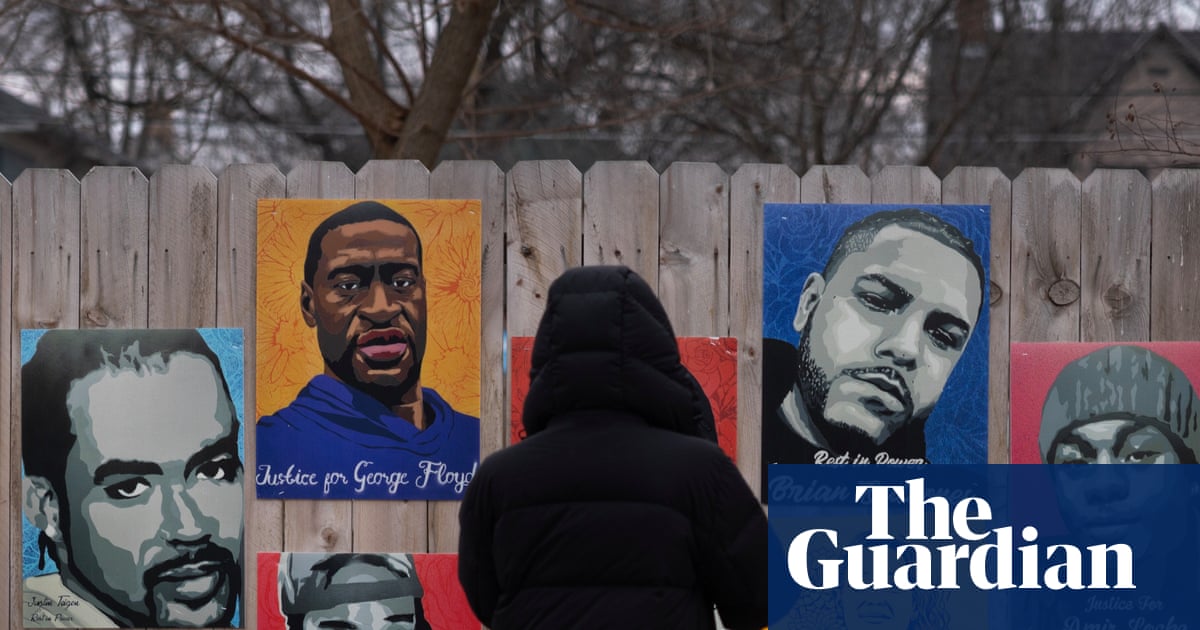
And yet, the notion that community members must protect and provide for one another, whether because of state violence or state failures, is not new. The police killing of George Floyd in 2020, and the uprising that ensued, also spurred neighborhood-level organizing in Minneapolis.
In Schwesnedl’s words: “2020 never ended.”
Andrew Fahlstrom, an organizer with rapid-response group Defend the 612, said Floyd was killed three blocks from his house. For at least a week during the 2020 uprising, the police disappeared, Fahlstrom said, and the fire department was overwhelmed. According to the city’s review, residents felt abandoned during that time.
“We had to organize our own infrastructure,” Fahlstrom said.
Much of the community response to the current ICE surge – including efforts to document actions by immigration officers, build camaraderie and communication between neighbors, and coordinate mutual aid – builds on existing efforts. “This is not our first rodeo,” Fahlstrom said.
“I don’t know where Minneapolis police are right now,” Schwesnedl said during his ICE-watching shift. When asked if Minneapolis police was refusing to respond to residents’ calls about incidents with ICE, as many residents have claimed, a department spokesperson simply re-sent a link to the city’s separation ordinance, which prohibits city officials from carrying out immigration enforcement.
During the 2020 protests against police violence, a common call-and-response was: “Who keeps us safe? We keep us safe!” The same sentiment underpins the present. Parents stand guard outside schools in 13F (-10.6C) weather. Mothers are gathering gas masks. People with whistles to warn their neighbors about ICE mill about on corners. People like Schwesnedl patrol the streets.
“We’ve always had to do it ourselves,” Kelly Petersen, one of the founders of the Community Aid Network (CANMN), said. “We have whistles, and we have organizing. That’s all we have against people with huge trucks and guns.”
‘It’s just us, y’all’
Blocks from where Renee Good was killed is George Floyd Square, a memorial for Floyd as well as a gathering and healing space for the community.
“It’s just us, y’all,” Marcia Howard, an educator and organizer, recently told a group of neighbors at the square’s morning meeting. On the purse around her torso was the image of George Orwell’s dystopian novel 1984. “No one’s here to save us,” she said.
Neighbors at the square have met twice a day, every day, since Floyd was killed more than five years ago. Police are not welcome in the space, while efforts to support the community, such as free clothes, food and medical care, are central to its ethos.
There has been a dramatic resurgence of mutual aid around the Twin Cities, including food drives and fundraisers to support those on lockdown. Demand for food deliveries through CANMN, created during the uprising, doubled in December and again in January, Kelly Petersen, one of its founders, said.
“People are terrified and not leaving their houses,” Jennifer Arnold, the executive director at the non-profit Inquilinxs Unidxs Por Justicia, said. “It is at a level of crisis almost all the time.”
In turn, neighbors are stepping up to help those in hiding: offering rides, laundry, food, rent and other necessities. Becky, whose daughter attends Folwell elementary school, has been driving children with vulnerable parents to school since ICE arrived in December. She asked that her last name not be used due to safety concerns.
“The situation is reminiscent of 2020 in that the government is shooting at us,” she told me. “But the scale of my involvement is greater.”
“It’s heartbreaking. Our inbox, our DMs, are just flooded with people saying: ‘Help us,’” Petersen said. “If you’re local and you’re not slotted into any work right now, there’s never been a better time to get involved. It’s not that hard. You just have to show up every single week.”
Petersen also began ICE watching last Wednesday – the same morning Good was killed. She had just administered first aid to a woman in Powderhorn park when she heard shots had been fired on Portland Avenue. Good’s wife was in a group chat with Petersen. “They shot my wife in the face,” she texted. It was the last message Petersen read that morning before her phone died. She relayed it to other legal observers around her. “We all just stood there and looked at each other,” she said.
The day after Good was killed, Fahlstrom said this has not had a chilling effect on community defense. “It was exactly the opposite,” he said. “Thousands more people were signing up to do exactly the work that Renee Good was doing, and to carry on her legacy.”
Limiting ‘damage and terror’
While much of the organizing in Minneapolis is taking place on a neighborhood level, organizers in other cities and states are sharing resources and tactics. Organizers with the Chicago neighborhood ICE watch group Protect Rogers Park, for instance, offered training to people in Minneapolis and explained what worked about their systems and what didn’t.
When ICE teargassed a group of protesters blocks from Good’s memorial earlier this week, Sam Luhmann, a 16-year-old from Chicago, was among those on the scene. Luhmann came to Minneapolis the day after Good’s killing.
“I was in Chicago during the heaviest parts of ‘Midway Blitz’, and it was nothing like Minneapolis right now,” he said. “The sheer number. The violence. The aggression. The chemical weapons are on steroids here. No one can breathe when ICE comes around.”
“It feels reminiscent of George Floyd,” Petersen said. “But it’s different. It’s darker.”
For one, the MPD is “intimately accountable to the people of Minneapolis because they live here”, Fahlstrom said. But when federal agents come in, all residents can do is “limit their damage and terror as much as possible”, he said. “They look at us like enemies of the state,” Petersen added.
There has also been a growing number of threats made to community members trailing agents. “You guys gotta stop obstructing us – that’s why that lesbian bitch,” a reference to Good, “is dead,” an ICE agent said to an observer, according to the Minnesota Reformer.
“Peaceful protest is a sacred first amendment right. This was not that,” DHS assistant secretary Tricia McLaughlin told the Guardian when asked about ICE’s policy towards observers. “If you impede law enforcement operations, ignore law commands, and use a deadly weapon to kill or cause bodily harm to a federal law enforcement office, there are dangerous and, in this case deadly, consequences. This was entirely preventable.”
Just before I joined Schwesnedl for his afternoon commute Tuesday, I heard honking and whistles blocks from my house. An ICE observer – a white student at Hamline University, according to witnesses – had been pulled from his car and taken into custody. A group of observers was gathered near his now-empty vehicle, trying to decide what to do next.
As tensions continue to escalate in the city, so has the federal response. On Thursday, Trump threatened to enact the Insurrection Act, which would grant the armed forces authority to conduct law enforcement activities, to quell resistance to ICE. On Friday, a federal judge told agents not to retaliate against peaceful protesters or stop drivers who are not forcibly obstructing officers.
Also on Friday, the Trump administration began a criminal investigation into mayor Jacob Frey and governor Tim Walz for conspiring to impede ICE. Walz has since “mobilized” the Minnesota national guard and is on standby if needed. On Sunday, the Department of Justice said it is investigating a group of protesters who disrupted church services where a local ICE official is reportedly a pastor.
“People around the country need to be organizing,” Fahlstrom said. “Minneapolis is not gonna be the last place that falls under federal occupation.”
During his ICE observer shift, Schwendel began to drive towards agents the dispatcher said were surrounding someone in the neighborhood. But the area was cleared before he could get there, so he made a U-turn. Often, people are snatched too quickly for observers to do anything about it, multiple people said. But the thing about ICE watch, Schwesnedl said: you never know how many people you might save.
