

25,105 units in 2025; rise in voluntary donation camps
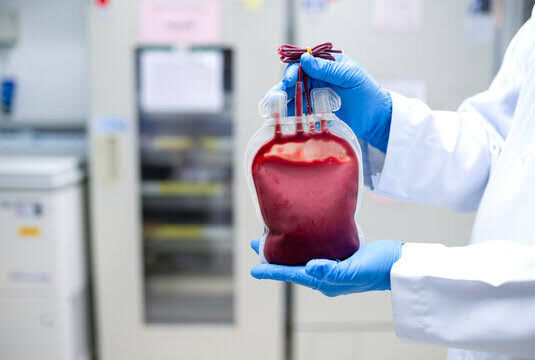
Hyderabad: The blood bank at Nizam’s Institute of Medical Sciences (NIMS) has recorded its highest-ever annual blood collection, with 25,105 units collected in 2025, officials said on Tuesday.
The facility is managed by the Department of Immuno-Haematology and Blood Transfusion (IHBT).
727 SDP procedures completed
Despite constraints in the availability of apheresis kits, which are specialised single-use disposables required for advanced blood component collection, the blood bank completed 727 single donor platelet (SDP) procedures during the year.
Hospital authorities said the milestone reflects a significant expansion in voluntary blood donation activity and improved operational coordination within the institute.
Voluntary donation camps see a sharp rise
According to the IHBT department, 50 voluntary blood donation camps were organised in 2025, a substantial increase compared to the department’s earlier annual average of around 10–15 camps.
“On some days, we conducted three donation camps in a single day, which required extensive coordination of staff, transport, screening and storage,” NIMS officials said in a statement.
The camps were organised across educational institutions, government offices and public spaces, with a focus on repeat voluntary donors rather than replacement donations.
Sustained team effort made this possible, says NIMS blood bank head
Dr Sudhir Kumar Vujhini, head of the NIMS Blood Bank, said the achievement was the result of sustained teamwork across departments.
“This level of collection is not possible without cooperation from senior hospital management, IHBT faculty, technical staff, nursing teams, residents and our BSc Transfusion Medicine students,” he said. “Every unit collected involves screening, processing, storage and timely issue; it is a continuous cycle.”
He also noted that platelet availability remained a challenge due to limited access to apheresis kits, a constraint faced by several public-sector blood banks.
Is this a record because the blood supply is usually low?
Experts point out that the record at NIMS must be viewed against a broader backdrop of chronic blood shortages, particularly in large urban hospitals.
Dr R Lakshmi Narayanan, a transfusion medicine specialist not associated with NIMS, said that most tertiary hospitals struggle to maintain adequate stock throughout the year.
“In India, demand consistently outpaces supply. Seasonal drops, festival periods and exam months often see collections fall sharply,” he said. “When a government hospital sustains high voluntary donation numbers, it stands out because the baseline is usually constrained.”
How do other major hospitals fare in blood collection and storage?
While private and public tertiary hospitals in metros like Hyderabad, Chennai and Bengaluru operate high-capacity blood banks, most rely on a mix of voluntary camps and replacement donations.
• Large government hospitals typically collect tens of thousands of units annually but face periodic shortages of platelets and rare blood groups.
• Corporate hospitals often depend on networked blood banks and external suppliers, particularly for SDPs.
• Teaching hospitals with transfusion medicine programmes tend to perform better in voluntary donor mobilisation.
“Numbers alone don’t tell the full story,” said Dr Amisha Deshpande, a public health expert focusing on blood services. “What matters is consistency, component separation and whether voluntary donations form the backbone of supply.”
Platelet demand continues to outstrip supply
Single donor platelets remain one of the most in-demand components, especially during dengue and viral fever seasons. Experts say limited access to apheresis kits and trained manpower continues to restrict capacity.
“Even high-performing blood banks face bottlenecks in platelet collection,” Dr Deshpande added. “This is a systemic issue, not an institutional failure.”
‘Regular voluntary donation is the best solution’
Health officials say the NIMS record highlights what structured outreach and institutional backing can achieve, but also underlines the fragile nature of blood supply systems.
“Blood is not something you can manufacture on demand,” Dr Vujhini said. “Regular voluntary donation is the only sustainable solution.”
Source link
