

4 people lightly hurt, buildings mangled as Iranian missile attack hits Tel Aviv

An Iranian missile attack lightly injured four people and badly damaged property in Tel Aviv on Tuesday morning after Israeli airstrikes struck multiple Islamic Republic regime sites overnight.
The attack on Tel Aviv was one of several salvos fired from Iran at Israel overnight Monday and into Tuesday morning targeting north, south and central Israel, sending millions repeatedly scrambling for bomb shelters. One person was also lightly wounded in a Haifa suburb.
In Tel Aviv, medics said they treated the four people at the site of the Iranian ballistic missile impact, but none required hospitalization.
Images showed widespread destruction with a warhead, that police said contained 100 kilograms of explosives, leaving a large crater alongside mangled buildings and vehicles at the scene of the attack.
“As soon as we received reports of the impact, we responded with large forces and arrived at the scene within minutes. We saw destruction, smoke, and chaos. We immediately began conducting searches. Four casualties were walking around in mild condition and did not require further medical treatment,” said Magen David Adom medic Yoel Moshe.
Home Front Command official Col. Miki David said the warhead caused significant damage to three nearby buildings, but resulted in no serious injuries.
“I’m happy to say that in this incident you’re seeing behind me, which appears visually dramatic, there are only three light injuries,” he told reporters at the scene, adding that most residents took cover in a nearby bomb shelter.
David further assessed the considerable damage caused by the projectile, indicating that it did not split off from a cluster munition, but noted it still appears to have been smaller than the conventional, non-cluster, warheads previously launched by Iran.
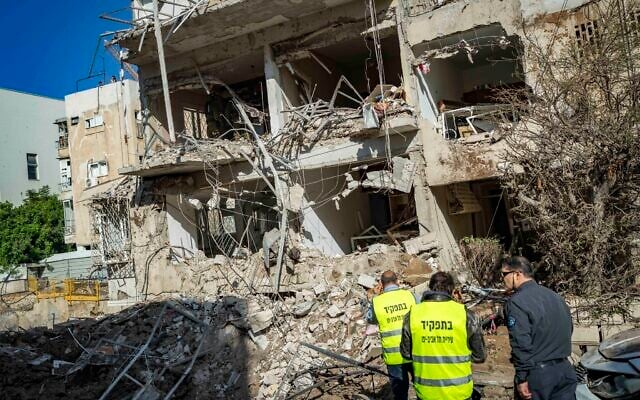
Tel Aviv Mayor Ron Huldai told reporters at the scene that “many homes were damaged, and I assume others will be found when the examination is over.”
He said the main building hit was old and will be demolished if there is no way to repair it.

Doron, a resident of the damaged neighborhood, told the Maariv news outlet he couldn’t stop shaking after the impact.
“It was a crazy boom. I went to the stairwell with my partner, and suddenly I heard a huge boom. I embraced her, and we were both scared. I told her it was right above us, right here above us,” he said. “Thank God we are okay.”
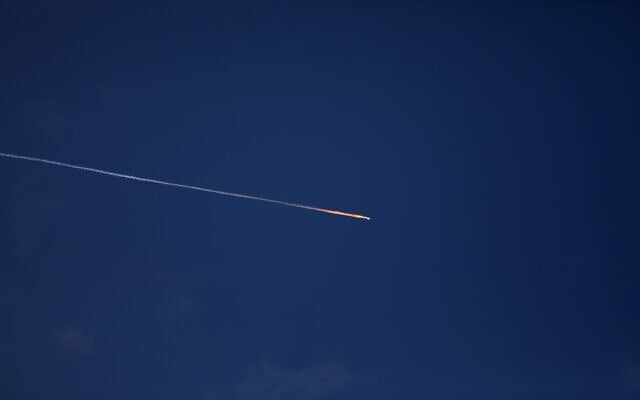
The destructive impact came after Iran fired several missile salvos overnight Monday and into Tuesday morning after an 11-hour lull.
A man who stepped on a missile fragment following an attack on northern Israel was lightly wounded and being treated for his wounds, the Magen David Adom ambulance service said past midnight. Damage was also caused to a home in the Haifa suburb of Nesher by a cluster munition from the attack.
Several other strikes throughout the night and into the morning set off sirens in parts of southern, northern, and central Israel, without any injuries reported.
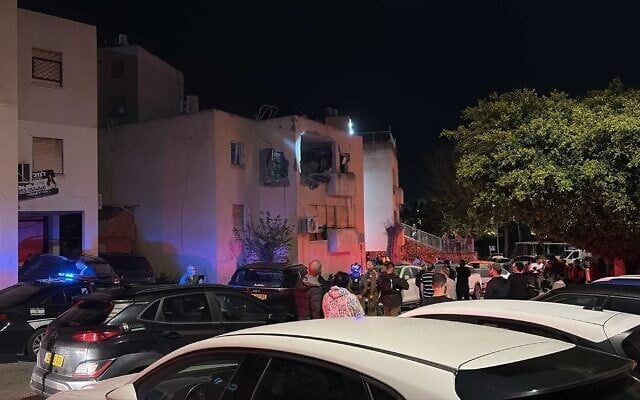
In recent days, Iran’s strikes on Israel have slowed to roughly 10 missiles a day from 90 on the first day of the war, and the IDF said Monday that it had destroyed or disabled about 330 of Iran’s estimated 470 ballistic missile launchers.
More than half of the launchers were destroyed in strikes, while the others are considered to be inoperable after the air force struck entrances to subterranean facilities that house them, according to the military, which vowed to keep hunting down the roughly 150 remaining launchers.
Iran also kept up attacks on the Gulf.
In Kuwait, power lines were hit from air defense shrapnel, causing partial electricity outages in several hours. Missile alert sirens sounded in Bahrain, and Saudi Arabia’s Defense Ministry said it had destroyed 19 Iranian drones targeting its oil-rich Eastern Province.
The attacks came as US President Donald Trump announced his administration was engaged in talks to end the war that the US and Israel launched on the Islamic Republic on February 28 in a bid to destabilize its regime and destroy its nuclear and ballistic missile programs.
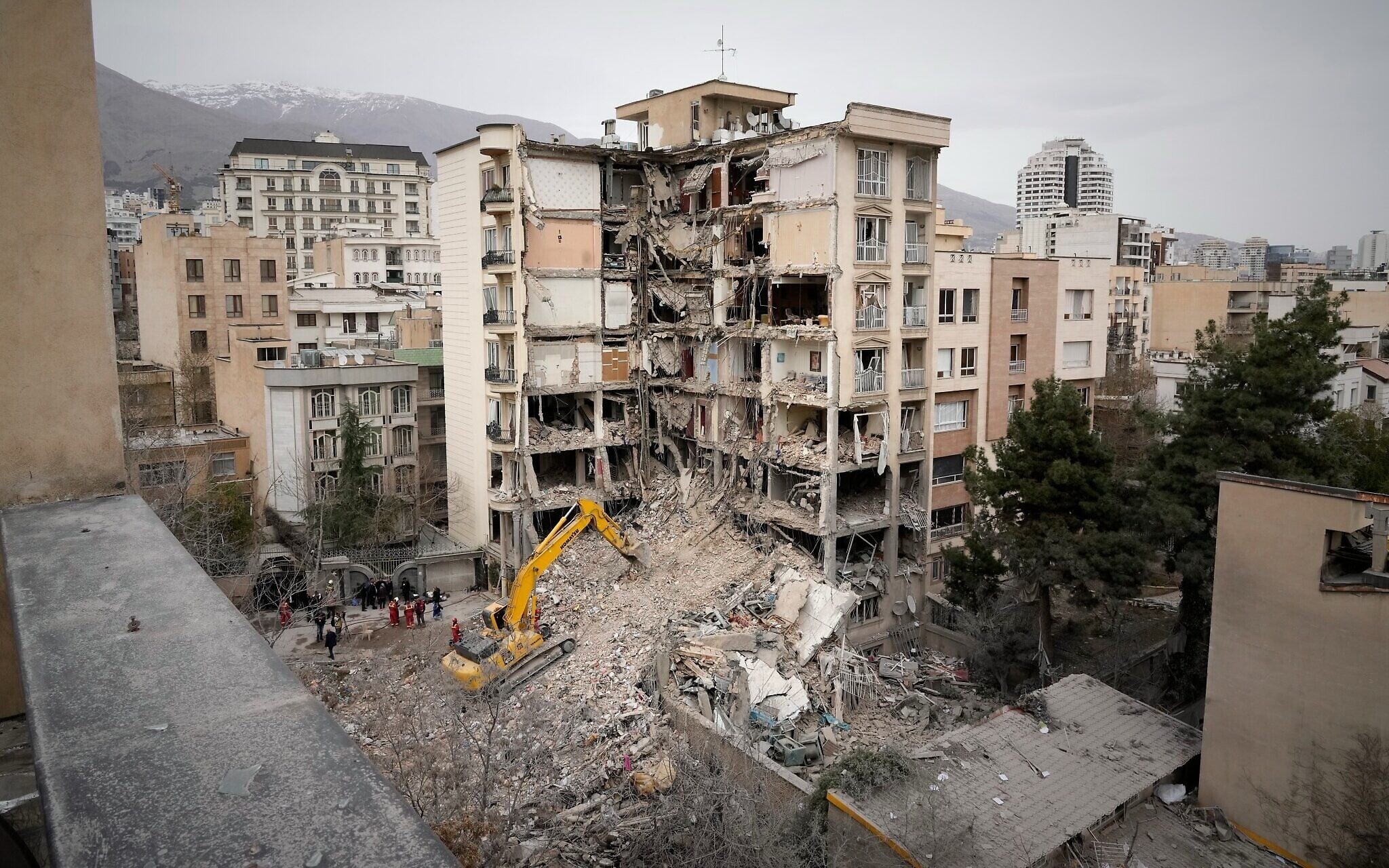
Soon after Trump’s announcement, the IDF said it launched a new wave of strikes targeting Iranian regime infrastructure sites in Tehran.
The military later said the Israeli Air Force struck the IRGC’s “main security headquarters.” According to the IDF, the site was embedded within “civilian infrastructure” and was used to “synchronize regional units responsible for enforcing regime order and internal security,” including the Basij paramilitary force. Steps were taken to mitigate civilian harm in the strike, the military said.
Overnight into Monday, dozens of Air Force jets dropped over 100 bombs on Iranian military bases and weapons production sites during a wave of airstrikes in Tehran, the IDF said.
According to the IDF, the sites included: A base of the Islamic Revolutionary Guard Corps’ Quds Force that oversaw “operational and intelligence activity”; an IRGC air defense headquarters; an IRGC ground forces headquarters; an intelligence headquarters of the IRGC Quds Force; a naval cruise missile production site belonging to the Iranian defense ministry; and several more facilities involved in the production and research of weapons, including in the fields of electronics, ballistic missiles, and warheads.
In an additional update on the strikes, the IDF said Tuesday morning that the air force struck ballistic missile storage facilities and various Iranian regime headquarters.
The military said, in Tehran on Monday, it struck two intelligence headquarters of the Islamic Revolutionary Guard Corps, and a headquarters of Iran’s Intelligence Ministry.
Also in the capital, IAF aircraft hit weapon storage sites and air defense systems, the military said.
Overnight, the IDF said, it struck in northern and central Iran more than 50 targets, including sites used to store and launch ballistic missiles.
Draft Security Council resolution calls to open Hormuz by ‘all necessary means’
The UN Security Council is negotiating on a draft resolution introduced by Bahrain to authorize states to use “all necessary means” to ensure freedom of navigation in the Strait of Hormuz, diplomatic sources said Monday.
The draft text, seen by AFP, also demands that Iran “immediately cease all attacks against merchant and commercial vessels and any attempt to impede lawful transit passage or freedom of navigation” in and around the Strait.
Just a trickle of cargo ships and tankers, most of them Iranian, have made it through the Strait since Iran effectively blocked it in response to the US-Israeli bombing campaign. Normally, about a fifth of global crude oil and liquefied natural gas pass through the Strait. The virtual stoppage has sent prices soaring.
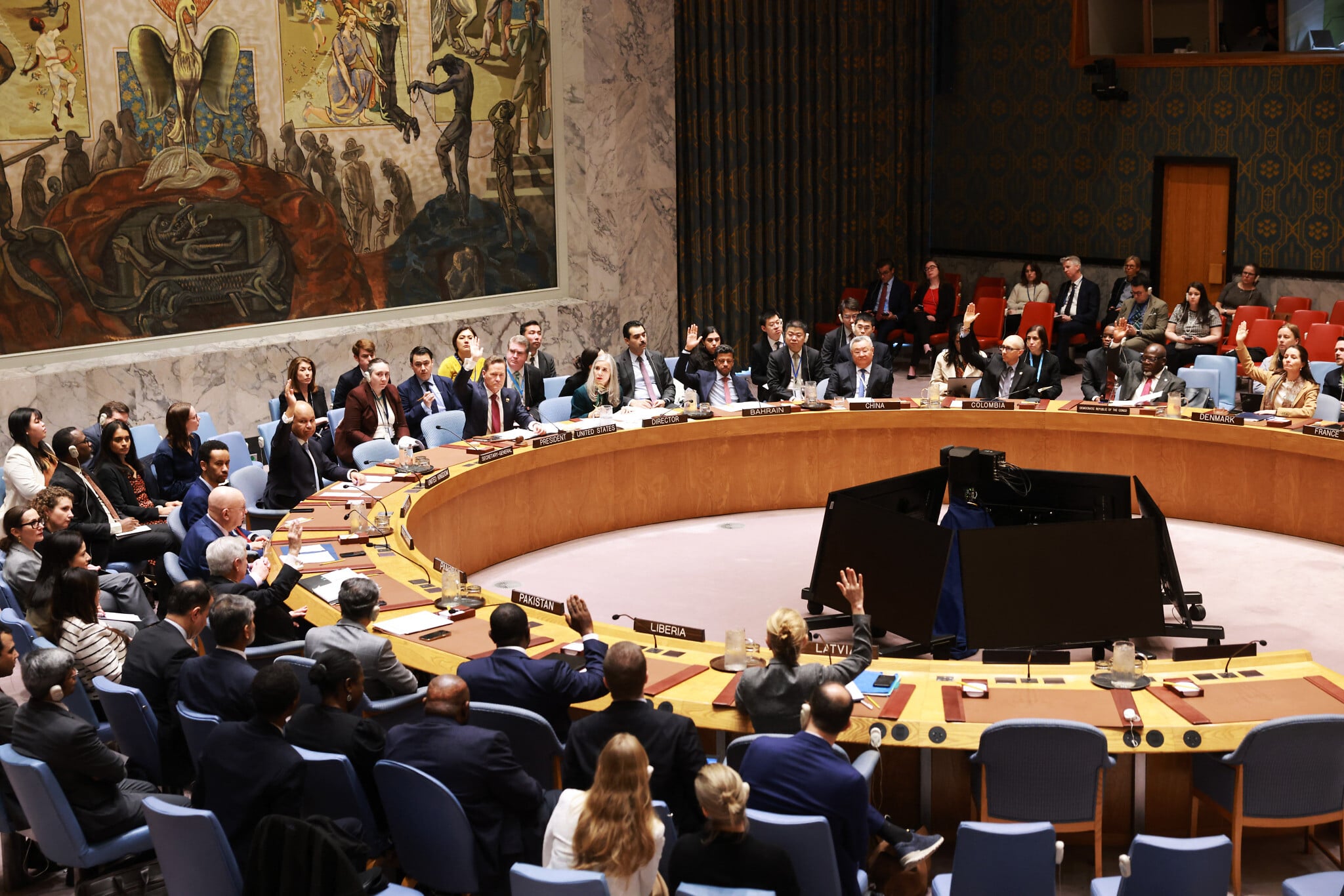
The UN Security Council draft resolution proposes allowing member states “to use all necessary means” — including within the territorial waters of littoral states within or bordering the Strait — “to secure transit passage and to repress, neutralize and deter attempts to close, obstruct or otherwise interfere with international navigation” there.
The draft also threatens targeted sanctions against those who “undermine navigational rights and freedoms” in the Strait.
The resolution text could be modified during the negotiations among member states in the 15-member council, the UN’s highest decision-making body.
Its chances of approval by the council, where the five permanent members have veto power, remain unclear.
Bahrain, acting on behalf of the Gulf states, was behind a resolution adopted by the council in mid-March that demanded the “immediate cessation” of Iranian attacks against the Gulf states and Jordan.
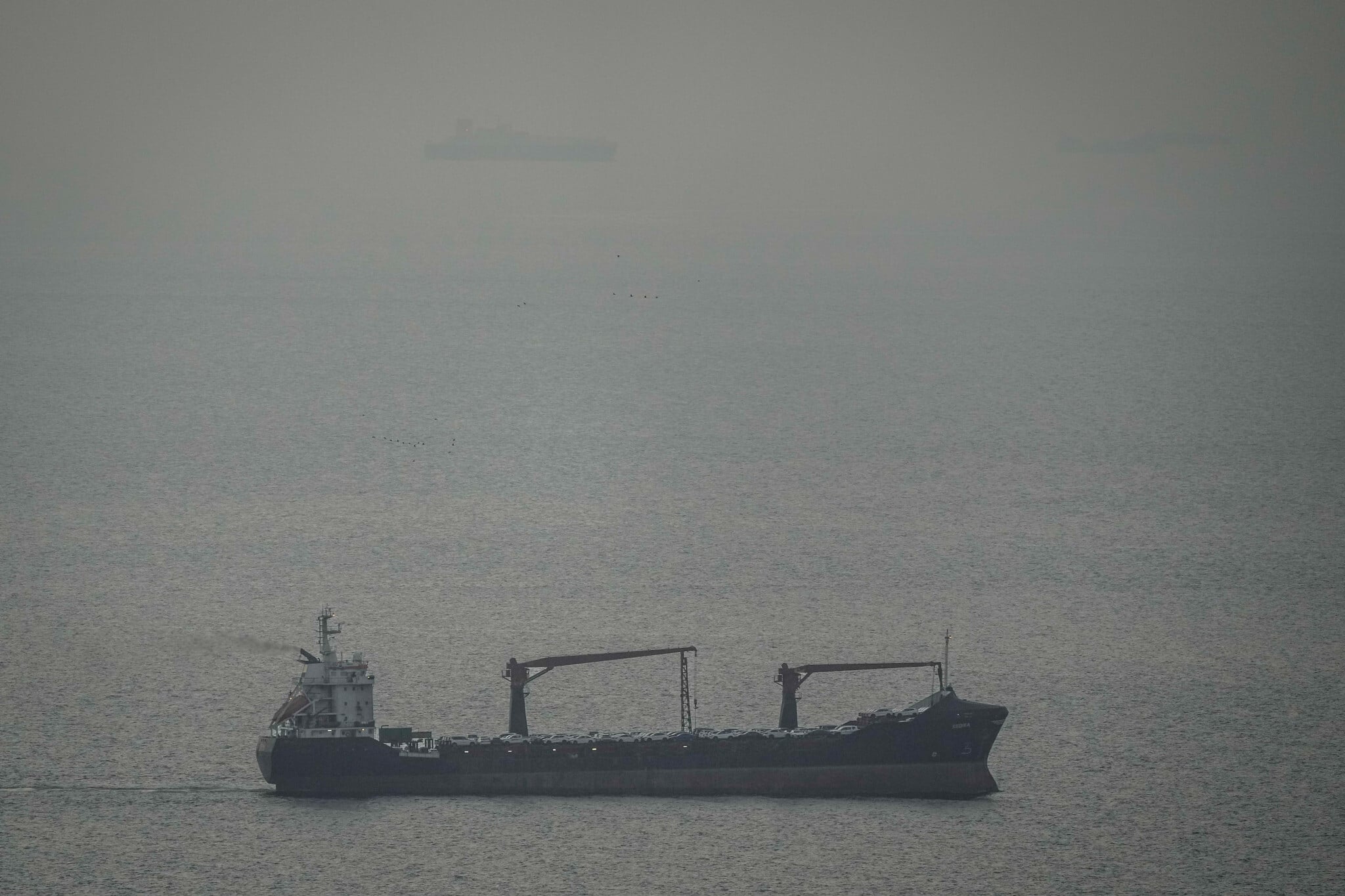
Meanwhile, two tankers bound for India sailed through the Strait of Hormuz on Monday.
The two India-flagged tankers were carrying liquefied petroleum gas (LPG) used mostly for cooking in India. They loaded at anchorages in Kuwait and the United Arab Emirates, LSEG ship-tracking data showed.
The Pine Gas, which loaded in UAE waters, sailed through the strait followed by the Jag Vasant carrying LPG from Kuwait, ship-tracking data on the MarineTraffic platform showed.
India’s Ministry of Ports, Shipping and Waterways, confirmed that the two tankers, carrying more than 92,000 tons of LPG, had sailed through Hormuz and were expected to reach ports in India between March 26-28.
Hundreds of vessels have dropped anchor in and outside of the Gulf, cutting off food and other vital imports and energy exports, mostly to Asia and Europe, and some 20,000 seafarers remain stranded inside the Gulf, according to the UN’s shipping agency.
