

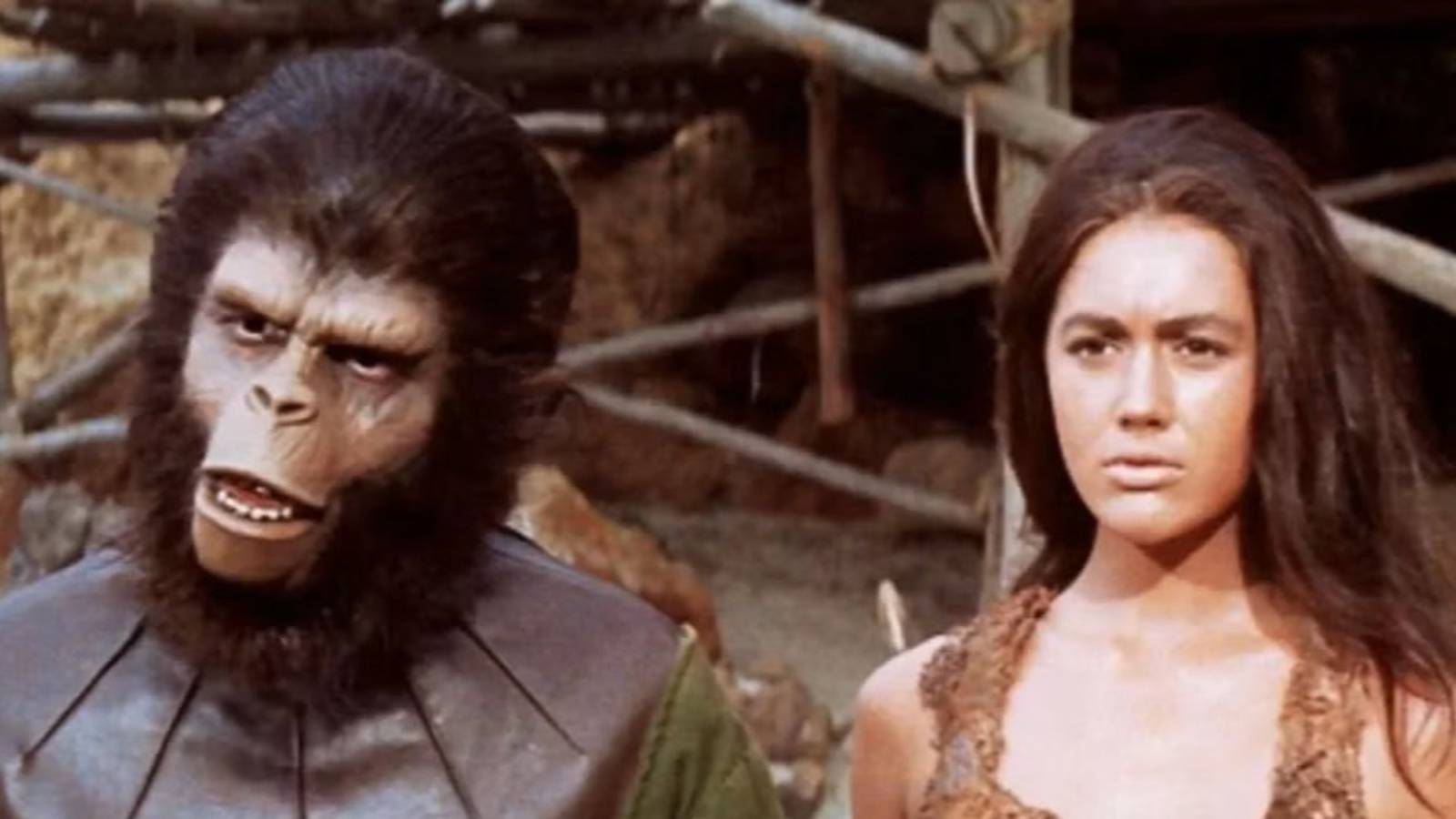
It’s incredible how much rewatching the original Planet of the Apes movies changes how you see the whole series. While the average viewer will be familiar with the classic 1968 film and the modern reboot series, there are many interesting elements in sequels like Beneath the Planet of the Apes.
Although the outdated visuals might put some viewers off, you’d be missing out on some great cinematic experiences if you ignored the original Planet of the Apes series. Whether it’s deeply fascinating political themes or just the joy of comparing them to their modern counterparts, Planet of the Apes remains a fascinating franchise.
Planet Of The Apes Reveals Itself As A True Political Saga
While most audiences are familiar with the original 1968 Planet of the Apes movie, going back to rewatch the whole series, it’s impossible not to be impressed by how much it accomplishes over its five-film run. This reveals the series as being about far more than its iconic Statue of Liberty twist, as it taps into the political climate of its era.
Whether it’s the fear of mutually assured destruction in Beneath the Planet of the Apes or the exploration of media sensationalism in Escape from the Planet of the Apes, the films act as a time capsule of the political climate. Taken as a whole, the series tackles issues of racism, authoritarianism, and social upheaval.
The original Planet of the Apes movies are often dismissed as somewhat disposable due to the outdated special effects and costumed characters, but they were smartly written, and there’s a reason the series remains a popular franchise today. These movies might be campy and fun, but they are also politically rich and deeper than their reputation suggests.
You Realize How Bleak The Series Actually Is

It’s easy to think of the Planet of the Apes movies as fun sci-fi satires, but rewatching them, I’m struck by how dark and bleak they can be at times. Over the course of five movies, these releases delve into dark themes and aren’t afraid to take big swings with major narrative consequences.
From the hopelessness of Charlton Heston’s dark realization that he was on Earth the entire time to the way the planet is ultimately destroyed at the end of the second film, the series repeatedly refuses to give audiences anything resembling a comforting ending.
Overall, the Planet of the Apes movies depict humanity as a doomed species, showcase violence as inevitable, and portray history as a cycle of despair from which there is no escape. Even decades later, that uncompromising vision still gives the films a grim power that feels far more daring than most modern blockbusters are willing to attempt.
Its Time Loop Narrative Brings Everything Together Perfectly

The five movies in the original Planet of the Apes series wrap everything up perfectly, creating its own time loop that begins with the first movie. When we first meet Charlton Heston’s Taylor, we learn that the world has been overtaken by apes who have developed the ability to communicate, but we don’t know exactly how this happened.
As the series progresses, our questions are gradually answered as Cornelius and Zira escape their doomed planet and travel back to 1970s Los Angeles. This sets in motion a series of events that would lead to the world being overrun by primates and their eventual takeover of mankind.
Battle for the Planet of the Apes sees Cornelius and Zira’s son, Caesar, attempt to maintain peace between humans and apes, but it’s too late, as the uprising continues. All of this means that if Taylor never traveled to the future in the first place, none of this would have happened, and Planet of the Apes becomes a paradox within itself.
The Declining Budget Becomes More and More Obvious

Rewatching the original Planet of the Apes movie, I was immediately struck by its campy aesthetic and low-budget feel. This was classic 1970s sci-fi filmmaking at its purest, and although it lacked the polished visual effects of the reboot series, its unique character made it intensely watchable.
However, when going through the entire series, its budget constraints become far more obvious. Planet of the Apes cost $5.8 million in 1968, but by the time we get to Battle for the Planet of the Apes in 1973, its budget was $1.7 million. With 5 million less to play around with, the filmmakers had to use their funds wisely.
The final films in the original series have an almost TV-movie quality, and looking at the ape characters, it was immediately clear that they were just human actors in costume. Yet, the story was still great, the characters were interesting, and its thematic exploration of political topics remains relevant, meaning its status as a classic franchise is never in question.
You Understand Why The Reboot Took Things In A Much Different Direction

Rewatching the original Planet of the Apes movies hits different today because we can compare them directly to the reboot series. While some reboot series would simply retell the same story with up-to-date visuals and effects, Rise of the Planet of the Apes took a different approach, completely reinventing the origin.
Instead of having the astronaut Taylor find himself in a dystopian future, Rise of the Planet of the Apes tells the story of a genetically enhanced chimpanzee raised by the chemist Will Rodman (James Franco). The ape named Caesar ultimately kicks off a rebellion against humanity as the brutal war continues in later films.
This felt like a more modern story, allowing the filmmakers to take the best aspects of the original series while leaving the more campy, outdated parts behind in the 1970s. But seeing both versions side by side only reinforces how much raw creativity and social bite the original series still has beneath its dated surface.
Caesar Emerges As The True Protagonist

While most viewers will think of Charlton Heston’s Taylor or the villainous chimp Dr. Zaius when imagining characters from the original Planet of the Apes series, when we go back and watch all the movies, Caesar emerges as the true protagonist. As the son of Cornelius and Zira, he’s ultimately the most important character in the overall series.
Portrayed by Roddy McDowall in Conquest of the Planet of the Apes and Battle for the Planet of the Apes, Caesar is an evolved chimpanzee who is the leader of the ape army. When he sees that apes are held captive in slavery, he sees the hypocrisy of the humans and realizes that the only path forward is to lead an uprising that will change the course of history.
Viewed as a whole, the original series becomes less a collection of quirky sci-fi adventures and more a tragic generational epic. Its rough edges remain, but its ambition is undeniable. Rewatching today reveals Planet of the Apes as far smarter, stranger, and more daring than its pop-culture reputation suggests.
- Created by
-
Pierre Boulle
- Cast
-
Charlton Heston, Roddy McDowall, Kim Hunter, Maurice Evans, James Whitmore, Linda Harrison, Mark Wahlberg, Helena Bonham Carter, Tim Roth, Michael Clarke Duncan, Paul Giamatti, James Franco, Andy Serkis, John Lithgow, Freida Pinto, Gary Oldman, Keri Russell, Kodi Smit-McPhee, Jason Clarke, Toby Kebbell, Judy Greer, Woody Harrelson, Amiah Miller, Kevin Durand, Dichen Lachman, William H. Macy, Owen Teague, Freya Allan
- Movie(s)
-
Planet of the Apes, Beneath the Planet of the Apes, Escape from the Planet of the Apes, Conquest of the Planet of the Apes, Battle for the Planet of the Apes, Rise of the Planet of the Apes, Dawn of the Planet of the Apes, War for the Planet of the Apes, Kingdom of the Planet of the Apes
Source link
