


The original 1977 release of Star Wars fundamentally altered the film industry, transforming a risky space adventure into an unprecedented cultural and financial juggernaut. Before this release, science fiction often relied on bleak dystopian themes or slow-paced cerebral explorations. However, George Lucas infused the genre with high-fantasy archetypes, delivering a space opera characterized by mystical energy fields, chivalric sword fights, and clearly defined battles between good and evil. This stylistic alchemy established a unique cinematic identity that resonated globally, generating a highly profitable franchise that has maintained its position as a central pillar of pop culture for almost five decades.
Naturally, the massive box office returns of the 1977 Star Wars inspired rival studios to greenlight their own ambitious space operas, hoping to capture a fraction of that lucrative audience. These competing productions attempted to replicate the aesthetic and narrative formulas of the galaxy far, far away, populating their universes with heroic farm boys, roguish smugglers, and oppressive galactic empires. However, these imitators ultimately failed to achieve the same level of prestige, influence, or franchise longevity, regardless of whether the individual films were critically disastrous or genuinely entertaining standalone adventures.
7) Wing Commander
The 1999 adaptation of the popular video game series Wing Commander stands as one of the most creatively bankrupt attempts to cash in on the space opera craze. Directed by Chris Roberts, the film follows Christopher Blair (Freddie Prinze Jr.) and Todd “Maniac” Marshall (Matthew Lillard) as they join a desperate interstellar war against a feline alien race known as the Kilrathi.
Wing Commander desperately tries to mimic the World War II-style dogfights and roguish camaraderie of the Star Wars franchise, but it strips away any sense of grandeur or coherent world-building. The production also suffers from abysmal dialogue, flat characters, and visual effects that look significantly worse than the digital cutscenes of the games it was based on. Unlike the charmingly practical effects of Star Wars, this adaptation relies on muddy computer graphics and uninspired ship designs, failing to satisfy fans of the source material or attract a new audience and effectively killing any chance of an ongoing cinematic universe.
6) Rebel Moon
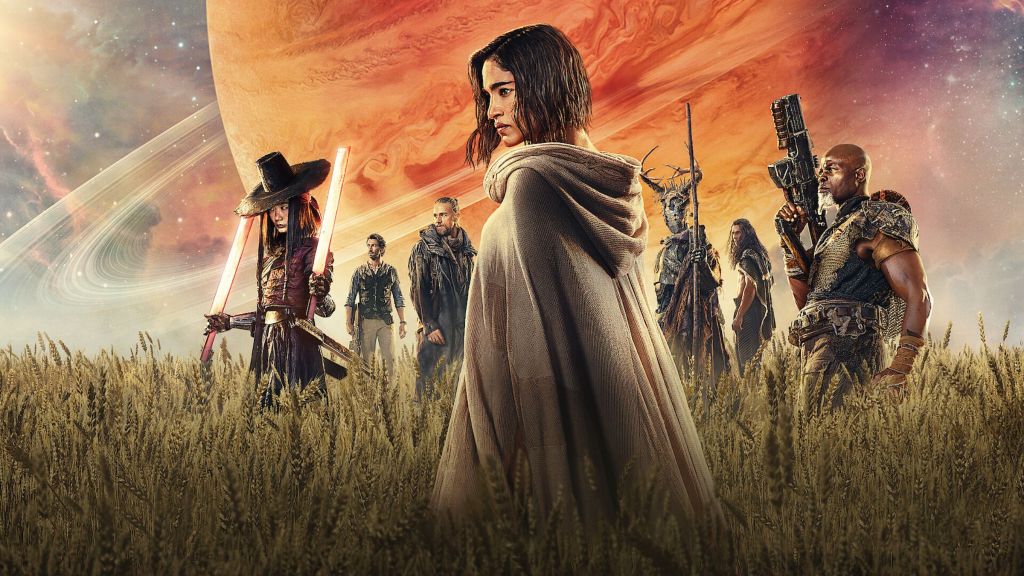
Director Zack Snyder originally pitched Rebel Moon to Lucasfilm as a mature entry in the Star Wars universe before reworking the concept into an original property for Netflix. The narrative centers on Kora (Sofia Boutella), a former soldier who recruits a band of warriors from across the galaxy to defend a peaceful farming colony from the oppressive Motherworld. The direct lineage to the Lucasfilm franchise is painfully obvious, with glowing energy swords, fascist galactic empires, and a dusty cantina filled with bizarre aliens.
Despite a massive production budget and extensive world-building efforts, Rebel Moon fails to establish a compelling identity of its own. Furthermore, Snyder relies heavily on his signature slow-motion action sequences and grim aesthetics, draining the story of the earnest adventure and charm that define successful space operas. As a result, Rebel Moon is a tedious and derivative experience, proving that assembling the superficial tropes of a legendary franchise does not automatically result in an engaging or memorable cinematic universe.
5) Battle Beyond the Stars

Legendary B-movie producer Roger Corman rushed Battle Beyond the Stars into production to capitalize directly on the lingering box office momentum of the late 1970s science fiction boom. The plot follows Shad (Richard Thomas), a young farmer who scours the cosmos to hire mercenaries to protect his peaceful planet from an evil warlord named Sador (John Saxon). The narrative is a blatant retelling of Akira Kurosawa’s Seven Samurai, a structural foundation that George Lucas also heavily relied upon for Star Wars.
Corman’s production features an eclectic cast of alien outlaws, including a space cowboy literally named Cowboy (George Peppard), but it lacks the budget to execute its grandiose vision. The resulting film is a campy, low-rent imitation filled with recycled sets and questionable special effects. While Battle Beyond the Stars possesses a certain trashy charm and features a triumphant score by composer James Horner, it remains a fundamentally flawed cash-grab that never possessed the narrative weight necessary to spawn a lasting franchise.
4) Valerian and the City of a Thousand Planets

Director Luc Besson brought a lifelong passion project to the screen with Valerian and the City of a Thousand Planets, an adaptation of the seminal French comic book series that heavily inspired the original Star Wars aesthetic. The story follows Major Valerian (Dane DeHaan) and Sergeant Laureline (Cara Delevingne) as they navigate a sprawling, intergalactic metropolis to uncover a vast government conspiracy. The production features a staggering budget of over $180 million, which Besson utilized to create incredibly dense and vibrant digital environments that rival the best planetary designs of the Lucasfilm prequels.
Valerian and the City of a Thousand Planets succeeds as an astonishing visual spectacle, offering highly creative alien species and wildly inventive action sequences. Unfortunately, the central romance lacks any genuine chemistry, and the stilted performances of the two leads tether the breathtaking visuals to a lifeless emotional core. This severe miscasting prevented audiences from investing in the characters, turning a beautifully crafted universe into a monumental financial failure that halted any plans for future sequels.
3) The Black Hole

Walt Disney Productions developed The Black Hole as a direct response to the massive success of Star Wars, attempting to blend family-friendly robot sidekicks with unusually dark existential horror. The film centers on the crew of the USS Palomino, including Captain Dan Holland (Robert Forster), as they discover a lost vessel hovering on the edge of a massive singularity. Aboard the derelict ship, they find the mad scientist Dr. Hans Reinhardt (Maximilian Schell) commanding an army of faceless drones.
With The Black Hole, Disney heavily invested in groundbreaking practical effects and a menacing score to replicate the epic scale of its rival. However, the movie’s tone fluctuates wildly between goofy interactions involving the hovering robot V.I.N.CENT (voiced by Roddy McDowall) and a genuinely terrifying descent into a literal representation of Hell. The Black Hole is an effectively atmospheric and visually impressive film, yet its brooding narrative and confusing metaphysical climax proved far too grim to launch a mainstream toy-driven empire.
2) Krull
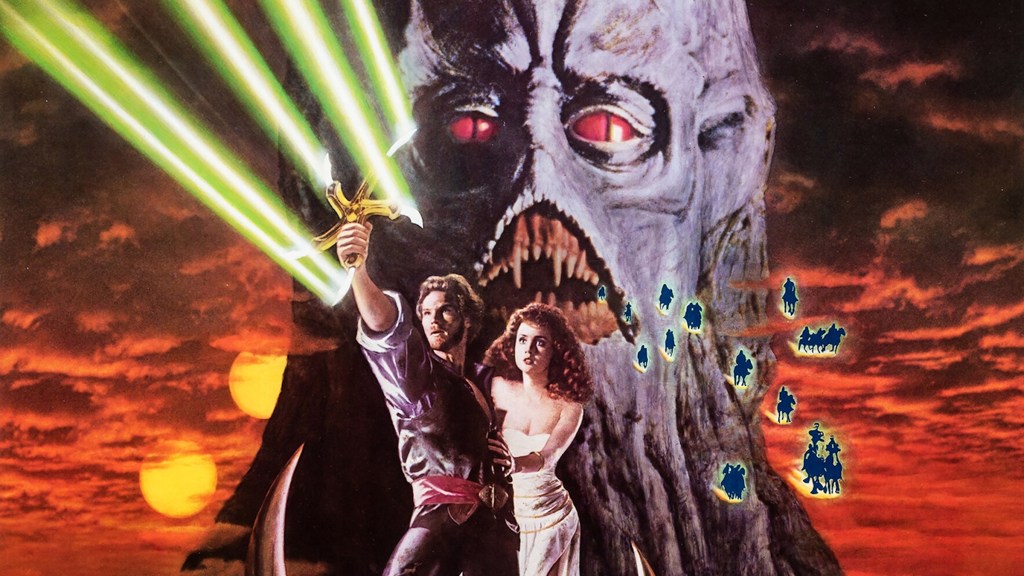
Krull represents one of the most ambitious attempts to merge the burgeoning science fiction boom with traditional high-fantasy tropes. Directed by Peter Yates, the narrative follows Prince Colwyn (Ken Marshall) as he embarks on a quest to rescue his bride from a monstrous alien conqueror known simply as the Beast. To achieve this, Colwyn must recover a magical, five-pointed throwing weapon called the Glaive.
The narrative of Krull actively mimics the hero’s journey framework, pairing a young royal with a band of misfit outlaws, an ancient mentor, and fantastical creatures. The studio spent heavily on elaborate sets and a sweeping, adventurous score, aiming to create a hybrid universe where laser blasters and medieval broadswords exist side by side. Krull is an undeniably flawed film with sluggish pacing and wooden lead performances, but it retains a highly imaginative aesthetic that has earned it a dedicated cult following. Despite these redeeming creative swings, the movie bombed spectacularly at the box office, ending its franchise aspirations immediately.
1) The Last Starfighter
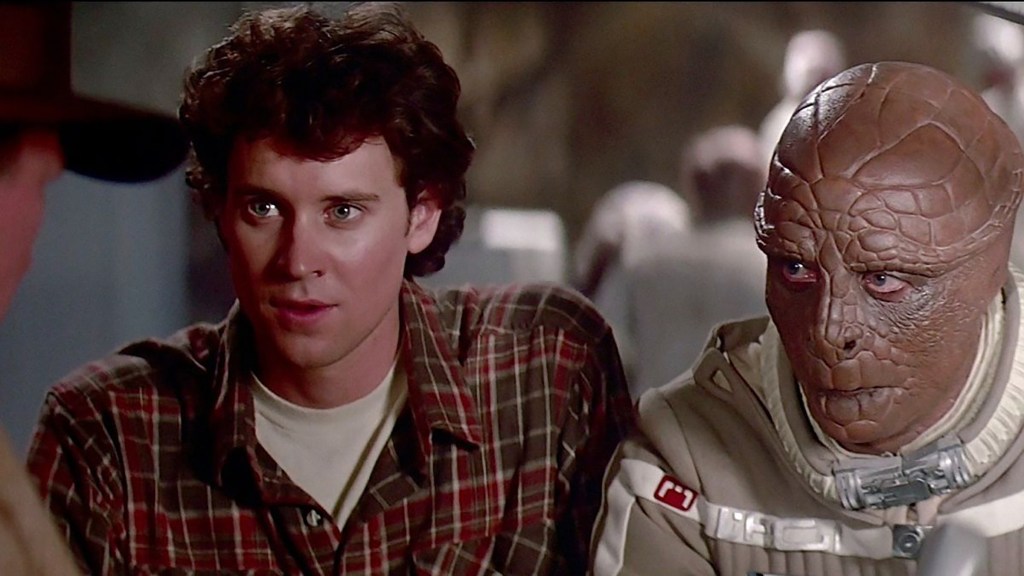
The Last Starfighter successfully captures the earnest optimism and thrilling escapism of the best space operas, standing out as a genuinely excellent film that deserved a broader legacy. The plot centers on Alex Rogan (Lance Guest), a disillusioned teenager living in a trailer park who discovers that his favorite arcade game is actually a recruitment tool for an intergalactic defense force. After achieving a high score, he is whisked away by the fast-talking alien Centauri (Robert Preston) to pilot a Gunstar fighter alongside the reptilian navigator Grig (Dan O’Herlihy).
The narrative of The Last Starfighter updates the farm boy destined for greatness trope for the video game generation, maintaining a tight emotional focus on Alex’s desire for a better life. Furthermore, the production made history by replacing traditional miniature models with extensive computer-generated imagery for its space battles. The Last Starfighter delivers an incredibly charming, well-acted, and visually groundbreaking adventure. Sadly, it failed to generate a massive franchise.
Which failed space opera do you believe actually deserved to spawn a massive sci-fi franchise? Leave a comment below and join the conversation now in the ComicBook Forum!
Source link
