

Two things make a spy movie hit the no objection territory for me: it respects the audience’s intelligence, and it weaponizes tension instead of noise. The best ones let you feel the mechanics of betrayal in real time, like you are watching decisions calcify into consequences. The kind where every detail has weight, and nothing exists just to look cool.
This list is seven films that feel complete in that way, even when they are messy, bleak, or morally thorny. The upcoming list of spy films isn’t them filtered by importance. I am placing them by how precisely they deliver their specific flavor of espionage, from pop perfection to soul-bruising realism.
7
‘Goldfinger’ (1964)
That pre-title sequence swagger still lands because it tells you who James Bond (Sean Connery) is before the plot even starts. The movie sharpens him against Auric Goldfinger (Gert Fröbe), a villain whose calm feels more unsettling than any snarl. Luxury turned predatory is the vibe, and it never lets up.
What keeps Goldfinger perfect for me is how every iconic beat is also a clue. Jill Masterson (Shirley Eaton) is not just a shock, she is a warning. Oddjob (Harold Sakata) is a walking punctuation mark for how serious this gets, and Operation Grand Slam is staged like a heist you can follow, right down to Pussy Galore (Honor Blackman) being written with enough willpower to matter.
6
‘Spy Game’ (2001)

Spy Game makes you feel as if the whole movie is ticking inside the titular character, Nathan Muir’s (Robert Redford) head, like he is running a private audit of his own sins while a clock screams in the background. I love that Nathan Muir is older, sharper, and quieter than most mentor archetypes, and watching him improvise inside CIA bureaucracy is half the pleasure.
The part that really sells it is how the film keeps tightening the screws without turning it into a speech about morality or friendship. Tom Bishop (Brad Pitt) is the one variable Muir cannot file away as an acceptable loss, because Bishop keeps acting like the job has consequences beyond the briefing room. You watch the Beirut mess, the way Bishop’s instincts keep pulling him toward people instead of protocols, and you can see why Muir is sweating in that office. All this makes the film flow like butter from start to end.
5
‘Munich’ (2005)

The first thing I always remember is how quiet the movie lets revenge feel, like a task you have to wake up and perform even when your stomach is turning, and Munich does it beautifully. Avner Kaufman (Eric Bana) starts out believing he can do this cleanly, hit the targets, protect his team, go home, and still be the same man. But the film makes you sit inside the waiting, the planning, the wrong turns, the paranoia of hotel hallways and unfamiliar streets. Every operation feels like a lesson in how quickly certainty decays when you have to look a person in the face before you erase them.
What pushes it into 10 out of 10 territory is how the story refuses to let Avner hide behind “mission accomplished.” Robert (Daniel Craig) and Carl (Ciarán Hinds) do not feel like disposable teammates. They’re paying for each step, and you can track the emotional cost across their bodies. The safehouse conversations, the constant checking of doors, the moments where Avner realizes his handlers are not telling him everything, it all stacks. By the time the final paranoia hits and home no longer feels like home, the movie has earned that hollow look in Avner’s eyes. It is not “what did you do,” it is “what did it do to you.” The damage keeps compounding.
4
‘Three Days of the Condor’ (1975)

Three Days of the Condor begins with one of the most effective normal-day-to-nightmare pivots in the genre. Joe Turner (Robert Redford) leaves the office to grab lunch, comes back, and the room is a crime scene that looks too deliberate to be random. The shock is not just the bodies. It is the realization that his small, boring job is connected to something that kills efficiently. From that moment, the movie plays like you are running while trying to think, and that is a brutal combination.
Then it gets even nastier because the film makes survival feel improvised, not heroic. Kathy Hale (Faye Dunaway) is pulled into Turner’s chaos in a way that should feel messy, and it does, because Turner is not sure what he is becoming while he is doing it. Joubert (Max von Sydow) is terrifying because he is calm and polite, like murder is simply professional courtesy, and his conversations with Turner feel like two philosophies colliding. That final exchange with Higgins (Cliff Robertson) is the perfect sting: Turner gets the truth out, but the movie leaves you staring at the question of whether truth actually matters when institutions can wait you out.
3
‘The Lives of Others’ (2006)

The Lives of Others follows Gerd Wiesler (Ulrich Mühe) sitting behind a wall, headphones on, taking notes on people’s lives like he is recording weather patterns. At first, he is cold, disciplined, and almost proud of how precise he is. Then the film starts doing something terrifyingly human: it lets the act of surveillance become a kind of intimacy, and you can see Wiesler changing in tiny, nearly invisible ways. A conscience wakes up.
Georg Dreyman (Sebastian Koch) and Christa Maria Sieland (Martina Gedeck) are written as characters with soft spots the system can exploit, which makes everything hurt more. The manipulation around the theater world, the pressure points, the moments where Christa Maria is cornered and made to feel small, and it all lands because it is so plausible. And Wiesler’s quiet choices are what make the movie perfect, because he is not saving the day with a speech. He is doing small acts that carry enormous risk, the kind of “one move at a time” defiance that feels real.
2
‘Tinker Tailor Soldier Spy’ (2011)

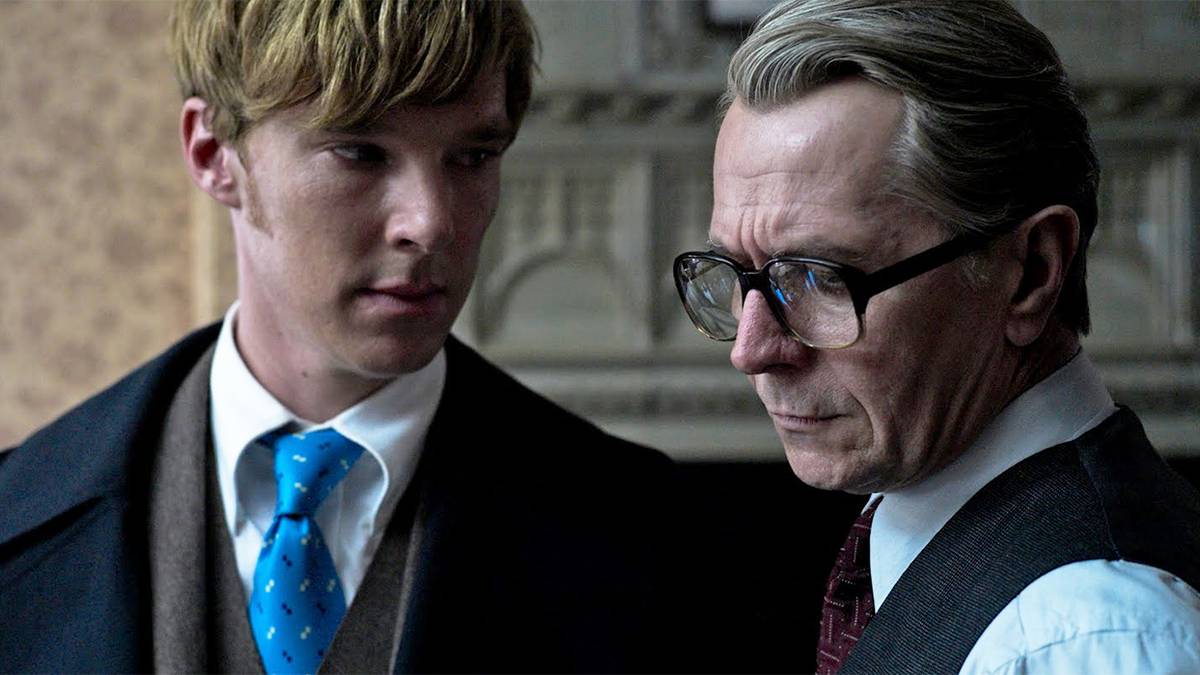
This one does not spoon-feed you, and that is exactly why it feels like real spy work. Tinker Tailor Soldier Spy moves through glances, pauses, half-finished sentences, and the heavy feeling that everyone has practiced lying so long it has become muscle memory. George Smiley (Gary Oldman) rebuilds a broken picture with patience, and the film makes you feel how exhausting that is. The Circus is full of ghosts, and Smiley is walking through them without flinching.
What I love about the film is its star-studded cast and how the personal betrayal bleeds into the professional one. Control (John Hurt) is a shadow hanging over everything, and the deeper Smiley goes, the more you sense that the rot is not a single traitor, it is a culture. Ricki Tarr (Tom Hardy) brings the messy human crack in the wall, Peter Guillam (Benedict Cumberbatch) brings loyal anxiety, and Bill Haydon (Colin Firth) carries the kind of charm that makes you want to trust him even when you should not. The Christmas party scene, the quiet humiliations, the way Smiley absorbs pain without announcing it, it all sets the stage for a reveal that lands like a bruise.
1
‘The Spy Who Came in from the Cold’ (1965)

This is the one that leaves frost on your bones. The film follows Alec Leamas (Richard Burton), a man who has been ground down by the job until his face looks permanently tired. From the beginning, you can tell he is running on fumes, and the film uses that exhaustion as tension. While watching Leamas stumble through the staged fall, the bitterness, the apparent unraveling, the viewer starts to suspect the story is smarter than it looks, but you cannot predict how cruel it is going to be.
Then the movie tightens the trap with Liz Gold (Claire Bloom), the courtroom sequence with Fiedler (Peter van Eyck), and Hans Dieter Mundt’s (Oskar Werner) chilling portrayal. And when the final pieces lock into place, you realize Leamas was never being tested; he was being used, and the film does not soften that with heroism. The ending at the wall is one of the most brutally honest finales in spy cinema because it refuses to pretend love can beat systems built on sacrifice. The deliberate cruelty in The Spy Who Came in from the Cold is unmatched.
Source link
