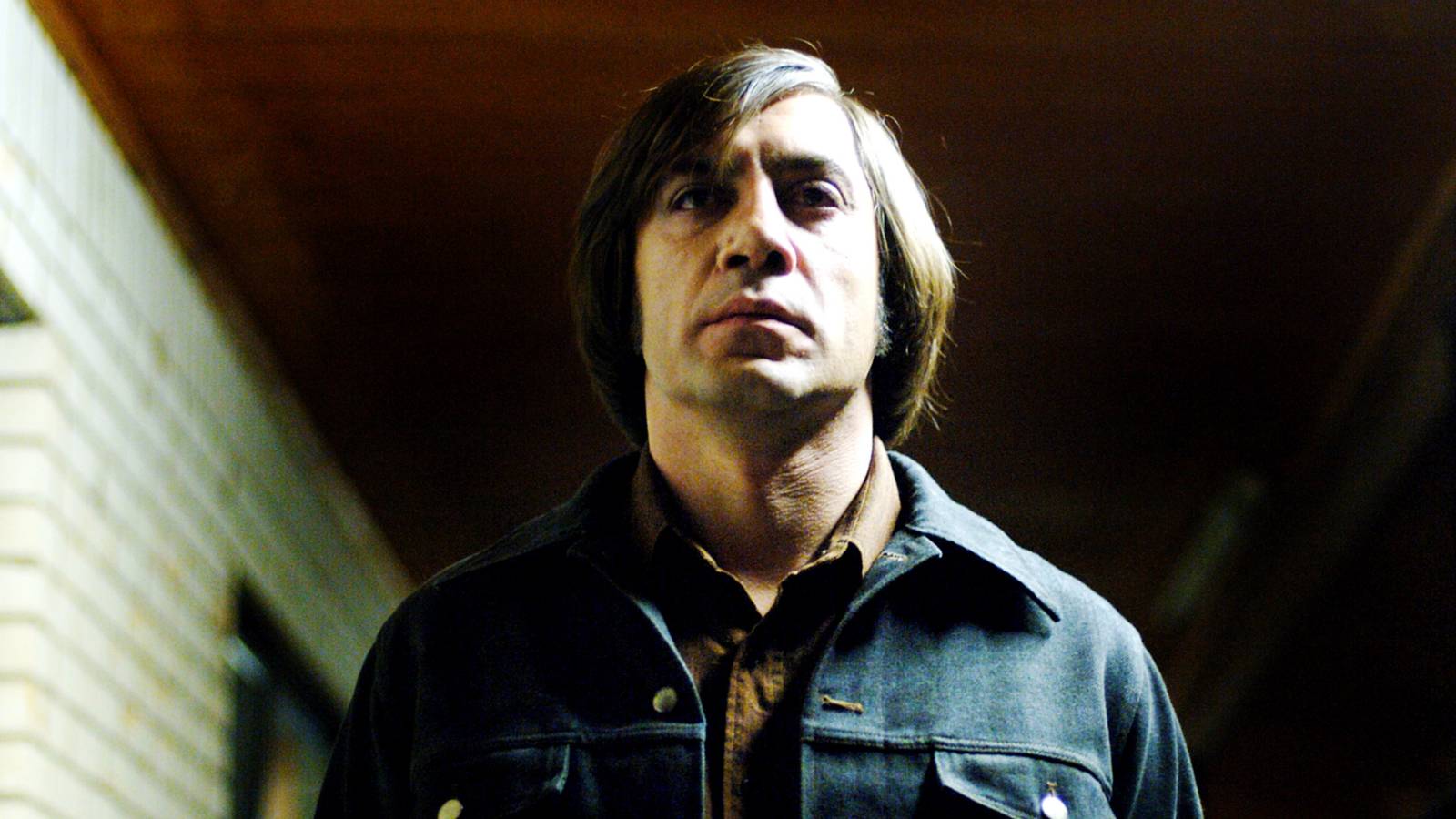
Lately, I have been so stuck with the feeling of picking apart a thriller when it ends, instead of being impressed. Most of the time, something doesn’t add up, or there are a few characters that act out of convenience. It happens a lot. That’s why a well-written thriller stands out so much more.
The films in this list are some of the perfectly written thrillers. You can follow every decision, even when it leads somewhere uncomfortable. The tension builds up very naturally and comes from how carefully everything is set up. And more importantly, the story still makes sense when you look back at it. Let’s have a look at them.
7
‘The Fugitive’ (1993)
Harrison Ford as Dr. Kimble in The Fugitive Image via Warner Bros.
The Fugitive is a thriller that does not rely on twists merely; it works because every part of the story is clear and tightly connected. The film wastes very little time and moves with a steady senseof urgency, but it somehow never feels rushed. From the opening moments, the situation is easy to follow, and the stakes are set in a way that keeps the tension consistent throughout.
Dr. Richard Kimble (Harrison Ford) is wrongly accused of murdering his wife and is forced to go on the run after a prison transport crash. As he searches for the truth behind the crime, U.S. Marshal Sam Gerard (Tommy Lee Jones) leads the manhunt with sharp focus and determination. What makes the writing stand out is how both sides are given equal weight. Kimble’s investigation and Gerard’s pursuit move side by side, and each step logically leads to the next. There are no unnecessary detours, which makes the story complete and carefully constructed from beginning to end.
6
‘Michael Clayton’ (2007)
Image via Warner Bros. Pictures
Some thrillers build tension through action, while Michael Clayton builds it through decisions and consequences. The film takes a more controlled approach and focuses on how pressure builds over time. It trusts the audience to follow complex situations without over-explaining anything.
Michael Clayton (George Clooney) works as a fixer for a powerful law firm, and he handles problems before they grow out of control. His routine changes when Arthur Edens (Tom Wilkinson), a senior lawyer, begins to act unpredictably in front of him during a major case involving a large corporation. At the same time, Karen Crowder (Tilda Swinton) tries to contain the situation from the corporate side. The writing is almost perfect because every character has a clear motivation, and every action carries weight. The story shows how a well-written thriller does not need constant action to stay engaging.
5
‘Zodiac’ (2007)
Robert Graysmith (Jake Gyllenhaal) hunchesover his desk while Paul Avery (Robert Downey Jr.) loiters casually behind him in ‘Zodiac’ (2007).Image via Paramount Pictures
Zodiac focuses on what happens when a thrilling case refuses to be solved. The film moves in a deliberate and controlled way, and shows how time passes without clear answers. Instead of forcing a concrete ending, it stays committed to the uncertainty, which makes the story feel more realistic and honest.
The investigation follows cartoonist Robert Graysmith (Jake Gyllenhaal), journalist Paul Avery (Robert Downey Jr.), and inspector Dave Toschi (Mark Ruffalo) as they try to track down the Zodiac killer. Each of them approaches the case differently, though all of them become consumed by it over time. The writing stands out because it does not simplify the process or offer easy conclusions. Clues lead somewhere, then stall. Leads appear promising, then fall apart. As a result, the tension comes from obsession and frustration, which makes the film feel complete even without a clear ending.
4
‘No Country for Old Men’ (2007)
Josh Brolin as Llewelyn Moss in No Country for Old Men.Image via Miramax Films
No Country for Old Men takes a quieter approach towards thrillers, though the tension never really fades. The film removes many of the usual thriller elements and replaces them with stillness, timing, and unpredictability. It does not guide the audience in a traditional way, which makes every moment feel more uncertain.
Llewelyn Moss (Josh Brolin) finds a suitcase of money after a drug deal goes wrong, and he decides to keep it, knowing it will bring trouble. That decision puts him in the path of Anton Chigurh (Javier Bardem), a relentless killer who follows his own strict sense of logic. The writing in the movie is flawless because it avoids the cliché easy explanations, which are visible in every other thriller. This unpredictability gives the film its due credit and makes it feel carefully thought out.
3
‘Chinatown’ (1974)
Jack Nicholson and Faye Dunaway star in Chinatown (1974).Image via Paramount Pictures
Some thrillers slowly pull you into a mystery, and Chinatown does exactly that with careful control. The story begins with what seems like a simple case, but it gradually opens into something much larger. Each new detail adds another layer, and the film never rushes to explain everything at once.
Jake Gittes (Jack Nicholson) is a private investigator who is hired to follow a man suspected of infidelity. What starts as routine work quickly turns into a complex investigation involving water rights, corruption, and hidden power. Evelyn Mulwray (Faye Dunaway) becomes central to the case, though her situation is not as clear as it first appears. Nothing feels wasted, and the story builds step by step until it reaches an ending that feels both shocking and inevitable.
2
‘The Silence of the Lambs’ (1991)
Anthony Hopkins staring intently at a small metal object in The Silence of the Lambs.Image via Orion Pictures
The Silence of the Lambs keeps its focus tight and controlled, which makes the tension feel constant from start to finish. The film does not rely on large-scale action. Instead, it builds its impact through conversations, psychological pressure, and the space between what is said and what is implied.
Clarice Starling (Jodie Foster) is a trainee at the FBI who is assigned to help track down a serial killer known as Buffalo Bill. To understand the case better, she interviews Dr. Hannibal Lecter (Anthony Hopkins), an imprisoned psychiatrist with a disturbing past. Their conversations become the center of the story, as Lecter offers insight while also testing Clarice at every step. Every exchange moves the story forward while revealing something about the characters, and nothing feels random.
1
‘Se7en’ (1995)
A close-up of Detective Mills (Brad Pitt) crying while holding a gun in Se7en.Image via New Line Cinema
Se7en is one of the best thrillers ever made since it builds toward a conclusion that feels unavoidable. The film follows a clear structure, though the tone grows darker with each step. From the beginning, it sets a mood that does not shift, which makes the ending more natural.
Detective Somerset (Morgan Freeman) and Detective Mills (Brad Pitt) investigate a series of murders connected to the seven deadly sins. As they move from one crime scene to another, the pattern becomes clearer, though the purpose behind it remains unsettling. The killer, John Doe (Kevin Spacey), stays hidden for most of the film, which adds to the tension. The writing stands out because everything connects back to the central idea. Each crime, each clue, and each conversation builds toward the last scene, making the story feel complete and carefully planned.
Collider Exclusive · Oscar Best Picture Quiz Which Oscar Best Picture Is Your Perfect Movie? Parasite · Everything Everywhere · Oppenheimer · Birdman · No Country
Five Oscar Best Picture winners. Five completely different visions of what cinema can be — and what it can do to you. One of them is the film that was made for the way your mind works. Ten questions will figure out which one.
🪜Parasite
🌀Everything Everywhere
☢️Oppenheimer
🐦Birdman
🪙No Country for Old Men
01
What kind of film experience do you actually want? The best movies don’t just entertain — they leave something behind.
02
Which idea grabs you most in a film? Great films are driven by a central obsession. What’s yours?
03
How do you like your story told? Form is content. The way a story is shaped changes what it means.
Your answers have pointed to one Oscar Best Picture winner above all others. This is the film that was made for the way your mind works.
Parasite
You are drawn to films that operate on multiple levels simultaneously — that begin in one genre and quietly, brilliantly migrate into another. Bong Joon-ho’s Parasite is a film about class, desire, and the architecture of inequality that manages to be darkly funny, deeply suspenseful, and genuinely shocking across a single extraordinary running time. Your instinct is for cinema that hides its true intentions until the moment it’s ready to reveal them. Parasite is exactly that — a film that rewards close attention and punishes assumptions, right up to its devastating final image.
Everything Everywhere All at Once
You want it all — and this film gives you all of it. The Daniels’ Everything Everywhere All at Once is one of the most maximalist films ever made: action comedy, multiverse sci-fi, family drama, existential crisis, and a genuinely earned emotional core that sneaks up on you amid the chaos. You are someone who responds to ambition, who doesn’t want cinema to choose between being entertaining and being meaningful. This film refuses that choice entirely. It is overwhelming by design, and its overwhelming nature is precisely the point — because the feeling of being crushed by infinite possibility is exactly what it’s about.
Oppenheimer
You are drawn to cinema on a grand scale — films that understand history not as a backdrop but as a force, and that place their characters inside that force and watch what happens. Christopher Nolan’s Oppenheimer is a film about the terrifying gap between what we can do and what we should do, told with the full weight of one of the most consequential moments in human history behind it. You want your films to feel important without feeling self-important — to earn their ambition through sheer craft and the gravity of their subject. Oppenheimer does exactly that. It is enormous, complicated, and refuses easy comfort.
Birdman
You are drawn to films that foreground their own construction — that make the how of the filmmaking part of the what it’s about. Alejandro González Iñárritu’s Birdman, shot to appear as a single continuous take, is cinema examining itself through the cracked mirror of a fading actor’s ego. You respond to formal daring, to the feeling that a film is doing something that probably shouldn’t be possible. Michael Keaton’s performance and Emmanuel Lubezki’s restless camera create something genuinely unlike anything else — a film that is simultaneously about creativity, relevance, self-destruction, and the impossibility of ever truly knowing if your work means anything at all.
No Country for Old Men
You are drawn to cinema that trusts silence, that refuses to explain itself, and that treats dread as a form of meaning. The Coen Brothers’ No Country for Old Men is a film about the arrival of a new kind of evil — implacable, arbitrary, and utterly indifferent to the moral frameworks we use to make sense of the world. It is one of the most formally controlled films ever made, and its controlled restraint is what makes it so terrifying. You want your films to haunt you, not comfort you. You are not interested in resolution if resolution would be dishonest. No Country for Old Men is honest in a way that most cinema never dares to be.
Digit is a versatile content creator with expertise in Health, Technology, Movies, and News. With over 7 years of experience, he delivers well-researched, engaging, and insightful articles that inform and entertain readers. Passionate about keeping his audience updated with accurate and relevant information, Digit combines factual reporting with actionable insights. Follow his latest updates and analyses on DigitPatrox.