

Hollywood has a long history of trying to squeeze every last drop of potential out of a successful box office hit. Usually, this results in cheap cash-grabs that dilute the legacy of the original film, leaving audiences wishing the studio had just left well enough alone. However, there are rare occasions when a television adaptation manages to step out of the shadow of its cinematic predecessor and find its own distinct voice. These series take the core premise of a movie and use the expanded runtime of television to explore characters and worlds in ways a two-hour runtime simply cannot accommodate.
Instead of just retelling the same story, the best TV adaptations of beloved movies expand the lore and deepen the emotional stakes, sometimes surpassing the quality of the source material. This is especially true for genre properties, where complex mythologies benefit from the slow-burn approach of serialized storytelling. The following series managed to defy the odds, transforming hit movies into legendary television franchises that stand on their own merits.
8) It: Welcome to Derry
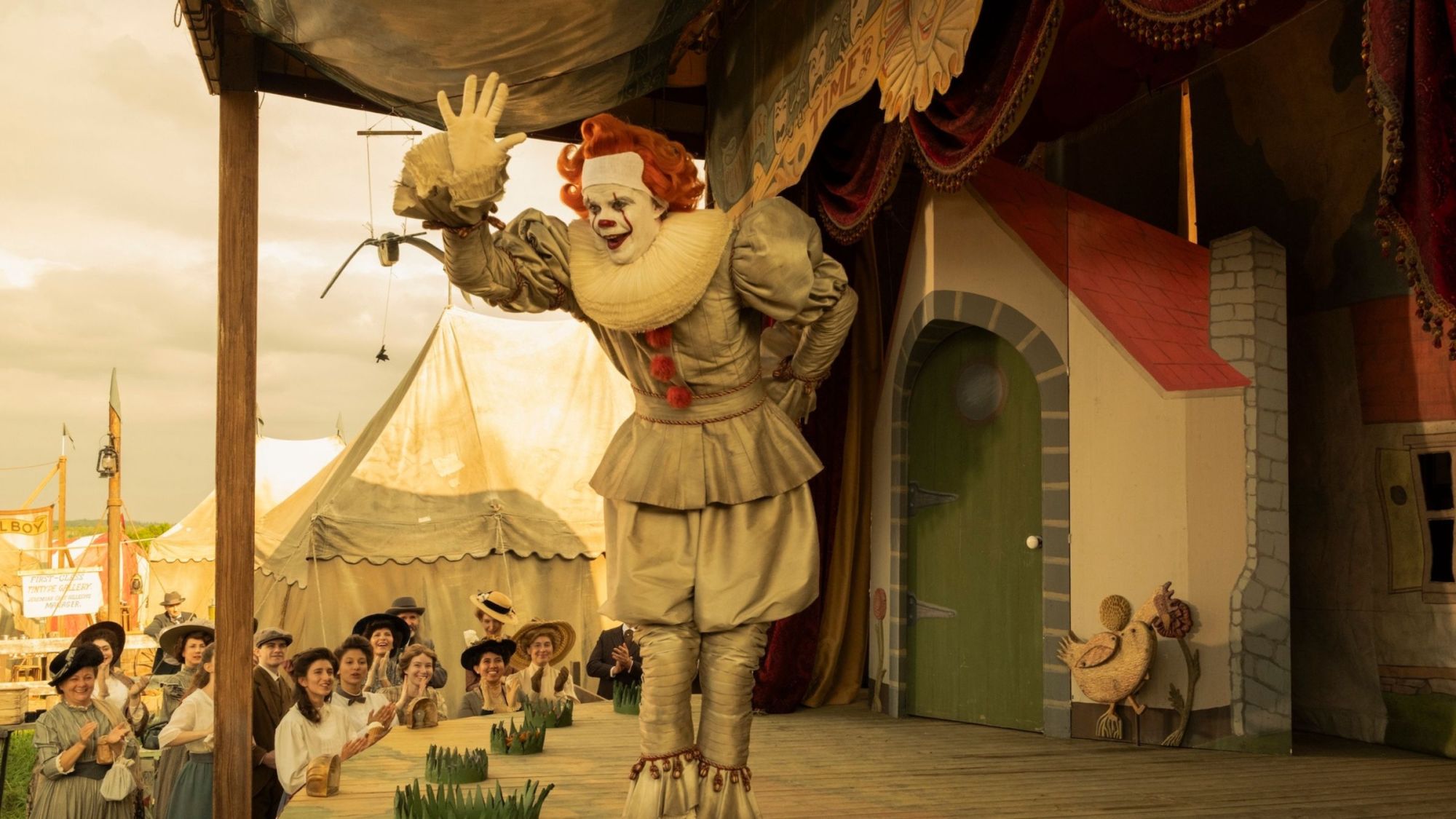
The recent cinematic adaptations of Stephen King’s It were massive hits, but they barely scratched the surface of the cursed town’s bloody history. It: Welcome to Derry serves as a prequel that finally gives the audience a look at the cyclical violence that has plagued the region for generations. Set in the 1960s, the series creates a suffocating atmosphere of dread, showing how the influence of Pennywise bleeds into the everyday lives of the residents long before the Losers Club ever formed. The period setting also allows for an exploration of racial tensions that mirror the supernatural rot beneath the streets.
In It: Welcome to Derry, Bill Skarsgård (Pennywise) returns to the role that defined his career, and his performance is just as terrifying on the small screen. However, the show refuses to rely solely on the clown for scares, instead building a mystery around the Hanlon family and their connection to the entity. The cast also helps the series to stand out, with Taylour Paige (Charlotte Hanlon) and Jovan Adepo (Leroy Hanlon) delivering powerful performances as parents trying to protect their children from a threat they cannot comprehend, while Blake Cameron James helps a new generation of Losers as Will Hanlon.
7) Friday Night Lights
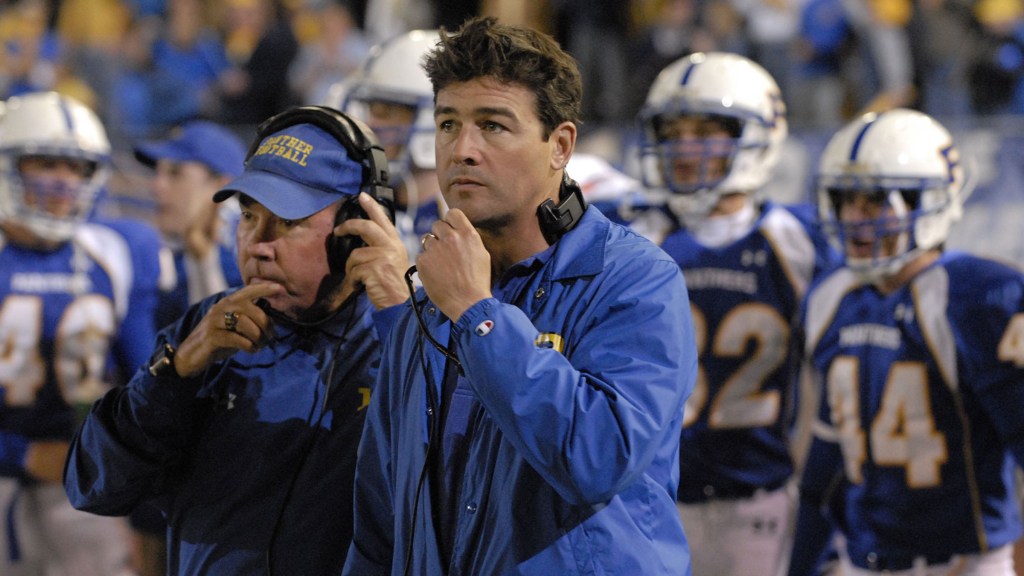
The 2004 film Friday Night Lights was a gritty look at high school football, but the television series evolved into a sprawling drama about community and family. The show centers on Eric Taylor (Kyle Chandler), a head coach who must navigate the intense pressure of a football-obsessed Texas town while raising his own family. Unlike the movie, which focused heavily on a single season, the series had the time to explore the lives of the players, the parents, and the faculty, creating a rich tapestry of life in Dillon, Texas.
Friday Night Lights is famous for its “clear eyes, full hearts, can’t lose” mantra, but its real strength is its refusal to shy away from difficult topics like poverty, racism, and injury. In addition, the shaky-cam cinematography gives the drama a documentary-like intimacy, making the emotional beats hit with devastating force. Finally, Connie Britton (Tami Taylor) matches Chandler scene for scene, creating one of the most realistic and supportive marriages ever depicted on television.
6) Alien: Earth
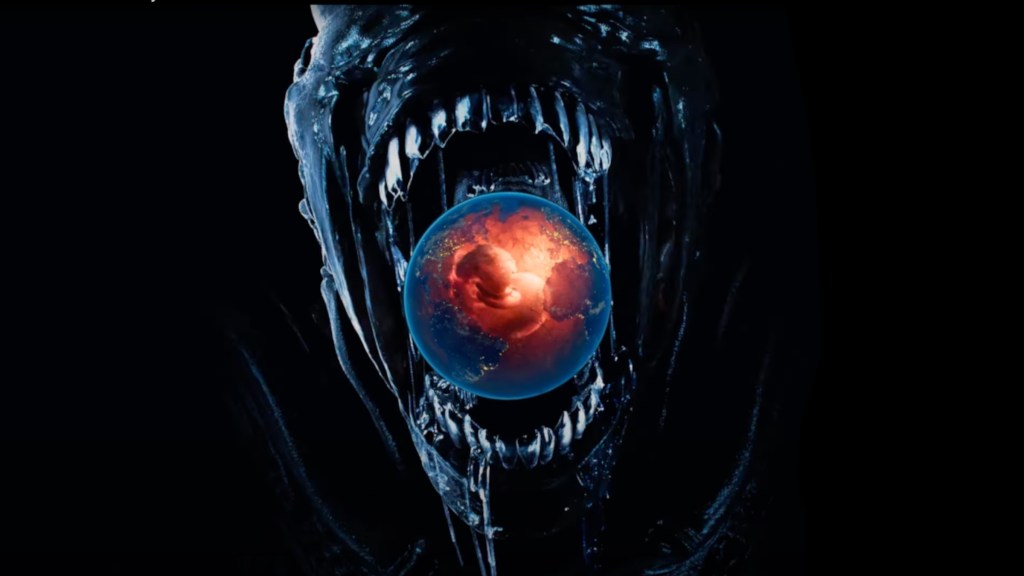
The Alien franchise has terrified moviegoers for decades, but bringing the Xenomorph to television required a delicate touch to avoid overexposure. Alien: Earth succeeds by grounding the cosmic horror in a terrestrial setting that feels uncomfortably close to home. Showrunner Noah Hawley, who previously worked magic with Legion, brings his signature psychological intensity to the story of a crash-landed vessel and the nightmare it unleashes. The series wisely avoids retreading the exact beats of the films, focusing instead on the corporate greed of Weyland-Yutani and the introduction of new artificial lifeforms that complicate the human struggle for survival.
Visually, Alien: Earth is a stunning tribute to the “cassette futurism” aesthetic established by the original 1979 film. The technology feels tactile and heavy, creating a grounded atmosphere that makes the eventual violence more visceral. Sydney Chandler (Wendy) anchors the cast as a hybrid caught between two worlds, while Timothy Olyphant (Kirsh) brings a synthetic calm to the proceedings. By shifting the focus to the socio-political landscape of Earth before the events of the Nostromo, the series adds a new layer of dread to the franchise, proving that the perfect organism is just as deadly on our home turf as it is in the vacuum of space.
5) Stargate SG-1

Roland Emmerich’s 1994 film Stargate introduced a fascinating concept, but Stargate SG-1 turned that single idea into a massive media empire. The series picks up where the movie left off, following a military team that utilizes an ancient portal to explore other worlds and defend Earth from alien threats. Richard Dean Anderson (Jack O’Neill) reinvented the lead role with a dry wit that became the show’s trademark, distinguishing it from the more stoic tone of the film. This shift in personality allowed the series to balance high-stakes sci-fi action with a sense of fun that kept audiences engaged for ten seasons.
The brilliance of Stargate SG-1 lies in its commitment to world-building. Over more than 200 episodes, the writers constructed a complex mythology involving the Goa’uld, the Asgard, and the Ancients, turning a one-off blockbuster into a living universe. The dynamic between O’Neill, Samantha Carter (Amanda Tapping), Daniel Jackson (Michael Shanks), and Teal’c (Christopher Judge) remains one of the best ensemble chemistries in sci-fi history. Stargate SG-1 proved that a TV budget was no barrier to telling epic stories, eventually spawning multiple spin-offs and solidifying its place as a cornerstone of the sci-fi genre.
4) MASH

It is rare for a television adaptation to completely eclipse the film that spawned it, but MASH is the exception that proves the rule. While Robert Altman’s 1970 film was a chaotic satire, the series softened the edges to create a dramedy that ran for eleven seasons. Alan Alda (Hawkeye Pierce) became the face of the show, leading a group of doctors and nurses stationed at a Mobile Army Surgical Hospital during the Korean War. Furthermore, the show mastered the art of balancing slapstick comedy with the grim realities of warfare, often switching tones within a single scene.
The longevity of MASH allowed it to evolve significantly over time, transitioning from a pure comedy into a more thoughtful exploration of the human cost of conflict. Characters grew, departed, and were replaced in a way that felt organic to the setting. As a result, the series finale remains one of the most-watched television events in history, a testament to how deeply audiences connected with the staff of the 4077th.
3) Fargo
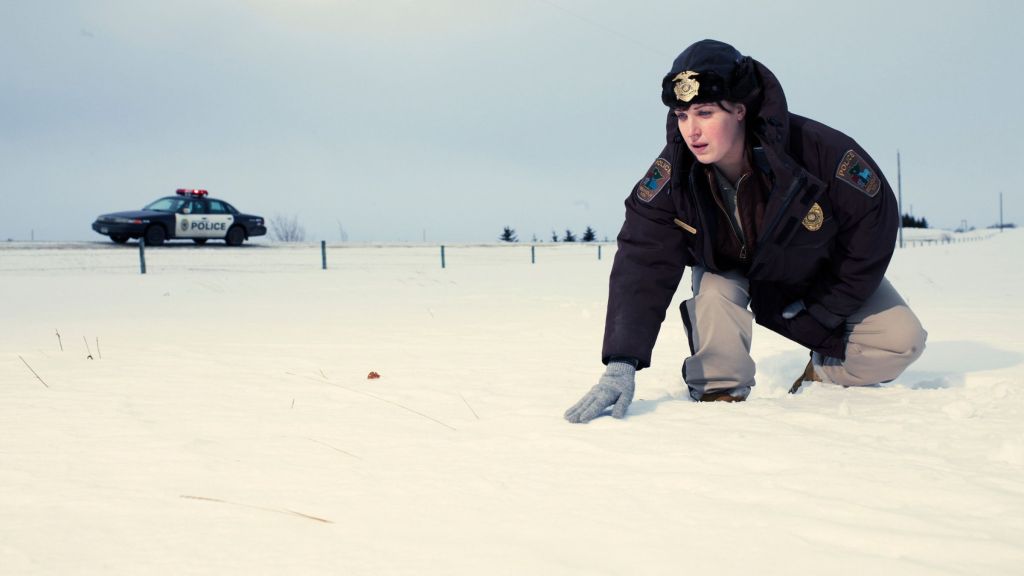
Attempting to adapt a Coen brothers masterpiece for television sounded like a fool’s errand, but Noah Hawley once again proved the skeptics wrong. Fargo functions as an anthology series that captures the distinct tone, humor, and violence of the 1996 film without directly copying its plot. Each season introduces a new cast of characters in the frozen Midwest who find themselves in way over their heads, usually due to a mix of greed and stupidity. The show maintains the film’s “Minnesota nice” veneer masking brutal criminality, but it pushes the visual style into even more surreal territory.
The casting across the Fargo anthology has been nothing short of spectacular, featuring heavy hitters like Billy Bob Thornton (Lorne Malvo), Kirsten Dunst (Peggy Blumquist), and Ewan McGregor (Emmit and Ray Stussy). The writing delights in the absurdity of fate, weaving intricate webs of coincidence and consequence that keep the viewer guessing until the final frame. Because of that, Fargo respects the cinematic language of the original while carving out its own identity as a quirky, violent, and surprisingly philosophical crime saga.
2) Hannibal
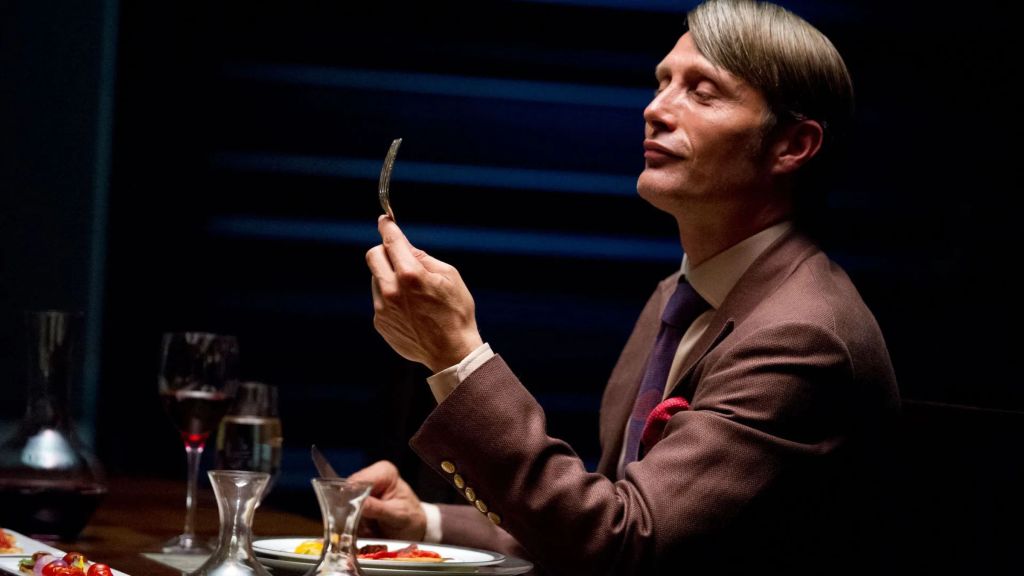
Ridley Scott and Jonathan Demme had already created iconic films featuring the cannibalistic psychiatrist Hannibal Lecter, but Bryan Fuller’s Hannibal turned the story into a fever dream of art and horror. The series focuses on the early relationship between FBI profiler Will Graham (Hugh Dancy) and Dr. Hannibal Lecter (Mads Mikkelsen) before the doctor’s true nature is exposed. Mikkelsen creates a version of the character that is distinct from Anthony Hopkins’, playing him as a Luciferian figure who is as seductive as he is dangerous. The chemistry between the two leads drives the narrative, creating a twisted romance that is unlike anything else on television.
Visually, Hannibal is one of the most striking shows ever produced. The murder tableaus are grotesque yet beautifully composed, blurring the line between crime scene and art installation. The series also elevates the act of cooking to a central visual motif, forcing the audience to find beauty in the preparation of meals that they know are made of people. Hannibal is a psychological thriller that prioritizes atmosphere and symbolism over procedural logic, resulting in a show that feels like a nightmare you do not want to wake up from.
1) Buffy the Vampire Slayer
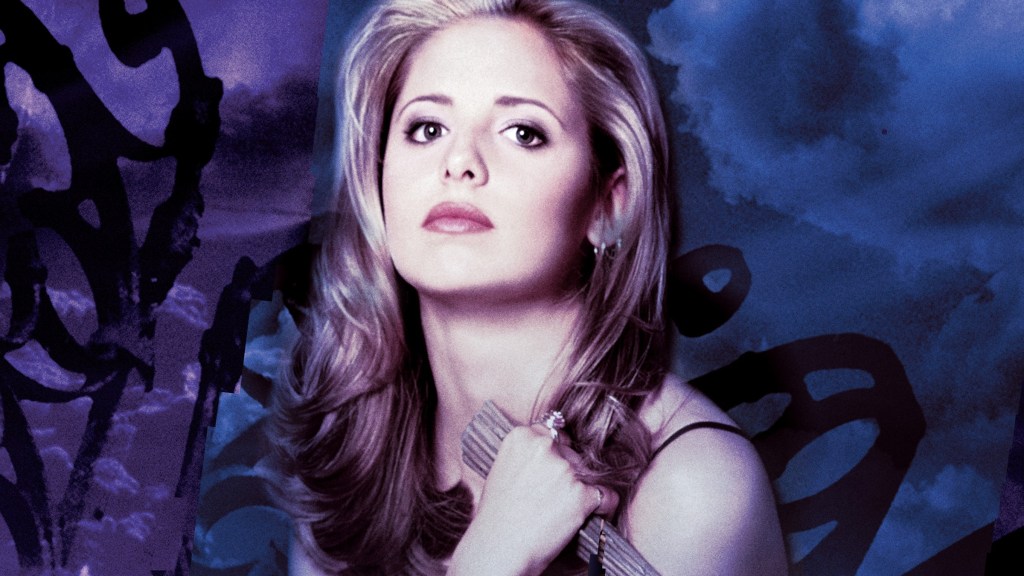
The 1992 film Buffy the Vampire Slayer was a campy horror-comedy that failed to land with critics, but creator Joss Whedon saw the potential for something greater. He retooled the concept for television, casting Sarah Michelle Gellar (Buffy Summers) as the chosen one destined to fight the forces of darkness. The result was a cultural phenomenon that redefined what a teen drama could be. By using supernatural monsters as metaphors for the very real horrors of adolescence and young adulthood, the show connected with a generation of viewers who felt like outsiders.
The Buffy the Vampire Slayer series excelled at ensemble storytelling, surrounding the slayer with the “Scooby Gang,” including Alyson Hannigan (Willow Rosenberg) and Nicholas Brendon (Xander Harris). Over seven seasons, the characters grew from high school students into complex adults, dealing with death, addiction, and heartbreak along the way. In addition, Buffy the Vampire Slayer pushed the boundaries of the medium with experimental episodes like the silent “Hush” and the musical “Once More, with Feeling,” taking a mediocre movie premise and turning it into the gold standard for genre television.
Which TV adaptations do you think surpassed the original movie? Leave a comment below and join the conversation now in the ComicBook Forum!
Source link
