

The best slashers do not need buckets of blood to mess you up — they just make a viewer do calculations in the head, which is why they linger longer than the splatter-heavy stuff. A shadow in the background, a pause on the phone, a camera angle that stays a beat too long, or an open-ended call with no voice on the other end sometimes deliver enough damage and your imagination fills in the worst parts.
The ten movies below earn their slasher credentials without leaning on explicit gore. Some are playful, some are mean, some are quietly horrifying, and a couple basically wrote the rulebook. But every one of them proves the same point: if the suspense is strong enough, you do not need to show much at all.
10
‘Happy Death Day’ (2017)
If you want a slasher you can recommend to friends who hate graphic stuff, Happy Death Day is an easy win. Tree Gelbman (Jessica Rothe) wakes up stuck in the same day and ends up treating her own murder like a puzzle she has to solve, which keeps it fun without draining the stakes. It is bright, fast, and still unsettling when that mask keeps popping up at the worst times.
Plus, it’s the loop in Happy Death Day that keeps tightening instead of repeating itself. Each reset forces Tree to notice tiny timing changes, wrong turns, and people she ignored, and the suspense comes from “where is the killer now” rather than anything explicit on-screen. Director Christopher Landon keeps the kills quick and the dread clean, so you feel the pressure without feeling grossed out.
9
‘Prom Night’ (1980)

There is something uniquely stressful about a slasher set on a night that is supposed to be pure celebration. Prom Night builds the dance-night vibe first, so you feel the lights, the noise, the gossip, and the way everyone is distracted by their own drama. That is the perfect cover for danger because the crowd is loud enough to hide it, and intimate enough to make it feel personal.
The movie does not need explicit gore because the tension is built on suspicion and timing. Kim Hammond (Jamie Lee Curtis) carries a past the film keeps pulling back into the room, which gives the stalking energy weight instead of emptiness. Even the little violence that’s in there is mostly suggestive and quick, letting the film pull its dread from the idea that the killer is already inside already.
8
‘The Stepfather’ (1987)

The Stepfather is a slasher wearing the skin of a domestic drama, and that is what makes it feel realistic. Instead of showing a lot, the film builds fear through routine, small inconsistencies, and the momentary drop in a smile. It’s a story about a man who adapts a new identity after killing his previous family and that sets a viewer up for continuous unease from the get-go.
The role of Jerry Blake (Terry O’Quinn) is perfect in a way that feels staged, like he is performing normal for an audience that never asked for the show. Then Stephanie Maine (Jill Schoelen), the woman’s daughter (the woman he later marries), starts noticing the cracks, and the movie gets under your skin because you can feel how hard it is to prove a vibe is dangerous.
7
‘April Fool’s Day’ (1986)

You put April Fool’s Day on when you want slasher tension with a playful edge, but still want the suspense to land. A weekend getaway, an isolated house, a group of friends, and then people start disappearing in a way that feels like a prank until it doesn’t. The movie keeps that “are we laughing or are we nervous” feeling alive the whole time and keeps you guessing.
What makes April Fool’s Day fit this list is how it stays relatively restrained while still delivering unease. Muffy St. John (Deborah Foreman) has host energy that feels warm and slightly too controlled, and the movie plays with that discomfort. Director Fred Walton knows exactly when to cut away, when to linger, and when to let your brain do the ugly work off-screen.
6
‘When a Stranger Calls’ (1979)

This is one of those slashers where the setup alone can make people uncomfortable. When a Stranger Calls takes babysitting, a quiet house, and a phone ringing at the wrong time, and turns it into pure panic without needing explicit gore. It’s exactly as chilling as the name implies. Jill Johnson (Carol Kane) spends the opening stretch in a normal situation that suddenly feels unsafe in a way that is hard to shake. When a Stranger Calls also had a remake in 2006, starring Camilla Belle in the lead role.
The fear in When a Stranger Calls comes from timing and proximity, not graphic imagery. The pauses on the line, the repetition, the creeping realization that the danger is closer than you want to believe, it all hits because it feels plausible. The movie never loses that trapped, watched feeling. I watched the remake back in 2009 and must add that the feeling sticks long after the credits have rolled down.
5
‘Alice, Sweet Alice’ (1976)

There is a grimy, uncomfortable energy to Alice, Sweet Alice that does not need explicit gore to get under your skin. It plays like a slasher filtered through guilt, religion, and family resentment, where the danger feels baked into the environment instead of arriving from outside. Alice Spages (Paula Sheppard) moves through the story with a volatility that keeps every scene slightly unstable.
What makes Alice, Sweet Alice so effective is the emotional messiness around the violence. Catherine Spages (Brooke Shields) brings an innocent presence that makes the tension feel crueler, because the movie keeps forcing you to notice who is protected and who is not. The film is helmed by Alfred Sole, who seems to have leaned into implication and suspicion, letting the scariest part be the family dynamic and the adult failures around it.
4
‘Black Christmas’ (1974)

If you only know modern slashers, Black Christmas will surprise you with how nasty it feels without being explicit. It takes a warm, chaotic sorority-house setting and turns it into a place where safety is basically a story people tell themselves. The film follows Jess Bradford (Olivia Hussey), who feels like a real person trying to hold her ground in a house full of noise, which makes the threat feel personal.
What makes Black Christmas legendary and hit harder is how it uses voice, space, and absence. The phone calls are disturbing without gore because they feel uncontrolled and close, and the stalking is filmed with patience that makes you scan every frame. It’s tension that does all the killing.
3
‘Halloween’ (1978)

There is a reason people still measure slashers against Halloween. It is not the body count, it is the patience. Michael Myers (Nick Castle) is forever terrifying because he is not rushing to perform, hand appearing in the background like a mistake your eyes catch too late — and he still does every year.
Halloween stays effective without explicit gore because it turns ordinary suburban space into a trap. The film is directed by John Carpenter who knows how to utilize silence in filmmaking like a warning and stretches simple movement into suspense, so you feel hunted even when nothing is happening. The violence is more suggested than displayed, which makes the fear feel psychological and sticky. Nonetheless, most horror fans love this film not because of the gore here — they do because they remember being watched.
2
‘Psycho’ (1960)

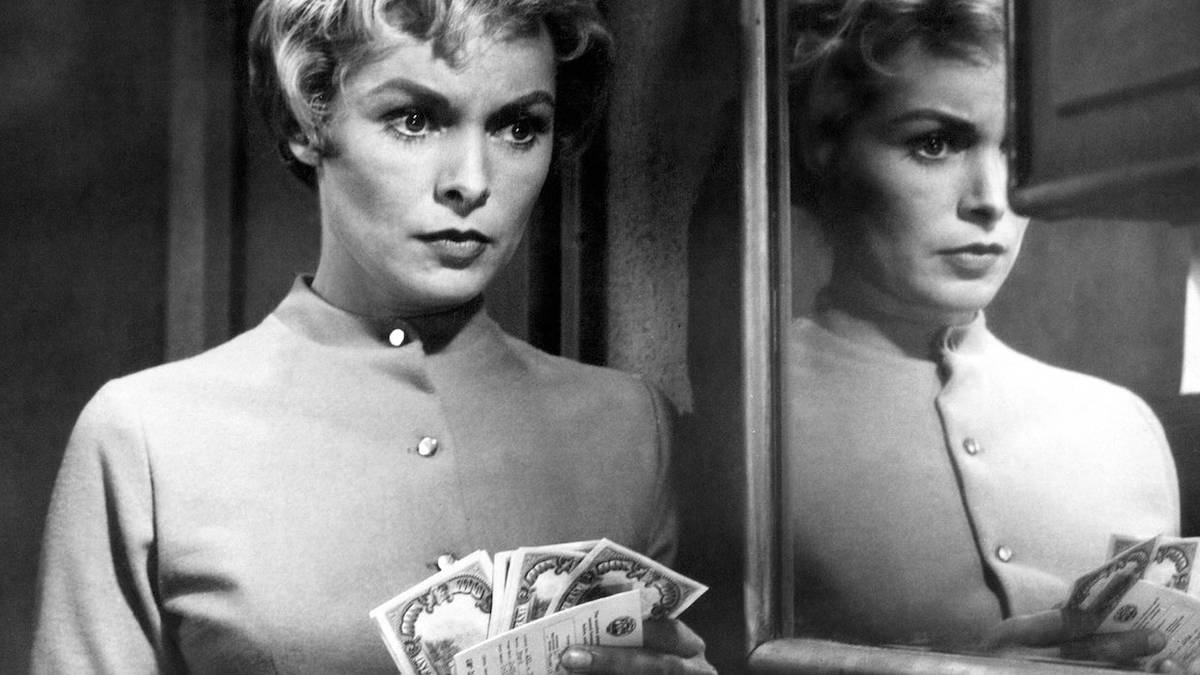
The fun of Psycho is that it pulls you in like you are watching one kind of story, then flips the table so smoothly you immediately get why people still talk about it. Marion Crane (Janet Leigh) starts as a very human mess of impulse and regret, and you follow her like you are in a tense moral thriller. After stealing a large sum of money, Crane is on the run, checks into a quiet roadside motel, where her disappearance after a shocking shower exposes a deeply fractured mind hiding behind polite smiles.
Then the movie changes the rules, and suddenly you are watching with your guard fully up. Then there’s Norman Bates (Anthony Perkins) who is the key to why this works without explicit gore. Perkins plays him polite and awkward enough that you almost relax, and that is exactly why the motel feels wrong. The film still matters in 2026 because it redefined psychological horror by turning ordinary spaces and people into sources of terror in a way modern thrillers still imitate.
1
‘Peeping Tom’ (1960)

Image via Universal Pictures
This is the one that feels the most violating without needing gore, because the horror is baked into the act of looking. Peeping Tom turns voyeurism into suspense in a way that still feels uncomfortable decades later. Mark Lewis (Karlheinz Böhm) is not scary because he is loud, he is scary because his obsession is quiet, methodical, and weirdly intimate, like the movie is forcing you to notice your own discomfort. It feels deeply invasive.
The violence in this film is also staged as violation, not spectacle. Helen Stephens (Anna Massey) brings a softness that makes the story even sadder, because you can see what normal connection looks like right next to Mark’s broken wiring. In the end, Peeping Tom follows a disturbed cameraman who murders women while filming their fear, using his camera as both weapon and confession, exposing how voyeurism and the act of watching can be inseparable from violence.

Peeping Tom
- Release Date
-
May 16, 1960
- Runtime
-
101 Minutes
-

Karlheinz Böhm
Mark Lewis
-
Anna Massey
Helen Stephens


Source link
