

Motorola Moto G Power (2026) review
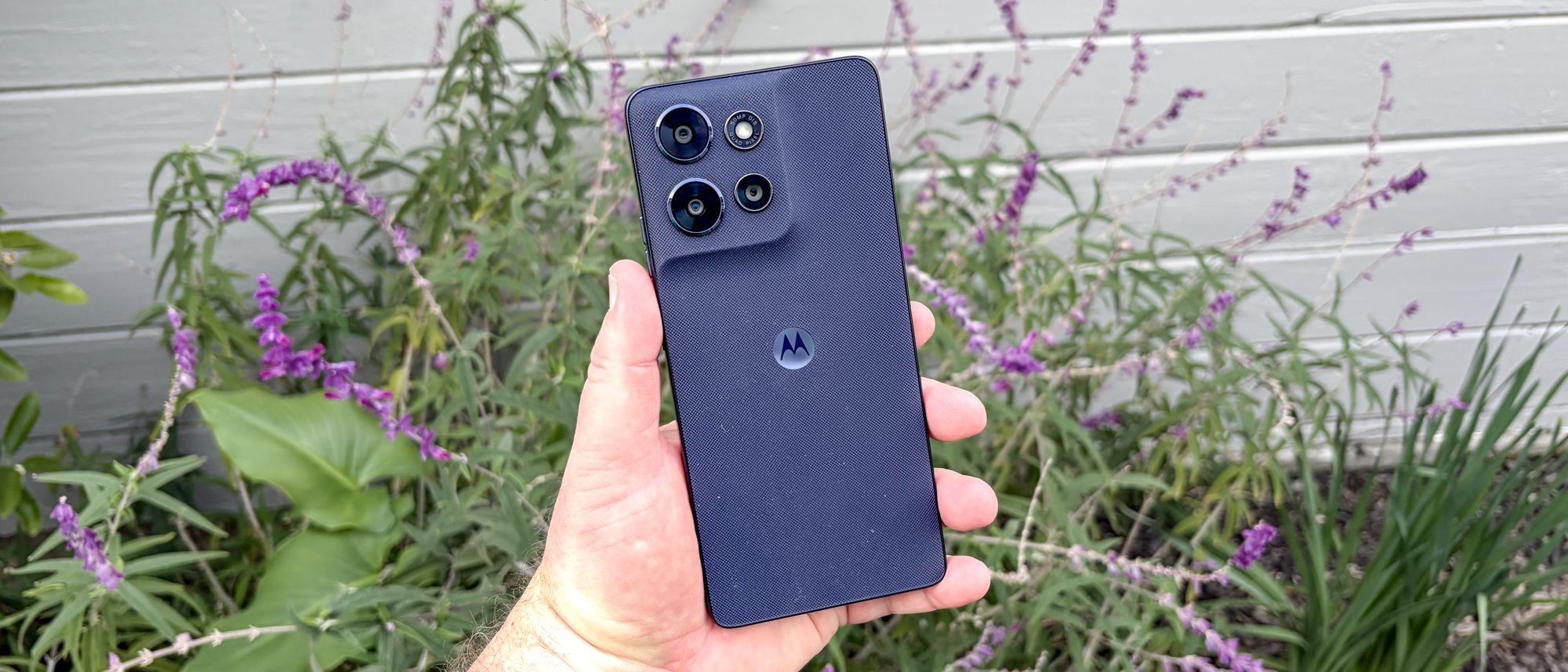
The Moto G Power (2026) offers exactly what its name would imply, and not much else.
The “Power” in this phone’s name applies to its battery life, and Motorola has always offered that in spades with this particular model in its Moto G series. And just like its predecessors, the 2026 edition of the Moto G Power offers the kind of longevity that will last you all day and beyond in a very affordable package.
Moto G Power (2026) review: Specs
|
Price |
$299 |
|
Screen size |
6.8-inch LCD (2388 x 1080) |
|
Refresh rate |
120Hz |
|
Chipset |
MediaTek Dimensity 6300 |
|
RAM |
8GB |
|
Storage |
128GB |
|
Expandable? |
Yes, up to 1TB |
|
Rear cameras |
50MP (f/1.8) main, 8MP (f/2.2) ultrawide |
|
Front camera |
32MP (f/2.2) |
|
Battery size |
5,200 mAh |
|
Charging speed |
30W wired |
|
Size |
6.6 x 3 x 0.34 inches (166.62 x 77.10 x 8.72mm) |
|
Weight |
7.3 ounces (208g) |
|
Colors |
Evening Blue, Cashmere |
Moto G Power (2026) review: Price and availability
The Moto G Power (2026) retains the $299 starting price of the Moto G Power (2025). As before, you get a phone with 8GB of memory and 128GB of storage, though a microSD slot lets you expand the phone’s capacity to up to 1TB.
The 2026 version of the Moto G Power went on sale on January 8, and you can buy the phone unlocked directly from Motorola as well as through Best Buy and Amazon. Verizon offers the phone as well, with other carriers — Cricket Wireless, Tracfone, Visible, Total Wireless, Straight Talk, Simple Mobile and AT&T — expected to add availability soon.
Moto G Power (2026) review: Why get this phone
Even with its budget roots, the Moto G Power has a few things to offer bargain hunters who still want a solid handset. But those benefits come with a few qualifications that are worth calling out.
Outstanding battery life

I hope to never lose my delight in how long Motorola’s budget phones last on a charge. After charging up my Moto G Power on a Saturday morning and spending the weekend taking photos, streaming videos and playing games, I still had around a 75% charge on Monday. Regular phone use barely puts a dent in the battery life.
On our more demanding Digitpatrox test, where phones surf the web continuously over cellular until they run out of power, the Moto G Power turned in an average result of 18 hours and 22 minutes, more than 7 hours longer than the typical phone lasts.
The Moto G Power achieved that time with its display set to the Smart & Balanced mode that lets the refresh rate hit 120Hz when you’d benefit from smoother scrolling. Locking in that refresh rate at 120Hz actually improved the Moto G Power’s battery test result by 24 minutes.
| Row 0 – Cell 0 |
Battery size |
Tested battery life (Hrs:Mins) |
|
Moto G Power (2026) |
5,200 mAh |
18:22 |
|
Moto G Power (2025) |
5,000 mAh |
17:13 |
|
Moto G (2026) |
5,200 mAh |
19:11 |
|
Moto G Play (2026) |
5,200 mAh |
18:50 |
It’s impressive battery performance, but it’s not atypical for Moto G phones. Both the Moto G and Moto G Play outlasted the Moto G Power on our battery test when all three phones were tested at their default refresh rate — in fact the Moto G (2026) was nearly an hour better than the Power. And that raises the question of whether the Moto G Power is the best choice among Motorola phones, even if you value a long-lasting phone above everything else.
A relatively low price

At $299, the Moto G Power costs hundreds of dollars less than flagship devices it outlasts on a charge. It’s also more affordable than midrange phones like the $499 Google Pixel 9a, which is my pick for the best cheap phone under $500.
But this isn’t the cheapest phone in Motorola’s Moto G lineup. The Moto G (2026) costs $100 less and the $179 Moto G Play (2026) is even cheaper. You’d expect the Moto G Power to offer more than those devices, but apart a lot of the specs save for battery size and screen size are the same. Yes, the Moto G Power is cheap, but there’s not a lot to distinguish it from other Moto G devices.
A solid design

It bears repeating that the Motorola’s Moto G devices look good — not just for budget offerings but just in general. I love the way the camera array on the back of the phone subtly blends in with the rest of the device instead of jutting out, and Motorola’s vegan leather back continues to offer a nice textured design.
While that same design is used for other Moto G devices, the Power steps things up by offering IP 68/69 water resistance, a holdover from the 2025 edition. That means you can dunk this phone in water and even subject it to a powerful spray without having to worry about damage. The Gorilla Glass 7i display is more scratch resistant the coating on cheaper Moto G models, too.
I wish the Moto G Power came in more vibrant colors. The Evening Blue shade of my review unit looks a bit staid, though there’s also a Pure Cashmere option that’s a bit more eye-catching. And if you’re not a fan of wireless earbuds, you’ll appreciate that the Power, like other Moto G devices, still offers a 3.5mm audio jack.
Moto G Power (2026) review: Cameras

You don’t get a Moto G phone because of the cameras — you just hope that the phones are capable of taking decent pictures when you need them. For the most part, the Moto G Power fits that bill, though not in a standout way. Camera performance is neither a strength nor a weakness with this phone — it’s just… there.
As with the 2025 model, the Moto G Power (2026) features a 50MP main camera and an 8MP ultrawide shooter on the back. A 32MP front camera handles selfies with double the pixels of last year’s front shooter.
Photographing a vase in an alcove of my house that’s not terribly well lit with natural light, the Moto G Power produced a dark image. But then again, so did the Nothing Phone 3a, a $379 phone that’s turned out some solid photos for me in the past. I think Motorola’s phone captures a touch more color in the flowers and makes the candle’s edges look a bit sharper.
I’ve found that the challenging lighting tends to flummox the Moto G Power’s cameras. While the club sandwich in this lunchtime photo looks appealing — the browned toast looks particularly detailed — the shadows have overtaken the onion rings to the point where the ketchup puddle is hard to determine. There’s more definition in the Nothing Phone 3a photo despite the shadows.
The ultrawide camera on the Moto G Power suffers the same problem. Yes, I’ve chosen to take this photo of a California beach with the sun setting directly into the shot, but the Moto G Power is unable to provide enough dynamic range to strike a balance between shadow and light. There’s some nice color in the sky around the sun, but the cliffs and beach look overly dark.
The Nothing Phone’s effort is no great shakes, either, but at least there’s more of a balance in the finished shot.
Turning to portrait mode, the Moto G Power does a better job with skin tone. My daughter’s skin looks warm and healthy in the Motorola shot — quite the contrast from the Nothing Phone’s pale look. The bokeh effect in the Moto G Power portrait looks pretty stylish, too, even if it caught more of her hair in the blur than the Nothing Phone did.
A trio of tiki mugs captured at night look more natural in the Moto G Power photo; the Nothing Phone’s lighting has an artificial cast to it. The consequence of Motorola’s more natural approach to night mode means fewer background details, though that’s not too much of a detriment in this particular photo.
Unlike the Nothing Phone and its 2x telephoto lens, there’s no dedicated zoom camera on the Moto G Power, though that’s a fairly standard omission on phones as cheap as the Motorola device. Still, when an elephant seal is on the same beach you are, you try out the zoom lens on your camera phone to capture the shot while maintaining a healthy distance from your subject.
At 4x, the dynamic zoom on the Power manages to recreate some of the details on the seal’s skin. But as you might imagine, the phone with the dedicated zoom lens does a better job making the seal’s outline distinct against the dark sand. In other words, you can zoom in with the Moto G Power, but expect some pretty ordinary results.
The macro photo feature on the Moto G Power is far more impressive. A close-up of a lime produces a pretty detailed look at the pores on the fruit’s rind. As you’d expect, the macro shot from the more expensive iPhone 17 is even more detailed — the Nothing Phone doesn’t have a macro feature — but the Moto shot is pretty comparable.
Switching back to a comparison with the Nothing Phone’s front camera, the Moto G Power selfie shows off a natural skin tone with a fair amount of detail. Even better, the far edge of my face remains sharp in the Moto shot, while some fuzziness creeps into the Nothing photo. I think the Moto G Power also makes the sunlight look a bit brighter in the corner of the photo.
You’ll get passable photos from the Moto G Power, particularly when the lighting is favorable, and if you take a lot of selfies, you’ll be pleased with the upgraded front camera on this year’s model. But don’t expect anything more than serviceable performance from this budget camera phone.
Moto G Power (2026) review: The trade-offs you’ll make
Budget phones means trade-offs, and the Moto G Power (2026) has more than its share. Most of the features you give up for a lower price are common to the Moto G series, though a few specific to the Power.
No leap forward in specs

I don’t expect big changes for budget phones year over year, but if you weren’t moved to buy the 2025 edition of the Moto G Power, you’re not going to find much to convince you that the 2026 version is a big step forward. Motorola’s changed nothing about the screen nor the chipset that powers this device, and we’ll get to why those are disappointments in a moment. Apart from the improved front camera, the only major difference from 2025 is a slightly larger battery.
Worse, Motorola has actually removed a feature from the Moto G Power. The 2025 model offered wireless charging, but that’s gone from this version. While a lot of cheap phones forego wireless charging as a cost-saving measure, it’s disappointing to see Motorola take a step back here.
Display still disappoints

My biggest issue with the Moto G Power (2025) was how dim the 6.8-inch screen was. Things are a little better this year, though not by much. Our lab measured the Moto G Power (2026) display at 895 nits in SDR mode with adaptive brightness turned on, which improves on the 2025 model’s 521-nit reading. But under similar circumstances, the Pixel 9a provides 1,634 nits of brightness.
In practical terms, that means the Moto G Power’s screen is very hard to see in bright sunlight. Watching a teaser trailer for “Avengers: Doomsday” outside, I had a hard time making out Patrick Stewart and Ian McKellen from the murky background. Similarly, an FA Cup match streaming on ESPN’s app was impossible to follow once I took the Moto G Power outdoors.
| Row 0 – Cell 0 |
Moto G Power (2026) |
Google Pixel 9a |
|
Brightness (nits) |
895 |
1634 |
|
sRGB % |
132.6 (Vivid), 111 (Natural) |
133 (Adaptive), 118.3 (Natural) |
|
DCI-P3 % |
93.9 (Vivid), 78.7 (Natural) |
94.2 (Adaptive), 83.8 (Natural) |
|
Delta-E color accuracy (lower = better) |
0.27 (Vivid), 0.24 (Natural) |
0.24 (Adaptive), 0.2 (Natural) |
When you are in favorable lighting, at least the Moto G Power display shows off a lot of colors, with an admirable degree of accuracy according to the phone’s Delta-E score. But what does that matter if you can’t see the screen when the sun is out?
Lackluster performance

Motorola clearly has a love affair with the MediaTek Dimensity 6300, as that chipset has powered all the 2026 Moto G models we’ve reviewed this year, including the new Power. The same silicon also features in the 2025 version of this phone, so performance is as sluggish as always.
|
Phone (chipset) |
Geekbench (single core/multicore) |
3DMark Wildlife Unlimited (FPS) |
|
Moto G Power 2026 (Dimensity 6300) |
800 / 2,146 |
8.1 |
|
Moto G Power 2025 (Dimensity 6300) |
792 / 2,117 |
8.1 |
|
Pixel 9a (Tensor G4) |
1,707 / 4,512 |
57.4 |
As you might expect, the Geekbench numbers on the 2025 and 2026 Moto G Power models are practically identical. They’re also dwarfed by what the Tensor G4 powering the Pixel 9a produces, and Google’s chip is hardly a powerhouse. GPU performance is pretty meh, too, with Motorola’s latest Power model produced just 8.1 frames per second on 3DMark’s Wild Life Unlimited test; the Pixel 9a hits 57.4 fps.
I noticed some lags when launching apps or jumping between opens apps on the Moto G Power. Basic tasks run OK, and I was able to play the demanding PUBG Mobile first-person shooter game without too much of an issue, though I did spot a few hiccups and pauses, particularly in cut scenes.
Limited software support
To repeat a complaint I had with the Moto G (2026), the Moto G Power only offers two years of Android updates with a third year of security support. On the bright side, with the phone already shipping with Android 16, that means your Moto G Power will stay up to date through Android 18. But even for budget phones, that level of support is skimpy — Nothing provides three years of software updates for its low-cost device.
Moto G Power (2026) review: Verdict
In a vacuum, the Moto G Power (2026) would be a perfectly fine choice for anyone looking for a lower-cost phone that lasts a long time on a charge. But the Power isn’t the only budget phone that does that — it’s not even the only Moto G phone that fits that description.
Given that the Moto G Power costs more than the standard Moto G and Moto G Play, you would think that it would have to last a lot longer than those phones or bring something unique to the mix to justify the higher price. But it falls short on both counts.
I like the Moto G series as a good option for phone buyers on a budget, but I think Motorola does a poor job making the different models distinct from one another. If Motorola’s looking to thin out the herd a little bit, the Moto G Power doesn’t really offer anything you can’t get from the Moto G while costing more for the same benefits.

Follow Digitpatrox on Google News and add us as a preferred source to get our up-to-date news, analysis, and reviews in your feeds.
Source link
