

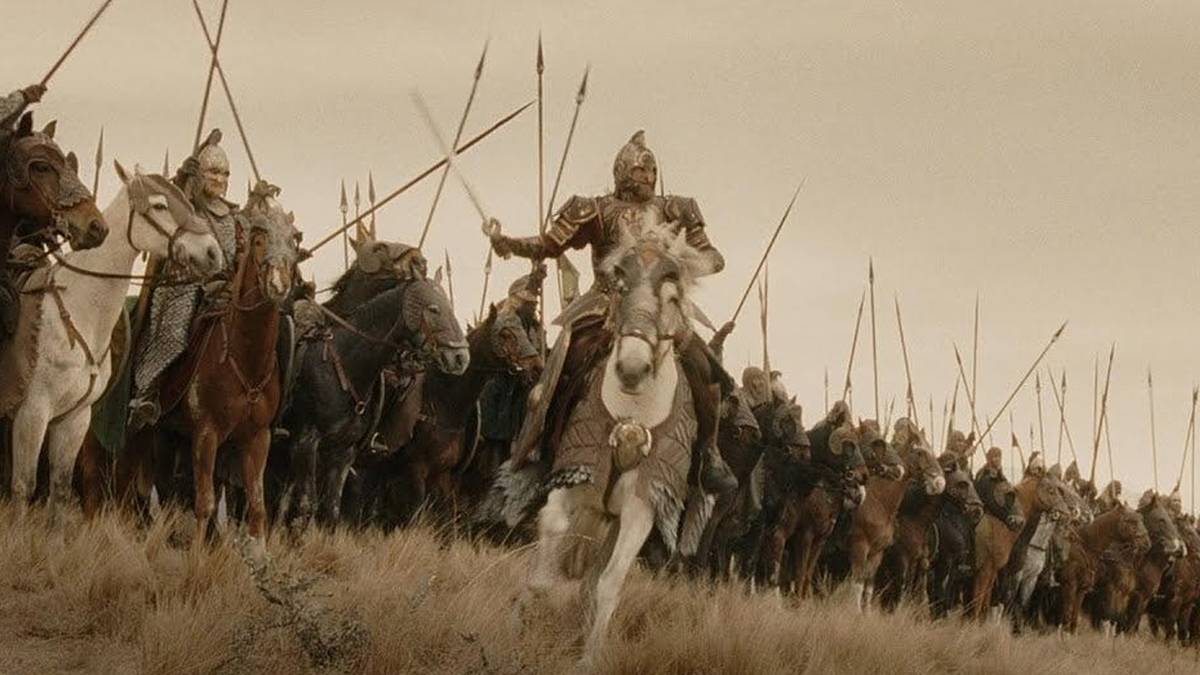
Films have evolved significantly over the past 100 years, with new trends and actors bringing these stories to life. From genre-defining classics like The Wizard of Oz to modern masterpieces such as Oppenheimer, fans can always find something to enjoy every year, and with over a century of content, there will always be must-watch films.
Movies are best experienced in theaters, and the best type of film to watch on the big screen is large-scale epics. That is why this list will rank the ten greatest epic masterpieces of the last 100 years, starting from 1926 to the present day. Based on scale, writing, ambition, vision, directing, and overall quality, these ten films are the grandest movies of the past century.
11
‘Stalker’ (1979)
Epics are defined as lengthy films with grand moments, numerous actors, and a rich visual style. Stalker doesn’t exactly fit that definition, but it is still a psychological epic worthy of being on this list. Tempted by their earthy desires, a group travels inside a mysterious Zone to find The Room. Led by a child, they explore this wasteland and all of its dangers.
Stalker isn’t like most epics, and while that unconventional nature pushes it down to the bottom of this list, it is still a psychological epic that deserves recognition. It doesn’t feature battles or thousands of actors, but Andrei Tarkovsky still creates an introspective epic with immense weight and philosophical discussion. It is an epic of the soul, so to speak, exploring a mysterious zone where wishes come true. The vast sense of metaphysical dread, achieved solely through the elements and a decaying landscape, is a magnificent feat that makes Stalker a masterpiece.
10
‘Mad Max: Fury Road’ (2015)

The Mad Max franchise redefined the post-apocalypse genre with its visual style, and while the originals are classic, Mad Max: Fury Road is arguably the best. The titular protagonist (Tom Hardy) wanders the wasteland. When he stumbles upon a paradise, he must help all the women escape the tyrannical ruler who keeps them as wives. This action epic is one of the greatest modern action movies.
Mad Max: Fury Road isn’t known for its complex story, but it is more than deserving of being an epic masterpiece. With editing, practical stunt work, and magnificent production design, this film is pure cinematic epicness on both scale and entertainment value. Mad Max: Fury Road is a grand operatic struggle for survival and redemption, capturing a feeling of insanity and exhilaration through its custom-built vehicles. This visceral experience is expansive and light on dialog, showing fans its epicness through raw thrills.
9
‘The Ten Commandments’ (1956)

Fans will notice a handful of biblical film adaptations on this list, but that is because they were popular in the 1950s and could achieve massive scale, with the first being The Ten Commandments. When Moses (Charlton Heston) discovers his true heritage, he decides to liberate his people.
Featuring some of the largest sets ever built in Hollywood history, this biblical epic is a massive masterpiece with old-school art direction. The Exodus scene, in particular, used over 12,000 extras and 15,000 animals, making it one of the largest scenes in cinematic history. The Ten Commandments isn’t as popular nowadays as other classic masterpieces, but it is an epic masterpiece nonetheless for its visual ambition and its achievement of pre-digital special effects.
8
‘Star Wars: A New Hope’ (1977)

The sci-fi genre has been reimagined many times, but one of the most influential was in 1977 when Star Wars: A New Hope came out. Luke Skywalker (Mark Hamill) must accept his destiny as a Jedi, leading the rebellion to take on the oppressive Empire, which has a strangehold over the galaxy.
Epics are most known for their long runtime, usually three hours, and while Star Wars: A New Hope isn’t as long, its scope and ambition are nothing less. The film revived the hero’s journey for the modern age, blending its groundbreaking take on dirty sci-fi with samurai cinema. Star Wars: A New Hope is one of the most imaginative films, creating an entire universe that endlessly expands, starting out with ambitious set designs and epic storytelling that expanded the boundaries of cinema.
7
‘Metropolis’ (1927)

Metropolis barely made the cut, coming out roughly 99 years ago, which barely makes it from this century, but no matter what, it is a masterpiece. People in Utopia don’t think too much about what’s below, but when one privileged youth learns about the disgusting truth, he becomes intent on helping the workers.
German expressionism was a revolutionary era for cinema, and one of its defining masterpieces was Metropolis. It created the visual language that most sci-fi cities use, proving to be an architectural epic that dazzled with its stylized sets and thousands of extras. Fritz Lang also used a process that places actors into miniature models, creating an unparalleled sense of scale.
6
‘The Last Emperor’ (1987)

Pu Yi (John Lone) is the last emperor of China, and The Last Emperor chronicles his life. Captured by the Red Army, he recounts his life as a child in prison and his lavish youth where he was sheltered from the outside world. As revolution sweeps the country, his life has flipped upside down.
Filming on site is, unfortunately, rare nowadays, but it makes the film feel more authentic, and that is why The Last Emperor is a masterpiece and one of the most accurate biographical epics, since it was filmed inside the Forbidden City. Not only that, but its story gives insight into the upheaval of the 20th century, following a man who started as a god-king and ended as a gardener. The costume design and cinematography make every frame pop with priceless precision.
5
‘Ben-Hur’ (1959)
4
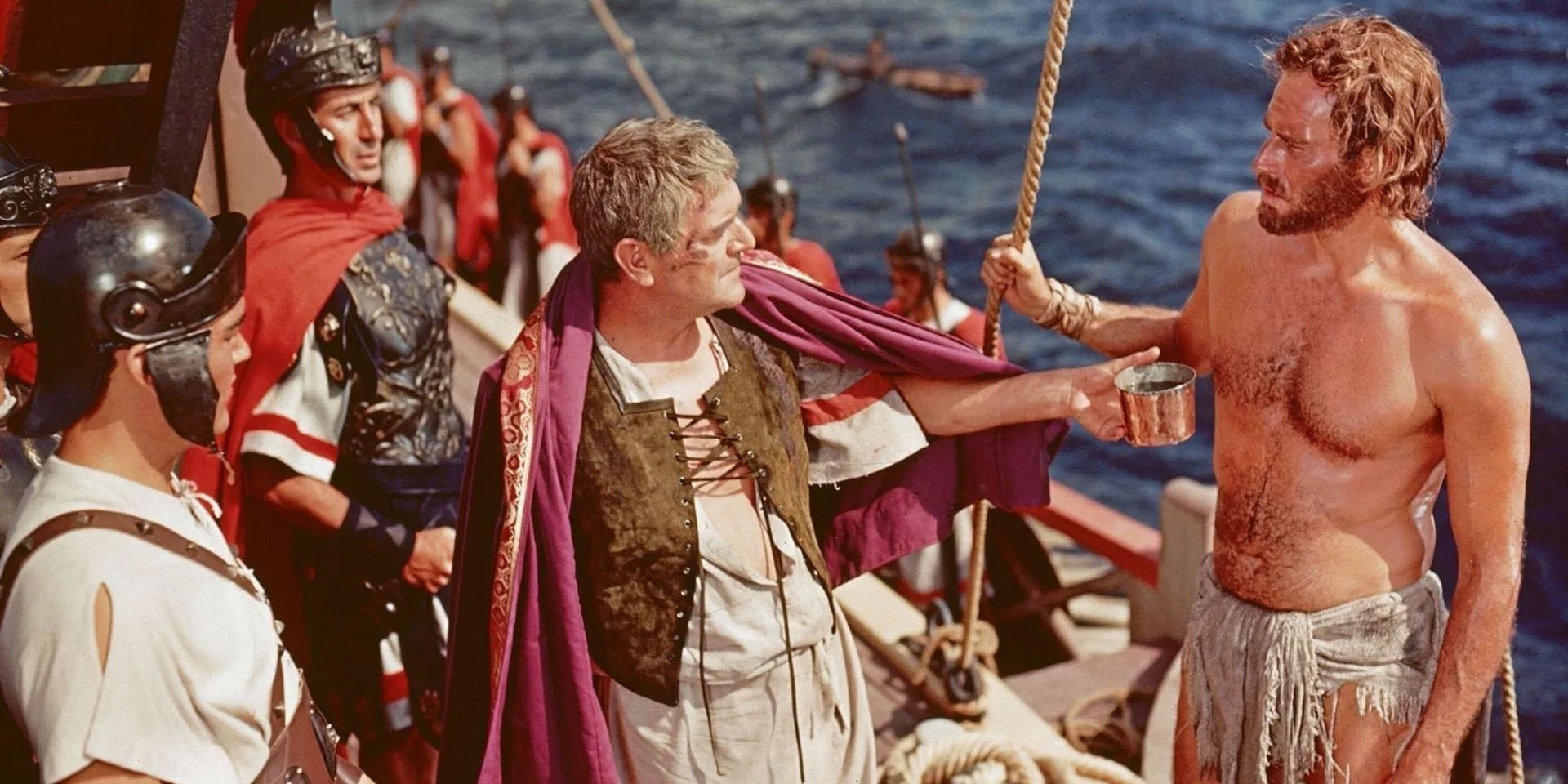
There are plenty of historical epics, especially during the 1950s, and one of the greatest is Ben-Hur. When a Jewish person is forced into slavery, he harbors a vicious grudge against those who betrayed him, now seeking revenge. This spans the entire movie, doing anything he can to get his payback.
Epics are a spectacle, and Ben-Hur is the gold standard for mid-century Hollywood spectacles. The story is all about physical endurance, famously captured in the chariot race scene, which involved 78 horses and 18 chariots. The stakes remain high throughout the film, and the story of personal revenge set against the backdrop of the Roman Empire elevates the spectacle even further, making Ben-Hur a masterpiece.
3
‘Ran’ (1985)
Akira Kurosawa is one of the greatest filmmakers of all time, producing a handful of epic masterpieces that have gone down in history. Based on Shakespeare’s King Lear, Ran is a Japanese epic where the king splits his kingdom between his two sons, but when the younger one defies him, a giant war sparks.
There isn’t a more visually striking movie than Ran, which used color as a weapon, proving to be a triumph. It features one of the most hauntingly gorgeous scenes in cinematic history, as thousands of arrows rain down upon the burning castle and its silent lord. Ran is a visual epic that pops with vibrant color and moves with a profound story, establishing itself as a masterpiece that has aged perfectly.
2
‘The Lord of the Rings: The Return of the King’ (2003)

This list doesn’t feature many modern epics, as one of the most recent films is The Lord of the Rings: The Return of the King. Frodo (Elijah Wood) and Sam (Sean Astin) are nearing the end of their journey, reaching Mount Doom where they will cast the One Ring into the lava, but Sauron is as cunning as ever.
Realistically, this entry represents the entire trilogy, but The Return of the King is by far the most epic. The world-building, sense of adventure, well-written characters, multiple plot lines, and grand battles coalesce to create the peak of modern-day storytelling and the gold standard of an adaptation. The set design and costumes create an immersive picture that blends practical and digital effects. The story never loses heart, and the pure scale and achievement remain baffling, almost feeling unfilmable because of its grandeur and fantastical aesthetic.
Source link
