

In an evolving health landscape, emerging research continues to highlight concerns that could impact everyday wellbeing. Here’s the key update you should know about:
Drawing on runners’ own reflections on Strava, the study uncovers how weather, paths, social dynamics, and performance pressure combine to influence how people feel during and after their runs.
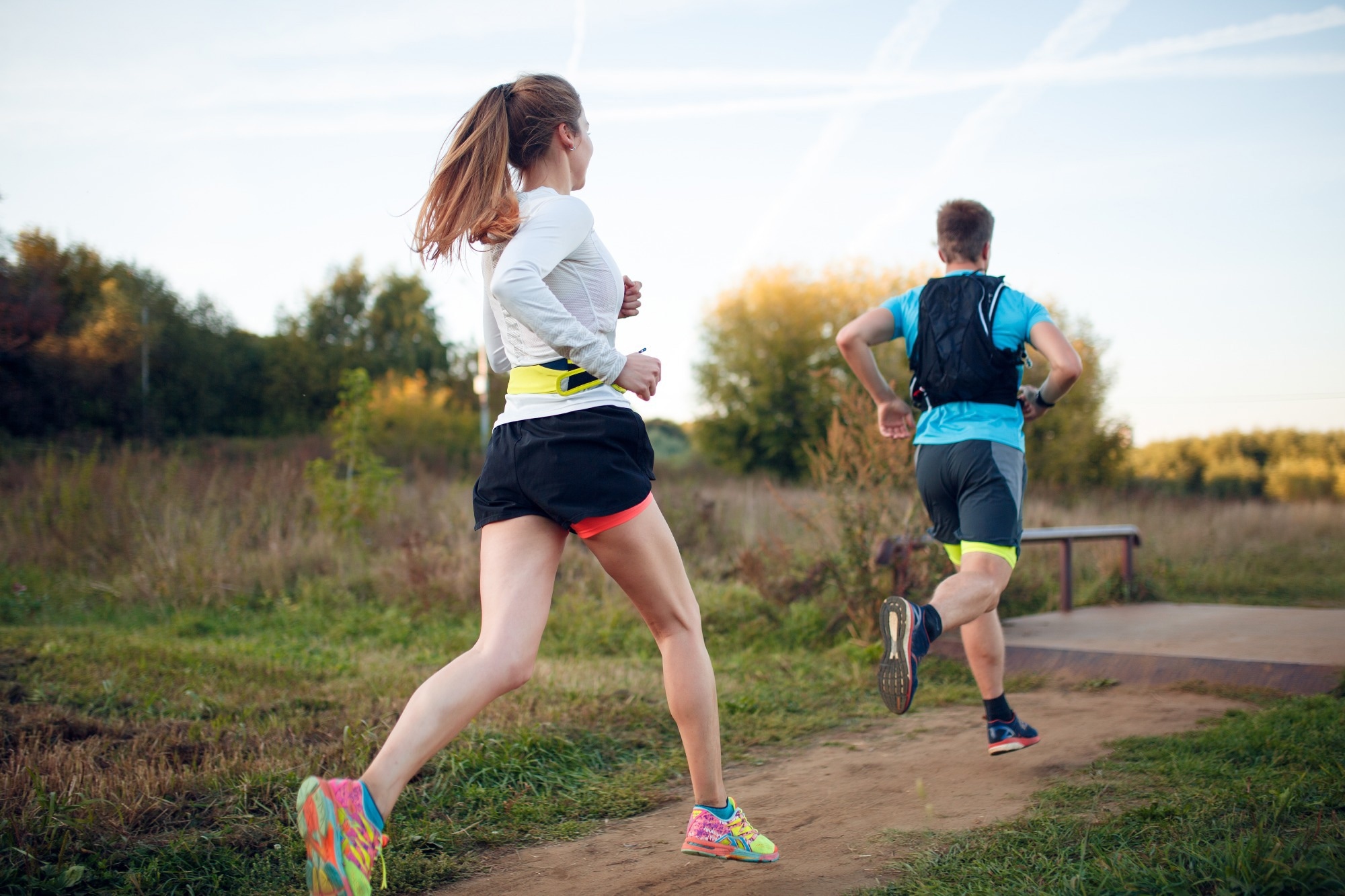
Study: Run with feeling: A qualitative content analysis of runner sentiment in Metro Vancouver. Image credit: Sergey Mironov/Shutterstock.com
A novel study from Vancouver, Canada, explores runners’ preferences and challenges as expressed in their own narratives, shedding light on how people emotionally experience everyday runs. The study appeared in the journal Wellbeing, Space and Society.
According to the authors, this is one of the first studies to apply mixed-methods qualitative analysis at scale to thousands of narrative posts generated directly by runners themselves, using social media data.
How environment shapes the emotional side of running
Running is becoming increasingly popular as an urban activity worldwide. It needs little equipment, is safe, and is inexpensive. Yet it is not equally enjoyable or safe everywhere. Multiple factors affect how runners feel about the sport during and after a run, and how these feelings affect their well-being.
Regular running improves both physical and mental well-being, reducing cardiovascular risk and stress. The greatest well-being is associated with running in blue or green areas, with prominent natural water bodies and greenery, respectively. In fact, running therapy is a useful mental health intervention.
Unlike activities like cycling or walking, there is relatively limited understanding of the factors that impact runner experience, hindering the framing of policies for safe and inclusive running environments. The current study was based on Strava, a social media application that tracks fitness and is widely used by runners. However, Strava users are not fully representative of all runners, as they tend to skew toward higher-income and more engaged users, and this limits the generalizability of findings.
How Strava posts became a qualitative research dataset
Researchers used a qualitative dataset derived from Strava posts from 72 men and 65 women in Metropolitan Vancouver. The researchers chose to use a mixed-methods approach, combining quantitative and qualitative methods, to analyze the factors contributing to extremely positive or negative feelings among runners.
For instance, earlier quantitative studies using crowdsourced data from apps like Strava have revealed a preference for blue or green spaces, traffic-sparse areas, comfortable, well-kept surfaces, and fewer crosswalk signals. These are likely associated with the socioeconomic status of neighborhoods and users.
While geolocation often underpins such data, the aggregated nature of this information prevents personal experiences and movements from being captured and included in the analysis. For this reason, the current study used NLP for sentiment and content analysis to detect factors associated with the running experience.
Notably, NLP sentiment modeling relies on Big Data that may underrepresent people of lower socioeconomic status. The authors explicitly acknowledge these structural biases, and the current study incorporated content analysis as well, aiming to challenge the inherent biases of the NLP model through iterative researcher interpretation and refinement.
Six themes explain why runs feel great or terrible
The researchers first performed sentiment analysis to stratify posts along the emotional spectrum from -1 to +1, representing extreme negativity and extreme positivity, respectively. This method rapidly classified sentiment across thousands of posts, with high but imperfect accuracy, as validated against manual coding and supplemented by repeated checks for misclassification.
This was followed by a content analysis of highly positive and highly negative posts. This selective analysis identified the topics most likely to affect runner experience.
The researchers chose to perform inductive content analysis. This method of qualitative text analysis aims to detect and organize patterns in the data, based on interpretation rather than predefined categories. These patterns form the foundation of valid and replicable inferences.
The content analysis yielded six categories and 26 subcategories. From most to least frequently mentioned, the categories comprised:
- Psychological aspects
- Interpersonal experience
- Weather
- Surroundings
- Physical experience
- Path
Each had its subcategories. For instance, psychological aspects, found in 645 posts, were classified under enjoyment, motivation, well-being, and perceived performance.
Psychological aspects
Runners enjoyed running, their surroundings, and the fun they had. All these contributed to improved well-being.
Running may enhance mood and relieve fatigue, while providing personal time. Reasons to run include health and socialization, while some wanted to become better runners. Apps like Strava provided recognition and motivation via awards and performance tracking, which were key to persistence and improvement, especially during the pandemic, which eliminated other races.
Some users strongly desired social recognition for their running on Strava, a tendency that men disproportionately expressed in the dataset. These runners were less likely to frame their runs explicitly in terms of well-being, and prior research suggests such comparison-oriented motivation may increase vulnerability to obsessive training patterns and burnout. However, the study itself did not directly measure risk.
Interpersonal experiences
The courtesy shown by other runners, walkers, or cyclists, and others using the same space, influenced interpersonal experiences, as did safety perceptions. Congested areas were more likely to be associated with unpleasant experiences.
Support from the runner community and their families improved well-being. The increase in Strava running clubs suggests a broader acceptance of the social well-being associated with group running. While social running was prominent in the data, the authors note that this likely reflects recruitment through running clubs and may overrepresent socially oriented runners. Many participants ran with others, but many also preferred to run solo.
During the pandemic, running often provided socialization in public outdoor spaces. This correlates with prior observations that running activity increased during the pandemic.
Weather
Pleasant weather was overwhelmingly preferred for running. Most runners used trails or green spaces. Specific subsets, notably trail runners, preferred more extreme conditions, including rugged terrain, cold, wind, and rain, to experience risk, enjoy a sense of adventure, and discover uncommon views or locations. Roads in winter were both dangerous and unpleasant for runners, particularly road runners without snow- or ice-specific gear.
Surroundings
Runners enjoyed connecting with nature in their surroundings, like parks and trails, while simultaneously feeling more connected to the community and experiencing greater well-being. Wild animal encounters caused conflicting emotions. Runners preferred good illumination, especially when running in darker or less populated areas.
Traffic was annoying, yet many runners used moderate- or heavy-traffic routes. This may signal route-choice constraints, such as restricted timing, competing priorities, safety considerations, and distance constraints. The availability of public amenities was very important to runners, though mentioned by only a few.
Physical experience
Most runners enjoyed the physical experience of running. Feeling sick, sore, or stiff was sometimes accepted as helping to build stamina and mental toughness, though runners clearly distinguished between manageable discomfort and injury-related pain. Injuries were quite common and often disrupted training routines.
Path
Finally, the runners showed no clear preference for steep paths overall, despite the increased challenge and better scenery for some. Most runners liked smooth, well-kept paths with semi-soft surfaces and good traction. Uninterrupted running rhythms are important to enjoying running.
What cities can learn from runners’ lived experiences
The results of this study reveal how personal, environmental, and technological factors interact to shape runner preferences and experiences. In contrast to earlier quantitative studies, this study combined sentiment analysis with inductive content analysis to foreground runners’ own descriptions of their experiences at a narrative level rarely available in large datasets.
The study results are preliminary and require validation with larger, more diverse samples, including runners who do not use Strava, and continued refinement of sentiment analysis methods. However, the use of inductive content analysis helped uncover hidden assumptions in large-scale data models, allowing for analytical adjustments.
Given the global reach of Strava and similar platforms, this methodology has the potential to examine other types of physical activity to better promote environments that support diverse modes of active travel.
The findings offer insight for urban planners and public health researchers, while underscoring the need for caution when translating platform-specific data into policy.
