

How Ukrainians Are Protecting Their Homes Against Russia’s Winter Offensive
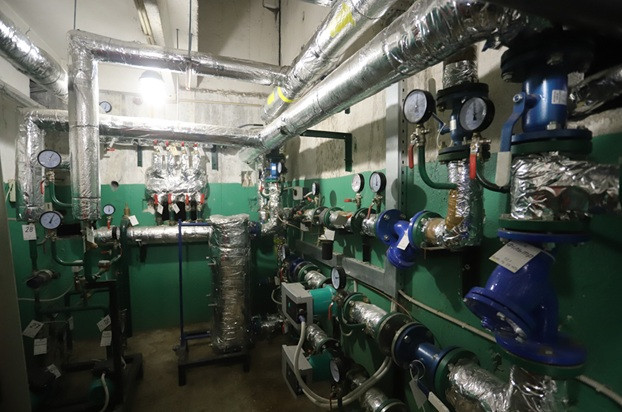
In Kyiv, power cuts now last up to 20 hours per day, with strikes on thermal plants leaving hundreds of buildings without heat – and some areas plunged into darkness for days.
Kyiv isn’t alone. Russia regularly targets the energy networks in regional capitals such as Kharkiv and Odesa, with the Kremlin openly acknowledging that these strikes aim to force Ukraine into negotiations. Over the past two weeks, temperatures have plunged to as low as -20°C (-4°F) at night and -13°C (8.6°F) during the day, and forecasts predict similar cold weather for the coming fortnight.
JOIN US ON TELEGRAM
Follow our coverage of the war on the @Kyivpost_official.
Yet so far, Russia has failed to achieve its goal. Public transport, restaurants, delivery services, mobile networks, supermarkets, and industry continue to operate in Kyiv and other major cities.
Several factors helped Ukraine withstand the attacks without a total blackout.
First, Russian strikes are less effective than claimed. After every major attack, Kyiv’s combined heat and power plants (CHPs) and boiler houses keep running – even at reduced capacity, while Ukraine’s air defenses destroy up to 90% of drones and 70-80% of missiles. Many attacks also miss or fail.
Russia has also been unable to break Ukrainians’ resolve and ability to adapt. Cities have built mini-CHPs and boiler houses – such as in Zhytomyr – that supplement large-city grids and are difficult to detect or target.
Other Topics of Interest
Ukraine’s Energy System Strained as Russian Attacks Hit Every Power Plant – Shmyhal
Over the past year, Russia has carried out 612 deliberate attacks on the energy sector, and the bombardment shows no sign of slowing, the minister said.
Administrative buildings, hospitals, restaurants, and businesses rely on high-capacity generators, while smaller enterprises use standard generators to maintain basic lighting. These measures keep essential services running.
Beyond infrastructure, Ukrainians themselves have adapted – collectively and individually – to survive under the prolonged crisis.
New tech, old buildings
One way Ukrainians have adapted is by modernizing their buildings.
Even before Russia’s full-scale invasion, residents of mostly Soviet-era apartment blocks formed Condominium Owners Associations (OSBBs) to manage and upgrade their buildings.
These panel-style apartment blocks are often cold, poorly insulated, and costly to heat. But the OSBB movement has helped to improve energy efficiency and lower utility costs, which has been crucial for survival during the war.
Kyiv Post visited a building in Kyiv’s densely populated Pozniaky district, supplied with heat and electricity by the city’s largest plant CHP-5, which has been repeatedly attacked by Russia over the past year.
From the outside as the image below shows, it is a typical Soviet 16-floor apartment building from the late 1980s to early 1990s. But inside, major changes have taken place.
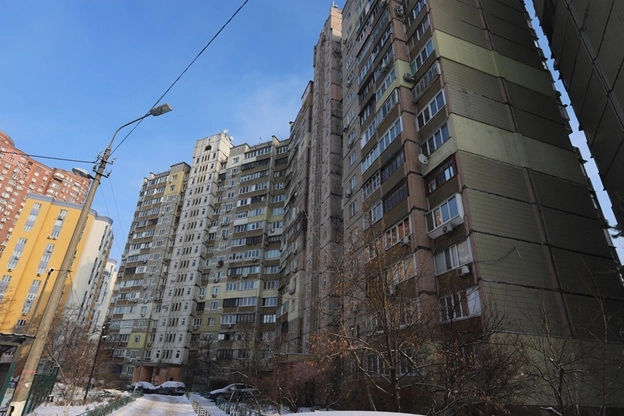
Kyiv Post met with Valeriy Pyndyk, the head of the local OSBB – an association of proactive residents that has managed to make significant improvements to the building.
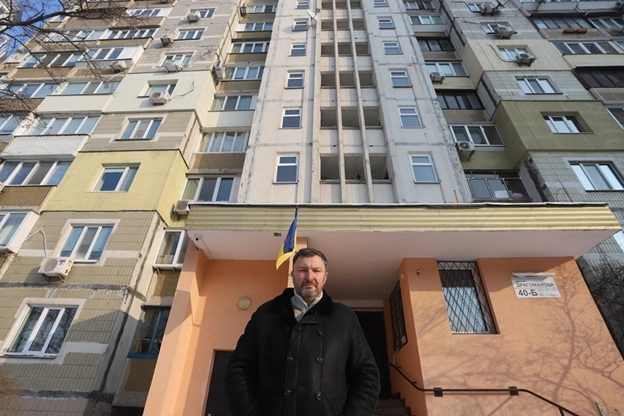
Pyndyk led us to the basement to see the control center for water supply and heating distribution.
“We started with the heating unit. What used to be here – outdated pumps, uninsulated pipes – created large heat losses and effectively led to people receiving barely warm radiators in their apartments, even with fairly hot heat carriers,” Pyndyk told us.
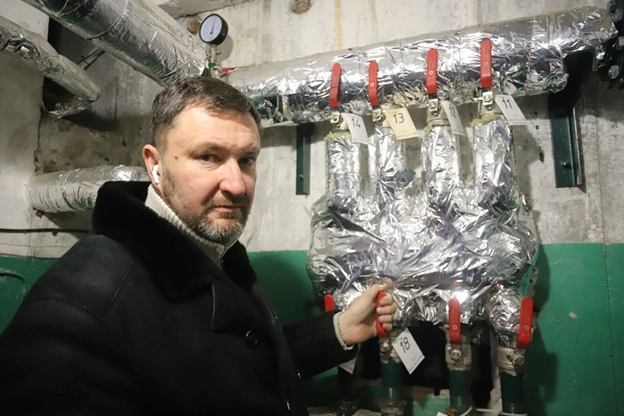
“We purchased new single-phase pumps that are electrically efficient and effective, insulated all the pipes, and achieved a reduction in heating bills by almost 30%,” he added.
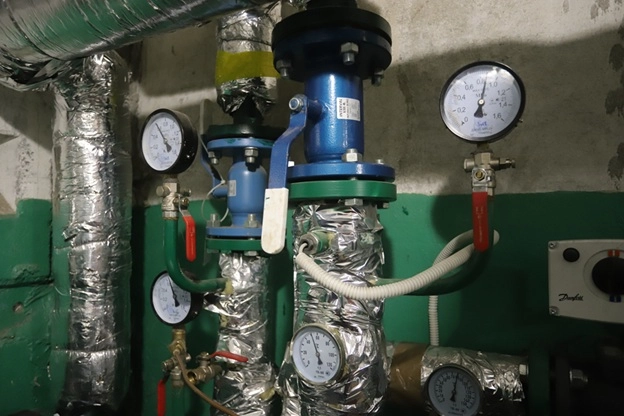
Two temperature sensors monitor the heat carrier – one measuring what enters the building, the other what reaches the apartments; and heat loss is almost nonexistent.
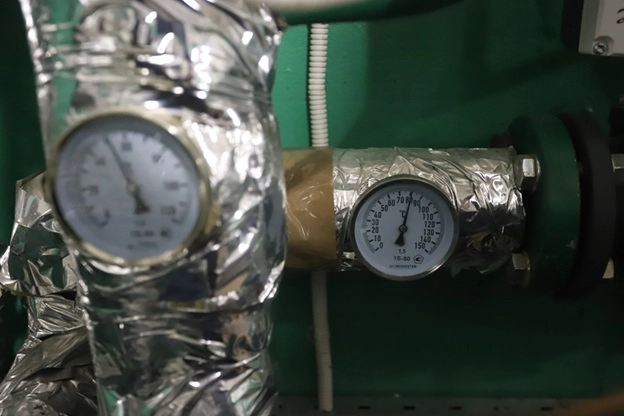
The old rusty pipes have also been replaced with new, well-insulated ones.

“The individual heating units cost just over Hr.1 million – about $40,000. The city sponsored 70% of it… we collected the remaining 30% together as an entire building,” Pyndyk said.
“At the same time, we insulated the pipes. We equalized the temperature between the upper and lower floors using circulation pumps, and we balanced the pressure in each riser,” he added.
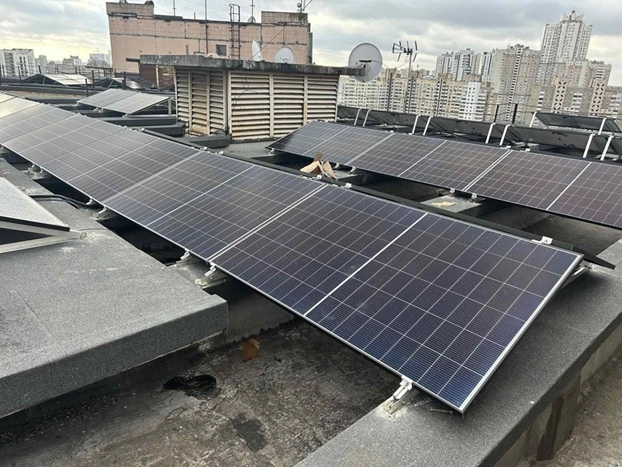
To run the heating unit independently, three rooftop solar stations have been installed, each generating up to 12 kilowatts (kW) of electricity.
“In addition, we replaced all consumable light fixtures with LED lamps featuring motion sensors – now they react to human movement and turn on only when someone is present, instead of burning constantly,” Pyndyk said.
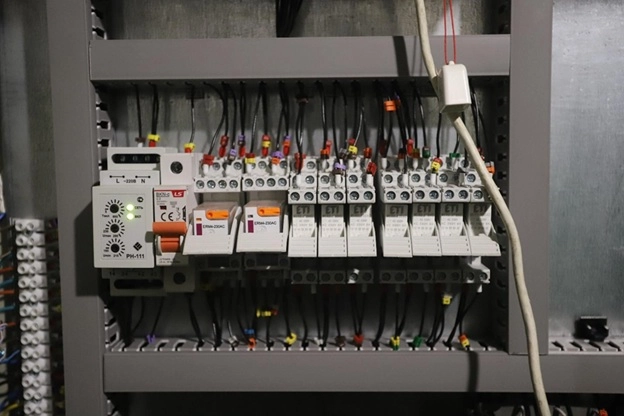
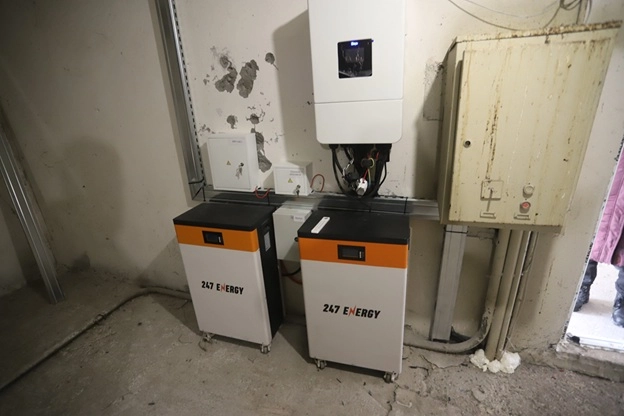
Additionally, each of the three buildings has two 15 kW balancing batteries on its roof, powering the internet, the elevator – which was fitted with a new motor – and lighting when electricity is out or solar panels underperform, such as on cloudy winter days.
To boost efficiency, fire balconies and stairwells were separated from common areas with doors featuring enhanced insulation, and over 90 windows and doors were replaced.
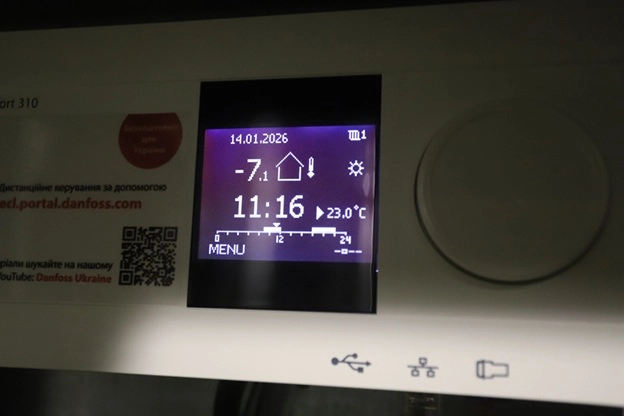
The results are striking: Even after 20 hours without electricity, the building stays warm, heating continues to run, and apartment temperatures remain above 20 °C (68 °F).
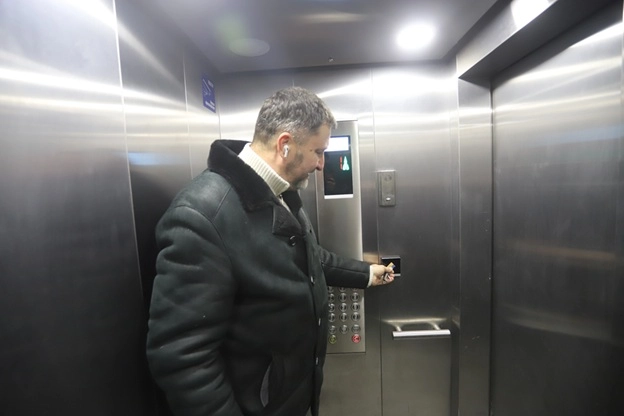
The elevator also works, and lighting is available.
Pyndyk explained that the benefits of such initiatives became clear to residents during Russia’s full-scale invasion, where uniting residents around such changes had been difficult before.
In Kyiv, city authorities support OSBBs by funding their creation and offering a 70/30 program, where the city covers 70% of energy-efficiency project costs, and residents cover the remaining 30%.
Today, Kyiv has over 1,500 OSBBs – nearly 14% of all residential buildings – and across Ukraine almost 40,000 OSBBs are working, with varying success, to upgrade their buildings.
Individual solutions
Ukrainians have adapted to prolonged power outages by using alternative energy sources, including large battery systems with inverters – truck batteries work particularly well.
Wealthier residents invest in charging stations from licensed manufacturers, while using power banks for Wi-Fi routers and extra laptop batteries has become routine.

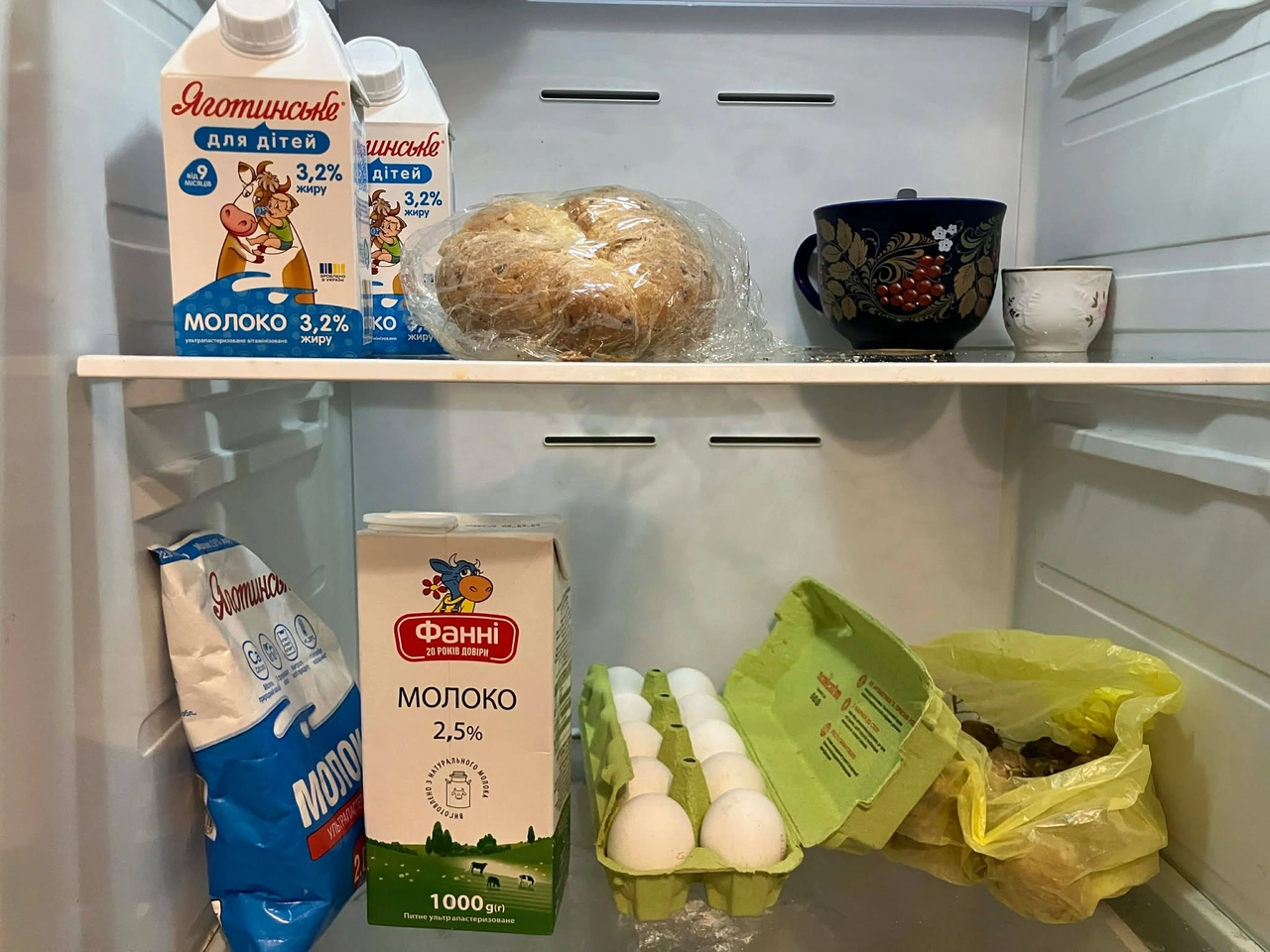
Household electricity use has also changed: battery-powered LED lamps have replaced traditional lighting, gas heaters have supplemented warmth, and food storage habits have shifted.
Milk has largely been replaced by ultra-pasteurized long-life versions; ready-made meals give way to vegetables and bread; porridge is returning; and meat is cooked immediately or ordered ready-made to avoid long-term storage.
Source link
