

DALLAS – Nearly five years after Winter Storm Uri sparked widespread power outages and killed hundreds of Texans, officials and residents are once more girding for a round of severe winter weather that will blanket large parts of the state.
Dangerously cold temperatures from an arctic blast will descend upon the state beginning Friday morning, and with the cold come chances of wintry precipitation in the form of snow, sleet and freezing rain. That winter blast is expected to grip the state from Friday evening to early next week.
Officials don’t expect widespread power outages, though Texans could still see local power outages if ice or falling tree branches knock out power lines.
Officials this week have set about making preparations for the weather. Gov. Greg Abbott announced a series of steps state departments are taking that include working with local governments to update local warming center maps and monitor water and wastewater. State officials are also helping set up teams of firefighters, state patrol agents and the National Guard.
Additionally, crews with the Texas Department of Transportation began treating roadways on Wednesday to prevent them from accumulating ice, though state and local officials told Texans they should stay home during the worst of the winter weather if they can help it.
“If you don’t have to go outside, please don’t,” Dallas Police Chief Daniel Comeaux said during a news conference Wednesday afternoon.
Is the Texas grid ready for ice and cold?
Years after Uri dropped record amounts of snow onto the state, left millions of Texans without power and killed at least 246 people, officials say Texas is better prepared to handle winter weather.
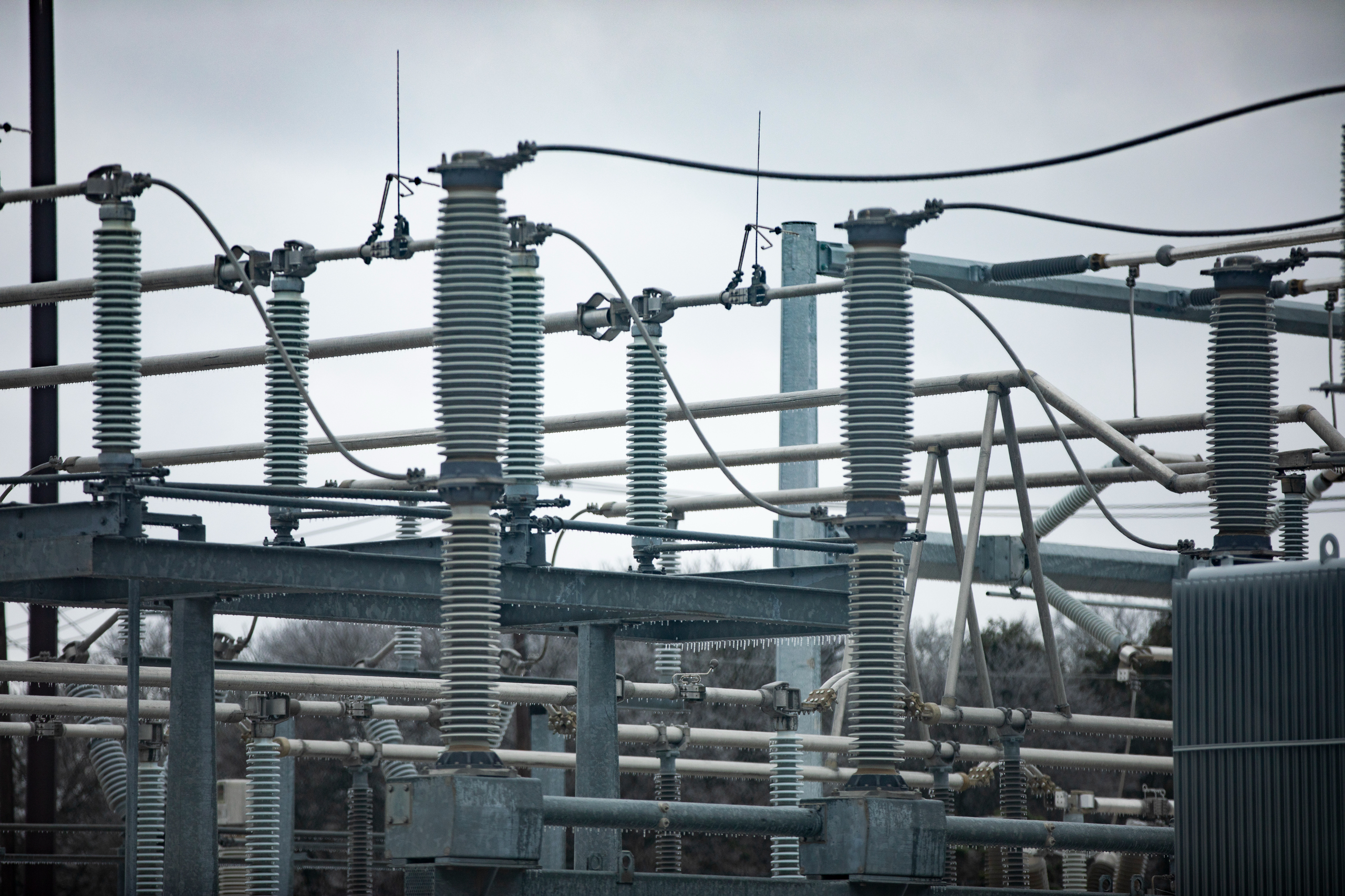
Perhaps the most crucial part of that preparedness is the stability of the state’s electrical grid. The grid, managed by the Electric Reliability Council of Texas, failed catastrophically during the February 2021 storm. Questions about whether the grid will hold up come up any time the state faces severe weather, hot or cold. Texans have grown particularly attentive to how the grid will hold up in a cold snap.
The grid is in better shape than it was in February 2021, state officials and energy experts have said. So far, the agency is projecting that Texas will have enough power to meet demand throughout the weekend.
“Based on expected weather conditions, ERCOT anticipates there will be sufficient generation to meet demand this winter,” the agency said in a statement.
That’s owing to two factors, said Matthew Boms, executive director of the Texas Advanced Energy Business Alliance, an industry trade group. For one, there’s more power on the grid than there was in 2021, and most of that new generation is in the form of solar panels, wind turbines and battery storage, Boms said.
“That’s a gigantic change,” Boms said. “We didn’t really have battery storage on the grid during Winter Storm Uri, and now we have thousands of megawatts of batteries. That’s a huge asset when we have this kind of winter event.”
Texas lawmakers also forced natural gas plants to harden their facilities against severe cold, Boms noted.
Natural gas is the backbone of Texas electricity, especially during extreme cold. More than half of the state’s power comes from natural gas. When gas production freezes, power plants lose fuel and shut down. At the same time, winter storms drive up demand for both heating and electricity. If gas facilities aren’t running, the electricity simply can’t be generated.
After Winter Storm Uri in 2021, the Texas Legislature directed the Railroad Commission of Texas, which oversees the state’s oil and gas industry, to strengthen how the state prepares natural gas facilities for weather emergencies and power outages. That directive led to the creation of the Critical Infrastructure Division, which focuses on identifying key natural gas facilities as critical and making sure they’re ready for all-weather emergencies, including winter storms. This designation also ensures these facilities receive power first in hopes it will prevent blackouts like those from Winter Storm Uri.
The agency inspected more than 7,400 natural gas facilities last year, the agency said.
Are cities and other utilities prepared?
Just because there’s more power on the grid doesn’t mean there won’t be any power outages, officials caution. The storm brings a strong chance of ice for most of the state, which can build up on power lines and tree branches, causing lines to break and people to lose power. Utilities said Wednesday they have crews at the ready to restore power as quickly as possible.
Mark Bell, president of the Association of Electric Companies of Texas, which represents companies like Oncor, El Paso Electric and CenterPoint Energy, said his members were ready.
“In areas that will be affected by the winter storm, electric generating companies and utilities are implementing their emergency operations plans, mobilizing staff, re-checking weatherization measures, procuring needed fuel and equipment, among other activities,” he said.
Even a thin layer of ice can add several hundred pounds of weight to a power line, causing it to sag and break. Ice buildup can even bring down utility poles.
“In a worst-case scenario with ice loading, you’ll get a domino effect with poles,” said Chester Brown, an operations director for Xcel Energy in Amarillo. “One finally gives up and breaks, and then you’ll have a whole string of poles that could break it at a certain time.”
The year before Uri, a winter storm brought heavy ice to the Panhandle, bringing down power lines and causing widespread power outages. Xcel in the years since has continually replaced poles with ones made of stronger material, Brown said.
That ice buildup was a key factor in leaving tens of thousands of Austin households and businesses without power in the wake of a severe winter storm in early 2023.
That’s a tough problem to fix, officials and experts said Wednesday. Cities and utilities in the past several years have tried to beef up their vegetation management to pare tree branches to prevent them from falling on power lines during severe weather.
The most straightforward solution, officials have said, would be to bury above-ground power lines. But doing so would be enormously costly. Burying Austin’s city-owned network of above-ground power lines would cost $50 billion, according to a city-commissioned estimate published last year. Instead of burying every power line, utilities in Houston and Austin have focused on burying lines in places most at risk of power outages, Homs said.
“If you did it everywhere, that would cost tens of billions of dollars and ultimately raise electric bills,” Homs said.
Austin Energy, the city’s publicly owned utility, doesn’t expect widespread power outages, General Manager Stuart Reilly told Austin City Council members this week, though the utility continues to monitor the situation and prepare for the ice storm, KUT reported.
“A lot can move between now and Friday night, and so we’ll just keep an eye on it,” he said. “But so far, the predictions aren’t for the worst-case scenario.”
Other preparations abound. In Dallas, officials will open up facilities at Fair Park, the site of the State Fair of Texas, to shelter folks experiencing homelessness from the cold. If the city sees widespread power outages caused by the storm, officials plan to open up additional facilities for people to get warm and charge their phones, they said Wednesday.
Those facilities didn’t have backup power to open as warming centers during Uri, Dallas City Manager Kimberly Bizor Tolbert said Wednesday. In the years since, the city drew down federal dollars to outfit them with generators in the case of severe cold weather, she said.
What’s next?
Abbott is expected to hold a news conference on Thursday with several other state officials, including Texas Division of Emergency Management Chief Nim Kidd, Texas Department of Public Safety Colonel Freeman Martin, Texas Department of Transportation Executive Director Marc Williams, and Electric Reliability Council of Texas CEO Pablo Vegas.
— Camila Beraldo Maia contributed.
Disclosure: CenterPoint Energy, El Paso Electric Company and Oncor have been financial supporters of The Texas Tribune, a nonprofit, nonpartisan news organization that is funded in part by donations from members, foundations and corporate sponsors. Financial supporters play no role in the Tribune’s journalism. Find a complete list of them here.
Source link
