

1961 was a rich year for cinema, one that captured the medium in a state of creative tension. Classical Hollywood craft was still very much alive, but it was increasingly being challenged by modernist impulses, international influences, and a growing appetite for moral ambiguity.
Filmmakers were experimenting with a ton of ways, often pushing against censorship, convention, and audience expectations. The result was a body of work that feels strikingly varied: the classics of 1961 include revisionist westerns, courtroom epics, surrealist experiments, relationship dramas, and more.
10
‘One-Eyed Jacks’ (1961)
“I got a taste for revenge.” One-Eyed Jacks was Marlon Brando‘s directorial debut and, while rough around the edges, it does show off the star’s talent for understanding character. It’s a Western steeped in betrayal and obsession rather than frontier heroics. The main character is a bank robber (played by Brando himself) betrayed by his partner (Karl Malden), who later returns seeking revenge, only to find his emotions complicated by love and moral hesitation.
The plot unfolds slowly, prioritizing psychology over the expected genre momentum. Indeed, the movie stands apart from traditional westerns of its era through its emphasis on wounded masculinity and emotional vulnerability. What has helped the film age better than many of its peers is its refusal to simplify revenge into catharsis. The protagonist’s anger is corrosive, undermining his sense of purpose rather than clarifying it. Basically, it’s a somewhat revisionist take on the classic Western story arc.
9
‘The Innocents’ (1961)

“I believe the children are haunted.” The Innocents is one of the most elegant and unsettling ghost stories ever filmed. Based on the classic novella The Turn of the Screw by Henry James, the plot follows a governess (Deborah Kerr) hired to care for two orphaned children (played by Martin Stephens and Pamela Franklin) in a remote country estate, where she becomes convinced they are under the influence of malevolent spirits. The children’s behavior oscillates between innocence and knowing menace, destabilizing any sense of safety.
But, crucially, the movie never clarifies whether the haunting is real or a projection of the governess’s repressed anxieties. Rather than relying on shocks, the film builds terror through suggestion and psychological pressure. Shadows, whispers, and glances do the work of horror, creating a suffocating atmosphere of dread. All in all, The Innocents is a cold, eerie psychological horror, a gothic story executed in exquisite style.
8
‘Breakfast at Tiffany’s’ (1961)

“I’m crazy about Tiffany’s.” Audrey Hepburn delivers a legendary performance in this one as Holly Golightly, an eccentric woman who projects glamour while quietly running from her own vulnerability. She catches the eye of her neighbor, struggling writer Paul Varjak (George Peppard), and he quickly becomes enamored with her. The plot traces their tentative relationship as both characters confront the difference between performance and identity. While certain elements have aged poorly, particularly in supporting roles, the core of Breakfast at Tiffany’s remains resonant.
It’s a romantic comedy that hides a surprising amount of melancholy beneath its charm (it was based on a Truman Capote short story, after all). In particular, the film captures a specific urban loneliness, where freedom and isolation blur together. The protagonist’s outward confidence masks a deep-rooted fear of belonging, making the romance less about rescue and more about recognition. For this reason, the film has been reappraised over time as something sadder and more complicated than its reputation suggests.
7
‘Judgment at Nuremberg’ (1961)

“It came to that the first time you sentenced a man to death you knew to be innocent.” Given the recent release of the Russell Crowe-starring drama Nuremberg, now is a good time to revisit this classic courtroom epic. Judgment at Nuremberg dramatizes the postwar trial of German judges accused of enabling Nazi atrocities through legal means. It unfolds through testimony and argument, forcing characters (and the viewer) to grapple with complicity, obedience, and ethical cowardice.
It was directed by Stanley Kramer (On the Beach, Guess Who’s Coming to Dinner), a liberal icon known for his “message films”. Here, he stages the drama with seriousness and restraint, allowing ideas rather than spectacle to drive tension. The defendants are not monsters, but educated professionals who hid behind legality and precedent. That discomforting recognition gives the film its power. Rather than offering easy condemnation, Judgment at Nuremberg asks how ordinary people justify extraordinary harm.
6
‘Last Year at Marienbad’ (1961)

“Last year at Marienbad, I met you.” Last Year at Marienbad is a radical experiment in memory, desire, and narrative uncertainty. The plot ostensibly follows a man (Giorgio Albertazzi) who insists he met a woman (Delphine Seyrig) the previous year, though she denies it, or cannot remember. From there, the film dissolves into repetition, contradiction, and visual pattern. It becomes an avant-garde psychological drama. Director Alain Resnais rejects traditional storytelling, using architecture, movement, and voiceover to create a hypnotic atmosphere.
He also embraces ambiguity, leaving so much unanswered. Rather than asking to be solved, Last Year at Marienbad invites viewers to experience time as fluid and unreliable. It lends itself to endless interpretation, with some suggesting the whole thing happens in the woman’s mind, or that all the characters are dead and in limbo, or that the film is a retelling of Greek myth. This approach was polarizing on release, but now widely hailed as visionary.
5
‘La Notte’ (1961)

“I feel empty.” La Notte is a bleak, unsparing portrait of emotional disintegration, the second installment in Michelangelo Antonioni’s “trilogy of alienation”. Marcello Mastroianni and Jeanne Moreau star as a married couple drifting through a single night of parties, conversations, and quiet betrayals, revealing the emptiness beneath their shared history. The plot is minimal, but the emotional stakes are immense. Silence, space, and architecture reflect the characters’ inability to connect.
La Notte captures the erosion of their relationship with devastating clarity, showing how intimacy can decay into habit and resentment. Love here does not collapse in a single moment but slowly, almost imperceptibly. Antonioni’s storytelling is subtle, sensitive, and stylish throughout, letting framing and architecture convey most of the mood. While not much “happens”, per se, the striking visual compositions and abundance of atmosphere keep the viewer engaged. This approach was hugely influential, making La Notte one of the defining works of modern cinema.
4
‘Viridiana’ (1961)

“Charity is not enough.” Viridiana is a darkly satirical film from master of the surreal, Luis Buñuel. It’s about a young nun (Silvia Pinal) whose attempts at charity and purity are gradually undermined by the cruelty and hypocrisy of the world around her. That said, as is generally the case with Buñuel’s work, narrative coherence is very much secondary to bold visuals. In this one, the director uses religious imagery, in particular, to provoke rather than reassure, turning acts of goodness into unintended farce.
The movie pivots between solemn devotion and grotesque parody, exposing the limits of idealism when confronted with human desire and resentment. It’s nothing if not audacious. Viridiana refuses to flatter belief systems, instead interrogating the structures that allow suffering to persist under the guise of virtue. This displeased Spanish authorities, who censored the ending. Viridiana‘s blend of humor and cruelty still feels pretty edgy now, all these decades later.
3
‘The Hustler’ (1961)

“I’m fast, and I’m pretty.” Paul Newman shines in this one as Eddie Felson, a gifted pool player who seeks validation through dominance, challenging a legendary champion at great personal cost. The film charts his rise, humiliation, and painful self-awareness. Rather than being a typical sports drama, The Hustler is a character study about obsession and self-worth. In it, competition is psychological warfare, and success brings no peace.
In fact, the usual genre tropes are turned on their head. For instance, the protagonist’s talent isolates him, drawing him toward self-destruction rather than fulfillment. The film’s stark visuals and unsentimental tone strip away romantic notions of genius. Ultimately, The Hustler remains a classic because it captures the cost of defining oneself entirely through victory. It’s a portrait of ego that still feels uncomfortably relevant. Much of the credit for the film’s success must go to Newman, who makes the character feel uncomfortably real.
2
‘West Side Story’ (1961)

“Tonight, tonight, it all began tonight.” Simply put, West Side Story is one of the most entertaining musicals ever, and it’s still fun to return to after all these years. It ably brought the Broadway production to the screen, adapting Romeo and Julietinto a story of rival street gangs in New York. Natalie Wood and Richard Beymer are phenomenal in the lead roles, perfectly using song and dance to express genuine tension, desire, and rage. The plot builds toward violence even as the music soars, creating a constant friction between beauty and brutality.
However, despite its musical form, West Side Story never trivializes its themes. Love is fragile, prejudice is often systemic, and hope is fleeting. While certain elements reflect their era, the film’s emotional clarity remains powerful. The movie took home that year’s Oscar for Best Picture, and it has continued to delight generations of fans ever since.
1
‘Yojimbo’ (1961)

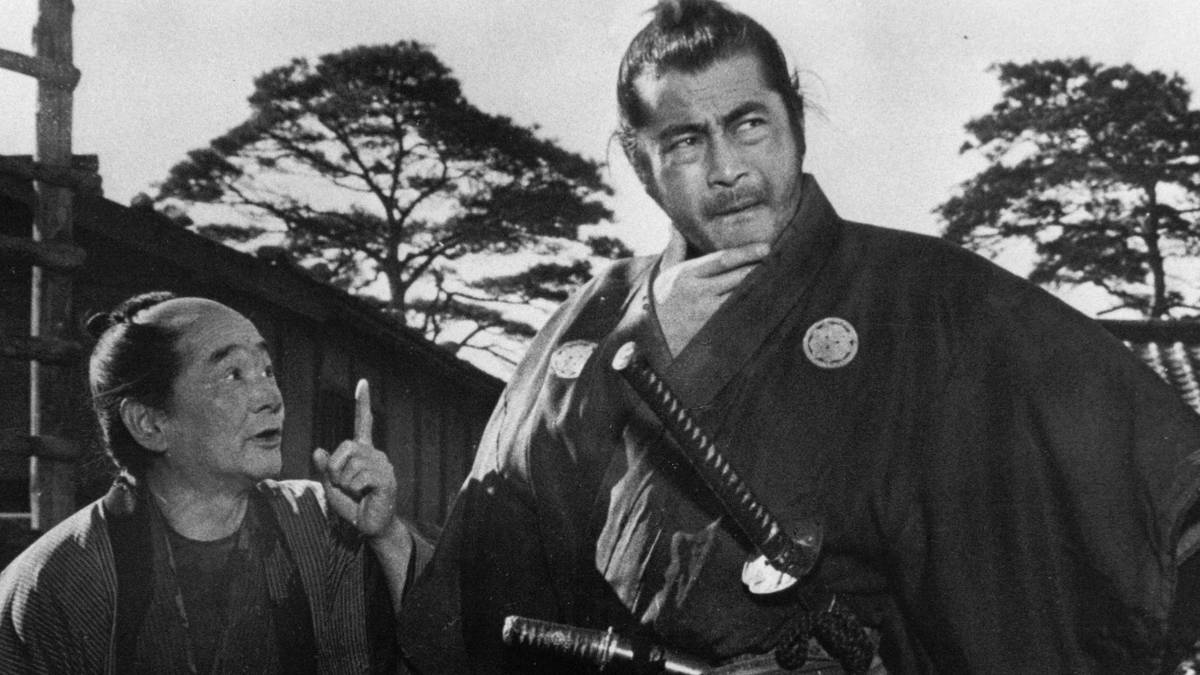
“Now there are two coffins.” Yojimbo is a genre film with a revolutionary spirit. In it, Toshiro Mifune plays a wandering ronin who arrives in a town torn apart by rival gangs. Sensing an opportunity, he decides to manipulate both sides for his own ends. The hero is not noble in the traditional sense; he is cynical, pragmatic, and self-interested. Yet his actions expose the corruption and absurdity of those in power. The setup is straightforward, almost archetypal, but Akira Kurosawa infuses it with dark humor, strategic tension, and bursts of hard-hitting violence.
The sword fights are spectacular, choreographed to perfection. In particular, Yojimbo reshaped action cinema by embracing ambiguity and wit, an approach that would be imitated by countless westerns and thrillers. Its stripped-down storytelling and iconic imagery have been referenced and mimicked by scores of movies since. This influence can be seen in classics like A Fistful of Dollars (a full-on remake) and Star Wars.
yojim

- Release Date
-
April 25, 1961
- Runtime
-
110 minutes
- Director
-
Akira Kurosawa

Source link
