

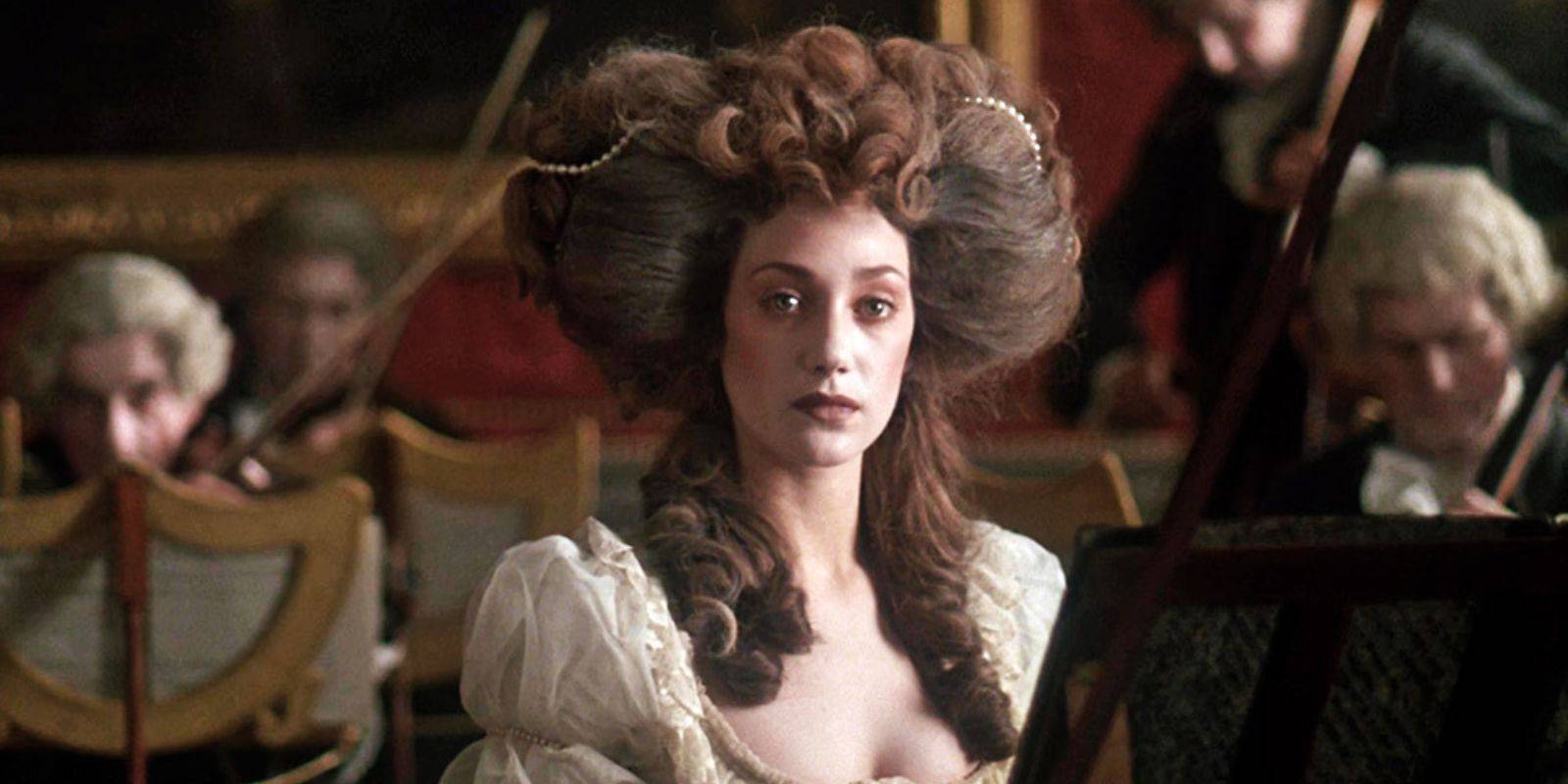
The 1970s are often described as cinema’s best decade, and with good reason. Hollywood briefly loosened its grip, allowing filmmakers to take risks that would be unthinkable in more corporate eras. Studios gambled on moral ambiguity, unresolved endings, and protagonists who were deeply flawed or outright broken, giving rise to the period commonly known as New Hollywood.
At the same time, genre boundaries blurred, political cynicism seeped into mainstream storytelling, and visual experimentation got bolder than ever. The result? Scores of classic movies that totally reshaped the medium. This list looks at ten of the most enduring of these masterpieces, though it barely scratches the surface. These ’70s movies might not have been instantly recognized as game-changers, but time has rectified them as absolute pillars of modern cinema.
‘The Last Detail’ (1973)
“I am the shore patrol!” The Last Detail is a deceptively small film that unfolds into something quietly devastating. The story follows two Navy petty officers (Jack Nicholson and Otis Young) assigned to escort a young sailor (Randy Quaid) to prison for a minor offense, turning what should be a routine transfer into an impromptu journey across America. On the surface, very little happens: there are bars, trains, arguments, and fleeting moments of camaraderie. Beneath that simplicity lies a profound meditation on authority, responsibility, and moral resignation.
Indeed, the script by Chinatown screenwriter Robert Towne is remarkably morally honest. The Last Detail refuses to flatter rebellion, refuses to offer easy villains, and refuses to pretend that good intentions are enough. It understands that the most damaging injustices are often carried out by ordinary people doing their jobs, telling themselves it’s not their place to stop the machine. It’s a message that’s universally relevant.
‘Badlands’ (1973)

“I wanted to be like James Dean.” Terrence Malick‘s remarkable debut is a character study disguised as a crime film, taking tropes from Bonnie and Clyde but giving them a more psychological and philosophical treatment. Martin Sheen and Sissy Spacek carry most of it single-handedly, playing a young couple who go on a killing spree across the American Midwest. Breaking with genre convention, they are not driven by ideology or desperation. Rather, they seem motivated by boredom, fantasy, and a vague desire for significance, drifting through open landscapes with eerie calm.
The female protagonist narrates everything in a flat, almost dreamy tone, creating a chilling disconnect between action and reflection. That detachment is the point. Badlands isn’t interested in condemning or excusing its characters; it merely observes them. It all adds up to a fascinating critique of American myth-making, one that exposes how romantic ideals and violence can quietly intertwine.
‘The French Connection’ (1971)

“Pick your feet up, Popeye.” Years before he revolutionized horror with The Exorcist, William Friedkin redefined what crime thrillers could look and feel like with The French Connection. It tells the story of two New York detectives (Gene Hackman and Roy Scheider) obsessively tracking an international heroin smuggling operation. Their methods are often reckless, invasive, and ethically compromised, yet the film refuses to position them as villains or saviors; they are simply men consumed by the hunt.
Through these characters and their increasingly unstable mission, the movie reveals how thin the line is between dedication and fixation. The ending offers no triumph, only unresolved tension and collateral damage, an unusually morally gray approach for the genre at the time. On the directing side, Friedkin handles everything with documentary-style grit, grounding the story in procedural detail rather than heroic narrative beats, culminating in one of the most masterful chase sequences in movie history.
‘Chinatown’ (1974)
“Forget it, Jake. It’s Chinatown.” Jack Nicholson delivers one of his finest performances in this neo-noir classic, one of the most corrosive films ever made about power and illusion. He is “Jake” Gittes, a private investigator uncovering a conspiracy tied to land, water, and generational corruption in Los Angeles. What begins as a routine infidelity case slowly expands into something far more disturbing. Gittes believes that knowledge will lead to control, but the film systematically dismantles that belief; every answer leads to a darker truth.
Chinatown endures because of its fatalism. Evil is not chaotic here, but entrenched, polite, and legally protected. By the end, understanding offers no power at all. The film’s final moments crystallize its worldview: justice is often irrelevant in the face of entrenched authority. Rather than offering catharsis, Chinatown leaves the audience with a sense of moral exhaustion that was well-suited to the cynical public mood of 1974, and which still rings uncomfortably true now.
‘Barry Lyndon’ (1975)

“Good or bad, handsome or ugly, rich or poor, they are all equal now.” One of Kubrick‘s many masterpieces, Barry Lyndon is one of the most formally audacious films of its decade. The plot centers on an Irish opportunist (Ryan O’Neal) who climbs the social ladder through charm, luck, and manipulation, only to find himself undone by the very world he seeks to conquer. Barry’s rise is hollow, his fall unavoidable. The film treats ambition as an aesthetic problem as much as a moral one, exposing how status and refinement conceal brutality and emptiness.
Kubrick approaches this narrative with clinical detachment, framing each scene like a living painting. The film’s famously natural lighting (an impressive and challenging visual undertaking) and stately pacing create a sense of inevitability rather than drama. Barry Lyndon is deliberately slow, allowing its themes of vanity, class, and self-delusion to come through more clearly. Quiet but profound.
‘Taxi Driver’ (1976)

“You talkin’ to me?” 50 years later, Taxi Driver still might be the most unsettling portrait of isolation ever put on screen. Robert De Niro delivers a legendary performance as Travis Bickle, a Vietnam veteran working nights as a cab driver in New York City, gradually slipping into paranoia and violent fantasy. Scorsese immerses us in the protagonist’s fractured perspective through voiceover, repetition, and oppressive urban imagery. In the process, he forces the viewer to inhabit Bickle’s mindset without endorsing it, creating a deeply uncomfortable intimacy.
The character’s loneliness and alienation are real, but his conclusions are terrifying. The final act does not resolve this tension but complicates it further. Taken together, Taxi Driver sharply captures how grievance can metastasize into ideology when left unchecked. It’s not a film about violence alone, but about how meaning collapses in the absence of connection. Sadly, these dynamics are still very much present in our society today. There are countless Travis Bickles out there.
‘Apocalypse Now’ (1979)

“The horror… the horror.” Apocalypse Now is less a war movie than a descent into moral madness. Loosely inspired by Heart of Darkness, it focuses on a U.S. officer (Martin Sheen) tasked with assassinating a rogue colonel (Marlon Brando) deep in the Vietnamese jungle. However, the plot is secondary to the themes, the grandeur, and the intensity. Each step upriver takes the story further from conventional reality and closer to psychological collapse. Francis Ford Coppola portrays war as an existential nightmare, where spectacle and horror merge.
Battles feel theatrical, rituals feel obscene, and authority feels arbitrary. There is no clear enemy, no coherent mission, and no redemptive arc; instead, the war becomes a metaphor for unchecked power and moral erosion. Here, meaning itself is unstable and elusive. Possibly the most colossal cinematic undertaking of the 1970s, Apocalypse Now remains the quintessential example of gonzo, borderline self-destructive filmmaking, a mode of storytelling now almost extinct.
‘The Godfather Part II’ (1974)

“Keep your friends close, but your enemies closer.” Coppola strikes again (his run of masterpieces between 1972 and 1979 has arguably never been topped). The Godfather Part II is one of the rare sequels that deepens and darkens its predecessor. It interweaves two narratives: the rise of a young immigrant (Robert De Niro) building a criminal empire, and the consolidation of power by his increasingly isolated son (Al Pacino). The younger man’s ascent is marked by hope and community, while the son’s reign is defined by paranoia and betrayal. The contrast is devastating.
That parallel structure allows the film to examine how ambition evolves across generations. Every victory comes at the cost of intimacy, and every act of control deepens loneliness. It’s the definitive statement on power’s ability to hollow out those who wield it. The Godfather Part II was also hugely influential in a more humdrum way: it was the first major film to use “Part II” in its title, something that has since become the standard.
‘Stalker’ (1979)

“Let everything that’s been planned come true.” Stalker is one of the most enigmatic and philosophically demanding movies, well, ever really. The plot (such as it is) revolves around three men (played by Alexander Kaidanovsky, Anatoly Solonitsyn, and Nikolai Grinko) traveling into a forbidden zone said to grant a person’s deepest desire. The Zone itself feels alive, responding not to force but to belief and doubt. This premise might sound like the basis of a sci-fi genre flick, but director Andrei Tarkovsky strips the narrative of conventional momentum, replacing it with atmosphere, dialogue, and silence.
Stalker avoids spectacle, using long takes (the average shot lasts more than a minute) and minimal action to create a meditative rhythm. As a result, the journey becomes internal rather than physical, forcing characters (and viewers) to confront their motivations. The movie questions faith, purpose, and human longing with striking intelligence. While viewers disliked this challenging approach on release, Stalker is now widely considered a classic of world cinema.
‘The Godfather’ (1972)

“I’m gonna make him an offer he can’t refuse.” While Part II is more sprawling and ambitious, the first Godfather is more potent and harder-hitting. In many ways, it’s the foundation upon which modern gangster cinema was built. The story is archetypal: an Italian-American crime family navigates power, loyalty, and survival in mid-century America. What elevates it beyond genre is its restraint; rather than focusing on action or bloodshed, the movie leans into relationships and psychological realism. Its true arc lies in the transformation of a reluctant outsider into a calculating leader. That evolution unfolds slowly, logically, and devastatingly.
In the end, The Godfather understands power as something that reshapes identity: family becomes hierarchy, love becomes leverage, and morality becomes conditional. Rather than glamorizing crime, the movie reveals its cost in isolation and loss. Few films have achieved such narrative elegance while maintaining such emotional gravity, and fewer still have aged with the same authority.
Source link
