

Former Harvard History Chairman Boasts of Transforming It From ‘White Male Affinity Group’
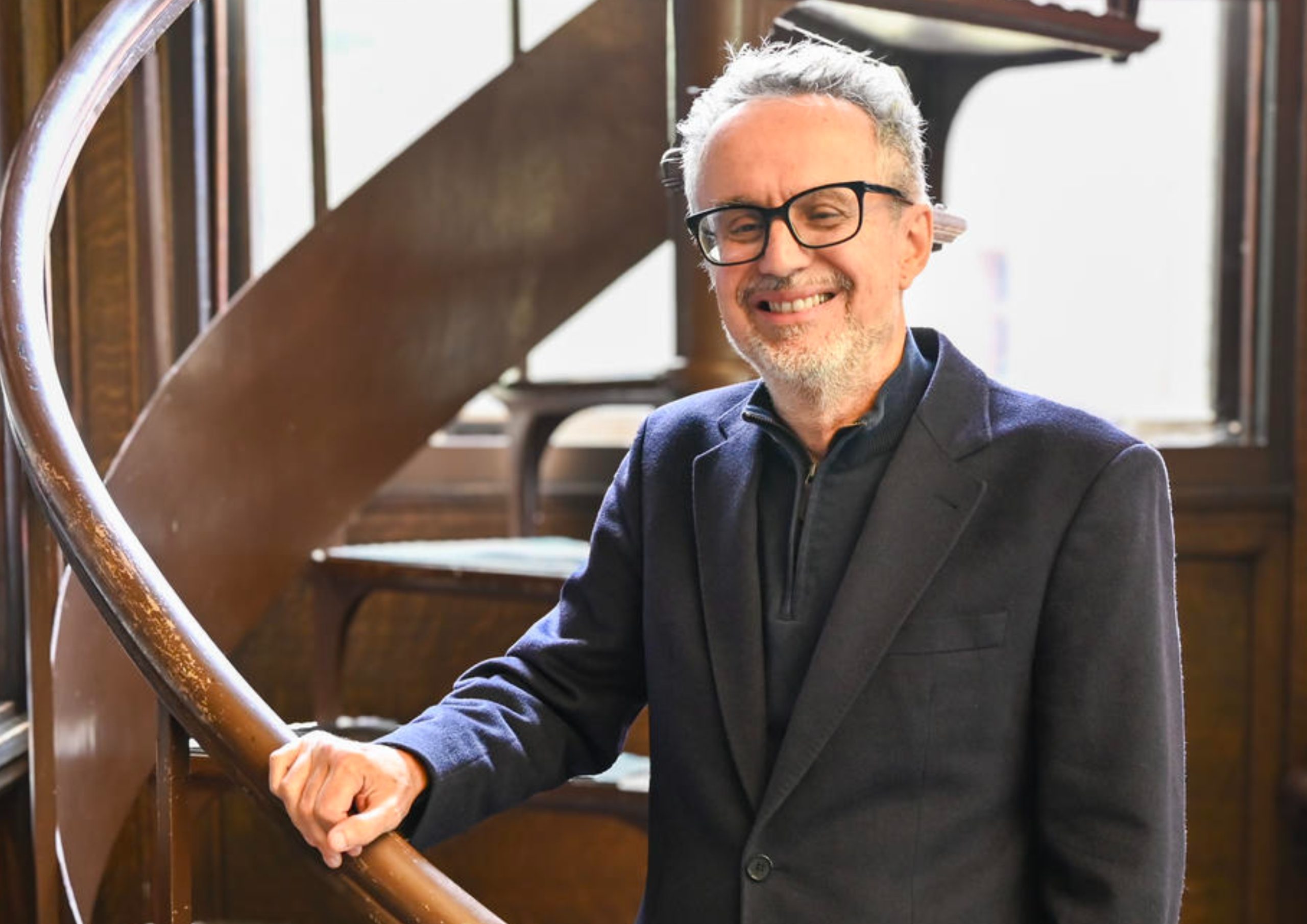
A former chairman of the Harvard History Department, Sidney Chalhoub, is out with a piece criticizing the Harvard History Department of the early 1990s as a “white male affinity group” and praising its transformation into today’s veritable United Nations, with “faculty native to more than fifteen countries around the world.”
The opinion article, published Wednesday in the Harvard Crimson student newspaper, reports, “When I was about to become chair of the History department in 2022, I tried to gather information about its past through recorded interviews and conversations with senior colleagues.”
“I found that in the early 1990s, the History Department had more than thirty tenured professors, two of them female,” Chalhoub writes, “The department felt like a white male affinity group, with assistant professors hardly ever achieving tenure. It took a lot of resolve for the situation to change — in 2022, 44 percent of the department’s professors were female, although today it is down to about 38 percent. The department now, from my estimation, has faculty native to more than fifteen countries around the world.”
I was a history major as an undergraduate at Harvard in the early 1990s and let me tell you that while Sidney Chalhoub, who did not arrive at Harvard until 2015, may prefer to disparage the department as it was in that era, it was crackling with intellectual vitality and academic rigor. For one thing, at least some of the professors were not “white”—they were Jewish, including Richard Pipes, Charles Maier, Bernard Bailyn, and Oscar Handlin. Pipes, who served on the National Security Council staff in the Reagan administration, was an immigrant to America from Poland. Bailyn’s father was a dentist, born in Russia. The notion that the Harvard History Department in the early 1990s was some sort of yacht club presided over by Samuel Eliot Morison, who died in 1976, is just preposterous. The chair of the department from 1985 through at least 1988 was Angeliki E. Laiou, who was born in Athens. Akira Iriye (who, sadly, died this week) was born in Japan and arrived in 1989. The scholars had names and reputations. David Herbert Donald and William Gienapp taught the Civil War. John King Fairbank taught the history of China and U.S.-China relations. Drew Faust was offered tenure (as a trailing spouse) in 1989.
Chalhoub seems to conceive of his faculty colleagues entirely in the dimensions of race and gender, or, as he describes it in the case of students, “multiple sexual orientations, and various racial identities,” not in terms of academic quality or excellence of research output or ideological diversity. As it is, Harvard history faculty who can find an escape are racing for the exits of Robinson Hall. Jill Lepore and Annette Gordon-Reed found ways over to Harvard Law School, with Lepore publicly mulling an exit from academia altogether. James Hankins is headed for the University of Florida. Jane Kamensky left to become CEO of the Thomas Jefferson Foundation, which runs Monticello. Simon Schama left for Columbia (okay, that was a while ago, but you take the point). Niall Ferguson left to join the Hoover Institution, become a columnist for the Free Press, and a talking head for CBS News.
Chalhoub contends, “I haven’t seen evidence to support the contention of faculty activism in class.” Had he read the report of Harvard’s Presidential Task Force on Combating Antisemitism and Anti-Israeli Bias, he might have seen the language about “partisan and one-sided pedagogy that also fell short of Harvard’s usual standards of excellence by failing to represent multiple viewpoints,” for example, a Harvard Divinity School program whose own staff described their educational goals publicly in writing as “denoting the urgent need to dezionize Jewish consciousness.” Or there was the Harvard Kennedy School class where a course assignment involved having students convince each other to attend a boycott-Israel rally, and the professors and students posed together for a photo in keffiyehs on the last day of class. Perhaps the problem isn’t the lack of “evidence,” but the inability of Chalhoub and his allies on the faculty to distinguish activism or achieve enough distance from their own bubble to detect it.
Chalhoub’s article concludes with a plea for Palestinian Studies at Harvard: “In October of 2024, I accompanied a delegation of students to a meeting with President Garber. The students developed a detailed proposal to foster education on Palestinian Studies, including the appointment of tenured faculty in the near future.” He contends, “Dehumanization needs to be countered with education,” which is pretty ironic considering Chalhoub’s own dehumanization of his distinguished predecessors as a “white male affinity group.”
The whole Chalhoub rant needs to be read in the context of James Hankins’s Compact article, “Why I’m Leaving Harvard.” Hankins quoted his Harvard mentor Ned Keenan, “famous for his declaration at a full faculty meeting that ‘this faculty does not choose to have its research priorities dictated by the intellectual interests of 18-year olds.’ This statement was greeted with rapturous applause.” Compare that to Chalhoub’s plumping for Palestinian Studies.
Hankins notes that the number of students choosing a major (which Harvard calls a concentration) in history has plummeted. About this, at least, the 18-year-olds have some sense. “Our numbers today, in 2024, are about one half of what they were in the ’90s.” Also, “Since the mid-1990s, indeed, the department began, sheepishly, to follow the general trend of academic history towards ‘globalization’ and ‘transnational history.’ … International history replaced the diplomatic history of the United States.”
Hankins also recounts that “In 2021 … I was told informally by a member of the admissions committee that ‘that’ (meaning admitting a white male) was ‘not happening this year.'”
Who is in charge now? The “interim department chair,” Daniel Smail, was, I suspect, last observed at the Doft Lecture asking about an email from Israel saying Trump should be given “enormous credit” for the ceasefire and hostage release deal. “I could not read after this point,” the questioner said, seemingly flummoxed by the notion of giving Trump credit for anything.
I emailed Chalhoub: “Were you able to change the demographics without unlawfully discriminating against white male applicants? You also write about the faculty’s native countries. How many of the 15 you mention have become American citizens? Do you think it’s important for Harvard to be American or do you think it should be a global institution?”
In response, I got an auto-reply: “I will be on research leave in the 2025-6 academic year, and not replying to emails regularly during this period. Thank you for your patience.” The leave time is apparently being spent writing Crimson articles denouncing the Harvard of the 1990s and the Harvard of today for moving too slowly to add faculty in Palestinian studies.
Harvard president Alan Garber is out with an email today acknowledging that “No institution can solve the hardest problems alone” and that “we must strengthen collaborations with other colleges, universities, research organizations, and industry partners, expanding and magnifying our contributions not only in research but also in teaching.” Maybe Harvard should allow its students who are interested in history to study virtually with Hankins, Allen Guelzo, Walter Russell Mead, and their colleagues at the University of Florida’s Hamilton School for Classical and Civic Education. Or even at Columbia’s School of International and Public Affairs, which recently picked up Jonathan Dekel-Chen from Hebrew University and whose faculty also includes former secretary of state Mike Pompeo. The existing Harvard history faculty may have its feelings hurt, but at least they can console themselves; the professors may be mediocre and they may not have much of value to offer students, but at least they aren’t white, male Americans.
Source link
