

India tracks exits, not returns amid brain drain: Sanjaya Baru at History Lit Fest

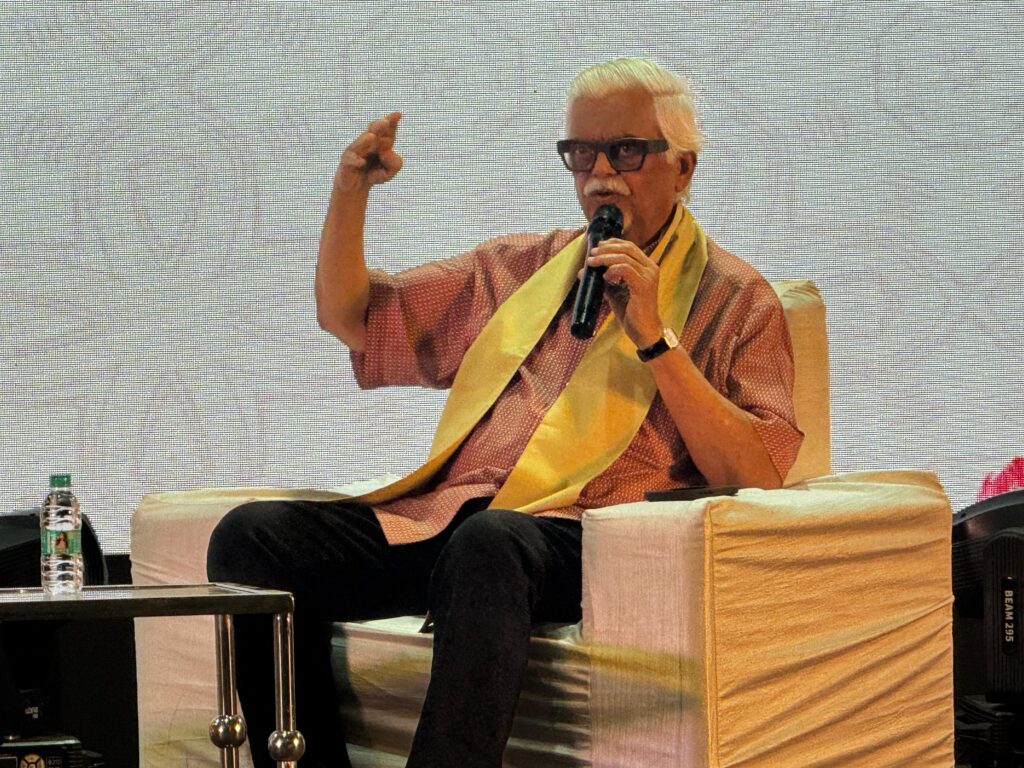
Hyderabad: India has no credible data on how many of its nationals are actually returning to the country to serve it, even as there is data on how many have left, former prime minister Manmohan Singh’s media advisor and author of the “Accidental Prime Minister” Sanjaya Baru said on Saturday, February 7, highlighting what he called the mass “brain drain” of Indian talent.
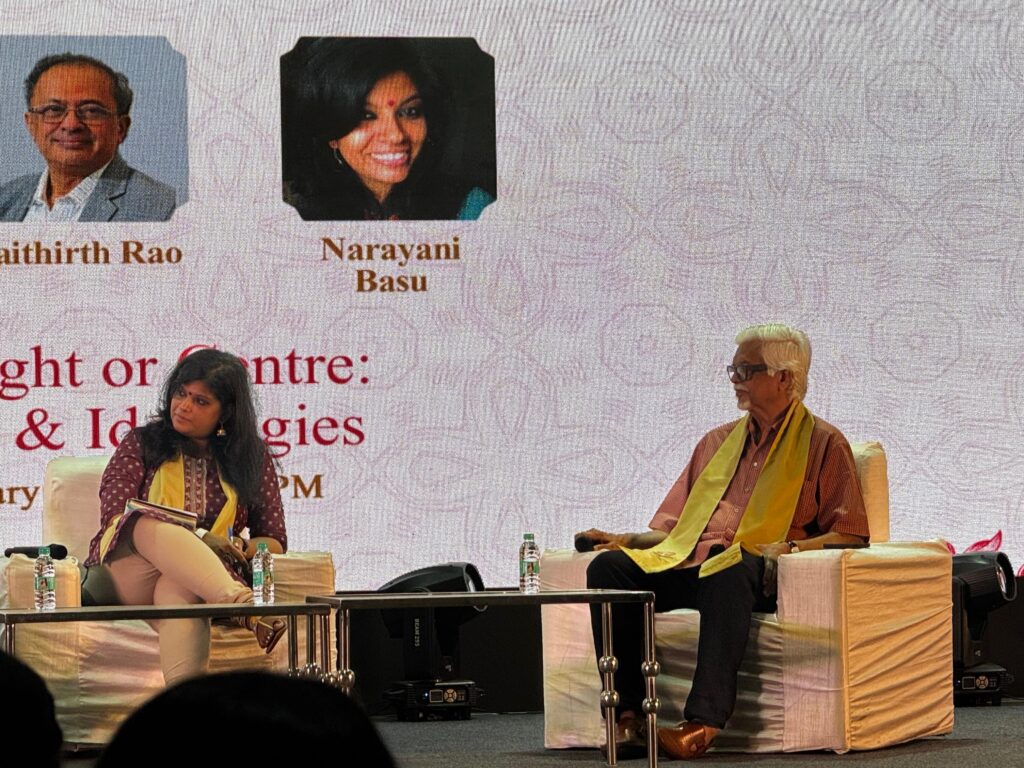
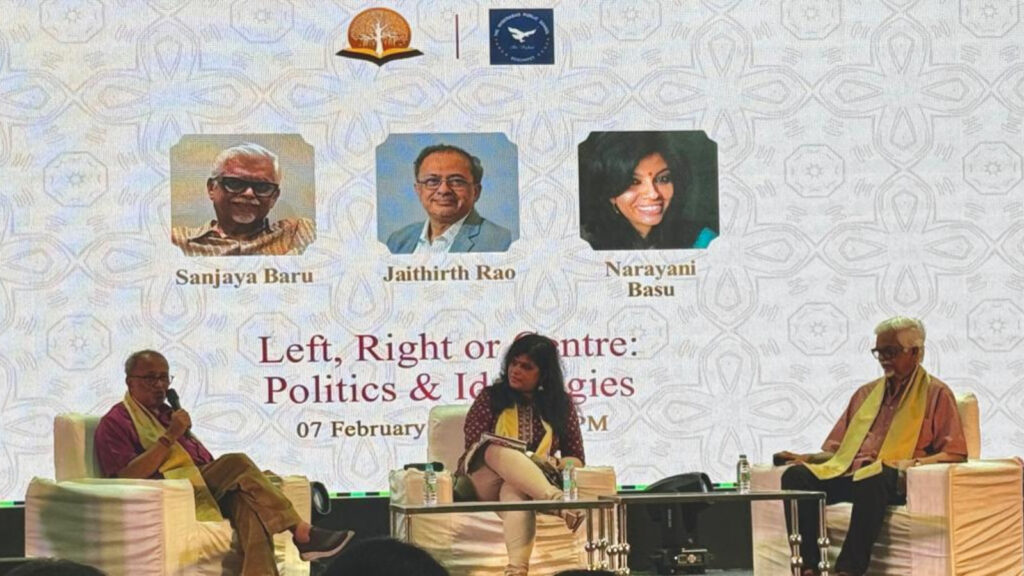
Speaking at a panel discussion at the History Literature Festival at the Hyderabad Public School in Begumpet, Baru repeatedly emphasised the absence of clear numbers showing Indian returnees, a concern he explored in his 2025 book, “Secession of the Successful: The Flight Out of New India.”
He framed the issue using the example of Hyderabad Public School, where he and the likes of Microsoft CEO Satya Nadella studied, describing it as having “quietly transformed into a centre for sending talent outside.”

Sitting beside him was businessman Jaithirth “Jerry” Rao, and what followed was a spirited exchange on liberalisation, nationalism, conservatism and why India’s best minds aren’t coming back.
Baru called it “elite emigration,” driven by a middle class that has become “increasingly nationalist,” but only in slogan. “They’re quite happy to sit in New Jersey and say ‘Bharat Mata Ki Jai,’ but there is this contradiction of a nationalism of a class that is actually leaving the country,” Baru said.
Baru wasn’t certain if this exodus tied to the 1991 economic shift. But he pointed to a troubling plateau in entrepreneurial growth.
“You look from 2011 to 2025. There’s a plateau. Hardly an entrepreneurial boom of the kind we saw post 1991. So, there is something happening there, which I think we need to worry about,” he said.Rao pushed back, saying living in America on an H-1B visa is no longer a viable option. And unlike India’s “neighbours in the North” (a reference to China), the Indian government has no provision to block its citizens from leaving, a consequence, he said, that was due to its democratic framework.
When nationalism was real
Both men agreed on one thing: India once knew how to bring its best back.
“Then prime minister Jawaharlal Nehru personally called a range of Indians such as Vikram Sarabhai, Dr Homi Jehangir Bhabha, Jnan Chandra Ghosh, among others, to came back and serve the country.
“We had a period of real nationalism when highly talented individuals came back and set up the Department of Atomic Energy, the nuclear program, the space program, the chemical laboratories, the physical laboratories,” Baru said.
The current administration hasn’t attracted back “a single name.”
Now, it’s celebrated when Indians seek better opportunities abroad. Few institutions are compelling enough to draw them home.
‘Political decisions are shaped more by reality than ideology’
Baru also offered a broader thesis: political decisions are shaped more by reality than ideology.
He pointed to Indira Gandhi’s alliance with the Communist Party of India (Marxist), which was less about ideological alignment and more about survival. “She needed support of the Left. Her majority in Parliament was at stake. Her government could not have survived,” he said.
Many reforms of that era, he argued, emerged from political compulsion. “So, when we talk about left, right and centre, my basic argument now is that almost all the issues are pragmatic.”Even Nehru, he noted, turned to the Indian government for investment when foreign capital dried up in post-colonial India, a pragmatic response to circumstance.
The liberalism debate
The sharpest clash came over liberalism.
Rao, who described himself as a “correct conservative,” didn’t mince words. Liberalism, he said, is a “dangerous doctrine that leads to chaos in the social and political fabric.”
“Because it exaggerates the people, the individual, without talking at the same time of duties and obligations,” Rao said, explaining why he “converted” to conservatism.
His comment about an “excessive focus on rights rather than obligations” drew the loudest reaction. Audience members challenged him. How can obligations be prioritised if rights aren’t given in the first place?
Rao stood firm. He argued that the ruling Bharatiya Janata Party (BJP), often labelled “extreme” or even “fascist,” represents a legitimate strand of conservatism in India – a response to what he called “extreme orientalism” attacking society.
“And in the absence of such a reaction, I am concerned that we will go to that atomised liberalism where there are only rights, no obligations or duties,” he said.
Baru, an open critic of the BJP, remained unconvinced. He had earlier stated that even entrepreneurs staunchly supporting the Narendra Modi government harbour internal grievances over what he termed “political favouritism” in the economic sector, referring to Adani and the multitude of projects the billionaire gets.
The panel ended without consensus, but with plenty of questions hanging in the air, much like the ones Baru posed at the start: Where is the talent going? And more importantly, why isn’t it coming back?
Source link
