

Global Strike Command’s Top General
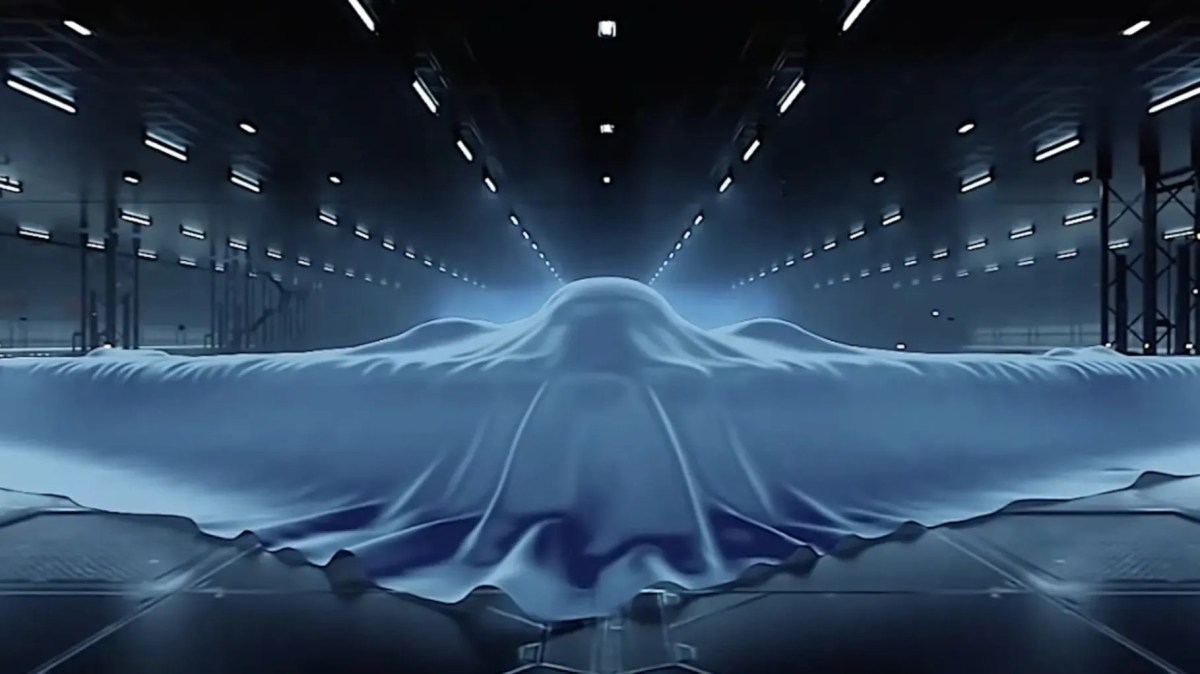
The head of U.S. Air Force Global Strike Command (AFGSC) has downplayed the current significance of Chinese efforts to develop new long-range strike aircraft with more global reach. He said that China remains, at best, a regional bomber force, though it continues to “aggressively” pursue new capabilities in this regard, like the long-awaited H-20 stealth bomber.
AFGSC commander Gen. Stephen Davis talked about Chinese bombers and other aviation developments with TWZ‘s Howard Altman last month. In that same interview, he also discussed his command’s role in any future conflict in the Pacific region, as well as new U.S. strategic capabilities that are in the works now, such as the B-21 Raider stealth bomber and the LGM-35A Sentinel intercontinental ballistic missile (ICBM), among other topics. This was Davis’ first interview since taking command of AFGSC in November 2025.
The Chinese People’s Liberation Army Air Force (PLAAF) recruitment video below from 2021 includes a teaser for the H-20 at the very end.
中国空军2021年度招飞宣传片完整版震撼发布!易烊千玺 吴京倾情加盟演绎强军路上精彩人生!「逐梦青春」| 军迷天下
“I can certainly understand their [the Chinese] desire to have a long-range strike capability like the United States, and I know that they’re pursuing it aggressively,” Davis said when asked for his thoughts on the H-20, as well as two very large stealthy flying wing-type drones that emerged in China last year. TWZ was first to report on the emergence of both of these designs, which appear to be at least in the initial flight test phase of development.
The H-20 is understood to be a stealthy flying wing-type bomber, very roughly analogous to the U.S. B-2 Spirit, and its development is said to trace back to the early 2000s. The U.S. military has previously estimated that it could have a maximum unrefueled range of close to 6,214 miles (10,000 kilometers), and noted that its reach could be further extended through aerial refueling. Past reports have also said that it might be able to carry up to 10 tons of ordnance, including land-attack and anti-ship cruise missiles.

“What I can tell you is they’re just not there yet,” Davis continued. “I think our adversaries look at our long-range strike capabilities, and … want to mimic them, but they can’t.”
“There’s no other country in the world [besides the United States] that can take and deliver a long-range strike platform pretty much on any day, in any time and place that they’re choosing, right?” he added. “Really, China is a regional bomber force at best. I think they’re trying to continue to develop that.”
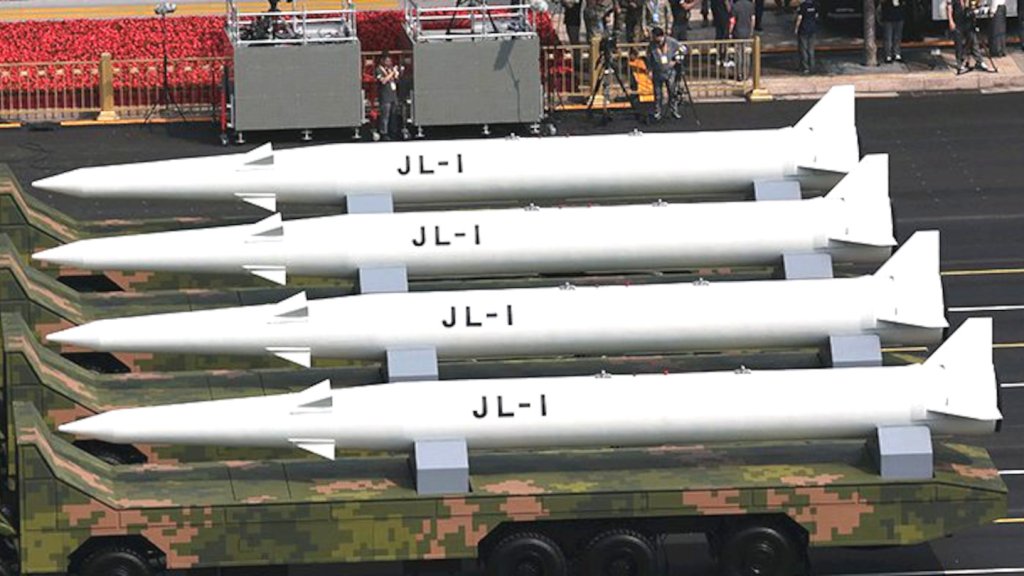
China’s bomber force currently consists of variants of the H-6, the core design of which was originally derived from the Soviet Tu-16 Badger. The H-6N version, which made its official debut in 2019, has enabled the Chinese People’s Liberation Army (PLA) to re-establish a strategic nuclear triad. The N model is primarily designed to carry a single, very large air-launched ballistic missile (ALBM) under its fuselage and is one of the H-6 types that is capable of being refueled in flight. How many different types of missiles have been integrated onto the H-6N to date is unclear, but its arsenal does include the nuclear-capable Jinglei-1 (JL-1), as you can read more about here.

Davis’ comments are in line with past statements from U.S. officials on the H-20, specifically.
In 2024, an unnamed U.S. intelligence official said the H-20 Stealth Bomber was “not really” a concern, according to a report at the time from Breaking Defense.
“The thing with the H-20 is when you actually look at the system design, it’s probably nowhere near as good as U.S. LO [low-observable] platforms, particularly more advanced ones that we have coming down,” the same official said. “They’ve run into a lot of engineering design challenges, in terms of how do you actually make that system capability function in a similar way to, like, a B-2 or a B-21.”
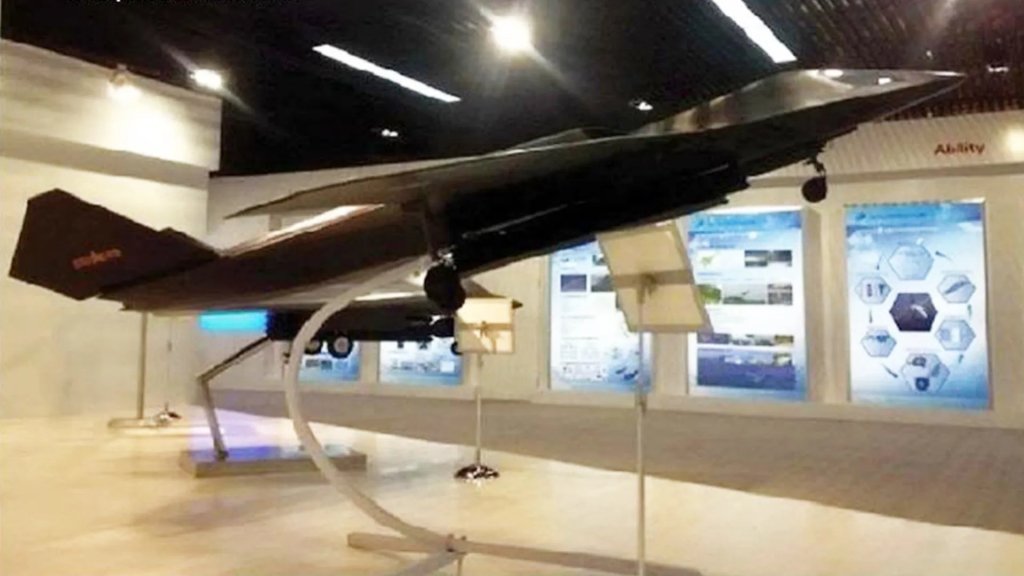
“The H-20 … may debut sometime in the next decade,” the Pentagon subsequently wrote in its annual report to Congress on Chinese military developments later in 2024. That report also highlighted ongoing efforts in China to develop a stealthy medium-range bomber, which has been referred to in the past as the JH-XX.
The Pentagon’s most recent annual China report, published in December 2025, notably makes no mention at all, directly or indirectly, of the H-20 or JH-XX. That report did note that “of China’s currently fielded systems, the DF-26 IRBM [intermediate range ballistic missile] and the H-6N’s ALBM are both highly precise theater weapons that would be well suited for delivering a low-yield nuclear weapon.” This underscores Davis’ comments about the continuing regional limitations of the Chinese bomber force.
Despite past PLA pronouncements that the program is on track, the current status of the H-20 is unclear. The present state of work related to the JH-XX, and whether it may have carried over into other programs, like the J-36 advanced tailless tactical combat aircraft, is also unknown. Starting in the late 2010s, there had been a surge in official and semi-official statements about how the H-20 was ‘coming soon,’ but this looks to have largely subsided in the past year or so.
This is despite a flurry in other very high-profile Chinese military aviation developments, including the aforementioned large flying wing-type drones, as well as the J-36 and J-XDS sixth-generation stealth fighters, the GJ-11 uncrewed combat air vehicle (UCAV), the KJ-3000 airborne early warning and control aircraft, and more. The PLA Navy (PLAN) has also made major strides in advancing its carrier-based aviation capabilities in the past year or so.

As TWZ has noted in the past, a platform like the H-20 would give the PLA the ability to hold entirely new swaths of the Indo-Pacific region, including in parts of the continental United States, at risk. An expanded long-range strike aviation force would also expand China’s ability to target highly strategic outlying areas, including the U.S. island territory of Guam and Hawaii, as well as threaten regional competitors like Japan and India. If fielded, the aforementioned JH-XX could also have an important role in future regional operations.
The PLA has already been working to expand its routine bomber operations in the Western ends of the Pacific, especially around Taiwan and in the hotly contested South China Sea. Chinese bombers also now regularly integrate with their Russian counterparts and have made use of bases in that country for joint patrols. H-6K missile carrier aircraft flew in international airspace near Alaska for the first time ever during one of these joint operations back in 2024.
In his recent interview with TWZ, AGen. Davis similarly highlighted the continued importance of American bombers in the Pacific.
“We have a requirement to be able to do that, day-to-day, for the President. We have to be able to penetrate adversary air defenses and deliver capabilities as directed,” Davis said when asked about the ever-growing threats posed by Chinese anti-access and area-denial capabilities. “We’ll continue to do that, as I said, by essentially, you know, taking all the information we can get, and integrating the B-21. Obviously, one of the great things about the B-21 is it’s going to be much more capable, it will have more sensors, it will have more inputs to it that will make it even stronger and more capable as a penetrating bomber.”
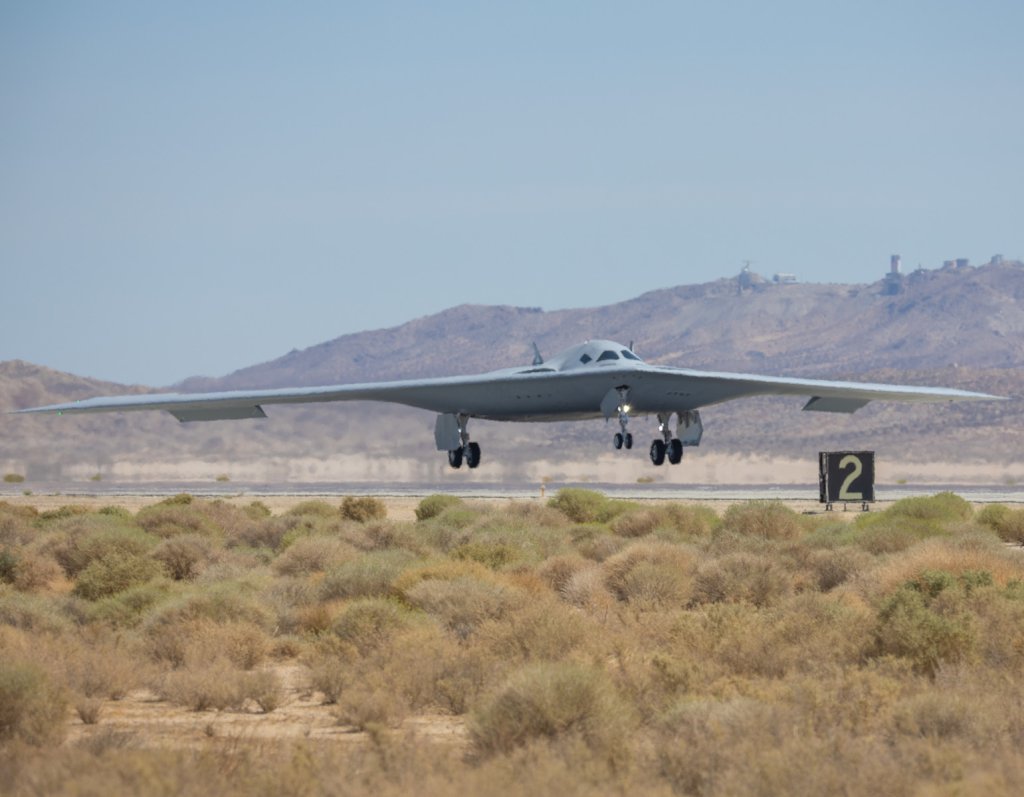
“Long-range strike, I think, contributes to every important mission set that we have in the Department of War,” the AFGSC commander also said when asked about how bombers could be employed against Chinese naval forces, specifically. “Obviously, one of the attributes of the modern force is the weapons they can carry, the variety of weapons they can carry, and the number and types of targets they can attack.”
“I think in any major confrontation that the U.S. would find itself in, you’re going to find your bomber forces are participating in bringing those skill sets to bear,” he added.
With this in mind, China is also still pursuing new long-range strike aviation capabilities, though it remains to be seen when the H-20 might finally emerge.
Contact the author: joe@twz.com
