

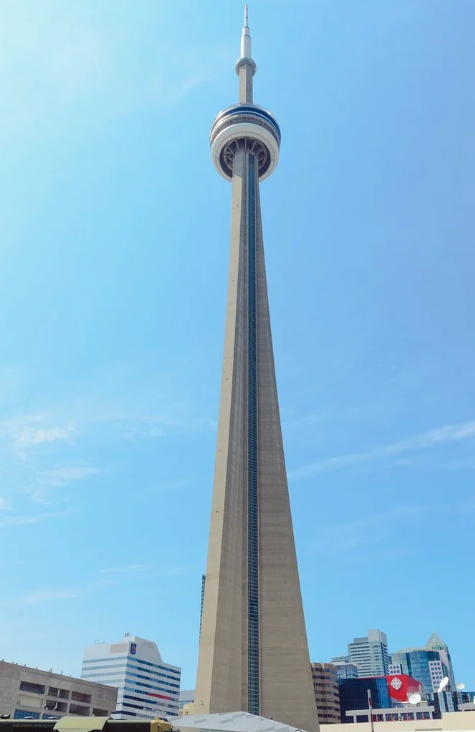
Looking for a movie to begin my spring semester Amherst Cinema viewings, I discovered “Nirvanna the Band the Show the Movie”, wondering, first, why they spelled Nirvana in that way, and second, what it may be about, as the synopsis provided little information and literally ended with: “…blah blah blah.” After learning that it was based in and dedicated to capturing the complicated mosaic that is Toronto, I was sold. Toronto is so unusually interesting to me (seeing that I’ve never been there), I knew I had to see it. (As a partial aside, numerous Letterboxd reviews affirm its authentic Toronto representation, including one calling it the best Toronto movie since David Cronenberg’s “Videodrome”).
Walking in just as it started, I was thrust into the ridiculous passion and fervor of the film. One of the two protagonists, Matt Johnson — a free-spirited and spontaneous character — is singing loudly to a tune fellow main character Jay McCarrol (who Matt lovingly calls Bird) plays on the piano beside him. To avoid confusion, throughout this review, I use Johnson’s last name for the actor and director, and his first name, Matt for the dramatized version of himself he plays in the movie. Similarly, McCarrol is from now on used for the actor, and Bird (Jay’s nickname) for the character.
They are in the living room of their kitschy (this is a compliment) home, decorated with posters of bands and movies everywhere with a feeling reminiscent of mine and many other rooms. With a growing trend of films embracing harsh lighting (see “The Devil Wears Prada” 2026 remake), the most striking thing aesthetically about this movie was its realism — the use of handheld cameras, natural lighting, realistic clutter (physically in the home and in the chaos of the plot), and real personalities, flaws and all, make the movie homey and nostalgic. They are filmed by Luca, their cameraman who they speak to throughout the film, situating it as mockumentary, and making the characters and situation immediately feel even closer to reality.
But this is a film that has been in the works long before formal filming started. The characters in this movie began development in the 2007-2009 web-series “Nirvanna the Band the Show.” Additionally, a later Viceland program of the same name ran from 2017-2018, in which they similarly played exaggerated versions of themselves performing around Toronto. Some clips from the 2025 film even date back to their library of footage from their web-series days.
Back in the living room, as Matt hatches a plan to play the Rivoli venue in Toronto, a goal we learn they’ve maintained for over 17 years, Bird keeps up with his tangents, trying to make sense of the random ideas he blurts out as he has done for the past two decades.
Now, Matt comes up with another plan: climb the CN tower, skydive into the SkyDome while the Toronto Blue Jays play, and announce to the crowd that they’ll have a show at the Rivoli (which they do not have) because, as Matt justifies, “if you build it, they will come.”
The opening scene successfully establishes for me the stark, and hilarious contrast between the two characters like a classic buddy comedy but on another level. In my eyes, “Nirvanna” is rivaled in modern times only by, or rather peers with, the 2024 Andrew DeYoung release “Friendship.”
The movie cuts to the CN tower, with suspense-inducing music in the background, as Matt and Bird approach the entrance, hunchbacked from the parachutes they put under their jackets. They, to my surprise, get through security after passing off a pair of clippers — that will actually be used to cut their harnesses — as needed to make more holes in Matt’s already tattered jeans, and pretending they turned the camera off after requests from security guards to do so.
At the top of the CN Tower, we see real footage of the two from their guide on the EdgeWalk. Matt determined, and Bird utterly terrified, they approached the edge. From the footage on the TV inside the tower and their cameraman above, we see Matt cut their harnesses and (pressed for time as the dome is closing due to inclement weather), jump as Bird, more so, get pushed by his friend.
Their mics cut in and out as they descend, and the movie leaves space for silence in the theatre so everyone can hear the uproar of laughter from my fellow audience members as we watch the unimaginable. It was here I asked myself, “How did they manage to make this?”
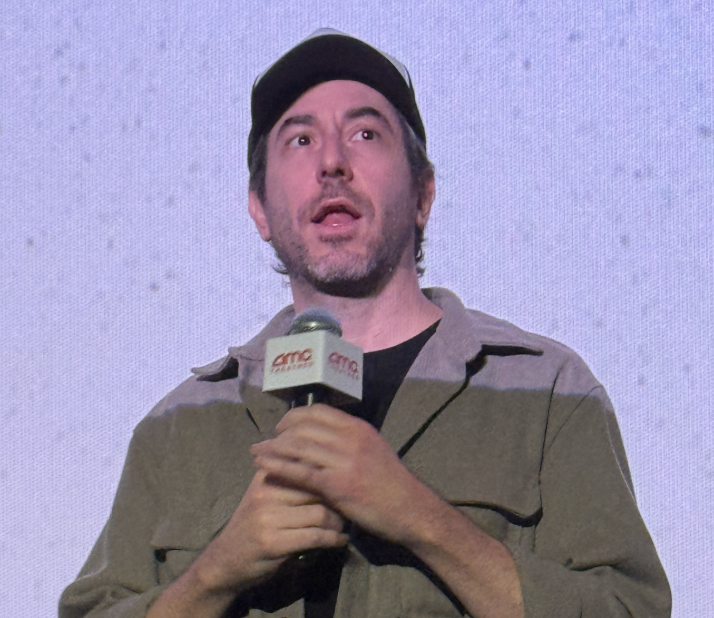
Johnson explained that “if a Hollywood movie were to do [these sequences], they would rebuild the CN Tower, they would do it with [professional] actors. It would be a $5 million stunt.” For reference, the film cost $2 million altogether.
Additionally, Johnson and McCarrol find that the nature of the film’s bridging of reality and fiction is made possible by its real interaction with the people around it — a technique they dub “social engineering.” In reality, to film the CN Tower sequence, Johnson said that “… it’s not immediately apparent that the camera is not controlled by [Matt and Bird]. It’s a GoPro on the head of a tour guide who had never met us before. We’re getting this guy to look and move exactly where we need him to in order to create the beats of that sequence without him even realizing he’s doing it, with the real crazy trick being that we leave with the footage.”
Still, at the top of the SkyDome, missing their slot to jump into it by mere seconds, they argue. Accepting defeat, the two are rescued by firefighters and, as if it couldn’t get worse for them, they pass the Rivoli, the second time that day — this time, their spirits are crushed. They see lightning hit the CN tower at 9:03 p.m., taking it as an omen that bad luck follows wherever they go.
The film constantly teeters on the tightrope between surreality and reality in an incredible way. This is something I love watching Nathan Fielder, Tim Robinson, John Wilson, and Larry David do, and, in fact, Johnson and McCarrol also opted to improvise dialogue in the film. What’s amazing about this production is it’s hard to know if you should really believe what you’re seeing.
McCarrol says this is a feature of the production of the film: “We always want our cameramen to be like National Geographic documentarians filming wildlife … We go over the psychology of how a four-person camera team could capture something so fantastic, and that’s what ends up forcing us to find where those strange lines between reality and fiction are. We try to go as far as we can without actually needing to cross a line into fiction.”
Bringing this level of humor and absurdity is made possible through reality, not a crafted piece of fiction. It’s the random interactions and interjections that humanize, or make the absurdity of the situation feel more real. In that way, maybe it’s not about blurring the lines between reality and fiction, but about showing how they are similar. Seeing the absurd reflected in our own reality — our own lives — may explain why I, and so many others, feel so drawn to this movie.
Johnson, most known for directing Blackberry (2023) — the film that partially helped get funding for “Nirvanna” — has a history of mixing reality and fiction in other productions like “Dirties” (2013) and “Operation Avalanche” (2016).
Still, this level of realistic spontaneity also required meticulous planning. In reference to their lawyer, whom the creators stayed in close contact with throughout the process, John shared, “[he] walked me through, film after film, what we can and can’t do and the circumstances that we need to create in order to do these things legally.” In a film chalked full with references to pop culture phenomena, these permissions were absolutely necessary to the realistic feel the film captures.
Arriving back home after the CN tower plan fails, Bird is tired and defeated, though Matt, unshaken, has the energy to come up with an ingenious “Time Machine Plan” (i.e. a replica of the one from Robert Zemeckis’ 1985 “Back to the Future”) using their RV in the backyard. An annoyance for Bird, this ambition is what eventually saves them, as Johnson has admitted, Matt’s worldview is psychotic: “I mean that medically [but] everybody could use a little bit more of that [to] give all of us the kind of confidence that we need to do great things.”
As per his plan, Matt attempts to turn the RV into a time machine (with varying degrees of success), while Bird calls a club in Ottawa to “book” an open-mic night, abandoning the pair’s long-attended dream of ‘making it’ together. Meanwhile, Matt spills a bottle of Orbitz — a short-lived Canadian drink the pair saved for nostalgia’s sake — on the machine, thinking he’s ruined it.
In the early morning, Bird travels to Ottawa in the RV, not knowing Matt is still in the back, and, fortuitously, the time machine sends them both back to 2008.
Back (or forward) in 2008, they see the younger versions of themselves putting up flyers as another one of Matt’s “classic plans.” Upon realizing the Orbitz were the magic ingredient, the two run to their old apartment and, as Matt commands, “loot the place!” to find a bottle.
There, they meet their younger selves face-to-face. Bird plays piano for young Matt while old Matt appears to young Bird in a self-proclaimed ‘Dickensian dream.’ The real feat was to coordinate this interaction so well, and, as I suspected, the clips were taken from hours of scrap footage from the web series, which was cut together by two editors of the film.
Overhearing a conversation between his younger self and old Matt, about whether or not Russell Peters was doing race comedy at the right time, old Bird is touched by old Matt’s comment that, “If you’ve got a best friend, you won’t even notice getting older.” Heart-warmed, Bird comfortably reveals that he attempted to flee earlier because he thought he could be more successful alone. He was torn between continuing to aim for his dream, and giving up after struggling for so long.
Matt, hurt, impulsively decides to change the past by erasing yet another of his plans from their whiteboard in 2008, writing “Don’t Play the Rivoli,” and seeing who will become successful in the future.
Arriving home in 2025, Matt, frighteningly, finds himself a part of a Jay McCarrol cover band, who he realizes is an international sensation.
Soon after, however, due to a slight misunderstanding with a presumed toy gun, Bird shoots one of his tour managers in the head, and is sent on the run during a police search. To make the movie feel even more absurdly real, the feasibility of this sequence, particularly the news stories and the security presence in the neighborhood featured, was made possible by the Drake and Kendrick Lamar feud and the shooting at the Canadian’s mansion in May 2024. The film crew capitalized on the moment and ran to the area.
While on the run, Bird returns to their apartment for Matt’s help. Matt, ecstatic for his friend’s return, explains what happened and suggests returning to 2008 again (partly justified by a quick “Obamna” joke) to go back to before Bird became famous without him, while Bird,wanted for murder, goes along with it to avoid being caught by the police. After another presumably ADHD-induced tangent, this time on ’80s clean rap and the Orbitz slogan (“A bolt of lightning in every bottle”), Matt proposes their next plan:Tweaking their previous time travel machine to go back a few days using electricity instead of Orbitz.
Their final stunt relies heavily on public interaction. The pair ask people to watch their things, and they bring rope to throw down from the tower and reach street level (attaching a cable to catch the lighting at 9:03 p.m.) while people gawk and try to make sense of it. Onlookers observe and, in true Toronto fashion, someone exclaims, “Yo, what is gwannin?”.
Realizing Bird is in trouble, Matt ends up sacrificing himself to conduct the electricity from the CN Tower to their RV, powering up the time machine successfully when the cord doesn’t reach. At the end — though we’re left unsure if Matt makes it back with him — Bird is reunited with Matt in their house, helping revise their CN Tower plan to, together, try once again.
Source link
