

Hidden Clues Challenge the Long-Held Theory Behind the Maya Civilization’s Collapse

New research suggests that explanations based only on climate may not fully account for the major decline of the lowland population in Central America and calls for a reassessment of those assumptions.
Between 750 and 900 CE, the population of the Maya lowlands in Central America underwent a dramatic demographic and political decline. In many regions, this downturn occurred at the same time as repeated periods of severe drought, leading researchers to long assume that climate stress played a decisive role.
For many years, researchers have argued that climate stress played a decisive role in the collapse of Maya civilization. However, new findings based on sediment records stretching back 3,300 years suggest the explanation may be more complicated than previously thought.
Benjamin Gwinneth, a geography professor at the Université de Montréal who studies environmental change and its influence on Maya societies, has conducted extensive fieldwork at the Itzan archaeological site in present-day Guatemala.
By analyzing sediment cores collected from Laguna Itzan, a lake located near the site, Gwinneth and his colleagues have been reconstructing a long record of both environmental conditions and human activity in the area.
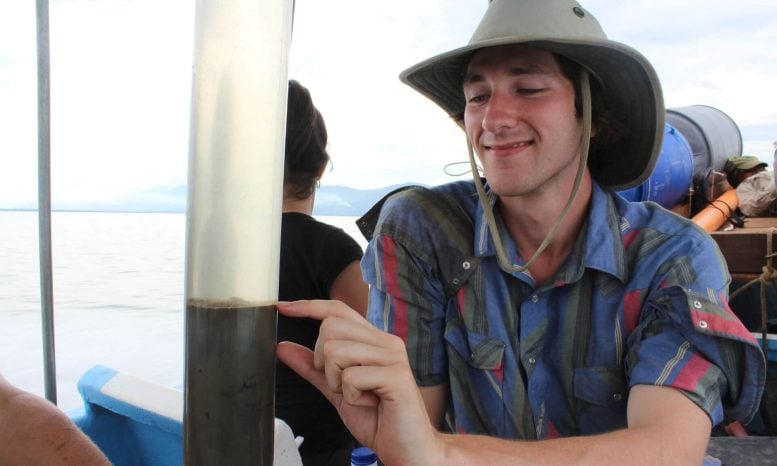
Their results revealed something unexpected. The team found no clear evidence of drought in the local climate record, even though the Maya population at Itzan declined during the same time period as populations in other parts of Guatemala and Mexico that did experience major drought.
This raises a key question: if drought was not present locally, what caused the decline?
Human and environment traces buried in sediment
To investigate, Gwinneth and his team analyzed three types of chemical markers preserved in the lake sediments. Polycyclic aromatic hydrocarbons helped reveal the intensity of slash-and-burn fires. Leaf wax compounds provided information about vegetation types and rainfall patterns. Fecal stanols offered clues about human population density.
Together, these indicators allowed the researchers to reconstruct changes in population size, farming practices, and climate over thousands of years. The record begins with the earliest signs of human activity around Laguna Itzan about 4,000 years ago and continues until the site was abandoned roughly 1,000 years ago.
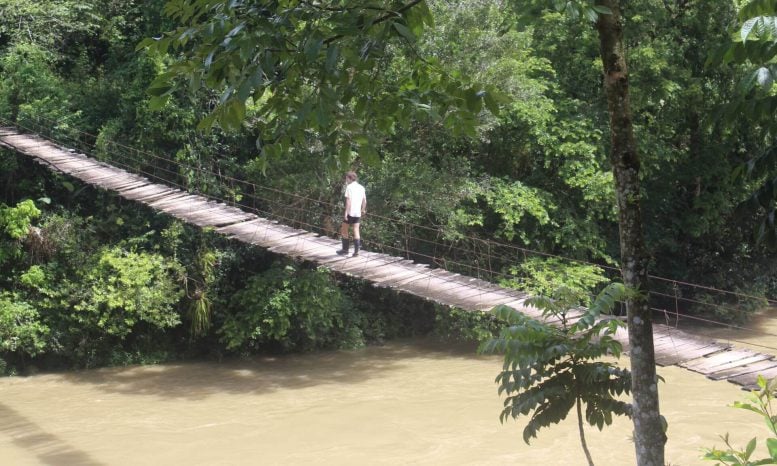
“The data revealed that the first permanent settlements appeared 3,200 years ago,” said Gwinneth. “There were slash-and-burn fires and an increase in population. During the Preclassic period, between 3,500 and 2,000 years ago, the Maya used fire extensively. They practiced slash-and-burn agriculture, using fire to clear the forest and then growing crops on the fertile ashes.”
New farming practices
During the Classic period, between 1,600 and 1,000 years ago, the researchers observed a significant change in land use. Population levels increased substantially, but evidence of burning dropped sharply.
“This probably means that most of the land had been cleared, which could have led to a change in agricultural strategy,” said Gwinneth.
The sediment data suggest a major intensification of farming. Agricultural methods appear to have shifted toward ridge and furrow cultivation to limit soil erosion, along with more intensive gardening techniques.
“Fire was no longer an important component of their farming practices,” Gwinneth said. “This transformation reflects gradual urbanization and suggests that the Maya were changing agricultural strategies to feed a growing population.”
These findings match what archaeologists already know about Maya society during its peak. At that time the civilization was highly organized and increasingly urbanized, with specialized labor and advanced farming systems adapted to the surrounding environment.
The stable climate riddle
Additional analysis of hydrogen isotopes in the lake sediments produced another surprising result. Unlike Maya regions farther north that experienced drought, the climate near Itzan appeared to remain relatively stable.
“Itzan is located near the Cordillera, where atmospheric currents from the Caribbean generate regular orographic (mountain-related) rainfall,” Gwinneth explained. “While other Maya regions suffered devastating droughts, Itzan appeared to have a stable climate.”
This finding is important because some researchers have proposed that the Maya collapse began in the southwestern lowlands, where Itzan is located. If drought did not occur there, Gwinneth argues, it could not have been the original cause of the decline.
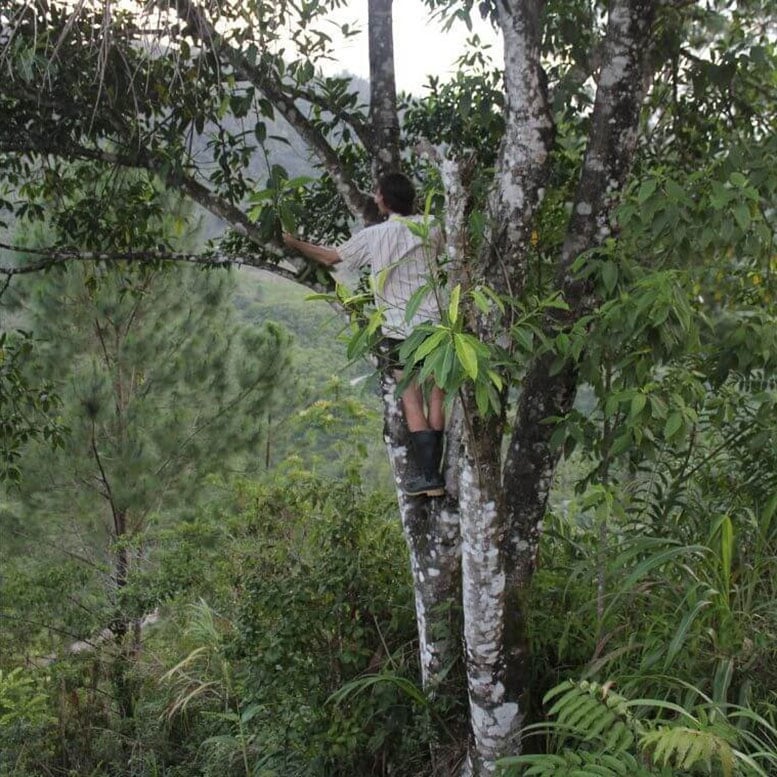
“Even though there were no drought conditions locally, the population of Itzan declined sharply during the Terminal Classic period, between 1,140 and 1,000 years ago,” Gwinneth continued. “Population markers show a dramatic fall, signs of agriculture disappear, the site was abandoned.”
The puzzle remains. Why would a community with reliable rainfall and favorable environmental conditions collapse alongside regions suffering from drought?
Fatal interdependence
Gwinneth believes the answer lies in the complex connections between Maya cities.
“The answer lies in the interconnectedness of Maya societies,” said Gwinneth. “The cities did not exist in isolation; they formed a complex network of trading relationships, political alliances, and economic dependence.
“When the central lowlands were hit by drought, this may have triggered a cascading series of crises: wars between cities over resources, the collapse of royal dynasties, mass migrations, disruption of trade routes, and so on.”
Under this interpretation, Itzan may have declined not because of its own local environment, but because it was affected by widespread instability throughout the Maya world.
Because Maya cities were closely connected through trade, politics, and migration, crises in one region could quickly ripple across the network. Drought affecting some areas may have triggered conflicts, economic disruption, and social upheaval that spread far beyond the locations directly experiencing climate stress.
“The transformation or “collapse” of the Maya civilization was not a mechanical result of a uniform climate catastrophe; it was a complex phenomenon in which climate, social organization, economic networks, and political dynamics were intertwined,” Gwinneth concluded.
“Regional socio-political and economic factors played a decisive role.”
Gwinneth believes these findings may also offer lessons for the present day, helping researchers understand how interconnected societies respond to environmental change.
Reference: “Evidence for highly variable land use but a stable climate in the southwest Maya lowlands” by Benjamin Gwinneth, Kevin Johnston, Andy Breckenridge and Peter M. J. Douglas, 21 November 2025, Biogeosciences.
DOI: 10.5194/bg-22-7079-2025
Funding for this project came from the Eric Mountjoy Fellowship, McGill startup funds and an NSERC Discovery Grant 2017-03902 to Peter M. J. Douglas.
Never miss a breakthrough: Join the SciTechDaily newsletter.
Follow us on Google and Google News.
Source link
