

Revolutionary New Cancer Treatment Reprograms Immune Cells Inside the Body
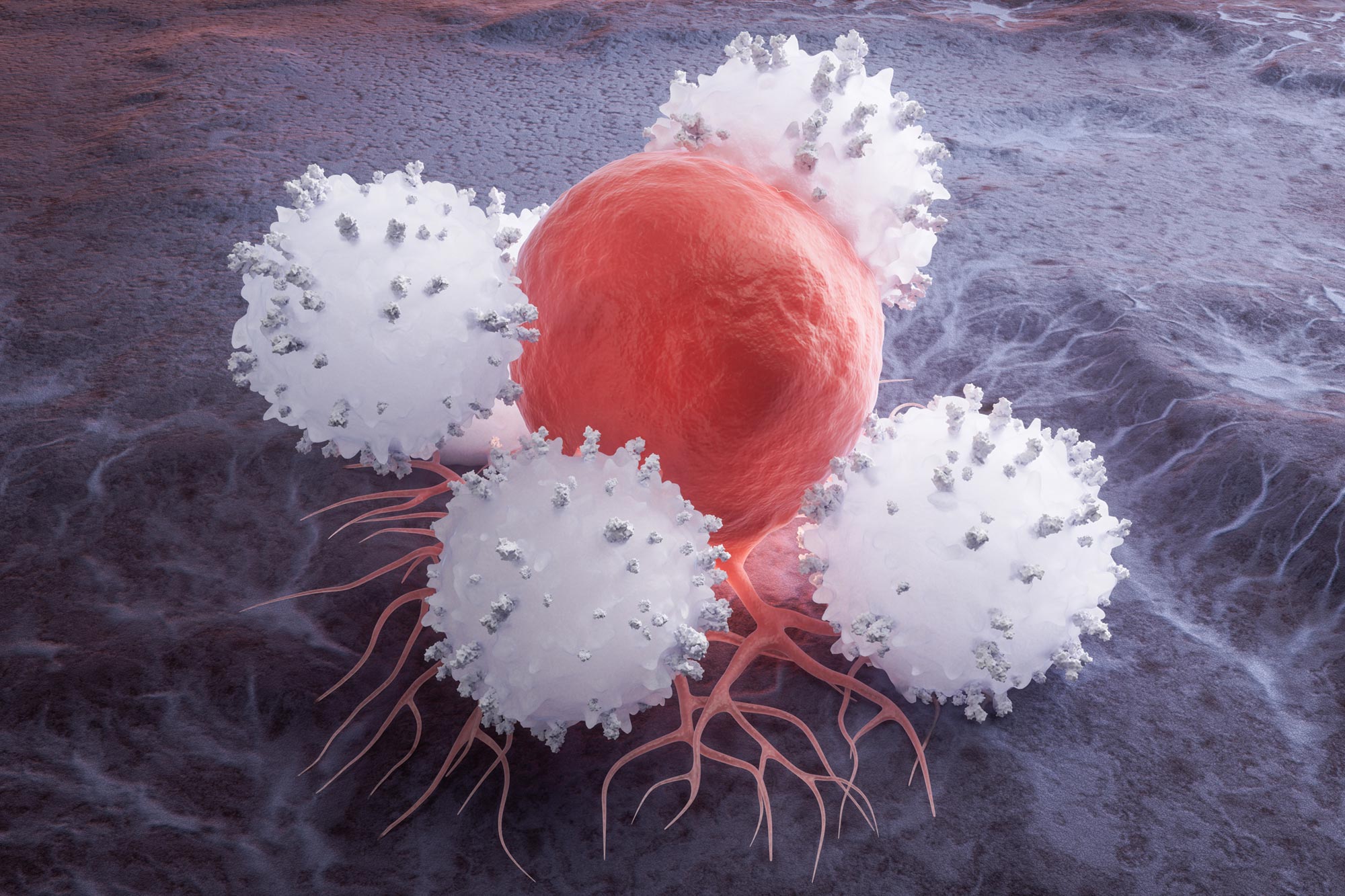
A new approach to CAR-T therapy is redefining how cancer-fighting immune cells can be engineered.
For years, one of the most effective treatments for certain blood cancers, known as CAR-T cell therapy, has relied on a complex, multi-step process. Doctors remove a patient’s immune cells, send them to a specialized lab for genetic modification, and then return them to the patient through infusion. While this approach has transformed cancer care, it can take weeks to complete and often costs hundreds of thousands of dollars, limiting access for many patients.
Researchers at UC San Francisco have now developed a way to reprogram these cancer-fighting cells directly inside the body. This new method could remove the need for external manufacturing, significantly reduce costs, and shorten treatment timelines.
This marks the first time scientists have inserted a large DNA sequence into a precise location within human T cells without taking the cells out of the body. The targeted technique also performed better than the conventional approach, which uses viruses to insert DNA randomly. The findings have implications beyond CAR-T therapy and could advance the broader fields of cell and gene therapy.
In a study published March 18 in Nature, the team tested the method in mice with human-like immune systems. The treatment successfully eliminated aggressive leukemia, multiple myeloma, and even a solid tumor.
“I think this is just the beginning of a big wave of new therapies that will be truly transformational and save a lot of lives,” said Justin Eyquem, PhD, an associate professor of medicine at UCSF and the senior author of the new paper. “I’m incredibly excited to be part of it.”
Molecular scissors alter gene
CAR-T cell therapy works by equipping T cells, key components of the immune system, with new genetic instructions that help them identify and destroy cancer cells. These instructions produce chimeric antigen receptors (CARs), which sit on the surface of T cells and act like sensors. When they detect specific proteins on cancer cells, they trigger the T cells to attack. Currently, seven CAR-T therapies are approved by the U.S. Food and Drug Administration for treating blood cancers.
Despite their effectiveness, these therapies remain difficult to access. Costs typically range from $400,000 to $500,000, and the production process requires specialized facilities and several weeks to complete. During that time, the disease can continue to progress. Patients must also undergo intensive chemotherapy beforehand to make room in the bone marrow for the modified cells, a process that can be especially challenging for older or medically fragile individuals.
“It’s become a global access issue; many patients who would benefit from CAR-T cells either can’t afford them or can’t get them fast enough,” Eyquem said. “There has been a big push in the field to try to move to directly producing these cells in the body.”
This concept, known as in vivo manufacturing, could also remove the need for pre-treatment chemotherapy.
To make this possible, Eyquem and colleagues, including researchers from the Gladstone Institutes, Duke University, and the Innovative Genomics Institute, developed a two-particle delivery system. It carries CRISPR-Cas9 gene editing tools, often described as molecular scissors, directly to T cells in the bloodstream. One particle is coated with antibodies that bind to CD3, a protein found only on T cells, helping ensure the system targets the correct cells.
The second particle contains DNA instructions for building the cancer-fighting CAR, along with guidance for inserting it into a precise location in the T cell genome. This location acts as an “on switch” that is active only in T cells. The new receptors are produced only when the DNA is inserted at this exact site. The particles were also designed to avoid rapid destruction by the immune system.
“When you manufacture these cells outside the body, you can do a lot of quality control to make sure you only end up with re-engineered T cells,” said Eyquem. “Inside the body, we can’t do that post-manufacturing quality control, so we really needed to optimize the approach upfront to avoid altering any other cells.”
Clear detectable cancer in two weeks
The team, led by co-first authors William Nyberg, PhD, and Pierre-Louis Bernard, PhD, both UCSF postdoctoral fellows, tested the system in mice with aggressive leukemia. A single injection eliminated all detectable cancer in nearly every mouse within two weeks. In some organs, the engineered cells made up as much as 40% of immune cells and cleared cancer from both the bone marrow and spleen.
The method also proved effective against multiple myeloma and, notably, a solid sarcoma tumor. Because solid tumors have typically been resistant to CAR-T therapy, this result stands out.
T cells engineered inside the body also appeared to perform better than those produced in the lab.
“What was especially remarkable was that the cells we’re generating in vivo actually look better than what we make in the lab,” Eyquem said. “We think that when cells are taken out of the body and grown in the lab, they lose some of their ‘stemness’ and proliferative capacity and that doesn’t happen here.”
The approach still needs to be adapted for human use, and clinical trials will be required to evaluate safety and effectiveness. To support this effort, Eyquem and his collaborators have launched a company called Azalea Therapeutics to advance the technology.
“If we can translate this to humans, we could dramatically reduce costs, eliminate waiting times, and potentially allow community hospitals — not just major cancer centers — to offer these life-saving therapies,” he said. “That would truly democratize access to CAR-T cell therapy.”
Reference: “In vivo site-specific engineering to reprogram T cells” by William A. Nyberg, Pierre-Louis Bernard, Wayne Ngo, Charlotte H. Wang, Jonathan Ark, Allison Rothrock, Gina M. Borgo, Gabriella R. Kimmerly, Jae Hyung Jung, Vincent Allain, Jennifer R. Hamilton, Alisha Baldwin, Robert Stickels, Sarah Wyman, Safwaan H. Khan, Shanshan Lang, Donna Marsh, Niran Almudhfar, Catherine Novick, Yasaman Mortazavi, Shimin Zhang, Mahmoud M. AbdElwakil, Luis R. Sandoval, Sidney Hwang, Simon N. Chu, Hyuncheol Jung, Chang Liu, Devesh Sharma, Travis McCreary, Zhongmei Li, Ansuman T. Satpathy, Julia Carnevale, Rachel L. Rutishauser, M. Kyle Cromer, Kole T. Roybal, Stacie E. Dodgson, Jennifer A. Doudna, Aravind Asokan and Justin Eyquem, 18 March 2026, Nature.
DOI: 10.1038/s41586-026-10235-x
Funding: Parker Institute for Cancer Immunotherapy, Pew Charitable Trusts, The Grand Multiple Myeloma Translational Initiative, CRISPR Cures for Cancer, Weill Cancer Hub West, James B. Pendleton Charitable Trust, Swedish Research Council, European Research Council, Swedish Society for Medical Research
Never miss a breakthrough: Join the SciTechDaily newsletter.
Follow us on Google and Google News.
Source link
