

Revolutionary Submarine Mysteriously Disappears Without a Trace – Scientists Are Now Preparing for a Bold Return
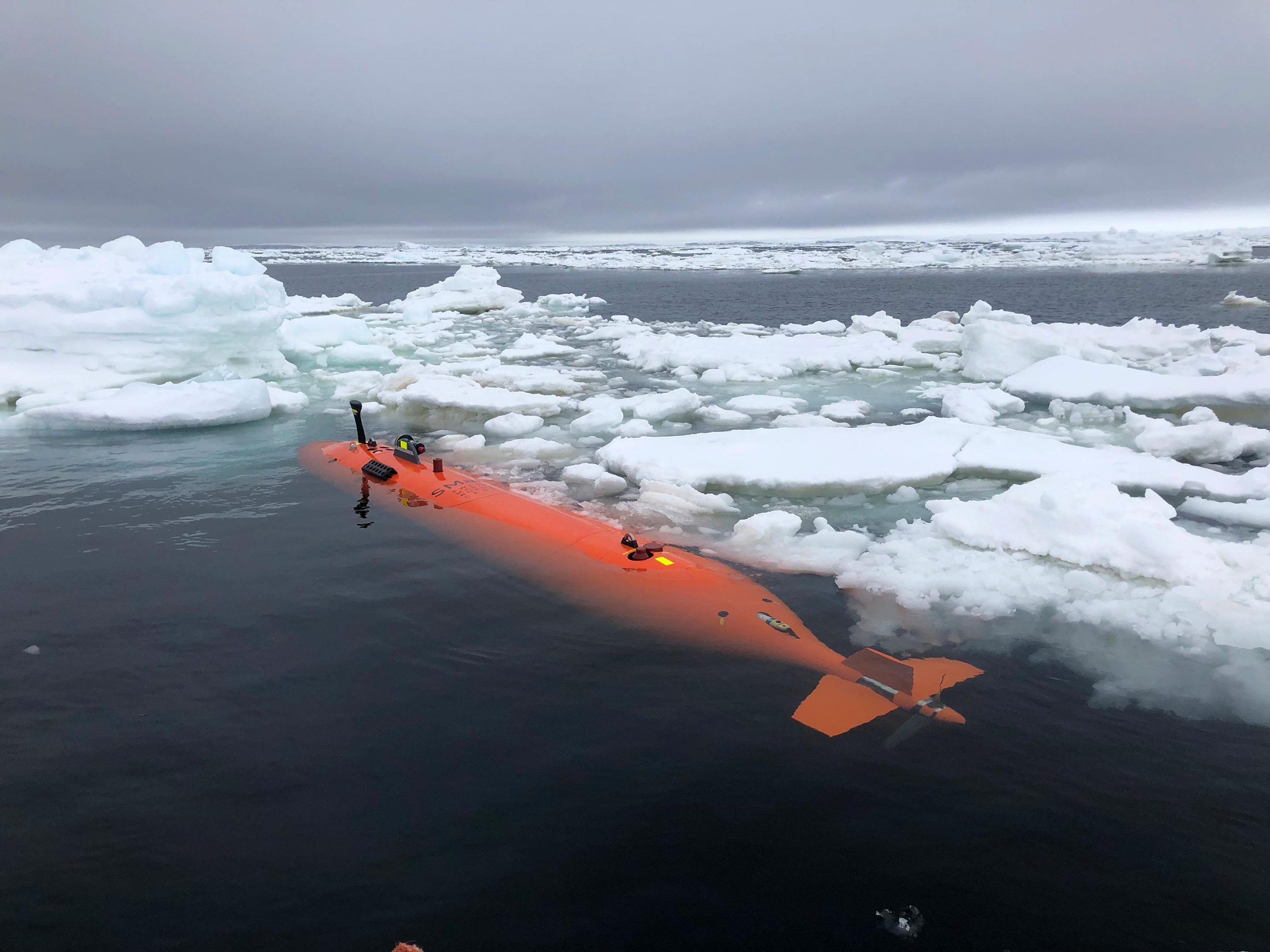
A pioneering robotic submarine that explored beneath Antarctica’s glaciers has been lost, but its discoveries are reshaping our understanding of ice melt as a more advanced successor is prepared to continue the mission.
A new robotic submarine is set to take over where Ran left off, reopening one of the most challenging frontiers in Earth science: the hidden underside of Antarctica’s glaciers.
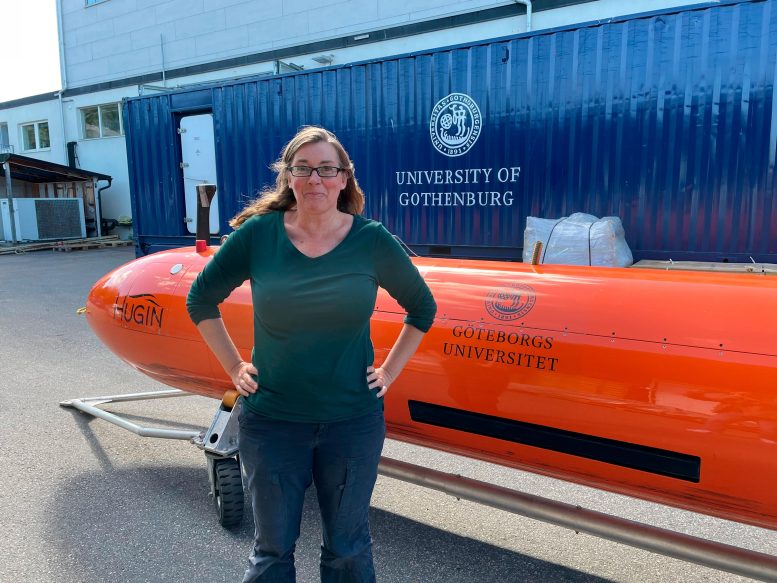
Ran, an autonomous underwater vehicle operated by the University of Gothenburg, vanished beneath Antarctic ice in January 2024 during a high-risk mission. Now, thanks to a major donation from the Voice of the Ocean Foundation (VOTO) and insurance funding, a successor is on the way. The new vehicle, Ran II, is scheduled for delivery in winter 2026/2027 and will be better equipped to survive and navigate these extreme environments.
Exploring a Hidden World Beneath the Ice
For six years, Ran gave scientists access to places no human or ship could reach. It traveled deep beneath floating ice shelves, including the Thwaites Glacier, one of the most closely watched glaciers on Earth due to its potential to accelerate sea level rise.
“Thanks to Ran, we became the first researchers in the world to enter under the Thwaites glacier, which in part lies in the sea. Although satellite data shows melting and movement in the ice, we were able to obtain close-up images of the underside of the ice and information about the exact mechanisms behind the melting,” says Anna Wåhlin, professor of oceanography.
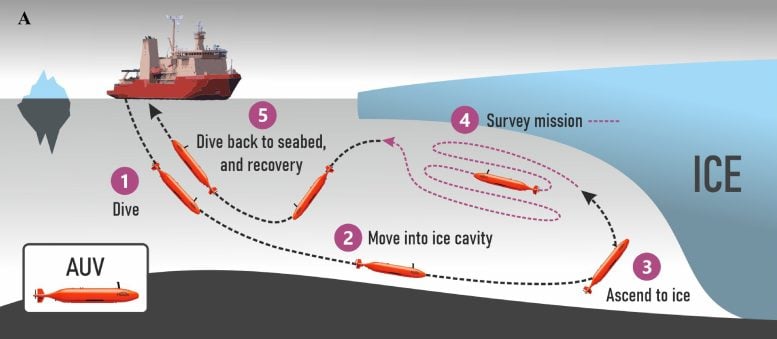
One of Ran’s most remarkable missions took place beneath the Dotson Ice Shelf in West Antarctica. Over 27 days, the vehicle traveled more than 1,000 kilometers (about 620 miles) in near-total darkness, venturing as far as 17 kilometers (about 10.6 miles) into the cavity beneath the ice. Using sonar, it mapped the glacier’s underside from roughly 50 meters (about 164 feet) below.
What it found challenged long-standing assumptions.
Instead of a smooth base, the ice formed a complex landscape of ridges, valleys, and plateau-like features, some resembling sand dunes. Scientists believe these shapes may be carved by ocean currents influenced by Earth’s rotation. The data also revealed that melting is not uniform. It intensifies in areas where warm, salty water flows upward and along vertical fractures in the ice.
“We have previously used satellite data and ice cores to observe how glaciers change over time. By navigating the submersible into the cavity, we were able to get high-resolution maps of the ice underside. It’s a bit like seeing the back of the moon,” says Wåhlin.
Why These Discoveries Matter
Antarctica’s floating ice shelves act as barriers that slow the flow of land-based ice into the ocean. When they thin or collapse, glaciers behind them can accelerate, contributing to rising sea levels worldwide.
The detailed maps collected by Ran are helping scientists refine models that predict how quickly this melting could happen. Until now, many models assumed relatively simple conditions beneath the ice. Ran’s data shows a far more dynamic and uneven system, driven largely by ocean currents.
“The maps that Ran produced represent a huge progress in our understanding of Antarctica’s ice shelves. We’ve had hints of how complex ice-shelf bases are but Ran uncovered a more extensive and complete picture than ever before,” says Karen Alley, a glaciologist and co-author of the study.
Researchers now believe that existing models may underestimate how quickly some regions can melt, especially where ocean conditions amplify the process.
A High-Risk Mission
Operating under Antarctic ice is inherently dangerous. Once deployed, Ran could spend more than 24 hours out of contact, navigating tight spaces beneath hundreds of meters of ice.
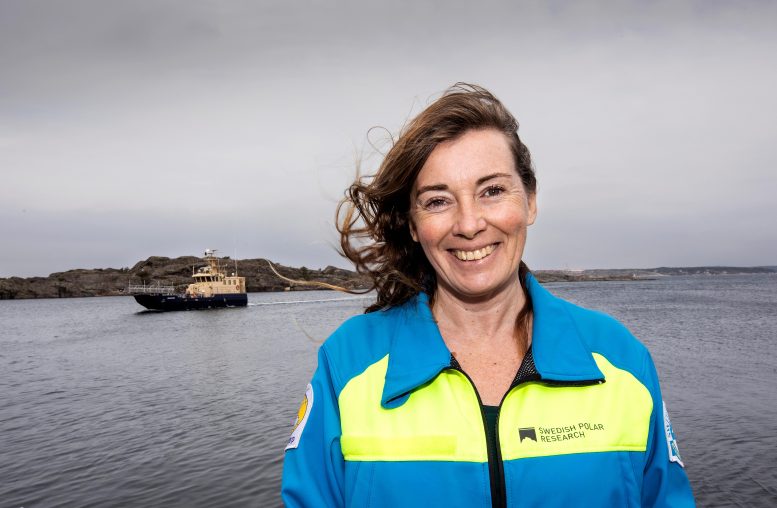
“There are not many uncharted areas left on Earth. To see Ran disappear into the dark, unknown depths below the ice, executing her tasks for over 24 hours without communication, is, of course, daunting,” says Wåhlin.
Despite more than 40 successful missions, the risks were always present. During a return expedition in 2024, Ran completed one dive before disappearing without a trace.
“The data we obtained from Ran’s expeditions is unique in the world and of great value to international research. At the same time, there are high risks involved, and we knew that something like this could happen. Personally, I think this is a better end than it gathering dust in a garage,” Wåhlin said after the loss.
Ran II and the Future of Ocean Exploration
Ran II will build on these achievements with improved navigation systems and stronger onboard decision-making capabilities, allowing it to respond more effectively in emergencies. The goal is not just to replace what was lost, but to push further into unexplored regions.
The new vehicle will also support research closer to home, including studies in the Baltic Sea, through a growing partnership between the University of Gothenburg and VOTO. This collaboration will provide scientists with access to advanced marine technology and high-resolution data.
At the same time, rapid progress in artificial intelligence is transforming how researchers analyze the massive data sets collected during these missions. Combined with next-generation AUVs, this could significantly speed up discoveries about how oceans and ice interact.
A New Era Beneath the Ice
When Ran first launched in 2018, it was one of only three vehicles of its kind in the world and the only one in Sweden. Its missions helped establish the country as a leader in polar ocean research.
Now, with Ran II on the horizon, scientists are preparing to return to one of the least explored environments on Earth. What lies beneath Antarctica’s ice shelves remains largely unknown, but it plays a critical role in the planet’s future.
With better tools and deeper access, researchers hope to answer one of the most urgent questions in climate science: how fast the ice is melting, and what that means for global sea levels in the decades ahead.
For more on the disappearance of Ran, see Groundbreaking Antarctic Glacier Survey Reveals Hidden Secrets.
Reference: “Swirls and scoops: Ice base melt revealed by multibeam imagery of an Antarctic ice shelf” by Anna Wåhlin, Karen E. Alley, Carolyn Begeman, Øyvind Hegrenæs, Xiaohan Yuan, Alastair G. C. Graham, Kelly Hogan, Peter E. D. Davis, Tiago S. Dotto, Clare Eayrs, Robert A. Hall, David M. Holland, Tae Wan Kim, Robert D. Larter, Li Ling, Atsuhiro Muto, Erin C. Pettit, Britney E. Schmidt, Tasha Snow, Filip Stedt, Peter M. Washam, Stina Wahlgren, Christian Wild, Julia Wellner, Yixi Zheng and Karen J. Heywood, 31 July 2024, Science Advances.
DOI: 10.1126/sciadv.adn9188
Never miss a breakthrough: Join the SciTechDaily newsletter.
Follow us on Google and Google News.
Source link
