

Science fiction is the genre of ideas, a cinematic playground where filmmakers are able to freely explore humanity’s relationships with technology, the cosmos, and our own evolution and future. It’s the most imaginative genre but the most complex to play with, and if one thing feels off, the entire story can be ruined.
So, building a Mount Rushmore for sci-fi means identifying the films that didn’t just succeed as science fiction features but fundamentally reshaped the genre and influenced everything that followed. It means finding movies that weren’t afraid to drop and adopt genre conventions all at once, to play around with storytelling, concepts, and ideas. If you ask anyone remotely interested in sci-fi, they’ll likely tell you this is the Mount Rushmore of sci-fi movies.
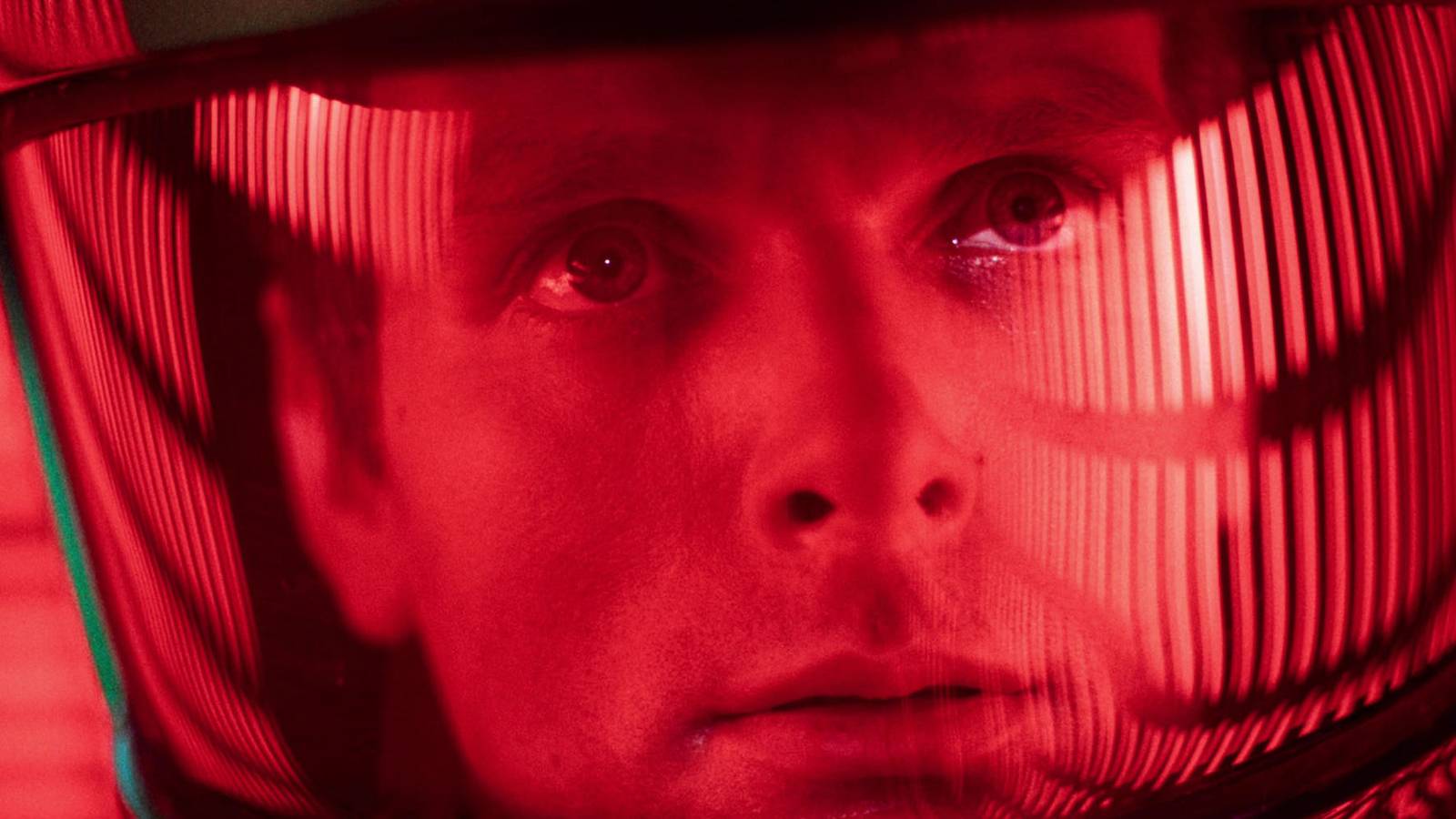
‘2001: A Space Odyssey’ (1968)
Stanley Kubrick was a multifaceted director, and his interests grew beyond the conventions of any kind of genre. While nowadays, directors are confined to existing within a certain space, trope, or convention, the industry allowed Kubrick to spread his wings and tackle diverse ideas, from the 1950s until the 1990s. Every genre is marked by a Kubrick film, and when we talk about the greats of each, his films are bound to come up. 2001: A Space Odyssey is his contribution to the sci-fi genre, and many call it the greatest film ever made—many directors have deemed it so for years, in particular in the Sights and Sounds director polls over the years.
2001: A Space Odyssey traces human evolution from primordial apes discovering tools to astronaut David Bowman’s (Keir Dullea) transcendent journey beyond the known universe, guided by mysterious monolithic slabs. Bowman is notably “accompanied” by the HAL 9000 computer on the spaceship—a calm voice that’s meant to be a guide for the astronauts but turns out more ominous, representing technology turning against its creators. Kubrick adapted the story together with sci-fi writer Arthur C. Clarke, whose short stories The Sentinel and Encounter in the Dawn served as inspiration for the film; there are discrepancies between the film and prose, which is typical for Kubrick, but it appears that the adaptation feels more inspired by the source material, allowing Kubrick to explore technology, artificial intelligence, evolution, existentialism, and mysticism all at once.
This sci-fi epic completely reshaped how the public saw science fiction, though it took them a while to warm up to it; Dullea noted that people left the premiere early, baffled and wondering what they were supposed to be watching. 2001 revolutionized the depiction of space on film, with special effects that took eighteen months and $6.5 million to achieve, creating what Kubrick insisted must be completely convincing. Paired with pre-composed classical pieces, including music by the likes of Johann Strauss II and Aram Khachaturian, 2001: A Space Odyssey put sci-fi on the map as a genre that can and should have as much visual appeal as substance and meaning.
‘Star Wars’ (1977)
When we discuss the modern blockbuster, we always divert our attention to Jaws, Steven Spielberg‘s first-ever summer blockbuster thriller that showed why theatrical experiences are vital for the industry. Some filmmakers make their movies specifically for the big, silver screens, but before, they had no choice—the silver screens were all they had, and anyone who wanted to make a mark with their storytelling had to have ideas that would fill every corner of the projection screen. After Jaws, it was anyone’s game, and young and imaginative George Lucas adapted Hamlet into a space opera, inspired by Akira Kurosawa, Toshirō Mifune, and the Dune novels, creating Star Wars—later, and today, known as Episode IV—A New Hope. With it truly came a new hope for bolder, visionary, beautiful storytelling.
George Lucas’s space opera follows young farm boy Luke Skywalker (Mark Hamill) as he joins the Rebel Alliance to take down the oppressive Empire and its dark enforcer, Darth Vader (voiced by James Earl Jones). On the other side, we have Leia Organa (Carrie Fisher), princess of the planet Alderaan, who rejects her aristocratic family tree to fight for what’s right, joining the Rebels and finding a kindred spirit in Luke (no, not like that). The film created a universe that still feels lived-in, ancient, and mythic, delivering a sci-fi fairy tale that is about family, redemption, heroes, villains, destiny, and bravery.
Sure, we could go on and on about the production value and Star Wars‘ visual language, from the Art Deco designs to the desert landscapes of Tatooine, but the biggest impact of Star Wars isn’t just its epic scale and beautiful look. The movie, and soon the franchise, gave people fandom as a culture, providing them a way to express themselves and become a part of that world, even for a day. Star Wars also made room for women as heroes and explored darker themes of oppressive governments, war trauma, and even capitalism. Before Star Wars, science fiction at the movies mostly meant monsters or aliens; after it, the genre became a dominant force in global entertainment.
‘Alien’ (1979)

Staying within the 1970s for some of the greatest sci-fi masterpieces ever made isn’t a coincidence; Star Wars, Close Encounters of the Third Kind, The Andromeda Strain, Solaris, and Invasion of the Body Snatchers are all products of the decade, which seems to truly be the defining one for science fiction. The end of that decade was marked with a high, because Ridley Scott made Alien, the definitive sci-fi horror/thriller that changed how we observe extraterrestrial life. Compared to Close Encounters, Alien is much less hopeful about the encounters of the third kind, which is direct contact with alien life.
Alien follows the crew of the commercial towing spacecraft Nostromo as they investigate a distress signal on a desolate moon. They encounter a nightmarish alien organism that implants itself in a crew member and bursts out of their chest, then begins picking them off one by one inside the ship’s claustrophobic interior. Alien is a true hybrid of genres and ideas, blending science fiction with Gothic horror and creating something visually and thematically interesting and, ultimately, new. H.R. Giger designed the creatures, from the face-huggers to the Xenomorph queen mother, introducing a new visual synonym for terror; the face of such terror is a perfect organism whose biological and mechanical elements remain disturbing decades later.
When Alien came about, Scott was mostly a filmmaker known for adverts, while Sigourney Weaver was a fairly unknown actor. Yet, Weaver’s character, Ellen Ripley, very soon became one of cinema’s greatest heroes, a woman whose intelligence and survival instincts made her a feminist icon in a genre that had rarely revolved around female protagonists. Academic analysis of the film spans cognitive narrative theory, interdisciplinary studies, Gothic studies, and psychology, showing how Alien operates on levels far beyond simple scares. Besides just feminist themes within Ripley and the Xenomorph queen herself, there’s a very timely theme of artificial intelligence, technology, and trust that remains resonant, something similar to what Kubrick tried to achieve in 2001: A Space Odyssey. Alien spawned a vast franchise, showing the intellectually complex, visually stunning, and viscerally terrifying nature of science fiction.
‘Interstellar’ (2014)

Leaving the 20th century and entering the 21st, we usher in a new era of science fiction, with improved CGI techniques and technology, but ultimately the same old methods with which we observe poignant storytelling. Christopher Nolan‘s Interstellar weaves together space exploration, theoretical physics, and crushing familial bonds, making a modern sci-fi epic that is intellectually and emotionally ambitious. Nolan himself feels like an ambitious filmmaker, often treading where no one seems to actively look (rather than where everyone is afraid to); his masterpiece is often in dialogue with Kubrick’s 2001, from visual sequences to the meditative pace and questions about humanity’s place in the cosmos. Yet Interstellar charts its own territory, arguing that love itself might be a force as fundamental as gravity and that human connection can transcend dimensions, something that feels like Kubrick never truly considered when placing his astronaut in a lonely vastness.
Interstellar follows Cooper (Matthew McConaughey), a widowed father and former NASA pilot, who leads a mission through a wormhole to find a new habitable planet for humanity as Earth suffers from environmental collapse. The film depicts Cooper’s struggle but also how Cooper and his daughter Murphy (Mackenzie Foy/Jessica Chastain), whose lives unfold at different rates due to time dilation, follow each other’s paths and attempt to find each other amid Cooper’s once-in-a-lifetime space mission.
With theoretical physicist Kip Thorne as executive producer and screenwriter Jonathan Nolan (Christopher’s brother) enrolling in relativity studies, the film is fully based on scientific theory about wormholes, black holes, and time dilation. The scene where Cooper watches decades of his children’s lives pass in minutes after receiving messages from Earth is a devastating depiction of parental sacrifice but also one of the most accurate and, admittedly, chilling ways to show viewers the vast possibilities of the cosmos. While Interstellar encapsulates the human fight against extinction, it also honors its predecessors in sci-fi. As it reaches toward something new, bold, and genuine, it tells us, “Do not go gentle into that good night,” making sci-fi a genre that can be a strong plea to humanity.

Interstellar
- Release Date
-
November 7, 2014
- Runtime
-
169 Minutes
Source link
