

Israel kills Islamic Guards intel chief, bombs largest Iranian petrochemical plant
The Israeli Air Force launched a wave of attacks on Iran overnight Sunday and on Monday, killing two senior Islamic Revolutionary Guard Corps officers in Tehran, hitting the country’s largest petrochemical plant and blowing up several airports used by the IRGC as fighting continued despite efforts to reach a ceasefire.
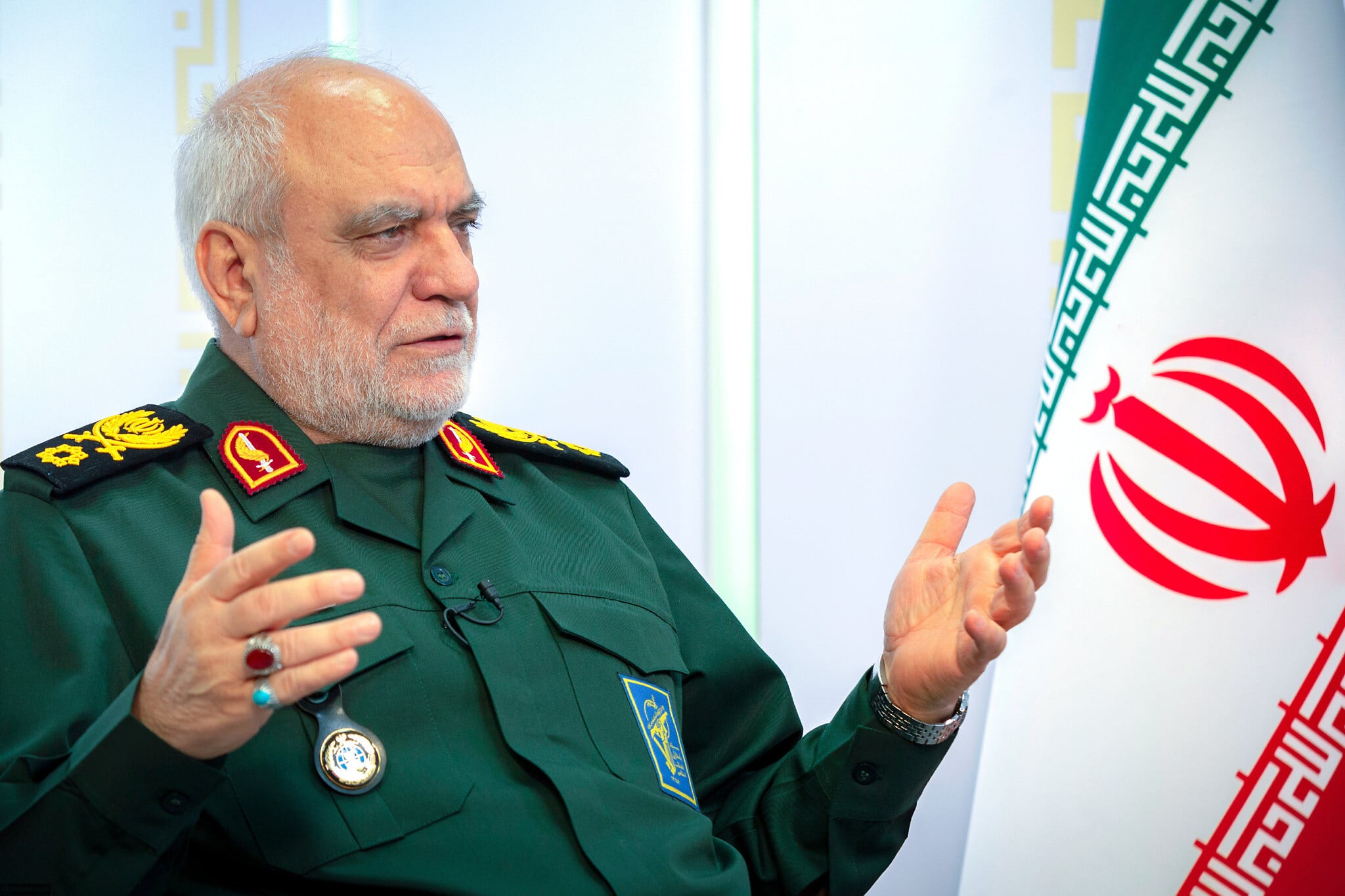
A first strike killed Majid Khademi, who served as head of the Intelligence Protection Organization of the IRGC and the Intelligence Organization of the IRGC. He entered the role several months ago, following the killing of his predecessor, Mohammad Kazemi, by Israel during the June 2025 war.
A separate strike in Tehran killed another top IRGC official, Yazdan Mir, known by his alias Sardar Bagher (sometimes spelled Asghar Bakri), who headed the IRGC Quds Force’s clandestine Unit 840.
The Israel Defense Forces said Khademi was “one of the IRGC’s most senior commanders and had accumulated extensive military and security experience over many years.”
“In his role, he was responsible for gathering intelligence and helping formulate a comprehensive situational assessment for the regime’s senior leadership” during the war, the military said.
Khademi also “worked to advance terror activities against the State of Israel and against Jewish targets worldwide. He also took part in attempts to target American individuals and was responsible for monitoring Iranian civilians as part of the regime’s suppression of internal protests,” the IDF added.
On Bagheri, the IDF said he held several senior roles in the Quds Force over the years, “within which he advanced numerous efforts to target Israeli and American targets around the world.”
Unit 840 has been implicated in kidnappings and assassinations of figures outside of Iran, including Israelis.
The military said Bagheri “coordinated and promoted terror activities against the State of Israel, including operations carried out within the territory of the State of Israel, Syria, and Lebanon.”
Unit 840, under Bagheri’s leadership, had also “advanced operations aimed at harming IDF troops operating in the buffer zone in Syria, using Syrian operatives who had previously served in Assad’s army,” the army said.
In addition, the military said Bagheri was involved in smuggling weapons from Iran into Israel and the West Bank.
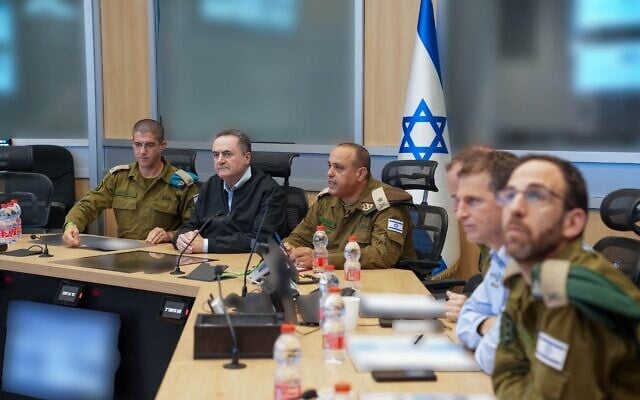
Defense Minister Israel Katz, who said he was updated on the strike during an assessment with IDF Chief of Staff Lt. Gen. Eyal Zamir, declared, “Iran’s leaders live with a sense of persecution. We will continue to hunt them down one by one.”
Prime Minister Benjamin Netanyahu lauded the military for Khademi’s assassination in a Hebrew-language post on X.
He also hailed the assassination of Bagheri, calling him “responsible for attacks against Jews and Israelis around the world.”
“Whoever acts to murder our citizens, whoever directs terrorism against Israel, whoever builds the Iranian axis of evil — their blood is on their own head. We are acting with power and determination; we will reach anyone who seeks to harm us,” the premier warned.
“We will continue with full force, on all fronts, until the threat is removed and all the objectives of the war are achieved.”
Israel strikes South Pars petrochemical plant in Iran
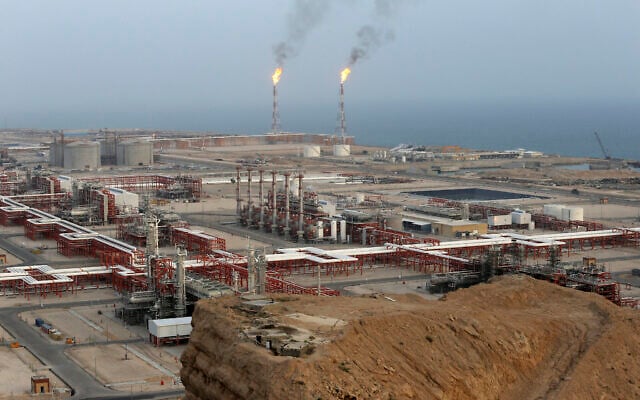
The Israeli Air Force also struck Iran’s South Pars petrochemical plant at Asaluyeh.
Katz said in a statement that the IDF “has just powerfully struck the largest petrochemical facility in Iran, located in Asaluyeh, a central target responsible for about 50 percent of the country’s petrochemical production, following last week’s strike on the second main facility.”
منشأة عسلوية للغاز والبتروكيماويات في بوشهر pic.twitter.com/CFA9wx28bu
— Mohamad Ahwaze (@MohamadAhwaze) April 6, 2026
He said that the two facilities, “which together are responsible for about 85% of Iran’s petrochemical exports, have been taken out of use and are not functioning.”
“This is a severe economic blow amounting to tens of billions of dollars to the Iranian regime,” he said.
Katz said that the petrochemical industry is a “central engine in financing the activities” of the Islamic Revolutionary Guard Corps and Iran’s military build-up.
He added that the IDF has been instructed to “continue striking with full force the national infrastructure of the Iranian terror regime.”
“The Iranian terror regime will discover that continued aggression against Israel and the cowardly and criminal firing at Israeli civilians will lead to a deepening of the economic and strategic damage it pays and to the collapse of its capabilities,” Katz said.
Hours later, a second petrochemical facility in Iran was hit by airstrikes, Iranian media reported.
“A few minutes ago, the Marvdasht Petrochemical Complex was targeted by an American-Zionist enemy attack,” the Fars news agency reported, adding that a fire that sparked at the complex was brought under control, and no casualties were caused.
Israel did not immediately comment on the report.
IAF bombs airports, says they were used by Quds Force
The Israeli Air Force also bombed three airports in Tehran overnight, saying they were being used by the Quds Force, the IRGC’s extraterritorial arm.
The strikes came as Iran continued to launch ballistic missile attacks at Israel, some of which have proven deadly in recent days.
Israel’s military said it struck three airports in the Tehran area, hitting runways and control towers, along with a Quds Force factory that manufactured drones.
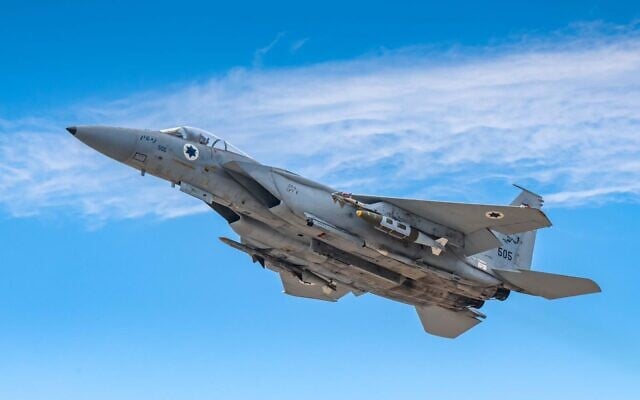
The IDF also said that it destroyed dozens of Iranian aircraft during strikes the airports. Dozens of Israeli Air Force fighter jets hit Iranian planes and helicopters, as well as infrastructure “used by the regime’s armed forces for military purposes” at Tehran’s Mehrabad Airport and two smaller airstrips in the area.
בתקיפה נרחבת בשדות התעופה בטהרן: צה״ל תקף עשרות מטוסים ומסוקים של חיל האוויר האיראני
חיל האוויר בהכוונה מודיעינית של אמ״ן ולמד״ן השלים במהלך הלילה, מטס תקיפה נרחב לפגיעה בחיל האוויר האיראני וחיל האוויר של משמרות המהפכה בשדות תעופה בטהרן.
עשרות מטוסי קרב של חיל האוויר תקפו… pic.twitter.com/PnHmSmRZva
— צבא ההגנה לישראל (@idfonline) April 6, 2026
Iranian media also reported that an airstrike on a residential building in a city southwest of Iran’s capital had killed at least 13 people. The semiofficial Fars news agency and Nour News reported the strike near Eslamshar. It wasn’t immediately clear why the building was struck.
Separately, gas outages hit parts of Tehran after a strike on a university, according to Iran’s state broadcaster, but were soon restored, according to Iranian state television.
The strike, which occurred in the early hours of Monday, hit a gas pressure reduction station and metering facilities at Sharif University of Technology, causing a leak. “The attack did not result in a fire, and in less than half an hour, the gas leak was completely fixed,” state broadcaster IRIB said.
It wasn’t immediately clear what had been targeted on the grounds of the university, which is empty of students amid the war. However, multiple countries over the years have sanctioned the university for its work with the military, particularly on Iran’s ballistic missile program, a main target of the US-Israeli campaign.
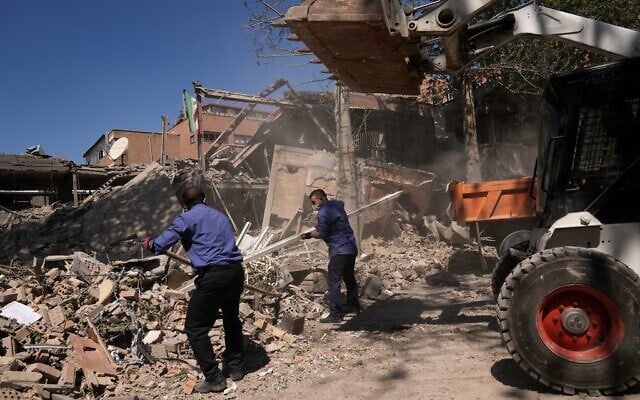
The attack also hit the university’s data center, which houses an artificial intelligence facility, according to the Fars news agency.
Iranian media carried footage showing extensive damage at the site, with twisted metal, debris and damaged structures across the area.
American forces in Kuwait targeted with drones
Meanwhile, Iran targeted US forces located on Kuwait’s Bubiyan Island, the spokesperson of Iran’s Khatam al-Anbiya Central Headquarters said in a video statement shared by state media.
Ebrahim Zolfaqari said Iran targeted satellite equipment and munitions on the island with drones, adding that US forces had relocated there from Arifjan camp after that base was repeatedly struck by Iran.
Bubiyan Island is the largest of Kuwait’s coastal island chain, located in the northwest of the Gulf.
Six people were injured from debris falling in a residential area in northern Kuwait after an Iranian attack, Kuwait’s health ministry said earlier.
The United Arab Emirates said overnight that its air defenses were responding to a missile and drone attack.
A drone attack damaged a telecommunications building in the UAE’s Fujairah in the United Arab Emirates, the state-run WAM news agency reported. The attack targeted a building of the state-funded du telecom company. No one was injured, WAM reported, quoting officials in Fujairah.
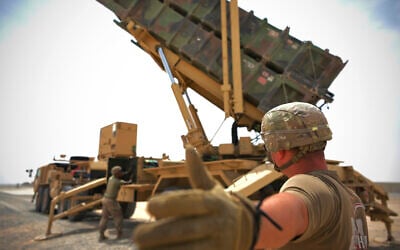
In the UAE capital of Abu Dhabi, authorities said a Ghanaian man suffered wounds from shrapnel after the interception of an Iranian missile over the city’s Musaffah neighborhood. That’s near Al Dhafra Air Base, which hosts US forces and has been repeatedly targeted by Iran in the war.
Israel launched its campaign against Iran, alongside the US, to degrade the Iranian regime’s military capabilities, distance threats posed by Iran — including its nuclear and ballistic missile programs — and “create the conditions” for the Iranian people to topple the regime, the military and other Israeli leaders have said.
Axios first reported on Sunday that the US, Iran and regional mediators were discussing a potential 45-day ceasefire as part of a two-phase deal that could lead to a permanent end to the war, citing US, Israeli and regional sources.
In a post laden with expletives on his Truth Social platform on Sunday, Trump threatened further strikes on Iranian energy and transport infrastructure if Iran failed to make a deal and reopen the Strait by Tuesday. Later on Sunday, the president, in a follow-up post, gave a more precise deadline of Wednesday 12 a.m. GMT.
