

Israel launches fresh strikes in Beirut as Hezbollah faces homegrown anger over new war
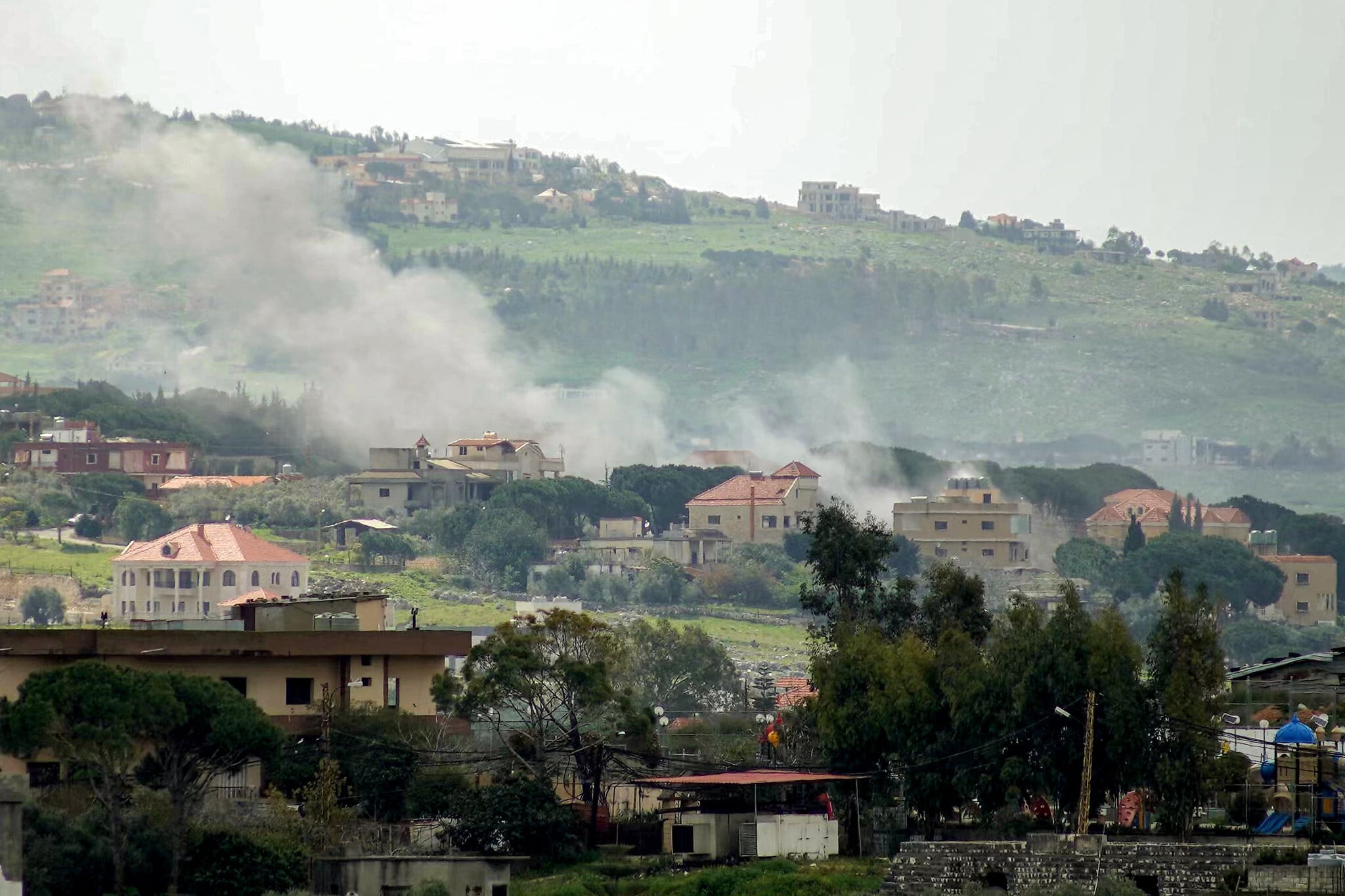
Israeli strikes rained down on Beirut and across southern Lebanon on Monday, as the Israel Defense Forces announced it had launched a new wave of attacks on Hezbollah infrastructure in the Lebanese capital, while residents reported wide bombardment in the south as well.
Meanwhile, anger against the terror group continued to grow among Lebanese civilians on Monday as people searched for someone to blame after an official from the Lebanese Forces Christian political party was killed in an Israeli strike the previous day.
Footage showed smoke billowing across the skyline after the strike on the southern suburbs, a Hezbollah stronghold that has largely emptied of residents following repeated Israeli attacks and evacuation warnings.
The IDF reiterated its evacuation warning for Beirut’s southern suburbs ahead of the latest strikes on Monday, which it said were going after “Hezbollah terror targets.”
Shortly before the warning, an AFP journalist in the southern suburbs saw just a few shops open, as well as a gas station belonging to the Al-Amana fuel company, destroyed in a previous raid.
Israel has targeted multiple Al-Amana gas stations in recent days, saying on Sunday that the company, which is owned by Hezbollah, “serves as a significant economic infrastructure for terror activity” and is used by the terror group to “refuel trucks transporting weapons and terrorists.”
Fresh portraits mourning Iran’s former supreme leader Ali Khamenei, who was killed in the US-Israeli attack on February 28 that triggered the Middle East war, were visible along some roads.
Israel has launched thousands of strikes across Lebanon since March 2, when the Hezbollah terror group reignited its conflict with Israel, in response to the US-Israeli offensive in Iran.
In south Lebanon, the health ministry said four people were killed in a raid on a car in Kfar Rumman, near the city of Nabatiyeh.
The state-run National News Agency (NNA) also reported deadly strikes elsewhere in the country’s south and east, including in the Tyre district village of Burj Rahal, where an AFP correspondent saw mangled metal and items including blankets and a mattress among the rubble of destroyed buildings.
“The preliminary toll is 15 homes damaged, which are no longer livable,” said Burj Rahal mayor Daoud Ezzedine.
“The residents want to return home, but unfortunately they will not be able to,” he added.
Also on Monday, the IDF announced that it had killed three Hezbollah operatives who were responsible for the deaths of four soldiers in southern Lebanon last week.
On March 30, Cpt. Noam Madmoni, Staff Sgt. Ben Cohen, Staff Sgt. Maxsim Entis, and Staff Sgt. Gilad Harel — all of the Nahal Brigade’s Reconnaissance Unit — were killed during a clash with Hezbollah gunmen in the village of Beit Lif.
The military said on Monday that in recent days, troops of the Nahal Reconnaissance Unit exchanged fire with and killed three Hezbollah gunmen “in close-quarters combat, and afterward, through precise intelligence, it was verified that these were the same terrorists responsible for the soldiers’ deaths.”
In a separate statement, the IDF announced that a senior commander in the Imam Hossein Division, an Iranian militia that operates alongside Hezbollah, was killed in an Israeli strike in Lebanon on Sunday.
The military said it struck Imam Hossein’s main headquarters responsible for “managing firepower,” and killed the militia’s artillery chief, Kamil Melhem, alongside other operatives, including an aide to the commander of the division.
It also published footage of caches of Hezbollah weapons that were recently found by troops in southern Lebanon.
The IDF said that reservists of the 769th “Hiram” Regional Brigade located one cache in an underground Hezbollah site.
#عاجل العثور على مجمّع إقامة تحت الأرض يحتوي على مخزون من الوسائل القتالية
????تواصل قوات الاحتياط التابعة للواء 769، تحت قيادة الفرقة 91، نشاطها البري المركّز لتوسيع نطاق المنطقة الأمنية في جنوب لبنان.
????حيث عثرت القوات على مجمّع إقامة تحت الأرض يحتوي على معدات عسكرية ووسائل… pic.twitter.com/gn4RzuUnFx
— افيخاي ادرعي (@AvichayAdraee) April 6, 2026
The weapons included assault rifles, sniper rifles, RPGs, and explosives, according to the military.
The IDF also airs a clip showing the identification of an armed cell of Hezbollah operatives in southern Lebanon, before they are targeted in an airstrike.
צפו בתיעוד: חיל האוויר בשיתוף פעולה עם הכוחות הקרקעיים חיסלו מחבלים חמושים בדרום לבנון
האוגדות הפועלות תחת פיקוד הצפון בדרום לבנון מעמיקות את פעילותן הקרקעית הממוקדת ליצירת קו הגנה קדמי ולהגנה על תושבי הצפון.
לוחמי צה”ל פועלים בשיתוף פעולה הדוק עם צוותי חיל האוויר ובכך מסירים… pic.twitter.com/Rr0H8KpbFp
— צבא ההגנה לישראל (@idfonline) April 6, 2026
Israeli officials have said the IDF is establishing a demilitarized “security zone” in southern Lebanon up to the Litani River, until the threat of Hezbollah is removed.
The buffer zone would be controlled with surveillance and firepower, as well as ground troops in areas deemed strategically necessary, the military has said.
Defense Minister Israel Katz has said he instructed the IDF to raze all buildings in the so-called “first line” of Lebanese villages close to the Israeli border, to ensure Hezbollah cannot use them to stage attacks on Israel.
Hezbollah, too, continued to launch rocket and drone attacks on Israeli targets throughout the day on Monday, setting off sirens across dozens of towns and communities across northern Israel.
The terror group has been firing hundreds of rockets per day, according to the IDF. However, the vast majority of the daily rocket fire has been directed at Israeli forces operating in southern Lebanon, with only a few dozen projectiles crossing the border into Israel.
On Sunday, Hezbollah also claimed to have targeted an Israeli Navy vessel with a cruise missile.
The group said a “direct hit was confirmed” on the ship, 68 nautical miles off the Lebanese coast, “after hours of tracking the target.”
The IDF denied the claim on Monday, saying it was a “false report” and “no Israeli vessel was hit.”
“We emphasize that there was no threat to an Israeli vessel or in its vicinity at any stage,” the military said.
A military source said that it is possible that Hezbollah fired on a foreign vessel, which was not hit. The matter is under review by the IDF, the source added.
Anger after Christian politician killed in strike
In Lebanon, anger at Hezbollah has continued to grow in recent weeks, as critics of the Iran-backed group blame it for the destruction unleashed across the country by Israel.
The sentiment was amplified further on Monday after an Israeli strike on an apartment building in the town of Ain Saadeh late Sunday killed an official from the Lebanese Forces, a Christian political party opposed to Hezbollah.
Israel said it had targeted a Hezbollah operative in the strike, but the third-story apartment was empty.
The strike blew out the walls and windows of the floor below, killing Pierre Mouawad, his wife, Flavia Mouawad, and a woman who was visiting them.
“This is the first time something like this has happened here,” family friend Nadine Naameh said. “We had always felt safe here.”

Neighbors wept outside the collapsed apartments as crews swept away the rubble.
“The people who live here are against violence. They don’t want this war,” according to municipal official Pierre Said.
The IDF on Monday acknowledged that it had mistakenly killed Moawad, saying it had intended to assassinate a Hezbollah operative.
It said the strike apparently failed to kill the Hezbollah target, and it “regrets the harm” to the uninvolved civilians.
Some residents and local officials in predominantly Christian areas have expressed concern that displaced communities are harboring terror operatives that could be targeted by Israel, with local authorities vetting those seeking rented accommodation.
But residents said no displaced people were living in the targeted apartment or surrounding buildings in Ain Saadeh.
According to residents, Israel issued no evacuation warning in the lead-up to the strike.
Samir Geagea, who leads the Lebanese Forces, criticized the Lebanese government on Monday for not confronting Hezbollah in the 15-months between the previous round of fighting with Israel and the current hostilities.
“Taking responsibility from the outset would have been better for everyone,” he said, talking about the Lebanese security agencies’ sluggish disarmament process of the terror group.
Lebanese Forces parliamentarian Razi El Hage had similar criticism for the group, telling Lebanese broadcaster MTV: “We are paying a heavy price for a war into which we have been dragged by the lawless organization Hezbollah.”
Lebanon says 1,497 people have been killed since the war erupted, including 57 health workers.
The Lebanese health ministry does not differentiate between combatants and civilians. Israel says it has killed some 1,000 Hezbollah operatives, including hundreds of members of the terror group’s elite Radwan Force, since March 2.
In the same period, 11 IDF soldiers have been killed in southern Lebanon amid fighting against Hezbollah. Two civilians have also been killed by Hezbollah rockets, and an Israeli civilian was mistakenly killed in the north by Israeli artillery shelling.
