

After the success of movies like The Outlaw Josey Wales, the Western fell into a lull, only to experience an unexpected revival in the ’90s. When the decade began with a slew of box office smash hits, studios and directors were able to quietly resurrect the frontier for a new generation. This was especially welcome as the West had largely been held back in the prior decade, as sci-fi, fantasy, and contemporary adventure dominated the ’80s.
The Wild West continues to be among Hollywood’s underdog genres, something that made its ’90s comeback even more impressive. Under the direction of filmmakers like Clint Eastwood, Kevin Costner, and Martin Campbell, the frontier was done justice with more versatility than ever. From one year to the next, creators tried to do something new with the genre, and these movies marked the best of each year’s Wild West output.
Dances With Wolves Salvaged the Epic Western
In 1990, Kevin Costner took on the single most ambitious Western project since the 1980 flop Heaven’s Gate when he adapted Michael Blake’s Dances With Wolves. The film focuses on US Army officer John J. Dunbar, who, after helping secure success in a Civil War battle, is allowed his desired posting to the abandoned Fort Sedgwick on the frontier. In his solitude, he befriends a playful wolf and the local Sioux tribe, their simpler, more harmonious way of life tempting him away from the army.
Made at a time when the genre seemed to be on its last legs, the movie proved to Hollywood that the frontier was still a viable part of cinema. It’s safe to say that, without Dances With Wolves‘ success, the ’90s might have never become the Western movie powerhouse audiences look back on today. Easily one of the greatest epic Westerns of all time, the film’s story has since become a cornerstone of modern stories, influencing the likes of James Cameron’s Avatar.
An American Tail: Fievel Goes West Gave Kids an Animated Western

Despite the success of Dances With Wolves, Hollywood was slow to catch up to the genre’s resurgence, leaving 1991 one of the weakest years the genre has seen. The one bright spot came from a surprising source in the animated sequel An American Tail: Fievel Goes West. This time, the Mousekewitz family ventures out West, hitching a ride aboard a train where Fievel encounters some treacherous cats, jeopardizing his journey.
Fievel Goes West emerged as a favorite among ’90s kids, taking the formula of a classic Western and turning it into an animal adventure. Replete with the voice of Jimmy Stewart for an added layer of authenticity, the film marks one of the few family-friendly entries in its genre of the ’90s. It’s a touching voyage into the heart of the frontier, one that treads the old ground of lawmen, pilgrims, and the spirit of the West.
Unforgiven Brought Clint Eastwood’s Western Image to a Dark Conclusion

After spending twenty-seven years as the face of the Western since A Fistful of Dollars, Clint Eastwood decided to retire his gunslinger persona for Unforgiven. Here, he plays the part of William Munny, a retired gunfighter who, driven to desperation to provide for his family, takes one last job as a bounty killer. Heading out to the Wyoming town of Big Whiskey with a pair of friends, his life is changed by his encounter with the brutal sheriff, Bill Daggett.
Unforgiven is a movie that makes deconstructing the Western its primary goal and achievement, tearing away the mythical image that defined Eastwood’s past roles. At this juncture of his career, the actor-director wanted to turn in an anti-violence piece, something his ’92 magnum opus excels at. Unfortunately, it proved to be such a perfect send-off for the gunslinger archetype that few movies have lived up to it since.
Tombstone Mythologized the Legend of Wyatt Earp and Doc Holliday

Tombstone follows the friendship between the lawmen Earp brothers and the gambler Doc Holliday in the Arizona town of Tombstone. When the brothers arrive, they find the streets under the boot of the violent Cowboy gang, setting them at loggerheads with the criminals. As their feud escalates, they become locked in a violent war that sees Wyatt setting out to rid the land of the crooks once and for all.
Tombstone wasn’t the box office juggernaut of Unforgiven, but its staying power is almost without equal. In the years since its release, the film has soared to the top spot for many Western fans, especially thanks to the enduring love for Val Kilmer’s performance as Doc Holliday. The ultimate revenge epic, the movie told the story of Wyatt Earp the way he’d have presented it: an almost mythical vendetta against outlaws by upstanding and heroic lawmen.
Legends of the Fall Explores America From the Perspective of a Frontier Family
Legends of the Fall follows the decision of Colonel William Ludlow to leave his military career and bring his family to rural Montana. As the world shifts radically around them, William and his three sons are swept up by changing events, especially as the boys join the US Army during the First World War. Living through war, prohibition, and the Great Depression, the family comes to represent the inner turmoil of America itself.
Decades before Taylor Sheridan’s Yellowstone franchise got there, Legends of the Fall did a phenomenal job of using a Western backdrop to tell the story of turn-of-the-century America. While audiences typically look to The Assassination of Jesse James as Brad Pitt’s best Western, this 1994 movie did a stellar job at crafting a story of one family’s tragedy as a microcosm of change.
The Quick and the Dead Feels Like a Western Comic Book Come to Life

The Quick and the Dead brings audiences to the remote frontier town of Redemption as a nameless gunslinger known as The Lady rides into the street. Sworn to avenge her father against his killer, town ruler John Herod, she hopes to use an annual shooting tournament to put an end to the tyrant. Naturally, she isn’t alone in her desire, and she’s soon forced to seek the aid of Herod’s old friend, now a pacifist priest forced to pick up his pistols once again.
The Quick and the Dead marked Sam Raimi’s love letter to the Spaghetti Western movement of the ’60s, giving audiences a story that feels ripped from a comic book. In that sense, it offers a charming break from the darker character studies and dramas of its decade for something more action-driven. As The Lady, Sharon Stone brought ’90s viewers a gender-bent Man With No Name, and the film’s eccentric cast of players elevates a decent story into movie magic.
From Dusk Till Dawn Changed Audience Perceptions of Neo-Westerns

In 1996, Robert Rodriguez teamed up with Quentin Tarantino to apply their grindhouse cinema style to the neo-Western horror From Dusk Till Dawn. The film focuses on the Gecko brothers, a pair of fugitives on the run from their latest caper, as they head down to the Mexican border for sanctuary. When the sun goes down, the dive bar they’ve chosen to hide out in is revealed to be the nesting grounds of a clan of bloodthirsty vampires.
From Dusk Till Dawn helped pioneer the idea of the Western not as a fixed genre of the 19th century, but a versatile corner of cinema that could be bent to accommodate other ideas. Bringing the themes and motifs of Wild West outlaws on the run from the law on their way to Mexico into modern America, its B-movie aesthetic sold it as a classic. One of the greatest cases of a genre bait-and-switch, it’s the kind of horror Western that must be seen to be believed.
Buffalo Soldiers Explores the Aftermath of the Civil War

Buffalo Soldiers takes place in 1880s America as an all-Black cavalry regiment of the US Army is tasked with safeguarding America’s Western territories. The story focuses on Washington Wyatt, a man granted his freedom from slavery after the Civil War, as he realizes his unit is under the command of racists. Forced to navigate life on the frontier as both a perilous army posting and a tricky social dynamic, he and his men are forced to reckon with the legacy of slavery in America.
Made in the same vein as films like Edward Zwick’s Glory, Buffalo Soldiers highlights the often-forgotten role that Black American soldiers played in securing American military victory. More than anything, however, it served as a difficult commentary on the reality that racism didn’t end with slavery, and free Black troops had to prove their worth for decades after. Often overlooked for its TV movie status, the film benefited from poor competition in 1997, outdoing the likes of The Shooter in quality.
The Mask of Zorro is the Blueprint All Legacy Sequels Should Follow

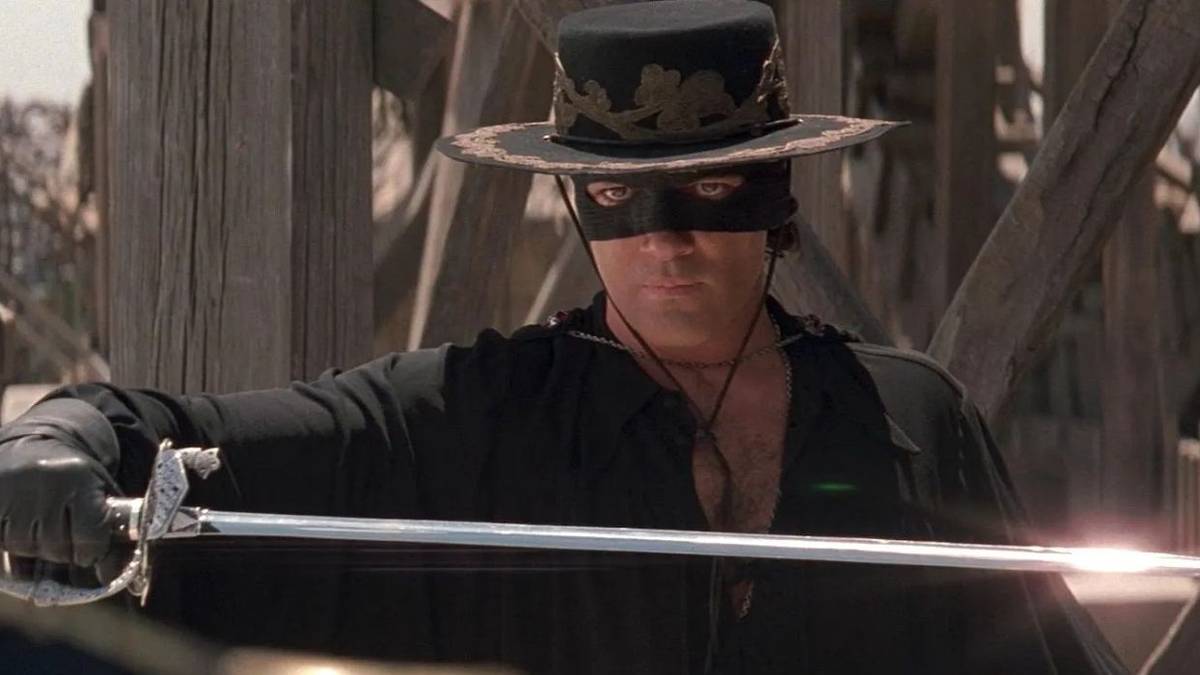
Since Johnston McCulley first created him in 1919, Zorro has served as an icon of Western adventure. In 1998, Martin Campbell revived the franchise after a decades-long hiatus, this time casting Anthony Hopkins as Diego de la Vega as he’s betrayed by a rival don. Seeking his revenge, he recruits a thief named Alejandro Murietta to become his successor, training him to be both a gentleman and a champion of the people of California.
The Mask of Zorro stands out as the perfect legacy sequel, continuing from the heyday of the character during the golden age, while also being something fresh and exciting. Its success was so strong that it practically revived the swashbuckler adventure genre overnight, paving the way for franchises like The Pirates of the Caribbean. A frontier tale of justice, revenge, and freedom, it marks the greatest big-screen take on the character since the ’40s.
Ravenous Is An Utterly Unique Part of Western Movie History

Despite being an unusually strong decade for the genre in the post-70s environment, the ’90s wound down with a year that, but for Antonia Bird’s Ravenous, would have been forgettable for Westerns. The movie focuses on US Army Captain Boyd as he’s sent to the remote Fort Spencer as punishment for cowardice in battle. Shortly after arriving, he joins a search party to rescue people said to be trapped with a sadistic cannibal, only to be framed for the killer’s crimes. What follows is a slow descent into frontier madness.
Ravenous is a Western that defies conventional norms, covering comedy, slasher, supernatural horror, Western, and war all in one fell swoop. Robert Carlyle manages to steal the show every time he’s on the screen as the brutal and sadistic Ives, turning in a decade-best villain performance for the genre. Westerns come in all forms, and Ravenous is proof that it’s at its best when it strives to be unique, dark, and unsettling.
Source link
