

In an evolving health landscape, emerging research continues to highlight concerns that could impact everyday wellbeing. Here’s the key update you should know about:
In this interview, industry expert Dongmin Choi explains the importance of automated imaging and colony picking. He dives into how they improve consistency, reproducibility, and data quality in cell-based workflows, enabling more efficient research and better long-term experimental insights.
Please can you introduce yourself and your role at Curiosis?
My name is Dongmin, and I am a sales manager at Curiosis. I work closely with distribution partners and researchers around the world, supporting both the introduction of our products and their application in real laboratory environments.
My role involves ensuring that our partners have the technical and commercial support they need, while also helping researchers understand how our systems can improve their workflows and data quality.
Before we get into the specific technologies, could you share some insight into the biggest challenges researchers face today in managing complex cell-based workflows?
Cell-based assays involve complex, multi-step processes, and one of the biggest challenges is maintaining consistency across experiments. Researchers often deal with significant manual labor, and human error can easily affect reproducibility.
Establishing standardized workflows and SOPs is critical, but not always easy to achieve. This is where automation systems play an important role, helping labs reduce variability, improve consistency, and generate more reliable data over long-term experiments.
Live cell imaging has become increasingly important in modern cell biology. From your perspective, what makes continuous, non-disruptive monitoring so valuable compared with more traditional endpoint analysis?
Continuous, non-disruptive monitoring allows researchers to observe dynamic cell behavior over time without disturbing the culture environment. Cells are highly sensitive to conditions like temperature, CO2, and humidity, so maintaining a stable environment is essential.
In the past, researchers typically relied on endpoint analysis, observing only the beginning and final states of an experiment. Now, with continuous monitoring, they can capture the entire process, gaining much deeper insight into how cells behave and respond over time.
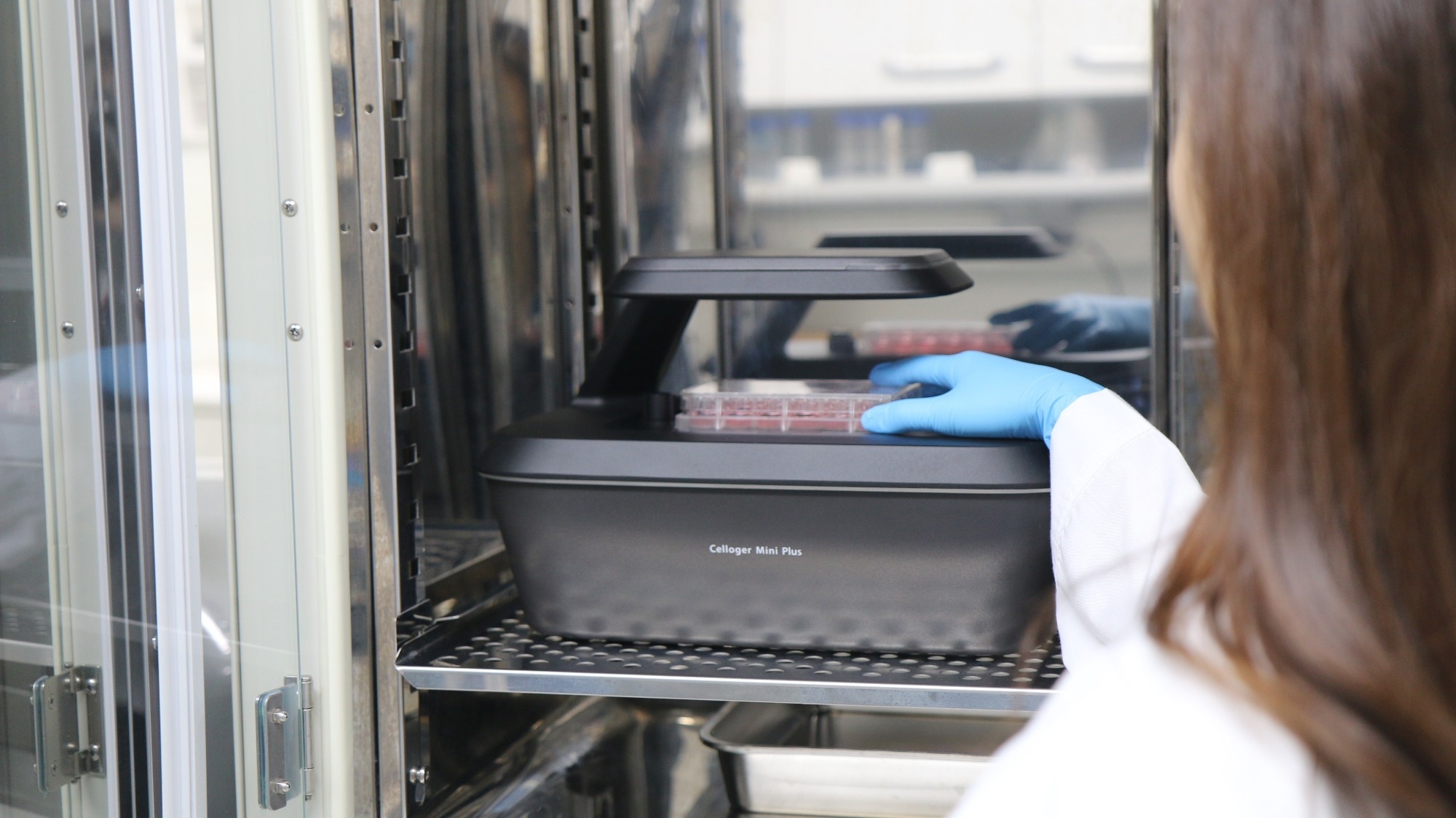
The Celloger series is designed for real-time monitoring inside an incubator. For researchers new to this area, how does this setup change how they can observe and understand dynamic cellular behavior?
By placing the imaging system directly inside the incubator, researchers can monitor cells continuously under stable conditions. This allows them to capture real-time changes more naturally and consistently. While some researchers may feel confident in manual observation, our focus is on improving data credibility and repeatability rather than just convenience.
Eliminating the need to remove samples reduces environmental disruption and helps ensure that results are more reliable and reproducible across experiments.
Image Credit: Curiosis Inc.
One of the key aspects that often interests researchers is application range. What kinds of studies is Celloger especially well-suited for, and what can scientists learn from those experiments?
Celloger is designed for long-term cell monitoring, so it is ideal for a wide range of studies. These include proliferation, confluence, morphology, migration, stem cell research, wound healing assays, and organoid growth.
Because the system includes fluorescence functionality, researchers can also measure fluorescence intensity and track biological processes in more detail. Overall, it enables scientists to better understand how cells respond and evolve over time under different conditions.
When speaking to labs that are considering adopting a live cell imaging system, what do they most often underestimate about the impact it can have on experiment quality or efficiency?
Many labs underestimate how much automation can improve reproducibility and efficiency. Some researchers believe that experienced personnel can outperform automated systems, but the real value lies in consistency. It is not about performing a task well once; it is about achieving the same quality hundreds or thousands of times.
Automated imaging reduces manual intervention, minimizes variability, and ultimately increases the credibility of experimental data.
Turning to the CPX-α, your newly launched colony picking system, can you explain why colony picking is such a critical step and where manual approaches typically fall short?
Colony picking is a critical step because it directly affects downstream cell line quality. In applications like antibody production, ensuring monoclonality is essential. Manual colony picking is often slow, labor-intensive, and inconsistent, which can introduce variability into the process.
Automated systems like the CPX-α improve accuracy and efficiency, helping ensure that the correct colonies are selected and reducing the risk of errors that could impact downstream results.
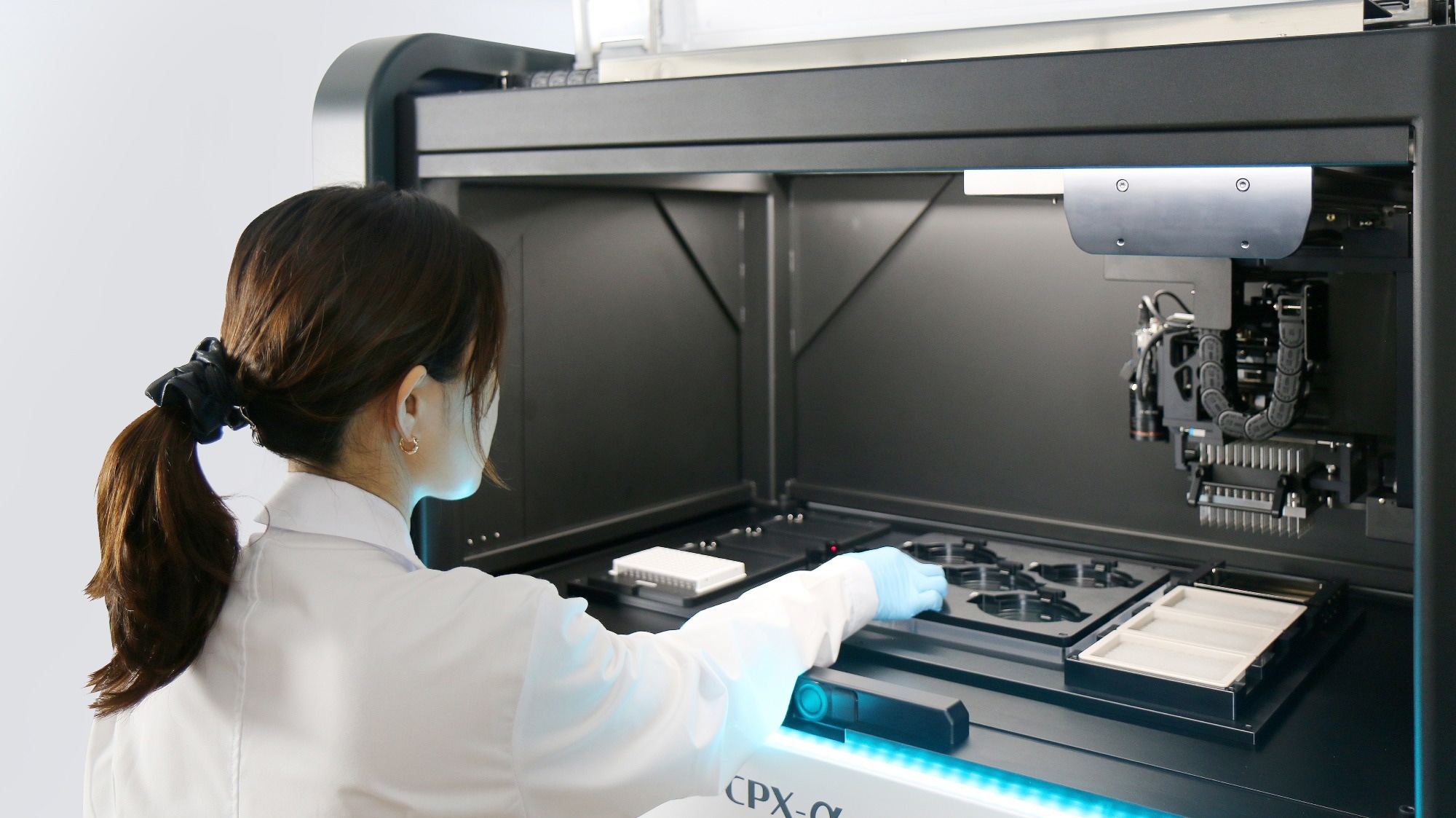
Image Credit: Curiosis Inc.
Both the Celloger and the CPX-α seem to support a broader push toward automation. How do you see these kinds of tools changing the balance between manual work and data-driven decision-making in the lab?
We believe that many laboratory workflows will shift toward automation in the near future. Automation systems, especially when combined with AI-driven analysis software, enable faster processing, higher consistency, and improved data quality. This shift allows researchers to focus more on interpreting results and making data-driven decisions rather than spending time on repetitive manual tasks.
When you speak with researchers, what do you think is the most important misconception to address about automated imaging or automated colony picking?
A common misconception is that automation is meant to replace human expertise. In reality, it is about enhancing consistency and reliability. I often tell researchers that the goal is not to outperform a human once, but to achieve the same high-quality result repeatedly. Automation ensures reproducibility at scale, which is critical for generating credible scientific data.
Since you recently launched the Celloger M22 and M26, could you provide an overview of these new systems and how they enhance the lab workforce?
The Celloger M22 and M26 build on the core capabilities of the Celloger series, including brightfield imaging and two-color fluorescence. The main difference lies in capacity. These systems can scan multiple plates simultaneously, either two or six plates, depending on the model, which makes them particularly well-suited for high-throughput screening environments such as drug discovery and pharmaceutical research labs.
By increasing throughput while maintaining consistent imaging conditions, they help labs handle larger workloads more efficiently without compromising data quality.
Looking ahead, what do you think labs will need most from the next generation of ools?
Labs will need tools that integrate more naturally into their daily workflows. Beyond technical performance, ease of use, standardization, and connectivity will become increasingly important. Automation will continue to play a major role, especially when combined with AI-driven analysis, enabling researchers to generate larger datasets and extract more meaningful insights. The ultimate goal is to support better science by making experiments more consistent, efficient, and actionable.
About Dongmin Choi 
Dongmin Choi holds a Bachelor of Business Administration in Marketing Management from De La Salle University and further studied marketing at Hongik University. As Key Account Manager at Curiosis, he works closely with partners and researchers to support the adoption of cell-based analysis technologies across laboratory and research environments.
About Curiosis
Curiosis Inc. develops, produces, and supplies laboratory equipment in the field of life science.
It provides solutions to improve the efficiency of cell-based research processes and aims to become a leading company in the bioindustry.
Drawing on core technologies in mechanical engineering, biophysics, and electrical engineering, Curiosis aims to provide high-quality products to its customers and contribute to a better future for humanity.
