

Studio Ghibli is one of the most notable and beloved animation studios, which has stood out for its unique visual and narrative style, and many others have taken inspiration from its works. The list of the best movies of all time has some animated works from different animation studios, though the one that stands out is Disney. While the Mouse House has been key in the development of animation, other studios have won the audience over with their unique styles and high quality.
One of them is Studio Ghibli, founded in 1985 by Hayao Miyazaki, Toshio Suzuki, Isao Takahata, and Yasuyoshi Tokuma. Studio Ghibli’s first movie was Castle in the Sky, released in 1986, and since then, the studio has produced a total of 24 movies, two of them TV films, all of them with the studio’s trademark visual style of bright and whimsical watercolor and acrylic hand-drawn scenarios and characters. On top of that, Studio Ghibli has stood out for covering maturing themes in its movies, from identity and love to war and environmentalism.
Every Studio Ghibli Film, Ranked From Worst To Best
Studio Ghibli and Hayao Miyazaki have made some of the best animated films of all time, but some of their anime movies are better than others.
As such, Studio Ghibli has become one of the most beloved and influential studios in the world of animation, with many others, both big studios and smaller ones, taking note. There’s a variety of movies out there that are perfect for those into Studio Ghibli’s works, whether due to their similar aesthetic, animation style, stories, themes, and/or fantasy elements.
The Boy and the Beast (2015)

The Boy and the Beast is a Japanese animated adventure movie written and directed by Mamoru Hosoda. The Boy and the Beast is the story of a lonely nine-year-old boy named Ren, who ends up in a parallel world of beasts. There, he becomes the apprentice of warrior bear Kumatetsu, with whom he forms a father-and-son bond. At the time of writing, The Boy and the Beast holds a 90% critics’ score on Rotten Tomatoes.
The Boy and the Beast has a beautiful hand-drawn style reminiscent of Studio Ghibli movies, along with a heartwarming coming-of-age story, exploration of family bonds, fantasy elements, and character development that will appeal to Ghibli fans.
Suzume (2022)

Suzume is a Japanese coming-of-age fantasy movie written and directed by Makoto Shinkai. Suzume is the story of the title character, a 17-year-old high school girl, who teams up with Souta to close supernatural doors across Japan to prevent destructive earthquakes caused by a supernatural worm.
Suzume is the third installment in Shinkai’s disaster trilogy, along with Your Name and Weathering with You.
Suzume’s strong female lead is fitting with many Ghibli movies, along with its blend of magic, environmental themes, and a mission that also includes breaking a curse. Suzume’s themes of resilience, grief, memory, loss, and love will resonate with Ghibli fans and will remind them of some of the studio’s best works.
A Letter to Momo (2011)

A Letter to Momo is a Japanese drama movie written and directed by Hiroyuki Okiura. A Letter to Momo introduces viewers to Momo Miyaura, an 11-year-old girl dealing with the death of her father. Momo and her mother move from Tokyo to a rural island, where, in the attic of her new house, she finds three yokai (goblins) that are invisible to adults. These creatures are quite chaotic and mischievous, but they end up being key to Momo processing her grief.
Like many other movies on this list, A Letter to Momo is perfect for Ghibli fans thanks to its hand-drawn animation and fantasy elements. A Letter to Momo’s exploration of grief through fantasy characters like the yokai is reminiscent of the emotional journey Satsuki and Mei go through in My Neighbor Totoro with the help of Totoro and other creatures. A Letter to Momo, then, is an emotional ride with beautiful visuals.
The Deer King (2021)

The Deer King is a Japanese fantasy movie directed by Masashi Ando and Masayuki Miyaji. Based on the fantasy novel series of the same name by Nahoko Uehashi, The Deer King follows a former soldier named Van, who is a slave at a salt mine and survives being attacked by wild dogs. Yuna, a young girl, is also a survivor, and they are pursued for their natural immunity to the Black Wolf Fever.
The Deer King will resonate with Ghibli fans not just thanks to its themes and setting in a world with tension between humans and animals, but also because of its connection to the studio. Ando was the chief animation director for Princess Mononoke and Spirited Away, while Miyaji served as assistant director on the latter, so The Deer King is guaranteed to appeal to Ghibli fans.
The Glassworker (2024)

The Glassworker is a Pakistani anti-war romantic drama movie directed by Usman Riaz. The Glassworker introduces the audience to Vincent, a young glassblower who falls in love with Alliz, the daughter of a nationalistic army colonel. This, along with the ongoing war, put their romance to the test, as Vincent and Alliz face family pressure, ideological differences, and more.
The Glassworker is Pakistan’s first hand-drawn animated movie.
The Glassworker is clearly influenced by Studio Ghibli, and even had Geoffrey Wexler, who worked for Ghibli, helping with the movie’s production. The Glassworker’s beautiful animation, with detailed backgrounds, its focus on artisan skills (which can be found in Ghibli movies like Whisper of the Heart), and its anti-war themes will also appeal to fans of Ghibli’s works, while also providing a powerful message about current conflicts.
Flow (2024)

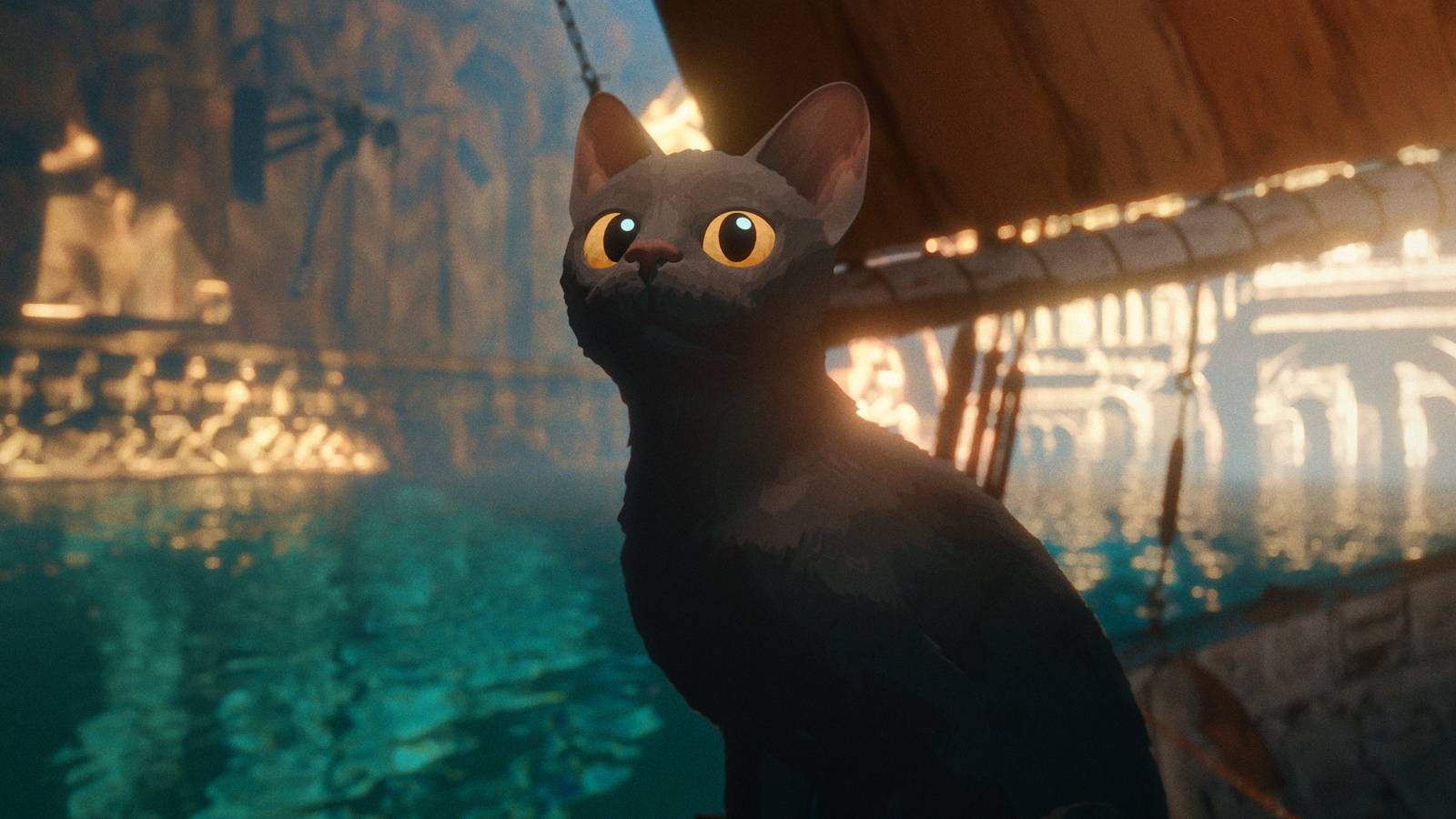
Flow is an animated dystopian adventure movie directed by Gints Zilbalodis. Flow follows a dark grey cat in a post-apocalyptic world, doing its best to survive. After its home is destroyed in a flood, the cat joins a capybara, a bird, a lemur, and a dog on a boat as they all try to survive this world. Flow is the first Latvian movie to win an Academy Award.
Flow has beautiful animation that, even though it’s digital, has a hand-drawn style and unique vibe that makes it stand out from modern animated movies. Flow’s themes of environmentalism, friendship, and community fit Ghibli’s style, as does its portrayal of animals without human traits or cartoonish elements. On top of that, Flow stands out for having no dialogue, thus fully relying on its animation and sound.
Your Name (2016)

Going back to Shinkai’s disaster trilogy, Your Name is a romantic fantasy movie and the first installment in this series. Your Name follows rural girl Mitsuha and Tokyo boy Taki, who suddenly and mysteriously begin to swap bodies. Mitsuha and Taki bond through notes they leave for each other, but there’s a twist: Mitsuha is three years in the past, and her town was destroyed. Taki decides to try to save her, but there are many challenges ahead.
Your Name’s magical elements, emotional depth, coming-of-age story, twists, and complexity will definitely attract fans of Studio Ghibli, along with the movie’s beautiful animation. Your Name also includes Japanese culture and an appreciation of the little things in everyday Japanese life, an element found in Ghibli movies that has granted them their status as “comfort” movies.
A Whisker Away (2020)

A Whisker Away is a Japanese animated romantic fantasy movie directed by Junichi Sato and Tomotaka Shibayama. A Whisker Away is the story of Miyo, a 14-year-old girl with a difficult family dynamic, who has a crush on Kento, who often stays away from her. Miyo acquires a magical Noh mask that turns her into a cat, and so she gets close to Kento while in her cat form. As Kento grows fond of her as a cat, Miyo has to decide whether to stay human or become a cat.
Like many Ghibli movies, A Whisker Away blends fantasy, whimsical elements, and magic with a deeply emotional story and a main character who goes through a very personal journey. A Whisker Away is all about identity, love, and acceptance, while also exploring the vulnerability and struggles of teenagers.
Mary and the Witch’s Flower (2017)

Mary and the Witch’s Flower is a Japanese fantasy movie directed by Hiromasa Yonebayashi and based on Mary Stewart’s 1971 book The Little Broomstick. Mary and the Witch’s Flower follows a young girl named Mary, who finds a magical flower in a nearby forest that gives her the power to become a witch for one night. Mary flies on a magical broomstick to Endor College, a school for witches, where she makes a dark discovery.
The animation style of Mary and the Witch’s Flower is very much like that of a Ghibli movie, and with good reason, as many animators who worked on it come from Studio Ghibli. Mary is also reminiscent of some of Ghibli’s main female characters, especially those who go on magical journeys that lead to self-discovery.
Luca (2021)

Luca is a fantasy film directed by Enrico Casarosa and produced by Pixar. Luca takes viewers back to the 1950s and to the Italian Riviera to meet Luca, a young sea monster boy who can take human form on land. Luca uses this ability to explore the town of Portorosso, along with his new friend and fellow sea monster Alberto. The two enter a triathlon in hopes of winning a Vespa to travel the world, but they have to be careful and hide their true identity, as the townspeople fear sea monsters.
Luca leans more towards a “slice-of-life” type of story rather than a major adventure, like most Pixar movies, instead focusing more on the personal journeys of its characters, their friendship, dreams, and the beauty of daily life, very much like most Ghibli movies. Luca has a warmer style reminiscent of Ghibli movies, and its town, Portorosso, is a reference to Ghibli’s Porco Rosso.

- Release Date
-
June 18, 2021
- Runtime
-
95 MINUTES
- Director
-
Enrico Casarosa
-

Jacob Tremblay
Luca Paguro (voice)
-

Jack Dylan Grazer
Alberto Scorfano (voice)
Source link
