

AI Is Rewriting Compliance Controls and CISOs Must Take Notice
By Itamar Apelblat, CEO & Co-Founder, Token Security
For decades, compliance frameworks were built on an assumption that now feels outdated: humans are the primary actors in business processes. Humans initiate transactions, humans approve access, humans interpret exceptions, and humans can be questioned when something goes wrong.
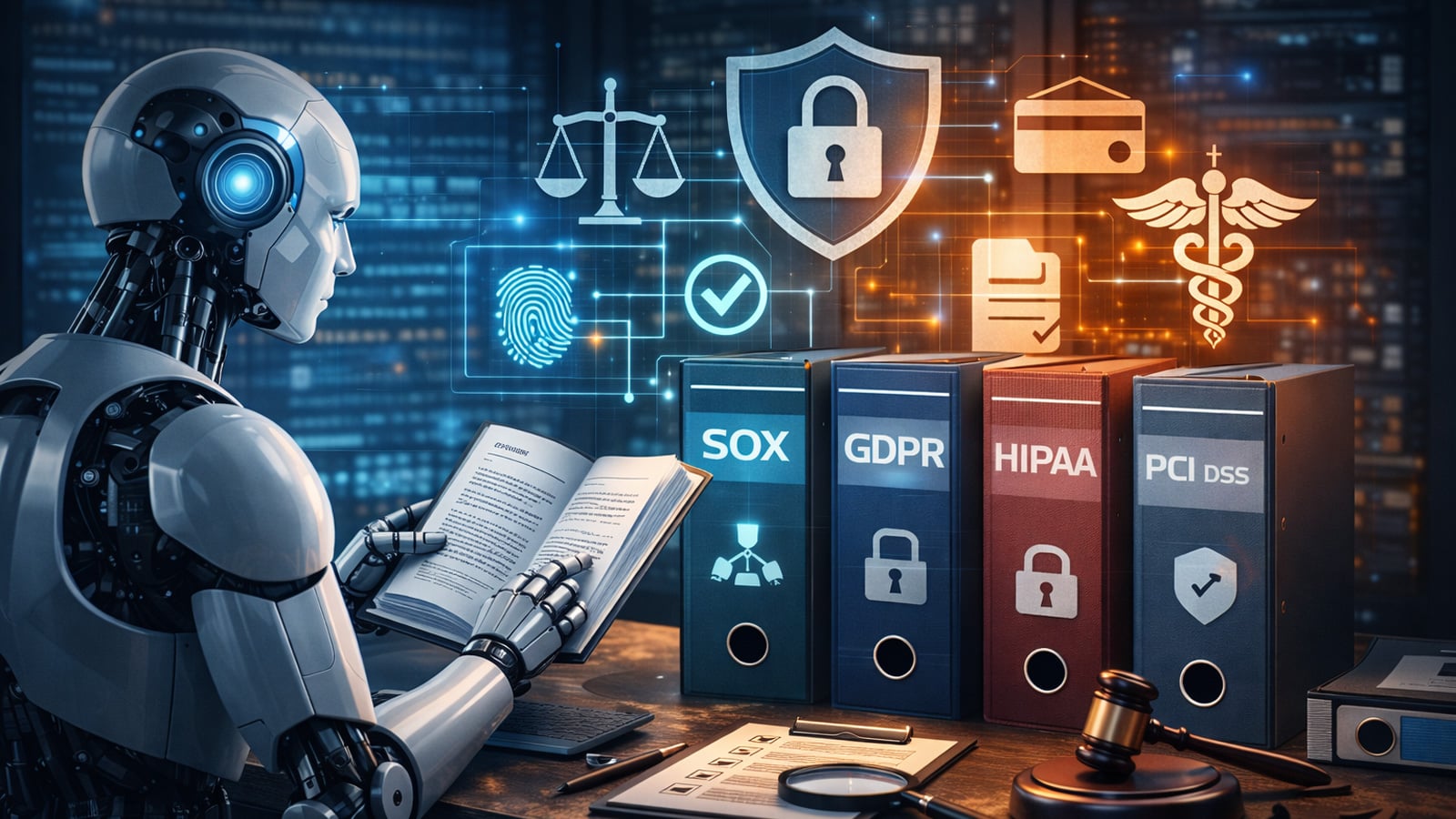
That premise sits at the core of regulatory mandates, like SOX, GDPR, PCI DSS, and HIPAA, which were designed around human judgment, human intent, and human control.
But, AI agents are now changing the operating model of modern enterprises faster than compliance programs can adapt.
AI has evolved beyond “copilots” and productivity tools. Increasingly, agents are being embedded directly inside workflows that affect financial reporting, customer data handling, patient information processing, payment transactions, and even identity and access decisions themselves.
These agents don’t simply assist; they act. They enrich records, classify sensitive data, resolve exceptions, trigger ERP actions, access databases, and initiate workflows across internal systems at machine speed.
That shift introduces a new compliance reality. The moment AI agents begin executing regulated actions, compliance becomes inseparable from security. And as that line blurs, CISOs are stepping into a new and uncomfortable risk category where they may be held responsible not only for breaches, but also for compliance failures triggered by AI behavior.
Compliance Frameworks Were Built for Predictable Actors
SOX, GDPR, PCI DSS, and HIPAA all assume that “actors” can be understood and governed. A human user has a job role, a manager, and a clear chain of responsibility. A system process is deterministic and repeatable. Controls can be tested periodically, validated quarterly, and assumed stable until the next audit.
AI agents don’t operate in that manner.
They reason probabilistically. They adapt to context. They change behavior based on prompts, model updates, retrieval sources, plugins, and shifting data inputs. A control that works today may fail tomorrow, not because anyone intentionally altered it, but because the agent’s decision pathway drifted.
This is a foundational compliance problem. Regulators do not care that the system “usually” behaves correctly. They care whether you can prove, continuously, that the organization is operating within defined control boundaries.
AI makes that far harder and that burden is increasingly shifting toward the CISO.
AI agents now act inside regulated workflows, creating new identity, access, and compliance risks.
This guide helps CISOs understand how to govern non-human identities, enforce least privilege, and maintain auditability as AI becomes an operational actor.
The Real Risk: AI Collapses Segregation, Access Boundaries, and Accountability
Compliance breakdowns rarely happen because a single control fails. They happen because systems allow a chain of actions that should never have been possible. AI agents create exactly that scenario.
To make agents useful, many organizations deploy them with broad permissions, shared credentials, unclear ownership, and long-lived access tokens. These are the same shortcuts security teams have spent years trying to eliminate and now they are being reintroduced under the banner of innovation. This undermines core compliance expectations:
SOX: Financial Controls and Reporting Integrity
AI agents can draft journal entries, reconcile accounts, resolve exceptions, and trigger workflow approvals. If an agent has access across finance and IT systems, segregation of duties can collapse silently. Worse, AI-driven decisions often cannot be explained in a way auditors can validate. Logs show what happened, but not why. This impacts whether an organization can properly ensure the integrity of financial reporting.
GDPR: PII Exposure and Processing Violations
Under GDPR, unauthorized access to personal data, accidental processing outside intended purposes, or inappropriate retention can trigger enforcement actions, even without a classic breach. An AI agent that pulls PII into a prompt, exports customer data to external tools, or logs sensitive data into unsecured systems may create a compliance incident instantly.
PCI DSS: Payment Data Handling and Restricted Environments
PCI compliance is built around strict segmentation and controlled access to cardholder data environments. AI agents that query payment databases, handle transaction records, or integrate with customer support systems can accidentally move card data into non-compliant systems, outputs, or logs. This can break PCI controls even if no attacker is present.
HIPAA: PHI Handling and Auditability
HIPAA requires not only confidentiality of PHI, but also detailed audit trails of access and disclosure. AI agents that summarize patient notes, pull data for analysis, or automate intake workflows may touch PHI in ways that are difficult to trace. If the organization cannot prove appropriate access controls and monitoring, that becomes a compliance risk even without malicious intent.
In each of these frameworks, the organization is accountable for what happens to regulated data and regulated workflows. When AI agents are the ones acting inside those systems, accountability doesn’t disappear. It simply shifts toward whoever controls identity, access, logging, and security governance.
This is why CISOs must take notice of this compliance challenge. This is why many organizations are beginning to treat AI agents as non-human identities that require the same governance, access controls, and monitoring as privileged users.
Why CISOs Could Be Held Responsible
Historically, compliance was shared across Finance, Legal, Privacy, and Audit. Security supported these programs, but wasn’t always viewed as the control owner.
AI changes the compliance equation because the risks it now lands squarely in the domains security teams already govern.
The moment AI agents begin operating inside regulated workflows, questions of compliance quickly become questions of identity and access: Who (or what) is the agent acting as? What permissions does it hold? How are its credentials stored and rotated? Can its behavior be monitored in real time, and can you detect when that behavior begins to drift from the agent’s original intent?
This is why AI compliance risk doesn’t sit neatly inside Finance, Legal, or Audit anymore. It lives in the same control surface as privileged access, change management, and system integrity.
Prompt updates, model swaps, plugin changes, or shifts in upstream data can subtly alter what an agent does without triggering any traditional compliance alarm bells. And when something goes wrong, the evidence required to explain and defend those actions depends on audit logging, data loss prevention, and the ability to prove that sensitive information didn’t escape into unapproved tools, repositories, or third-party services.
In other words, compliance doesn’t fail in the AI era because someone forgot to check a box. It fails because the agent had more access than anyone realized. Because its behavior changed quietly over time. Because controls were assumed stable rather than continuously verified. Because audit trails were incomplete or couldn’t explain intent. Because sensitive data ended up somewhere it shouldn’t have.
And because when leadership is asked to account for the incident, no one can clearly articulate why the agent made the decision it did.
These are classic security governance breakdowns just wearing a compliance label. And as regulators tighten expectations, “the AI did it” is quickly becoming one of the least acceptable explanations an organization can offer.
In practice, the CISO becomes the executive responsible for ensuring AI agents can be trusted as digital actors inside regulated workflows. That means ensuring they have clear ownership, least-privilege access, monitored behavior, and documented change control. Without those foundations, CISOs may find themselves answering uncomfortable questions from auditors, boards, and regulators.
The Bottom Line
AI agents are becoming operational participants in systems that were never designed for non-human decision-makers. This is no longer just a security issue. It’s a compliance reckoning.
SOX controls, GDPR safeguards, PCI segmentation, and HIPAA auditability all depend on predictable behavior and traceable accountability. AI introduces behavior drift, opaque decision-making, and the temptation to grant broad privileges just to make it work.
As a result, CISOs are no longer only protecting infrastructure. They are increasingly responsible for ensuring regulated workflows remain defensible when digital actors execute them.
In the age of AI agents, the question won’t be whether something went wrong. It will be whether you can prove you were in control when it did. And, when regulators come looking for accountability, the CISO will be one of the first names on the list.
For CISOs navigating this shift, the question is no longer whether AI will impact compliance, but how to maintain control when non-human actors are executing regulated workflows. The CISO’s Guide to Agentic AI and Non-Human Identity Security outlines the governance, access, and monitoring foundations required to keep AI-driven systems auditable, defensible, and regulator-ready.
Download the free CISO’s Guide and learn how to govern AI agents and other non-human identities.
Sponsored and written by Token Security.
Source link
