

In an evolving health landscape, emerging research continues to highlight concerns that could impact everyday wellbeing. Here’s the key update you should know about:
In this interview, News Medical speaks with Yavuz Çelik, Global Product Manager at Hamilton, about how real-time cell density monitoring enhances yield, viability, and process efficiency in biopharmaceutical production.
Can you please introduce yourself and your role at Hamilton Process Analytics?
My name is Yavuz Çelik, and I’m a Global Product Manager at Hamilton Process Analytics. My focus is on cell density sensors, and in my role, I help guide the development and application of technologies that provide real-time insights into bioprocesses. These include our Incyte Arc and Dencytee Arc sensors, which offer reliable, scalable, and automated solutions for monitoring viable and total cell density across various bioreactor types.
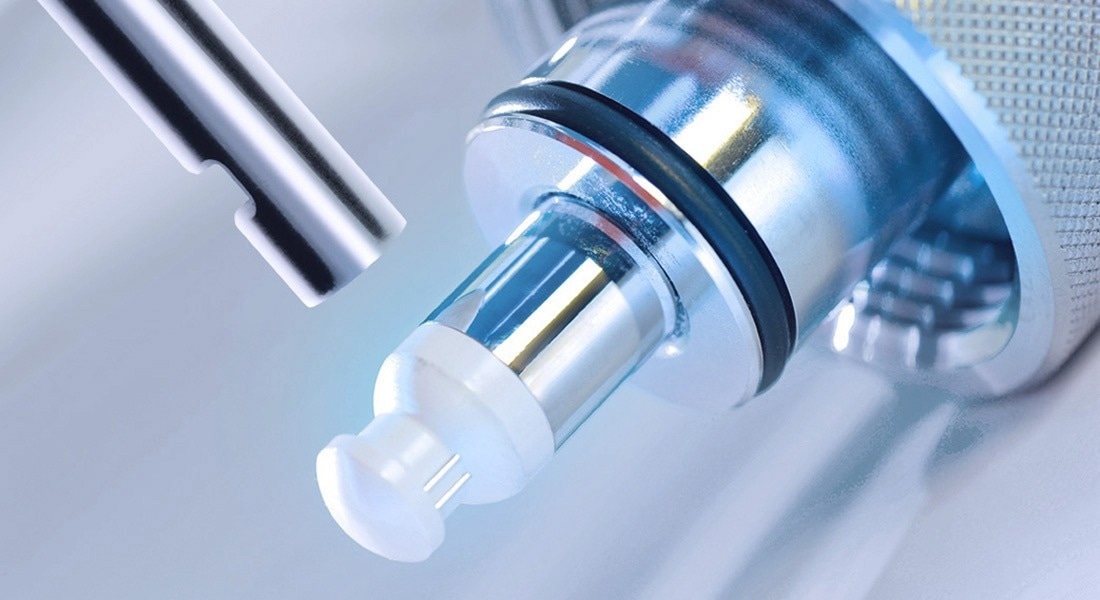
Hamilton Cell Density Sensors. Image Credit: Hamilton
What technologies does Hamilton offer for cell density monitoring, and how do they work?
We offer two key sensor platforms: Incyte Arc, which measures viable cell density, and Dencytee Arc, which measures total cell density.
Incyte Arc uses biocapacitance spectroscopy. It creates an electromagnetic field using four platinum electrodes. Living cells with intact membranes become polarized and carry charge, which we measure to determine viable cell concentration. Dead cells do not respond because their membranes are compromised.
Dencytee Arc combines transmission and reflection measurements. At lower turbidities, it measures transmitted light; as cell density increases and the medium becomes more opaque, it switches to reflection. This dual principle gives a broad, accurate range of measurement across all cell concentrations.
How is real-time cell density monitoring being applied in space research?
We are actually preparing our sensors for space applications. At the University of Bremen, scientists tested Dencytee Arc in experiments simulating long-term space missions. Over 180 days, the sensor showed no drift and delivered data closely matching offline OD and biomass readings. This is crucial because if anything fails in space, you can’t just fix it. Our sensors offer reliability, robustness, and low-maintenance performance, even in such extreme scenarios.
How are your sensors improving downstream processing in biopharma?
In a recent study with Boehringer Ingelheim, our Dencytee Arc sensor was used to monitor turbidity before and after centrifugation, which helps protect downstream filtration systems. By maintaining turbidity below a set threshold, clogging is reduced and filter lifespan is extended. With the sensor’s wide measurement range, a single device can monitor all three critical points: after the bioreactor, after the centrifuge, and at the waste line. This adds value by simplifying integration and saving costs.
Can you explain how real-time cell density improves perfusion processes?
In perfusion, particularly cell-specific perfusion rate (CSPR) strategies, real-time viable cell density (VCD) data is essential. In our study, Incyte Arc measured VCD every 30 minutes, enabling automated adjustment of media flow. Compared to traditional perfusion:
- Cell density increased by 30 %
- Media consumption dropped by 25 %
- Product yield rose by 40 %
These results show feedback-controlled perfusion with VCD sensors leads to higher productivity and lower batch costs.
How does real-time cell density data help with scaling between bioreactor types?
We provide single-use and reusable sensors using the same principles and electronics. Whether using a 300 mL benchtop STR or a 10,000 L production bioreactor, our sensors deliver consistent, reliable data. We demonstrated identical performance from 3 L to 200 L bioreactors in one study. This consistency simplifies scale-up and reduces time to market.
How does cell density data improve process consistency and viability modeling?
Monitoring VCD allows us to create a “fingerprint” of the process, ensuring each batch follows the same growth profile. For CDMOs, this is especially valuable because it supports documentation and consistency for regulatory submissions.
We also collaborated with EMGEN to build a viability model by combining our permittivity sensor with an optical density sensor. This model had a 96 % accuracy within a 5 % error margin, meeting stringent engineering requirements.
Cell Density eBook – What are the Many Applications of Cell Density Sensors?
Does cell density monitoring contribute to cost reduction?
Yes, and in multiple ways. First, it enables higher cell densities in the same bioreactor volume, which leads to greater product yields. Second, less media is consumed, and third, offline sampling is reduced, which cuts labor and assay costs.
Every offline sample carries risks of contamination and delay, whereas inline sensors are non-invasive, sterile, and provide continuous real-time data that supports automation and better decision-making.
Why is it important to measure cell density in addition to other parameters like pH, DO, or metabolites?
pH, DO, and metabolite levels are critical but only describe the environment. Cell density tells you how the cells are responding. For example, if glucose drops quickly, is it because of rapid cell growth? If CO2 builds up, is it harming the cells? VCD sensors help correlate environmental changes with cellular responses, giving you a complete understanding of your process.
Cells are the engine of bioproduction. Monitoring them directly is essential.
About Yavuz Çelik
Yavuz Çelik is the Global Product Manager for Cell Density Sensors at Hamilton Process Analytics, where he leads the development and application of advanced bioprocessing sensors, including the Incyte Arc and Dencytee Arc platforms. With a background in biotechnology and process control, Yavuz is an expert in biocapacitance spectroscopy and sensor integration for upstream and downstream workflows. His work focuses on enabling real-time, scalable, and automated bioprocess monitoring solutions to support pharmaceutical innovation.
Through collaborations with industry leaders and academic institutions, Yavuz has contributed to studies spanning applications from space biology to commercial perfusion processes. He regularly presents at industry conferences and webinars, sharing insights on how data-driven sensor technologies can increase yield, reduce costs, and support regulatory compliance.
About Hamilton Bonaduz AG
The field of process analytics is one of Hamilton’s fastest-growing business units. In 1989, the company developed its first pH sensors and has been growing continuously ever since. Today, the portfolio includes parameters such as pH, ORP, CO2, conductivity, dissolved oxygen, as well as total and viable cell density. With a focus on the biopharmaceutical industry, this business unit addresses challenges in process analytics with groundbreaking developments. The Arc sensors represent an important innovation of recent years, since the integrated micro-transmitters render external transmitters unnecessary. For the steadily growing single-use sector, Hamilton also offers specialized pH, oxygen, conductivity, and cell density sensors. In addition to sensors, the process analytics division supplies the corresponding cables, fittings, transmitters, buffers, standards, and accessories.
Hamilton’s history began in the late 1940s in California. Today, the company has a global presence with headquarters in Reno, Nevada; Franklin, Massachusetts (both USA); Bonaduz and Ems (both Switzerland); Timisoara (Romania); as well as sales offices around the world. Together with its subsidiaries and more than 3,000 employees, Hamilton is a leader in the development and production of liquid handling, process analytics, robotics, medical technology, and automated storage solutions.
