Blackouts hit parts of Tehran as Israel conducts strikes in Iran amid peace talks
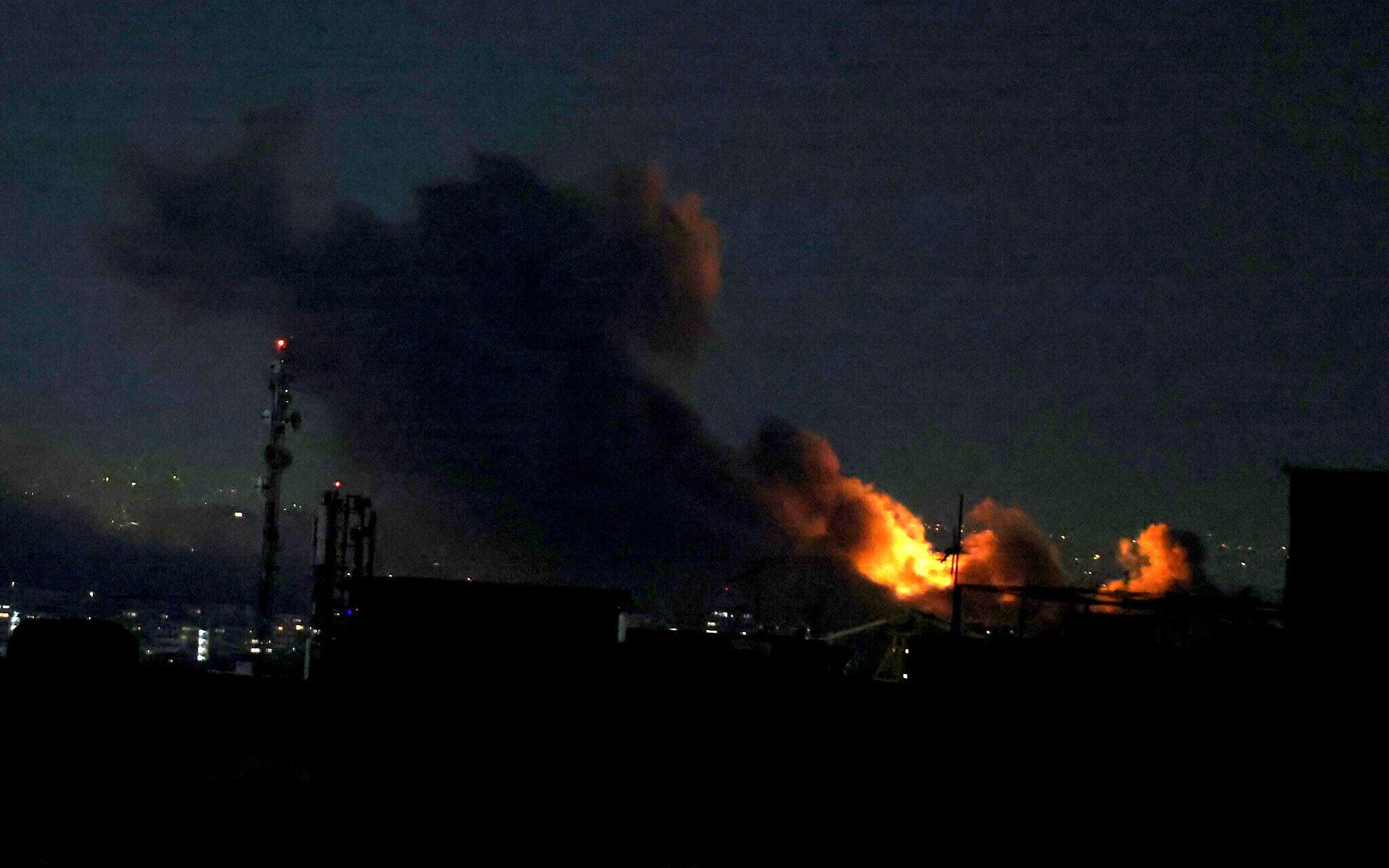
Electricity was cut in parts of Tehran and the neighboring Alborz province Sunday night after attacks on power infrastructure in the area, state media quoted Iran’s Energy Ministry as saying, as the IDF announced a new wave of airstrikes in the Iranian capital.
Shrapnel hit a part of the electricity grid in Alborz, causing power to be cut in several areas of the Iranian capital and the city of Karaj, state media reported. Power was restored later Sunday night to some areas that had experienced outages, and authorities were working to restore electricity in all affected areas, state media said, adding that “the electric grid is stable.”
The strike came amid talks to end the war in Iran, which began when the US and Israel launched a bombing campaign against the Islamic Republic on February 28 in a bid to destabilize the regime and destroy its ballistic missile and nuclear programs. Iran has responded with missile and drone strikes in Israel and across the region.
US President Donald Trump had previously threatened strikes on Iranian power plants unless Iran stops blocking the Strait of Hormuz, a key pathway for the global oil supply. But he postponed the deadline for Iran to open the strait until April 6 to allow time for negotiations over a US proposal to halt the fighting. Iran has reportedly responded with its own proposal calling for attacks to end, reparations and Iranian control over the Strait of Hormuz.
Pakistan said Sunday that it was preparing to soon hold “meaningful talks” to end the conflict. However, it was unclear if Iran or the US had agreed to attend, and a top Iranian official has accused the US of publicly pushing negotiations while privately planning an invasion.
Shortly after the blackouts were first reported Sunday night, the IDF said it was striking regime targets in Tehran, without elaborating.
In an earlier wave of strikes on Tehran Sunday morning, Israeli Air Force jets dropped over 120 bombs on arms production sites, as well as air defense systems and ballistic missile storage and launch sites, the military said.
⭕️24 HOUR RECAP: 150+ fighter jets have used 120+ munitions in strikes on infrastructure sites in Tehran
Targets included:
• A site for the development of critical components for ballistic missiles
• A site used by the IRGC’s military industries for the research and… pic.twitter.com/Q9wPhJjWLN— Israel Defense Forces (@IDF) March 29, 2026
According to the IDF, the targeted manufacturing sites included a facility where “essential” components for ballistic missiles were developed; a complex belonging to the Islamic Revolutionary Guard Corps, used for research and development of ballistic missiles and satellite launchers; and a weapons research, development, and production site of the Iranian army.
Separately, the International Atomic Energy Agency said Iran’s heavy water production plant at Khondab, which the country said was attacked on Friday, has suffered severe damage and is no longer operational.
The installation contains no declared nuclear material, the UN nuclear watchdog added in a social media post on X.
Pakistan ‘honored’ to host talks as Iran said to float proposal
Efforts to end the conflict have drawn the support of countries across the region. The foreign ministers of Turkey, Saudi Arabia, and Egypt attended a meeting convened by Pakistan to review progress in bringing the United States and Iran to the negotiating table to end the war, the Pakistani Foreign Ministry said Sunday, without elaborating.
Islamabad has emerged as a mediator, having relatively good ties with Washington and Tehran, after what Pakistani officials call weeks of quiet diplomacy.
Speaking after the meeting with his regional counterparts on Sunday, Pakistan’s Foreign Minister Ishaq Dar said, “Pakistan is very happy that both Iran and the US have expressed their confidence in Pakistan to facilitate the talks. Pakistan will be honored to host and facilitate meaningful talks between the two sides in the coming days.”
Pakistan later said foreign ministers had departed for their home countries. The talks were originally scheduled to continue Monday.
There was no immediate word from Washington or Tehran, and it was unclear whether discussions on the monthlong war would be direct or indirect. Pakistan’s foreign ministry did not answer questions, and Iran’s mission to the United Nations declined to comment.
Egyptian Foreign Minister Badr Abdelatty said the meetings in Pakistan are aimed at opening a “direct dialogue” between the US and Iran, which have largely communicated through mediators.
Iranian officials have rejected the US’s 15-point “action list” as a framework for a possible peace deal and publicly dismissed the idea of negotiating under pressure. But Iran’s state broadcaster has reported that Tehran drafted its own five-point proposal, reportedly calling for a halt to killing Iranian officials, guarantees against future attacks, reparations and Iran’s “exercise of sovereignty over the Strait of Hormuz.”
Iran has eased some restrictions on commercial ships in the strait, agreeing late Saturday to allow 20 more Pakistani-flagged vessels to pass through. It “sends a clear signal that Iran remains open for business with the world, provided the United States abandons coercion,” said Asif Durrani, Pakistan’s former ambassador to Iran.
An adviser to the United Arab Emirates, Anwar Gargash, called for any settlement to the war to include “clear guarantees” that Iranian attacks on neighbors will not be repeated. He said Iran’s government has become “the main threat” to Persian Gulf security, and called for compensation for attacks on civilian infrastructure.
IRGC says Israeli, US officials’ homes now fair game
Meanwhile, Iran’s joint military command spokesperson Ebrahim Zolfaghari declared on Sunday that the private residences of US and Israeli officials have now become legitimate targets for Iran.
Zolfaghari said the decision was made after the US and Israel have targeted residential homes of Iranians in various cities across Iran.
The threat was aimed at US and Israeli military and political officials living in the Middle East, including Israel.