

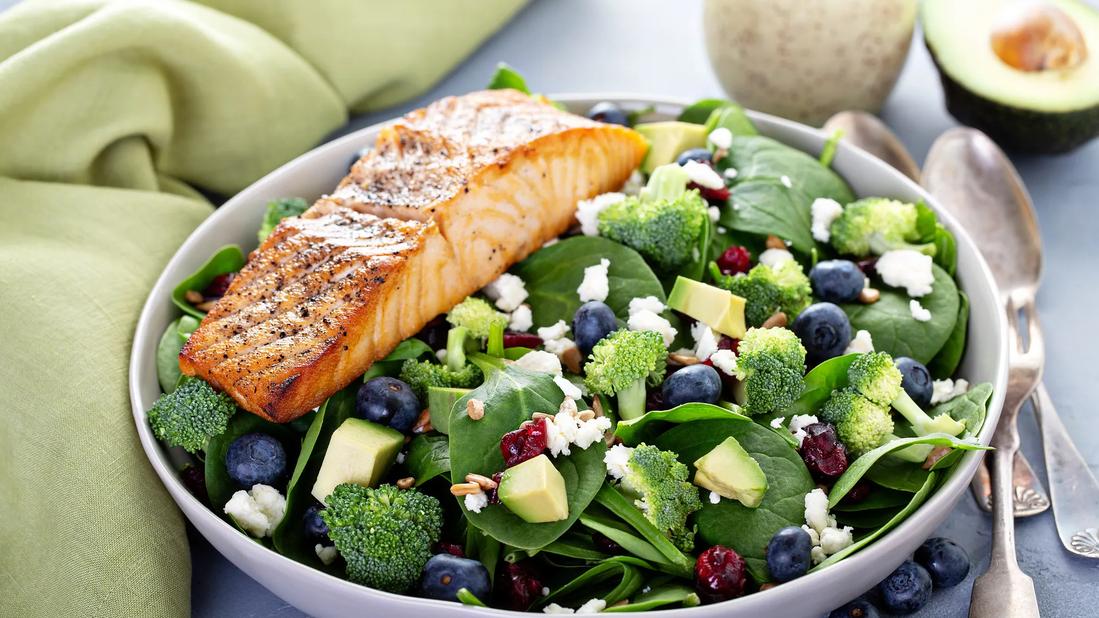
If, as the saying goes, “You are what you eat,” then the foods in your diet can have a profound impact on your body. And some of them can also boost your mind.
Advertisement
Cleveland Clinic is a non-profit academic medical center. Advertising on our site helps support our mission. We do not endorse non-Cleveland Clinic products or services. Policy
“Different diets have been suggested over the years for optimal brain health, and we have strong evidence for some,” says memory and cognitive health specialist Babak Tousi, MD.
Dr. Tousi explains which “brain foods” can help with memory, concentration and more.
Foods linked to better brain health
As you age, your brain experiences a decrease in both white matter and gray matter — two types of tissue that play important roles in your brain’s everyday ability to function.
“But various foods and eating styles can help combat these age-related brain changes and decrease the risk of diseases like Alzheimer’s,” Dr. Tousi says.
In fact, research suggests that up to 40% of dementia cases may be related to a few modifiable risk factors, including diet. So, if you’re looking for ways to boost your brainpower, consider making changes to what you eat.
Dr. Tousi explains which foods could help.
Fish
There’s strong evidence that fish can slow brain degeneration. That’s thanks to omega-3 fatty acids, which are known to benefit learning and improve memory.
Look for fish that are high in omega-3s, but low in mercury, like:
- Salmon
- Tuna
- Herring
- Sardines
Berries
When it comes to cognitive health, berries get a special call-out from other types of fruits. Various studies show that these little fruits can have a positive impact on age-related neurodegenerative diseases.
“Berries are recommended for brain health due to their vitamins, minerals and fiber,” Dr. Tousi explains. “They’re also high in anthocyanins, a group of deep red, purple and blue pigments that help protect and improve brain function.”
Some delicious berries to add to your diet include:
- Blueberries
- Strawberries
- Blackberries
Whole grains
Switching out refined carbohydrates for whole grains could have a positive impact on your brain. Whole grains are associated with less inflammation, lower blood pressure and lower cholesterol — all of which are linked to better brain function.
Plus, Dr. Tousi says that these complex carbohydrates break down more slowly in your body and release their sugars gradually. That’s a good thing.
“When you eat white bread, it breaks down quickly into sugar,” he explains. “But the complex carbs in whole grains break down at a much slower pace, which allows your body to function more efficiently.”
Try swapping out simple carbs with whole-grain substitutions like:
- Whole-grain bread
- Whole-grain pasta
- Brown rice
- Quinoa
- Oatmeal
- Buckwheat
Leafy greens
Eating just one to two servings of leafy greens per day could help slow age-related cognitive decline. Why? Because these salad staples are packed with much-needed nutrients, like vitamin K, lutein, folate and beta-carotene, which all play important roles in brain health.
One study showed that over the course of five years, older adults who ate leafy greens had better thinking and memory skills than those who rarely ate them. The difference equated to having a brain that functioned like it was about 11 years younger.
Turn to greens such as:
- Kale
- Spinach
- Arugula
- Bok choy
- Broccoli
- Collard greens
Walnuts
In general, nuts and seeds are considered good for your brain — but walnuts warrant a special mention.
They’re particularly high in a type of omega-3 fat called alpha-linolenic acid, plus other compounds linked to lower levels of oxidative stress (cell damage) and chronic inflammation.
“Both stress and inflammation can harm the brain over time,” Dr. Tousi cautions, “so anything that helps keep levels low also helps protect your brain as you age.”
Other brain-healthy foods
Dr. Tousi shares other foods that have been linked to cognitive health benefits:
- Extra-virgin olive oil: Higher olive oil intake (more than 7 grams per day) is associated with a lower risk of dementia-related death compared to those who rarely consume it.
- Eggs: They’re not just packed with protein. Eggs are also high in choline, a nutrient shown to help your brain manage memory and mood.
- Coffee: One review found that drinking two to three cups of coffee per day is associated with a lower risk of developing Alzheimer’s disease.
- Green tea: The combination of caffeine and L-theanine in green tea is thought to benefit memory, attention and overall brain function.
- Dark chocolate: “The flavonoids in dark chocolate with at least 70% cocoa content might help improve certain thinking skills, like how quickly someone processes information and how easily they find words,” Dr. Tousi says.
Know what to skip
What you don’t eat is just as important as what you do eat. To keep your body and mind healthy, it’s best to scale back on or avoid:
- Ultra-processed foods, like hot dogs, potato chips and soft drinks
- Sugary foods, like candy, desserts and sauces
- Foods high in saturated fat
- Foods high in sodium (salt)
- Alcohol
“Cutting out pro-inflammatory foods can slow cognitive decline and may also help prevent conditions such as Alzheimer’s and dementia,” Dr. Tousi notes.
Best diets for a healthy brain
Two eating styles have been linked to overall brain health. Let’s take a look.
Mediterranean diet
The Mediterranean diet focuses on fish, lean meats, vegetables, whole grains and olive oil. It’s known for being especially heart-healthy — but it’s good for your brain, too.
“The Mediterranean diet has been found to decrease white matter changes,” says Dr. Tousi. “It also increases thickness in gray parts of the brain, or what we call it the cortex of the brain, where the thinking process is.”
MIND diet
The MIND diet is a mix of the Mediterranean diet and the DASH diet, which was developed to help lower blood pressure. Research shows it’s also associated with slowing cognitive decline.
This anti-inflammatory eating style focuses on brain-boosting foods, like fish and berries, while nixing red meat, fried foods, sweets and fast food.
“The MIND diet encourages foods that are high in polyphenols, antioxidants and omega-3 fatty acids, which have all been shown to support brain function,” Dr. Tousi explains.
Video content: This video is available to watch online.
View video online (https://cdnapisec.kaltura.com/p/2207941/sp/220794100/playManifest/entryId/1_bl2yi12v/flavorId/1_5f3sgelj/format/url/protocol/https/a.mp4)
A healthy diet focused on eating fresh produce, lean meats and whole grains can support brain health by limiting oxidative stress.
Food for thought
Being mindful of what you eat can have health benefits for your whole body, including your brain and memory.
“Whether you switch out some of the ingredients on your plate or explore new eating styles entirely, there’s a lot you can do to help slow memory decline as you age,” Dr. Tousi encourages.
And though specific diets and foods can be helpful, it’s more about a mindset shift — one that focuses on eating a balance of nutritious foods and scales back on ultra-processed foods, sugar and alcohol.
“Making sure your meals have a mix of different fruits and vegetables is a good way to get a balance of nutrition for your body and brain,” he says. “Even small changes can make a big difference.”
Source link
