

‘Data is control’: what we learned from a year investigating the Israeli military’s ties to big tech | Israel
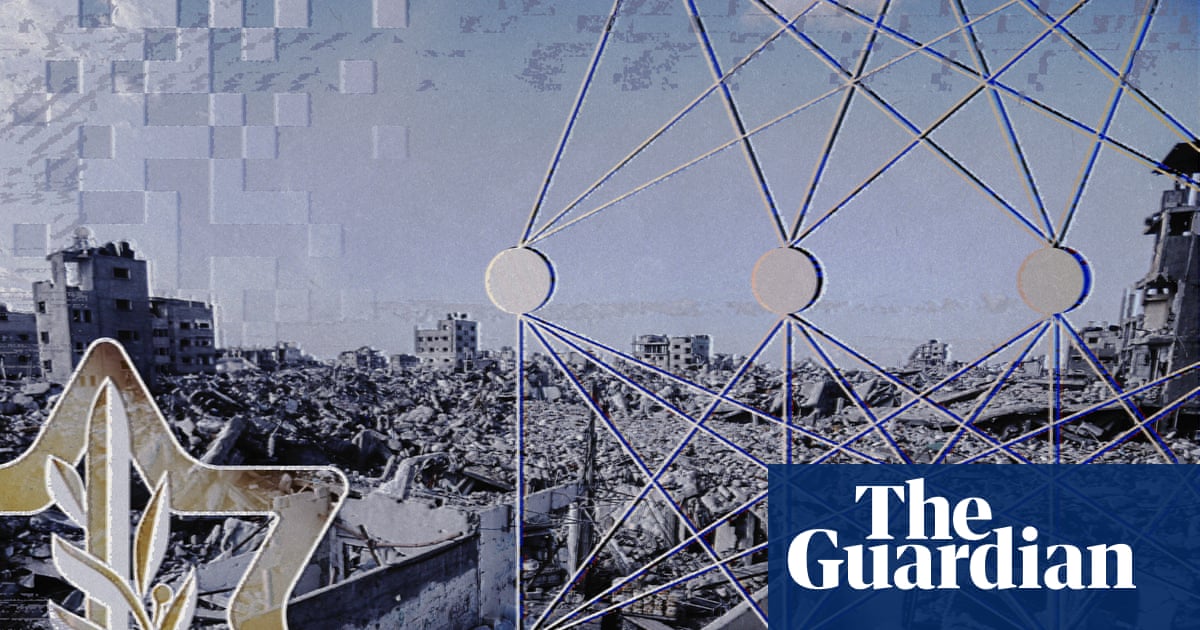
In January this year, Harry Davies and Yuval Abraham first reported that Microsoft had deepened its ties to Israel alongside other major tech firms. Since then, the Guardian has published an award-winning series of investigations – in partnership with the Israeli-Palestinian publication +972 Magazine and the Hebrew-language outlet Local Call – that has revealed a symbiotic relationship between Silicon Valley and the Israeli military.
One investigation exposed an Israeli mass surveillance program scooping up virtually all Palestinian phone calls and storing them on Microsoft’s cloud services – setting off an inquiry that ultimately prompted the company to cut off Israel’s access to some of its technology. Another story revealed that the Israeli military created a ChatGPT-like tool to analyze data collected through the surveillance of Palestinians. Yet another revealed that Google and Amazon had agreed to extraordinary terms to clinch a lucrative contract with Israel.
I asked Davies and Abraham to discuss what they learned this year – about the role of these technologies in Israel’s assault on Gaza, whether these business ties are sustainable, and what the revelations tell us about how the wars of the future will be fought.
How did Israel’s relationships with these companies change after October 7?
Yuval Abraham: The Israeli military had been fetishizing artificial intelligence and big data for many years – a trend that is very much connected to Israel’s occupation of the Palestinians, because the occupation generates a lot of data. What changed after October 7 was the scope. The military was looking to bomb hundreds of targets every day in Gaza. Tens of thousands of people were recruited into reserve duty. That meant a huge spike in usage of technological systems. That’s where the big tech companies stepped in.
Harry Davies: There was a huge surge in demand – not just for the storage capacities of the tech companies, but also for the products that they offer to analyze the information used to prosecute a war. What’s valuable for the military is the way in which these services are able to provide what’s known as “blob storage”, which allows them to store and process infinite amounts of raw intelligence information.
What has made Israel such an appealing market for these companies?
Yuval Abraham: As we reported, the Israeli army has been collecting Palestinian phone calls for a long time. But when you want to collect the phone calls of an entire population every day, and you want to retain those phone calls for long periods of time, you need a lot of storage room and processing power.
If you remember the [Edward] Snowden revelations, many of them had to do with metadata, which doesn’t weigh a lot. But the Israeli military also wanted to store mass audio files, images or videos – and for that it felt it needed the assistance of companies like Microsoft. In the West Bank, sources have told us this information has been used to find dirt on people to blackmail them. In the Gaza Strip, we know that this massive trove of intercepted phone calls was also used in airstrikes that killed civilians.
So data is power and data is control. And these American cloud providers allow the Israeli military to store a lot of data and to sift through it very effectively. That has direct consequences for people on the ground.
Quick Guide
Contact Harry Davies and Yuval Abraham about this story
Show
If you have something to share about this story, you can contact Harry Davies and Yuval Abraham using one of the following methods.
Secure Messaging in the Guardian app
The Guardian app has a tool to send tips about stories. Messages are end to end encrypted and concealed within the routine activity that every Guardian mobile app performs. This prevents an observer from knowing that you are communicating with us at all, let alone what is being said.
If you don’t already have the Guardian app, download it (iOS/Android) and go to the menu. Select ‘Secure Messaging’.
To send a message to Harry and Yuval please choose the ‘UK Investigations’ team.
Signal Messenger
You can message Harry using the Signal Messenger app. Use the ‘find by username’ option and type hfd.90
Email (not secure)
If you don’t need a high level of security or confidentiality you can email harry.davies@theguardian.com
SecureDrop and other secure methods
If you can safely use the tor network without being observed or monitored you can send messages and documents to the Guardian via our SecureDrop platform.
Finally, our guide at theguardian.com/tips lists several ways to contact us securely, and discusses the pros and cons of each.
Harry Davies: Yossi Sariel, the former head of [Israel’s elite spy agency] Unit 8200, wrote a book under a pseudonym that we revealed to have been published by him. In that book, he articulated what at the time was a bold and radical vision – as Yuval described, this fetishization of Silicon Valley technology. He recognized the possibilities that the likes of Google, Amazon and Microsoft could afford the Israeli military. Two years before October 7, he said that militaries and governments needed to forge relationships with these companies that are similar to the relationships they have with companies like Boeing and Lockheed Martin. So he was already thinking about these companies as instrumental to war and surveillance in the way that a defense contractor provides components for fighter jets or manufactures bombs and missiles.
Some of our reporting has looked at how elements of his vision have come true and have been put into effect, both before October 7 and afterwards, in both the West Bank and Gaza.
We know AI is central to Israel’s military operations – its army has developed its own AI capabilities, as you revealed, Yuval, and has also purchased AI tools for use from Microsoft. Why is AI so central to Israel’s broader war aims?
Yuval Abraham: What AI did was allow Israel to achieve the effective results of carpet bombing without losing the legitimacy of a data-driven assault with targets and objectives. In Gaza, one way in which the Israeli military used AI was to give a score to almost every person in Gaza who has a phone number, determining how likely it was that person was a member of Hamas or Islamic Jihad. This score was based on a machine-learning algorithm [developed by Israel] called Lavender. It was trained on a dataset of known Hamas members. AI allowed the Israeli military to generate and bomb tens of thousands of military targets, on a scale that without AI would not have been humanly possible. Many of the targets were not Hamas members, according to sources. And Israel for the most part bombed these people not while they were engaged in military activity, but when they stepped inside their families’ homes.
These AI systems had an error rate that the Israeli military knew about. But to me, the key thing about AI is not the mistakes that it makes. It’s the scale of destruction that it allows militaries to unleash, and it’s a discourse of legitimacy that it enables – a discourse of targets and collateral damage.
AI also seems to me to incentivize mass surveillance, right? Because it allows for the analysis of ever-growing reams of information.
Harry Davies: Signals intelligence agencies have long collected more information than they could humanly process. That served as a kind of restraint on their ability to conduct mass surveillance. I think we’re now seeing a shift where AI allows an intelligence agency like Unit 8200 to make sense of things that previously it struggled to make sense of.
Microsoft explicitly credited your reporting for changing its policies. Are you seeing any other signs of shifts within the tech industry?
Harry Davies: I think we’re seeing a lot of discomfort and dissent within these companies at both a junior and to some extent senior level. Many employees have been disturbed to find what the products and services that they’re working around the clock to build and market are actually contributing to. There have been protest groups which have emerged from current and former employees within these companies. That’s true across Silicon Valley. I think that played some role in the decision that Microsoft made as a result of our reporting. They were facing a lot of pressure internally.
Yuval Abraham: And there’s also a legal question for these companies: if the ICJ [international court of justice] ends up ruling that Israel has committed a genocide, then a follow-up question will be: who contributed to that genocide? Which companies helped maintain it and sustain it? For some people in these companies who are thinking ahead, that could also be a cause for concern.
It sounds like you think shifts in public support for Israel could actually affect these business relationships.
Yuval Abraham: Israel has developed a reliance on these companies for its Nimbus project, which is a huge contract signed between Israel and Google and Amazon back in 2021. It is moving the data of many of its government ministries, along with troves of information from the Ministry of Defense, onto these companies’ cloud servers.
These are US companies. They’re taking a certain gamble here that the US will stay loyal to Israel and won’t block, limit or sanction them.
Microsoft only blocked access to technology that was specifically enabling the mass surveillance of Palestinian phone calls – there are still many relationships between Microsoft and the Israeli military. But Microsoft’s action made many people in the Israeli system nervous. It was the first time we know of that a big tech company withdrew services from the Israeli military. It made some people ask whether Israel is making a mistake by giving these foreign companies so much leverage. That question is folded within a larger question of what the US will do, what will happen in 2028 if there’s a more progressive administration in the White House, at a time when so many Americans believe that Israel has committed a genocide in Gaza.
What’s your focus going to be in 2026?
Yuval Abraham: I think we only uncovered the tip of the iceberg.
Harry Davies: We’re both very conscious that, although we have spent a lot of time working on this, we still just have glimpses inside the system. We’re continuing to build a fuller picture of how this technology was and continues to be used in Gaza and in the West Bank as well.
There’s good reason to continue paying attention. Militaries pay attention to what other militaries are doing. There is great interest among other western militaries in how Israel prosecuted this war, in how it integrated these kind of technologies.
And there are other militaries whose combat systems and processes are already deeply integrated with Silicon Valley tech. Take the American military, for example. Look at what’s happening right now in the Caribbean. Are those operations somehow free of the involvement or reliance on systems and services provided by these companies? I suspect not. We don’t know for sure, but the Pentagon and the US military have very big contracts with all of these companies to provide cloud services. Post-Gaza, we have to look at these relationships and ask: what is the involvement of these companies and their technology in military decisions, in military operations and in warfare more broadly?
Yuval Abraham: Much of our reporting is based on whistleblowers, on individuals who are in proximity to power or hold positions of power.
Harry Davies: Our confidential sources have remained confidential and we are always interested in hearing from new people. Our door is always open.
Quick Guide
Contact Harry Davies and Yuval Abraham about this story
Show

If you have something to share about this story, you can contact Harry Davies and Yuval Abraham using one of the following methods.
Secure Messaging in the Guardian app
The Guardian app has a tool to send tips about stories. Messages are end to end encrypted and concealed within the routine activity that every Guardian mobile app performs. This prevents an observer from knowing that you are communicating with us at all, let alone what is being said.
If you don’t already have the Guardian app, download it (iOS/Android) and go to the menu. Select ‘Secure Messaging’.
To send a message to Harry and Yuval please choose the ‘UK Investigations’ team.
Signal Messenger
You can message Harry using the Signal Messenger app. Use the ‘find by username’ option and type hfd.90
Email (not secure)
If you don’t need a high level of security or confidentiality you can email harry.davies@theguardian.com
SecureDrop and other secure methods
If you can safely use the tor network without being observed or monitored you can send messages and documents to the Guardian via our SecureDrop platform.
Finally, our guide at theguardian.com/tips lists several ways to contact us securely, and discusses the pros and cons of each.
Source link
