

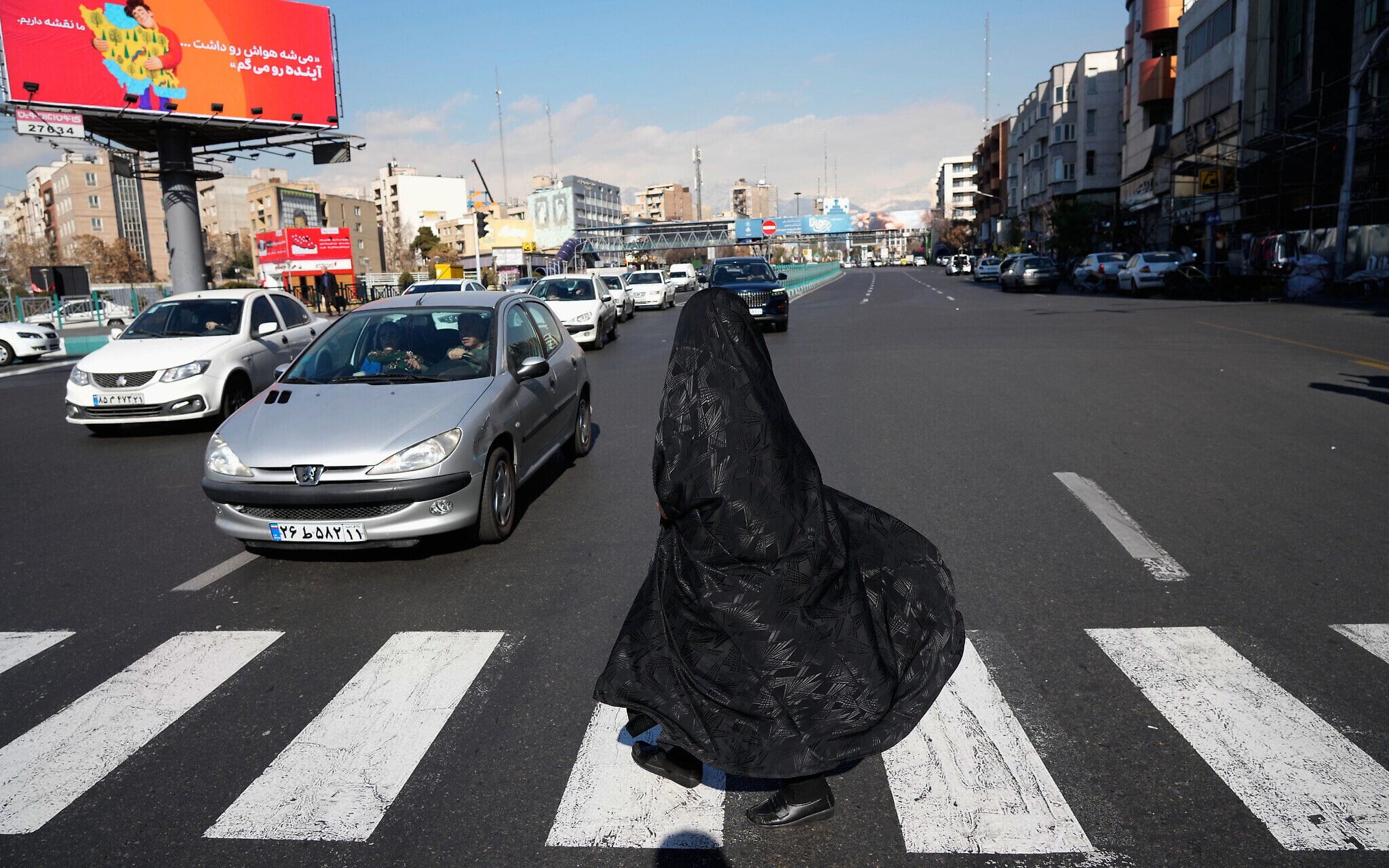
Iran’s deadly crackdown appears to have broadly quelled protests for now, residents said on Friday, as state media reported more arrests in the shadow of repeated US threats to intervene if the killing continues.
Meanwhile, a senior hard-line cleric called for the death penalty for detained demonstrators and directly threatened US President Donald Trump — evidence of the rage gripping authorities in the Islamic Republic. And more US military assets were expected to arrive in the region, reflecting the continued tensions.
Several residents of Tehran reached by Reuters said the capital had now been comparatively quiet for four days. Drones were flying over the city, but there had been no sign of major protests on Thursday or Friday. Another resident in a northern city on the Caspian Sea said the streets there also appeared calm. The residents declined to be identified for their safety.
The New York Times cited four residents from different parts of Tehran as saying the capital had assumed an air of martial law, with regime officers deployed in large numbers in different parts of the capital and usually busy streets now empty.
“There is massive disappointment and disillusionment,” a resident who worked in central Tehran told the Times, speaking on condition of anonymity for fear of reprisal.
Iran’s state-owned Press TV also cited Iran’s police chief as saying calm had been restored across the country.
Harsh repression has left several thousand dead in the demonstrations that began on December 28 over Iran’s ailing economy and morphed into a mass movement demanding the removal of the clerical system that has ruled Iran since the 1979 revolution.
Iranian authorities imposed an internet shutdown last week that activists fear is aimed at masking the true scale of the deadly crackdown.
On Saturday, more than 200 hours into the shutdown, monitoring group NetBlocks said internet connectivity in Iran rose “very” slightly.
“Metrics show a very slight rise in internet connectivity in Iran this morning after the 200 hour mark,” NetBlocks said on X, but added that connection was only around 2 percent of ordinary levels and there was no sign of “a significant return.”
Accounts of the violent repression have trickled out despite the shutdown.
One woman in Tehran told Reuters by phone that her daughter was killed a week ago after joining a demonstration near their home.
“She was 15 years old. She was not a terrorist, not a rioter. Basij forces followed her as she was trying to return home,” she said, referring to a branch of the security forces often used to quell unrest.
Iranian-Kurdish rights group Hengaw said there had been no protest gatherings since Sunday, but “the security environment remains highly restrictive.”
“Our independent sources confirm a heavy military and security presence in cities and towns where protests previously took place, as well as in several locations that did not experience major demonstrations,” the Norway-based group told Reuters.
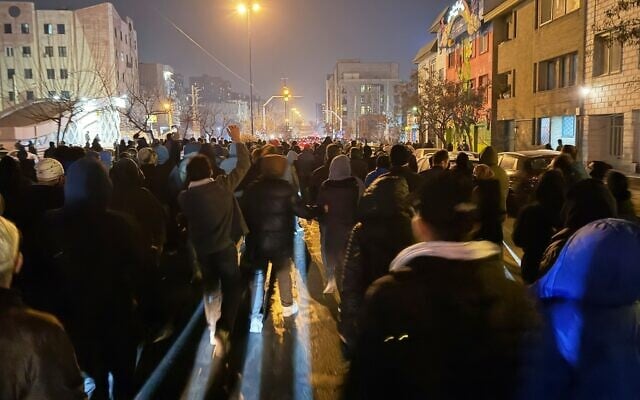
There were, however, still indications of unrest in some areas. Hengaw reported that a female nurse was killed by direct gunfire from government forces during protests in Karaj, west of Tehran. Reuters was not able to independently verify the report.
The state-affiliated Tasnim news outlet reported that rioters had set fire to a local education office in Falavarjan County, in central Isfahan Province, on Thursday.
An elderly resident of a town in Iran’s northwestern region, where many Kurdish Iranians live and which has been the focus for many of the biggest flare-ups, said sporadic protests had continued, though not as intensely.
Describing violence earlier in the protests, she said: “I have not seen scenes like that before.”
Video circulating online, which Reuters was able to verify as having been recorded in a forensic medical center in Tehran, showed dozens of bodies lying on floors and stretchers, most in bags but some uncovered. Reuters could not verify the date of the video.
In a sign of the conflict’s potential to spill over borders, a Kurdish separatist group in Iraq said it has launched attacks on Iran’s paramilitary Revolutionary Guard in recent days in retaliation for Tehran’s crackdown on protests.
A representative of the Kurdistan Freedom Party, or PAK, said its members have “played a role in the protests through both financial support and armed operations to defend protesters when needed.” The group said the attacks were launched by members of its military wing based inside Iran.
The US-based Human Rights Activists News Agency on Friday put the death toll in Iran’s demonstrations at 3,090, including at least 163 people identified as affiliated with the government. The group relies on a network of activists inside Iran that confirms all reported fatalities.
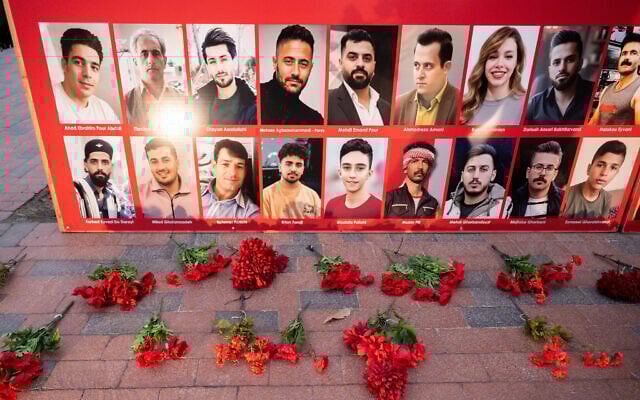
The toll could not be independently verified. An Iranian official said earlier this week that about 2,000 people had been killed.
The casualty numbers recall the chaos surrounding the 1979 revolution and dwarf the death toll from previous bouts of unrest that have been suppressed by the state, including in 2009 and 2022.
In a letter to the United Nations Human Rights Council on Friday, Britain, Germany, Iceland, Moldova and North Macedonia requested the body “hold a special session to address the deteriorating human rights situation in the Islamic Republic of Iran.”
“A special session is needed because of the importance and urgency of the situation,” read the letter, which was seen by AFP.
It highlighted “credible reports of alarming violence, crackdowns on protesters and violations of international human rights law across the country.”
The request requires the backing of at least a third of the council’s 47 members to go through. Countries have been given until Monday to back the requested session, for which no date has yet been set. There had already been broad support among council members for the special session request, a source close to the matter told AFP.
Senior cleric: ‘Armed hypocrites should be put to death’
Trump, who had threatened to strike Iran if it kept killing protesters, has backed away from the threat, saying he received information that the killings would stop.
Prime Minister Benjamin Netanyahu and other regional leaders, wary of retaliation from Iran, had reportedly petitioned Trump not to strike. Mossad chief David Barnea was also in the US on Friday for talks on Iran, according to a source familiar with the matter, and an Israeli military official said the country’s forces were on “peak readiness.”
Trump on Friday said his decision not to attack was entirely his own, adding that Iran’s purported decision to stay the executions of 800 detained protesters had a “big impact.”
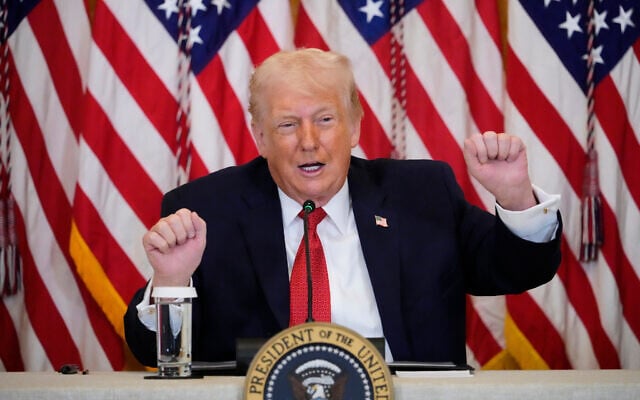
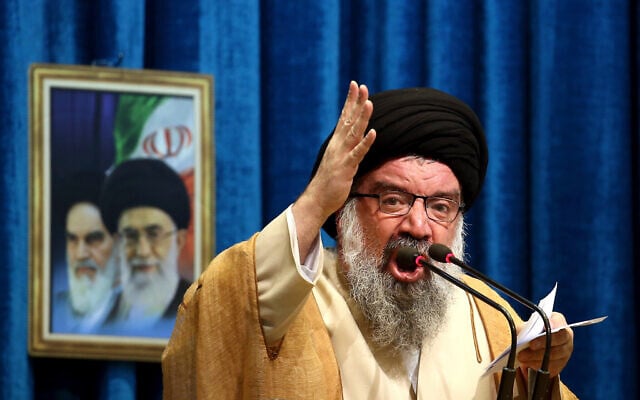
Even as Trump backed away from his threats, Iran’s Ayatollah Ahmad Khatami threatened him in a sermon carried by Iran’s state radio. The sermon sparked chants from those gathered for prayers, including, in reference to the anti-regime protesters, “Armed hypocrites should be put to death.”
Khatami, a member of Iran’s Assembly of Experts and Guardian Council long known for his hard-line views, described the protesters as “Trump’s soldiers” and Netanyahu’s “butlers.” He said Netanyahu and Trump should await “hard revenge from the system.”
“Americans and Zionists should not expect peace,” said Khatami.
The cleric also provided the first overall statistics on damage from the protests, claiming 350 mosques, 126 prayer halls and 20 other holy places had sustained damage. Another 80 homes of Friday prayer leaders — an important position within Iran’s theocracy — were also damaged, likely underlining the anger demonstrators felt toward symbols of the government.
He said 400 hospitals, 106 ambulances, 71 fire department vehicles, and another 50 emergency vehicles also sustained damage.
With tensions in the region still running high, the European Union’s aviation regulator urged the bloc’s airlines to avoid flying in Iran’s airspace, citing the high alert of Iranian air defenses and increased likelihood of misidentification due to the potential US military action.
“The presence and possible use of a wide range of weapons and air-defense systems, combined with unpredictable state responses …. creates a high risk to civil flights operating at all altitudes and flight levels,” the European Union Aviation Safety Agency (EASA) said in a bulletin on potential conflict zones.
In an attempt to defuse the tensions, Russian President Vladimir Putin held conversations with both Netanyahu and Iranian President Masoud Pezeshkian on Friday, according to Kremlin spokesman Dmitry Peskov.
Shah’s son urges US to make good on threats
Iran’s exiled Crown Prince Reza Pahlavi, whose name was chanted by many protesters in the anti-regime demonstrations, urged the US to make good on its pledge to intervene.
Pahlavi, who has lived in the US since his father was overthrown by the 1979 revolution, has said he wants to be a figurehead to lead a transition to a secular democracy in Iran.
Speaking to reporters in Washington on Friday, Pahlavi said, “I believe the president is a man of his word.”
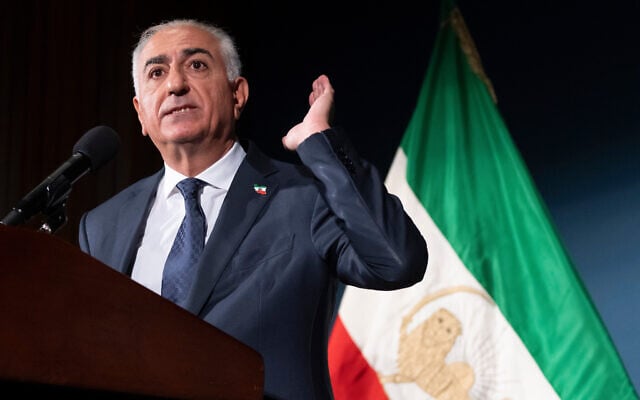
“Regardless of whether action is taken or not, we as Iranians have no choice but to carry on the fight,” he said.
“The Islamic Republic will fall — not if, but when,” Pahlavi said. “I will return to Iran.”
“Iranian people are taking decisive actions on the ground. It is now time for the international community to join them fully,” said Pahlavi, calling on the international community to “protect the Iranian people by degrading the regime’s repressive capacity, including targeting the Islamic Revolutionary Guard leadership and its command and control infrastructure.”
He also called on all countries to expel diplomats from the Islamic Republic.
Hours later, Pahlavi urged protesters to take to the streets again from Saturday to Monday.
